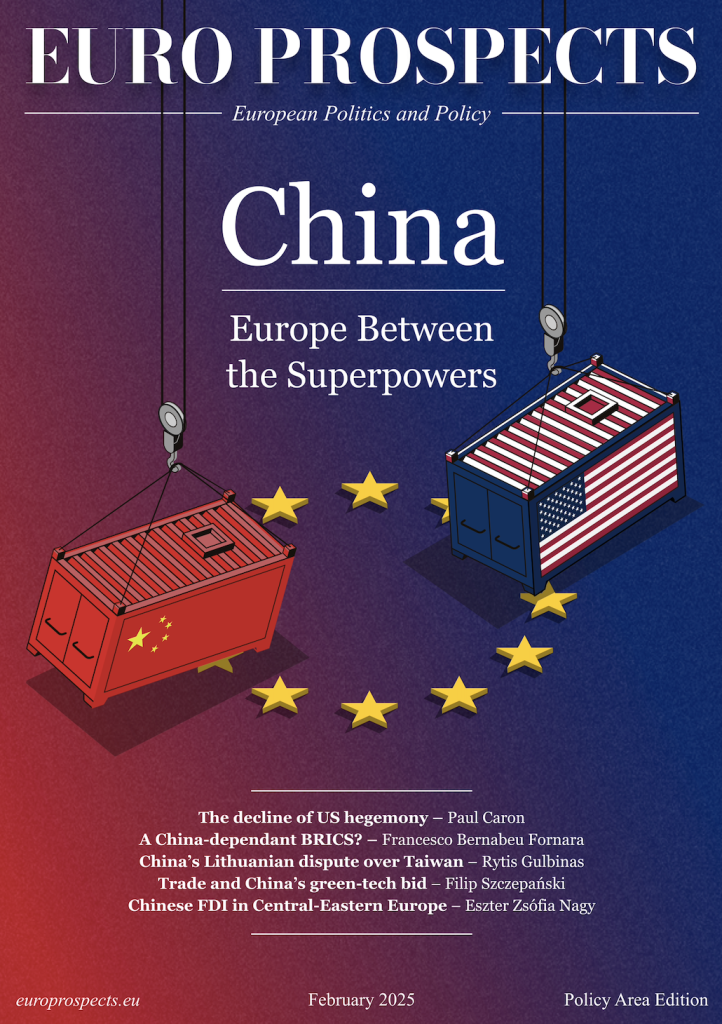
Left in the Dark: When Looking Towards China, Europe Needs a Clear-Eyed View
Despite China’s remarkable political and economic transformation, the narrative of a ‘Communist success story’ merits far more nuance. As China’s international influence grows, Europeans must learn to better understand the Chinese model—a task for which Europe’s own past with collectivism and authoritarian can offer valuable insight.
Why Does the Netherlands Not Recognize Palestine?
Why does a country that presents itself as a global beacon of human rights and international law continue not to recognize Palestine?
Isolation Worsens: Is Israel Losing Its Western Safeguards?
For decades, Israel could count on Europe as a protective shield — a source of military aid, economic integration, and crucial diplomatic cover. But today, that shield is cracking.
Sectarian Tensions, Strategic Dilemmas: The EU and Southern Syria’s Druze–Bedouin Conflict
As Syria’s Druze and Bedouin communities engage in armed conflict in the south, regional powers and the EU are confronted with challenging decisions. Not only is Syria’s fragile stability at stake, but so too is the future of Europe’s role in a changing Middle East.
Terrorism in the Sahel: A Growing Challenge for EU Security and Migration Policies
As the Sahel is engulfed in a crisis, will Europe take a stand, or will it watch from afar as Russia and China take charge in the Sahel?
Principles or Pragmatism? The EU’s Dilemma in the Red Sea Crisis
The Red Sea crisis is testing the EU’s soft power model—can humanitarian principles alone safeguard European interests in an increasingly hard-edged world?
From Ally to Advocate: The Dutch Pivot on Israel
Epitomised by the Dutch proposal to review EU-Israel relations, the Netherlands has recently adopted a more critical stance toward Israel’s actions in Gaza.
Hezbollah’s Decline: A Window for EU Engagement in Lebanon and Its Impact on EU-Iran Ties
As Hezbollah navigates shifting Middle Eastern power dynamics after Assad’s collapse, its role as Iran’s proxy challenges EU foreign policy. How can the EU exploit Hezbollah’s weakness to influence its ties with Iran and the region?
From Protector to Bystander: Understanding France’s Declining Influence in Lebanon
In recent years, Lebanon has spiraled into crisis, marked by political instability, economic collapse, and regional tensions. Once a cornerstone of French influence in the Middle East, Lebanon now stands at a crossroads. How did France, the former protectorate power that shaped Lebanon’ s modern governance, become a mere observer?
Precedent-setter or Pawn? The Chinese-Lithuanian Dispute Over Taiwan’s Representative Office
Course: China’s Ambitions in the 21st Century (University of Amsterdam)
Energy, Diplomacy, and Change: The EU-GCC Partnership in a New Geopolitical Era
After decades of unsuccessful attempts at building closer ties, the EU and the GCC are now entering a new era of partnership
The EU’s Approach to Terrorism in the Middle East: Strategy and Partnerships
Can the EU’s approach to Middle Eastern terrorism truly address the root causes and secure lasting peace, or is it merely a temporary fix?