The EU Is Ceding Influence and Running Out of Time in the South Caucasus
The EU Is Ceding Influence and Running Out of Time in the South Caucasus
How can the EU project real influence in a region where China, Russia, and Turkey move faster? Can Brussels balance its need for Azerbaijani gas with its own democratic principles? And what will it take for Europe to secure Armenia’s pivot to the West while preventing Georgia’s descent into authoritarian isolation?
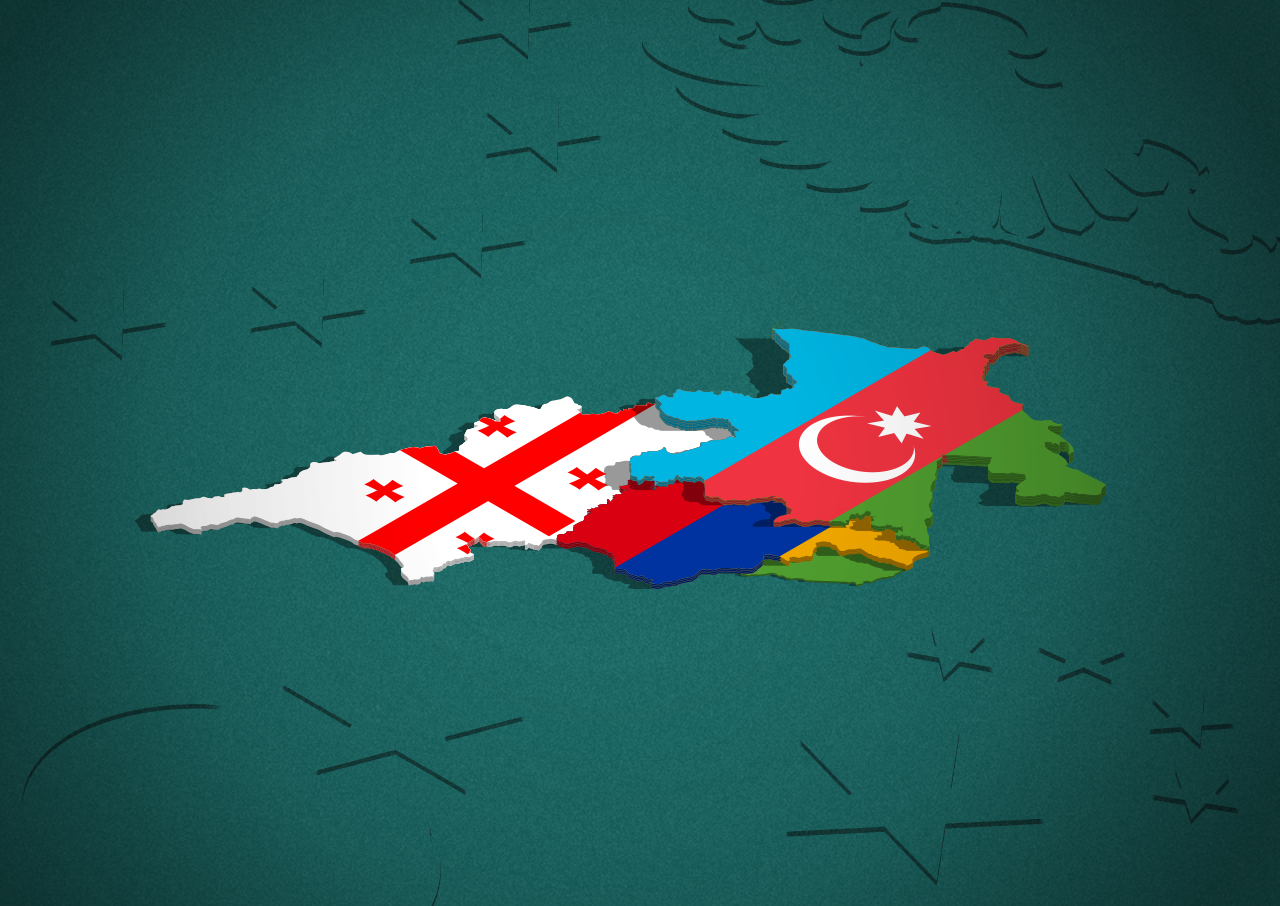
Image Credit: Euro Prospects

The EU’s engagement with the South Caucasus is pulling in three directions simultaneously: frozen relations with Georgia, a pragmatic but values-blind partnership with Azerbaijan, and a nascent but fragile rapprochement with Armenia. Across all three, the window for European influence is narrowing as Russia’s diminishing grip creates a strategic vacuum—one that China is actively filling through Belt and Road investment in the Middle Corridor. This corridor is a strategic trade route connecting China to Europe via Central Asia, the Caspian Sea, the South Caucasus, and Turkey, which acts as a crucial alternative to land routes through Russia. Meanwhile, Turkey is also deepening its regional footprint. It does so primarily by maintaining close ties to Azerbaijan, with which it shares both cultural and linguistic similarities. The two nations even hold joint military exercises, and are currently working on a new transit corridor, together with Armenia, which could improve trade flows within the region.
The European Union (EU) began establishing official relations with Azerbaijan, Armenia, and Georgia in the early 1990s, shortly after the three countries gained independence following the dissolution of the Soviet Union. In 1994, the European Parliament established the Delegation for Relations with the Countries of the South Caucasus. The legal basis for cooperation was established through Partnership and Cooperation Agreements, signed with all three states on April 22, 1996, in Luxembourg, and which entered into force on July 1, 1999. In 2004, the three countries were included in the European Neighborhood Policy, and in 2009, they became part of the Eastern Partnership initiative.
Yet, by 2009, the three countries’ paths began diverging. Georgia signed an Association Agreement with the EU in 2014. Unlike Georgia, which sought full legislative alignment through an Association Agreement, Armenia opted for a Comprehensive and Enhanced Partnership Agreement (CEPA)—a flexible framework that deepens political and economic cooperation without requiring the extensive legal harmonization mandated by an Association Agreement. Azerbaijan, meanwhile, continues negotiations on a new comprehensive agreement with the EU. Despite this institutional evolution, the EU has struggled to translate its formal frameworks into decisive geopolitical influence. This is largely due to its reactive policy of treating the region’s distinct realities with a one-size-fits-all approach.
Relations with Georgia
Following the 2024 elections, the government led by the Georgian Dream party adopted a law on ‘foreign agents’, nearly identical to Russia’s equivalent bill, placing NGOs with foreign funding under unprecedented state surveillance. This has led to daily protests in Georgia that have continued since. The EU tried to pressure the government through diplomatic channels, but without tangible effect. As a result, Georgia’s EU integration has stalled, and the country is facing deep isolation, being excluded from high-level European dialogues—with Brussels even suspending visa-free travel for holders of Georgian diplomatic passports.
Simultaneously, public trust in the EU is falling among Georgians. Nevertheless, citizens continue to take to the streets on a daily basis to protest the government’s illiberal pursuit and foreign agents law. Should the EU fail to move beyond declaratory pressure, democratic backsliding in Georgia will likely deepen. If so, Russian influence will as well, over what was once one of the most promising post-Soviet countries for EU membership.
Russian influence in the region is also significantly maintained through the unresolved conflicts in Abkhazia and South Ossetia, two of Georgia’s bordering regions. Following the collapse of the Soviet Union in the early 1990s, these regions became separatist entities backed by Moscow. This status quo was solidified by the 2008 Russo-Georgian War, after which Russia formally recognized their independence—a move rejected by the international community. Today, these ‘frozen’ conflicts serve as a strategic tool
for the Kremlin to exert pressure on Tbilisi, creating a geopolitical barrier that destabilizes the country and effectively hinders Georgia’s path toward Western integration.
Relations with Azerbaijan
Brussels’ cooperation with Azerbaijan, conversely, has been more narrow, focusing on the areas of infrastructure, energy, and security within the framework of the Eastern Partnership. The EU takes a largely realpolitik approach to its relations with Azerbaijan: gas is purchased and political issues are downplayed. While this ensures cheap energy supply, it strategically weakens Europe’s leverage by signaling that Brussels prioritizes immediate resource needs over its stated democratic principles, undercutting its moral and diplomatic credibility in the region.
Relations between Azerbaijan and the EU remain tense, however. On May 1, 2026, the Milli Majlis (the National Assembly of Azerbaijan) suspended its cooperation with the European Parliament, withdrew from the EU-Azerbaijan Parliamentary Cooperation Committee, and began the process of leaving the Euronest Parliamentary Assembly. The decision followed a European Parliament resolution that strongly criticized Azerbaijan’s human rights record, highlighted issues regarding political prisoners, and addressed the post-conflict situation in Nagorno-Karabakh. Yet, EU institutions lack a cohesive foreign policy, each pursuing different approaches: the European Parliament has taken a critical stance, while the European Commission continues to cooperate closely with Azerbaijan in the energy sector.
Azerbaijan’s relations with the Council of Europe have also strained. The country suspended cooperation with the Parliamentary Assembly of the Council of Europe (PACE) after its delegation was stripped of voting rights in 2024 over similar concerns.
As the Middle Corridor grows in popularity as an alternative route between Europe and Central Asia, losing influence in Baku is a strategic cost Europe can ill afford. If the EU continues to ignore the internal situation in Azerbaijan, the region will increasingly fall under the growing influence of China, which offers partnership with even less democratic conditionality.
Relations with Armenia
Armenia, conversely, is only beginning its journey toward Europe. The EU actively supports Armenia in economic and political matters, but risk of losing this new partner remains high as Russia here too continues to exert dominance over its economy and security. Armenia’s dependence on Russian gas and its military presence (including through the CSTO, the Russia-led security alliance Armenia remains a member of), as well as its deep economic ties, make it vulnerable to pressure from Moscow.
The EU is currently taking effective steps, but risks remain. In May of this year, Armenia hosted a major European forum for the first time. The European Political Community Forum in Yerevan increased the country’s standing within European institutional circles. Immediately following the forum, the first EU-Armenia summit was held. There, the President of the European Commission, Ursula von der Leyen, announced financial aid and investments for Armenia.
Even before the elections, the Russian Federation began blocking Armenian goods in an effort to influence voter opinion and pressure the government. Moscow is presenting Armenia with a choice between the EU and the Eurasian Economic Union, an economic bloc comprising countries within Russia’s sphere of influence. The Armenian government is trying to balance its relationship with both while also criticizing Russia’s alliances for their ineffectiveness. Then, on July 2, Ursula von der Leyen announced over €50 million in aid for Armenia and simplified EU trade for its agri-food products. These measures respond to Russian export restrictions and provide duty-free access to the EU market. Armenia is also an important part of the Middle Corridor.
Following Nikol Pashinyan’s party’s victory in the elections, the EU began supporting Armenia’s European path more actively and accelerated the transition to a visa-free regime with the EU.
Conclusion
The EU’s position in the South Caucasus is weakening at the moment it can least afford it. Russia’s diminishing influence in the region is being contested by external powers, as China and Turkey continue to aggressively expand their economic and diplomatic footprints. The European Union risks falling behind in establishing relations with all three countries in the region. To avoid this scenario, Brussels needs a more targeted strategy. In Georgia, this means transitioning from general statements to specific actions against democratic regression while maintaining open diplomatic channels. In Armenia, the EU must consolidate its current progress before Moscow increases pressure. In Azerbaijan, the EU should balance energy cooperation with support for civic initiatives under the Eastern Partnership, all under an institutionally cohesive strategy. Balancing geopolitical pragmatism with democratic conditionality is not optional; it is the only way to sustain European influence in the region.
Disclaimer: While Euro Prospects encourages open and free discourse, the opinions expressed in this article are those of the author(s) and do not necessarily reflect the official policy or views of Euro Prospects or its editorial board.

Guest Author
Riad is an analyst, researcher, and the Founder of Eastern Digital Corridor. Based in Azerbaijan, he focuses on South Caucasus geopolitics, European integration, and regional security. His work analyzes EU foreign policy, power dynamics in the region, and trade routes like the Middle Corridor. Combining a rigorous analytical approach with firsthand local context and his work at Eastern Digital Corridor, Riad brings a grounded, nuanced perspective to European-Caucasian relations.
Edited by Golo Vanden Eynde | Follow our European journalism