Securing Arctic Connectivity Amid Great Power Competition
Policy Brief
20 October 2026
Digital Sovereignty
Securing Arctic Connectivity Amid Great Power Competition
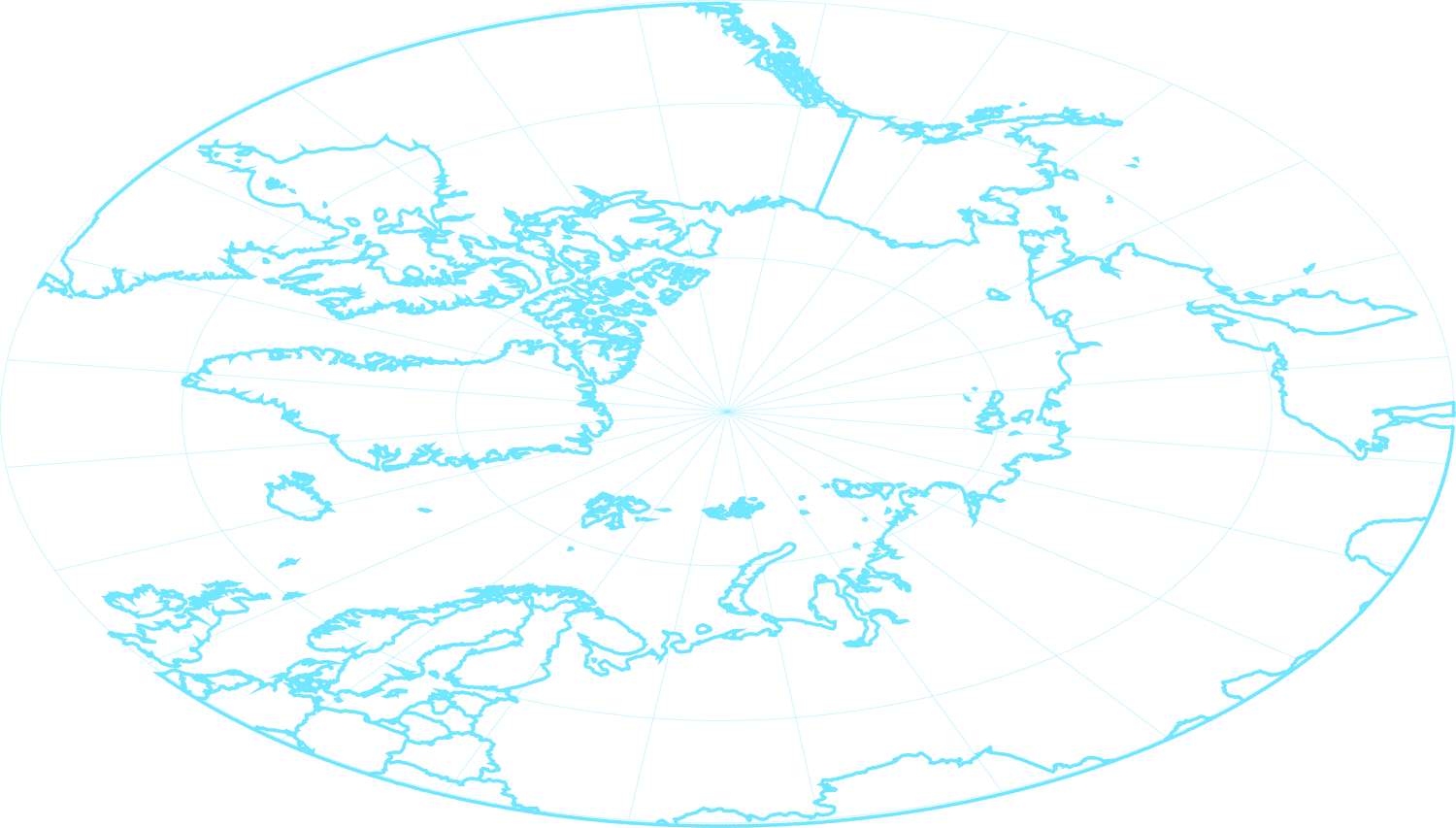
The European Union needs to define an Arctic Strategy that takes into account both EU digital sovereignty and security issues in the region.
Executive Summary
Despite the ambition of the 2025 EU International Digital Strategy, the European Union has yet to articulate a clear approach to the Arctic, a region described by EU HR/VP Kaja Kallas as “the front line of global power competition.”
As the level of Arctic ice sheets declines at nearly four times the global average, the region is opening new maritime routes and unlocking resource access, while becoming a live theatre for great-power rivalry. China’s Arctic strategy, embodied by its Polar Silk Road ambitions and deepening cooperation with Russia, together with more militarised Russian presence in the High North, and recurring sabotage of undersea cables in the Baltic Sea all point to the same conclusion: Arctic connectivity is now a matter of security, not just infrastructure planning.
The EU’s Arctic Strategy, adopted in October 2021, recognised the Arctic as an arena for great power competition and strengthened its engagement with Greenland through the opening of an EU office in Nuuk, but did not identify concrete security steps to address growing threats.
The 2021 Arctic Strategy was mostly focused on climate change adaptation, green transition and cooperation. Its revised version is expected to be published by the end of 2026, as it needs to be adapted to current times, and should further build on strategic cable projects such as Polar Connect, Far North Fiber and Tusass Connect, which are being built to secure Europe’s digital sovereignty in the region. This brief argues that the EU should deepen high-value partnerships with Arctic and near-Arctic states and embed digital connectivity explicitly into a coherent Arctic strategy, aligned with the Union’s wider security and digital agendas. Without concrete action, the EU risks strategic marginalisation in a region it can no longer afford to treat as peripheral.
Key Recommendations
1
Address Governance Fragmentation Issues to Strengthen Arctic Connectivity
Push for full Arctic Council observer status and consolidate the EU’s fragmented Arctic mandate (currently split between DG MARE and the EEAS) under a strengthened Special Envoy or dedicated EEAS unit.
2
Boost the EU External Digital Posture by Supporting Reliable and High-Value Partnerships
Deepen bilateral tracks with Canada, Norway, Iceland and Greenland to offset the EU’s continued absence from formal Arctic Council decision-making.
3
Align the New Arctic Strategy with the EU’s Wider Strategic Agenda
Embed digital sovereignty, cable security and NATO coordination explicitly into the 2026 Arctic Strategy revision.
Analysis
The strategic importance of digital infrastructure and the EU’s external digital policy
The EU’s International Digital Strategy, launched in 2025 highlights the strategic importance of the digital sector from a geopolitical, security, and economic point of view. However, internal fragmentation and technological dependencies weaken the EU’s ambition to become a global strategic actor in a highly competitive technological environment.
The key objectives of the EU’s International Digital Strategy include the promotion of a high level of security for the EU and its partners, strengthening the cybersecurity of critical infrastructure and ICT supply chains, boosting EU tech competitiveness through economic security and business cooperation.
Thus, Europe’s external digital policy needs to be more clearly defined in strategic terms, going beyond being a regulatory power in the digital domain (see the Brussels Effect), especially as digital power becomes more and more a matter of economic security, societal resilience, and global influence. In today’s world, rules alone cannot ensure either Europe’s security or the protection of its interests.
The EU’s external digital policy should be focused on diversifying cooperation in digital governance, infrastructure financing and capacity-building, fostering high-value partnerships and leveraging partners’ interest in accessing the EU market. Data flows, cybersecurity, regulation cooperation, and digital trade are increasingly embedded in regional or bilateral strategies, and the EU should be more strategic in this realm, particularly when it comes to the Arctic region.
Figure 1: Europe’s digital connectivity and the Arctic
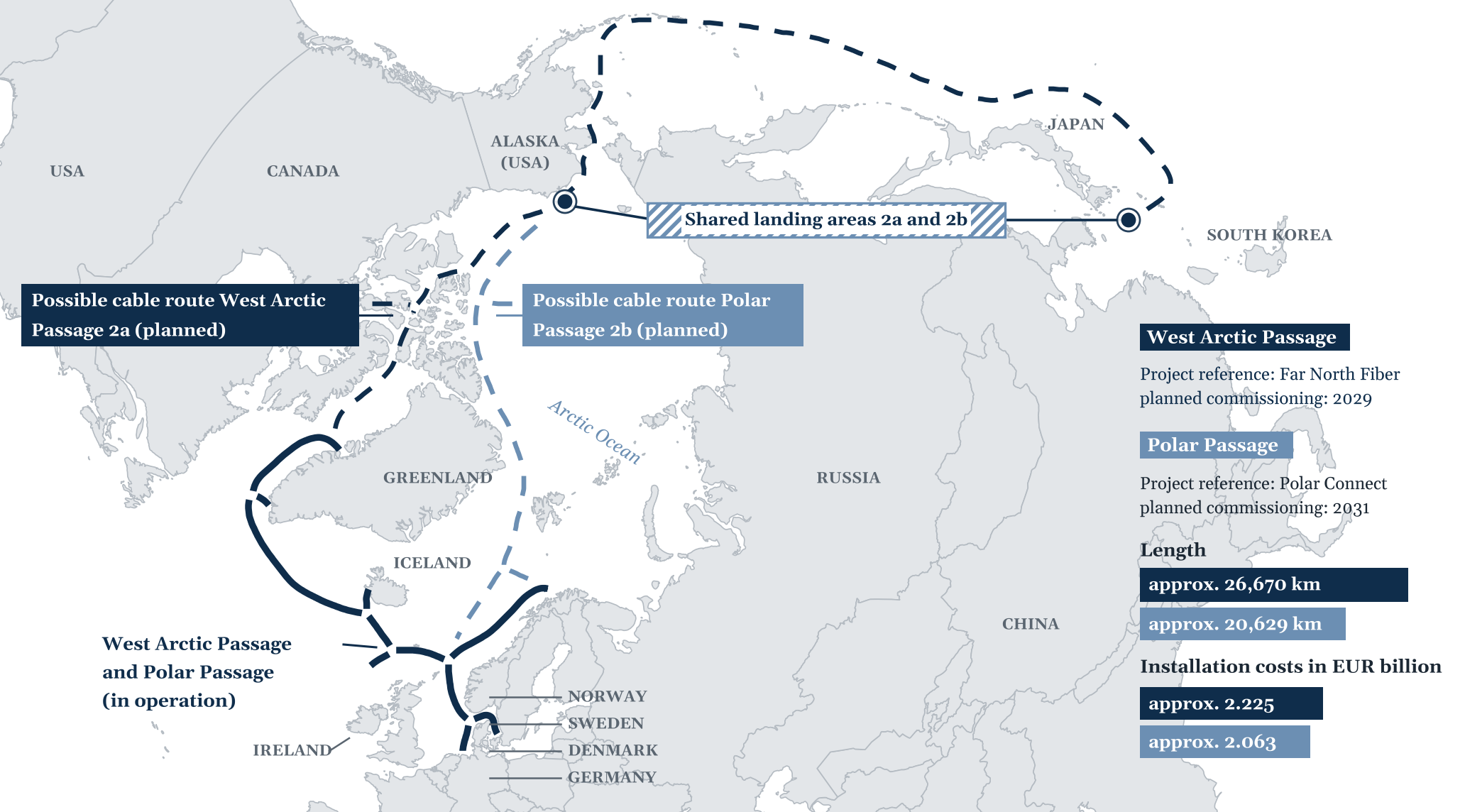
Source: mtc.government.bg Stiftung Wissenschaft und Politik (SWP), 2026
The case for Arctic connectivity as a theatre for great power competition
When it comes to the EU’s global digital engagement, Europe should focus on strengthening its connectivity and data flows in the Arctic region, which can be considered the theatre for geopolitical competition in the Northern Hemisphere. Clear examples of that can be drawn from China’s Arctic Silk Road ambitions and partnership with Russia in this endeavour, while Baltic Sea States keep being subject to sabotage to undersea cables carrying data flows, undermining European connectivity as well as European and global financial markets.
Several cables linking Germany, Finland, Sweden, Lithuania and Estonia were damaged in 2024, and a cable connecting Norway to Svalbard was disabled in 2022. The EU’s own foreign policy chief, Kaja Kallas, has captured the shift in stakes bluntly, describing the Arctic as no longer a quiet corner of the map but “the front line of the global power competition,” and warning that hybrid threats tied to Russia’s military build-up in the High North are growing in both intensity and frequency.
Against this backdrop, the EU’s external digital strategy towards the Arctic is indeed focused on subsea and terrestrial fibre connectivity through projects such as Polar Connect, which is part of a €4.3 billion Arctic priority area investment, together with the Commission’s investment in securing subsea cables, overall committed €347 million through the Connecting Europe Facility, also known as CEF, and the EU Action Plan on Cable Security. These routes matter beyond symbolism: roughly 90% of data traffic between Europe and Asia currently passes through the Bab al-Mandab strait, in the Red Sea, a chokepoint that is currently being weaponised and seized by Yemen’s Houthis, whereas trans-Arctic routes offer both a secure alternative and meaningfully lower latency.
This, on top of the fact that as ice melts the Arctic will unlock a new maritime trade route and access to resources, frames the EU’s connectivity projects as strategically important and increasingly urgent.
Bridging gaps in Governance Fragmentation
Arctic issues are inherently cross-sectoral: climate change is opening new routes and resources, which in turn raise trade, energy and environmental questions, while geopolitical competition and dual-use infrastructure such as cables and satellites give all of them a security dimension.
As such, the EU coordinates its Arctic policy through the Directorate-General for Maritime Affairs and Fisheries (DG MARE) and the European External Action Service (EEAS). Within the context of ongoing discussions about EEAS role and how to balance it with the European Commission’s increasingly external posture, the European Union needs to define an effective EU foreign policy, which would definitely strengthen EU’s role in strategic regions like the Arctic.
These efforts will also need to be coupled with institutional commitments that mirror EU’s engagement in the region, for instance by strengthening the mandate for an EU Special Envoy for Arctic Affairs as the European Parliament called for. The EEAS could also establish a dedicated Arctic unit, as well as foster partnerships with Arctic like-minded countries like Canada.
In spite of the fact that the EU’s dependencies in the tech sector hamper its global digital standing, the Team Europe approach and its flagship set of Team Europe Initiatives, which have helped align the work of the Commission, the HR/VP and Member States by working together and pooling our resources and expertise, mirror a commitment to delivering more effectiveness and greater impact in joint external actions.
In the long run, this would allow for the EU to obtain observer status within the Arctic Council meetings, bringing further institutional capacity to the forum and closer cooperation with regional actors. Recent research on Arctic Council Observers shows that non-Arctic actors contribute constructively to the Arctic Council, supporting its work on climate change and sustainable development. This underscores the strategic value for the EU of becoming an Observer: it would offer a credible, cooperative platform to advance its Arctic interests while reinforcing peaceful regional governance.
Toward a resilient digital infrastructure in Europe’s High North
The Arctic region is a priority for the EU, its security, and as such the 2026 EU Arctic Strategy should reflect the key role that digital sovereignty and secure data routes can play. Via multilateral cooperation, namely among the EU, Greenland, Nordic Countries, and within the Arctic Council, the EU should establish itself as a legitimate strategic actor in the region.
Moreover, the region offers the EU an opportunity to take a holistic approach to security issues, incorporating climate action, societal transformation and critical infrastructure. Responding to hybrid threats in a united manner certainly falls within the EU’s scope for action. However, the revised Arctic Strategy should be more closely aligned with the EU’s International Digital Strategy and other initiatives in the fields of security and defence.
To ensure its global standing, its digital sovereignty and security, it is crucial for the EU to establish itself as a strategic actor in both its digital external relations and the new Arctic Strategy.
More from the ESP Series
Explore the other ESP policy briefs, each offering actionable recommendations on a strategic challenge facing the EU.
View All ESP Policy Briefs →About Euro Prospects
Euro Prospects is an independent platform for in-depth analysis of European political affairs. We publish articles on the issues shaping Europe today, from the EU–Mercosur trade agreement and Europe’s semiconductor supply chains to the European Union’s strategic shift on Syria and Serbia’s global arms trade, to name a few.
But informing readers is only part of our Mission. Euro Prospects was founded to help cultivate a European public sphere — a transnational space of political curiosity and civic engagement among Europe’s citizens.
Visit Euro ProspectsAbout ESP
The European Strategic Policy Unit (ESP) is Euro Prospects’ dedicated think tank department. We produce forward-facing, policy-actionable analysis on European strategic sovereignty across defence, technology, trade, energy, industry, and digital infrastructure.
Partnerships
Interested in citing, discussing, or building on this research? ESP is actively building relationships with researchers, institutions, and publications working on European strategic policy.
Contact UsESP Members
Francesco Bernabeu FornaraHead of Unit; Editor-in-Chief, EP
Giulia ConvertiniDigital Systems Sovereignty
Finn Sands RobinsonTrade & Industrial Strategy
Rimsha ArifEnergy Market Resilience
Matilde MinettiEU-China Strategic Competition
Orla HarrisDigital Infrastructure Sovereignty
Jerfi WigleySupply Chain Resilience
Annika GerbigDefence Industrial Autonomy
Trinabh BanerjeeStrategic Digital Security
Luka OkropirashviliEastern Neighbourhood
Juan Carlos LeunissenTransport & Energy Connectivity
Antoine Cerqueira Da CostaFintech Sovereignty Analyst
Sofia CigoliniEU Fiscal & Monetary Sovereignty Analyst
Erik Giuliano WürthnerESP Outreach & Partnerships Coordinator