The Strait Europe Couldn’t Defend
The Strait Europe Couldn’t Defend
As the Houthis close in on the Red Sea’s southern gate and the Strait of Hormuz stays shut, the continent that depends most on both waterways has the least say over it either.
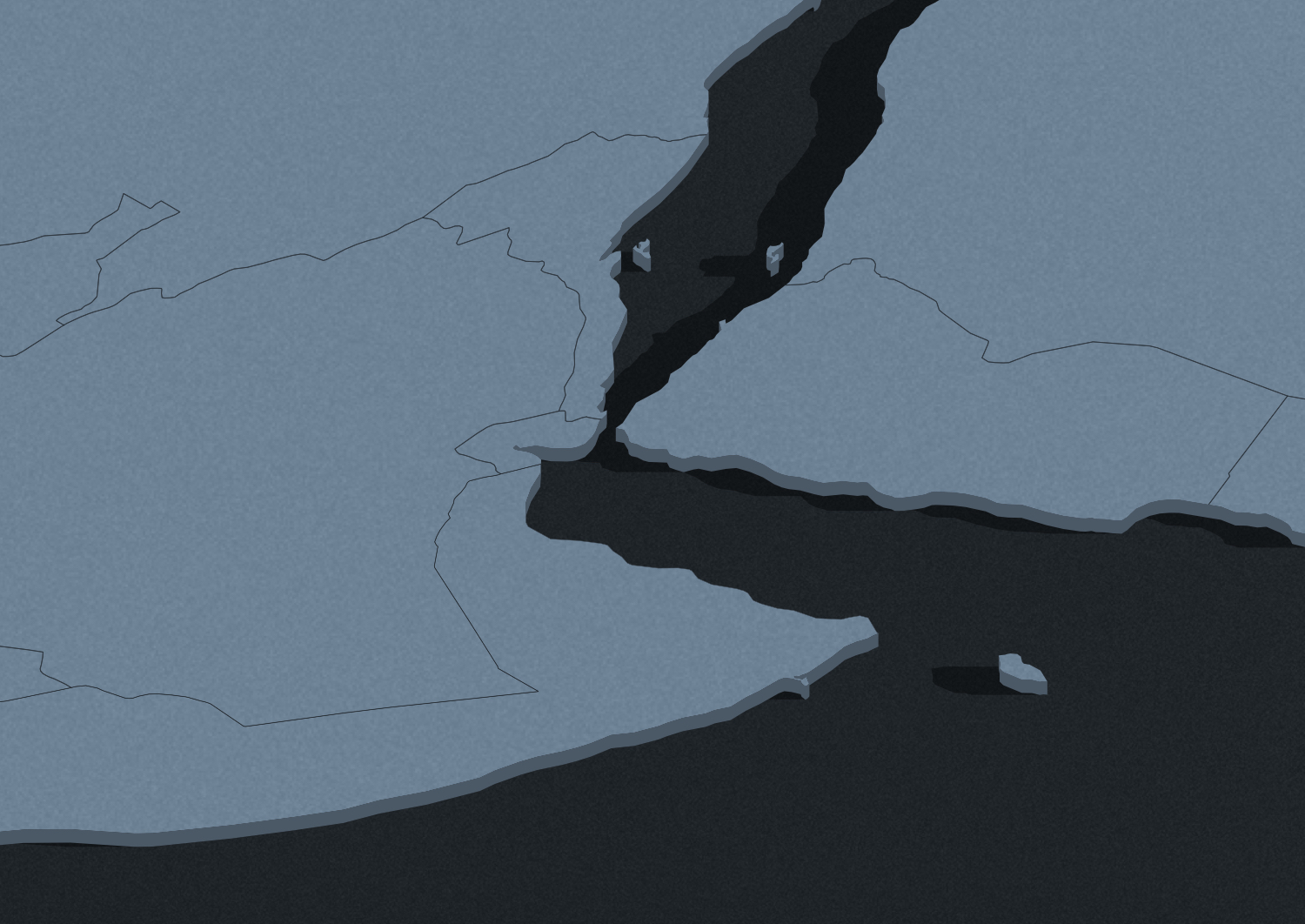
Image Credit: Euro Prospects
By Mohammad Nasser, Correspondent for the Middle East
Edited by Arturo Simone, Hybrid Threats Analyst
5 November 2026

For most of the past eight months, the Strait of Hormuz has been effectively closed to normal traffic, and the world has leaned on one alternative route for oil and goods: the Red Sea. In the second week of September, the Houthis, backed by Iran, seized the coastline and the island that overlooks its southern entrance. The Houthis are a Yemeni armed movement, backed by Iran, that has held the capital Sanaa and much of the north since 2014 and has fought a Saudi-led coalition ever since. Formerly known as Ansar Allah, the group emerged in the 1990s and waged war against the Yemeni government, culminating in their victory and their takeover of Sanaa.
Saudi Arabia has now begun a counter-offensive, launching a wide offensive to stem the Houthi advance and retake lost territory. All the vital goods and gas Europe needs run through these straits; however, Riyadh, Washington, and Tehran are making the decisions. Europe is the region’s biggest customer, yet it has almost no say in how this crisis ends. What follows is how the Houthis got here, why this is more dangerous than 2024, and who pays.
The offensive
For most of this year, the Houthis were a sideshow to the war with Iran. In September, they moved from supporting cast to leading role, with a hand on the Red Sea’s southern door.
The escalation was staged. On 20 July, the group declared a naval blockade of Saudi Arabia and began hitting Saudi oil tankers. Riyadh answered four days later with air strikes on the port of Hodeidah, which destroyed a weapons depot. Then, in the second week of September, the ground offensive came. Houthi forces took the port of Mokha on September 10th, then the coastal town of Dhubab, then Perim Island, which sits in the middle of the Bab el-Mandeb strait. By September 11th, the movement was claiming the whole of Yemen’s Red Sea coastline, and the Yemeni government confirmed it had pulled its forces off Perim. According to four sources familiar with the situation, including two Iranian sources, the IRGC helped coordinate the offensive and transferred IRGC members and weapons on July 13th. The Yemeni government has since claimed to have retaken Mokha and much of Dhubab district, which the Houthis deny.
The effect on shipping was immediate. One report put crossings of the strait at 15 on the day Perim fell, half the previous day’s 30. Whoever holds Perim can watch every vessel entering or leaving the Red Sea, and the Houthis already had missile and drone range over the strait before they took it.
The fighting has not stayed in Yemen. On October 2, the Saudi-led coalition said a Houthi strike hit a substation in Medina that powers the Prophet’s Mosque, and that the following day, it intercepted 3 ballistic missiles that were going towards the city of Khamis Mushait. On 2 October, Reuters reported that Saudi Arabia was preparing a counter-offensive, either a coastal push to retake the shoreline or a multi-front assault across four Yemeni governorates, with more than 100,000 Yemeni troops potentially mobilised. Both Türkiye and Pakistan are providing military and defensive support, with a Pakistani official saying that Pakistan dispatched four cargo aircraft carrying military equipment to Yemeni government-aligned forces in Aden, the government’s provisional capital, in September. The fighting is continuing, with the Houthis launching an offensive across the whole of Yemen. The frontline had been stabilising in early October, but the Saudi-backed offensive launched on 5 October has so far produced no clear reversal of the Houthi gains: the Houthis have encircled Taiz, and by 24 October were striking Aden’s airport while Saudi forces intercepted Houthi missiles aimed at Mecca, Medina and Yanbu; this war has gotten bigger and will continue.
So this is not a flare-up between the Houthis and the Yemeni government; rather, it is a territorial change on one of the world’s busiest trade routes.
Why this time is different
The Houthis have threatened Red Sea shipping before. Since late 2023, Iran-backed Houthis have been attacking commercial vessels in the Red Sea. Europe launched its Aspides naval mission in February 2024, whose goal, according to the EU, was that “ASPIDES will contribute to safeguard maritime security and ensure freedom of navigation, especially for merchant and commercial vessels.”
That is not to say that it was not painful. The Red Sea became a dangerous and unpredictable stretch for many commercial shipping companies, but carriers learned to live with the long way round the Cape of Good Hope. That crisis was painful, but it had a pressure valve: the world’s oil and gas still flowed through Hormuz.
However, now that valve is shut. The Strait of Hormuz has been effectively closed since the US-Israeli war on Iran began in late February, which led to a 95% drop in traffic. It reopened briefly in June under a US-Iran memorandum of understanding, which led to a cessation of hostilities, then closed again in early July after attacks on commercial ships, with Iran reaffirming that the strait will be closed until the US meets Iran’s conditions. On the evening of October 1, the UK Maritime Trade Operations centre said a tanker crossing the strait had been struck by an unknown projectile and caught fire, with crude oil rising to $108 a barrel.
With Hormuz closed, the Red Sea became the world’s second-best option, and Saudi Arabia became its anchor. Riyadh has been moving crude to its Red Sea coast and shipping it out through Bab el-Mandeb, bypassing the Gulf entirely. That is precisely what the Houthi blockade targets, and it is why their attacks have also reached the Saudi East-West pipeline and other energy infrastructure. Iran closed one door and, through its allies, is now leaning on the other.
“The Red Sea corridor, including Bab el-Mandeb, is central to global trade. 12 to 15 percent of global maritime trade worth more than $1 trillion transits the waterway, and sustained warfare and interference in the Red Sea at a time when the Hormuz itself is closed is going to trigger severe supply chain delays and further destabilise the economy. So far, the Houthis have told the European Union that the blockade only applies to Saudi Arabia and not Europe, and they have reaffirmed to the US administration as well that their ships will not be targeted. However, the blockade on Saudi Arabia directly affects Europe, as Saudi Arabia supplies energy and oil through the strait, and the attacks on refineries have really hurt Europe, especially now with the Hormuz also closed.
That is the difference. In 2024, the Red Sea was a problem. In 2026, it is the last functioning route, and it is being squeezed at the same time as the first.
The numbers do not lie, and Europe pays
Start with gas. European benchmark prices closed at around €76 per megawatt-hour on October 2nd, roughly 143% above a year earlier, and traders are watching storage levels ahead of winter with US-Iran talks deadlocked. Qatar normally supplies around 12 to 14% of Europe’s LNG, much of it historically through Hormuz. Europe replaced Russian pipeline gas with seaborne LNG after 2022, and now, without the Russian gas, Europe relies on gas from the Gulf states.
Now, the sea lanes. Lloyd’s List Intelligence counts 1,232 Suez transits in August, still 39% below pre-crisis levels, while Bab el-Mandeb traffic was 49% below 2023 levels. Coupled with an increase in piracy by Somali pirates off the coast of Aden and Somalia, the situation is starting to look bleak.
The problem does not just affect Europe. Most of the trade (by value) moving through Hormuz is tied to a handful of economies. Gulf exporters depend on Hormuz to move most of their output; without it, the Gulf states lose economic output and stability, indirectly affecting Europe.
Contrast that with the United States, where gas prices in Europe and Asia have risen but remain more stable because of abundant domestic oil and gas production, leaving it better insulated from this issue.
The issue is not only economic. Italy reportedly lost a Eurofighter when the Houthis bombed a Saudi base, a sign that European forces and equipment are already within range. Furthermore, fresh intelligence has warned of Iranian-led attacks against US bases in Europe, especially Ramstein in Germany.
A declining influence that cannot unite
What has Europe actually done? It has an answer on paper: Operation Aspides, which has been escorting ships in the Red Sea since 2024. Its mandate is defensive, though it can use force to protect merchant vessels, and has done so, with Italian warships shooting down Houthi drones.
But look at the scale. EU foreign policy chief Kallas said on 21 September that six warships are in the Red Sea under Aspides, when the original assessment was that the mission needed at least ten, and that the situation is now even more grave. She wrote to EU capitals on 19 September asking for more ships and air capability. After the defence ministers’ meeting on 28 September, she said she had not yet received any confirmed new commitments.
The pattern that has emerged is every capital for itself. Italy’s defence minister, Guido Crosetto, complained that only two European warships were in the area at one point and said Rome would not wait for Brussels, instead escorting its own cargo ships. Italian Foreign Minister Antonio Tajani has also voiced similar concerns in the past. “We have been asking the EU for months to reinforce the Aspides mission: Italy and Greece are doing a great deal, but if there is no military contribution [from the other EU states], there must be a financial contribution.” France, meanwhile, has announced it will send defensive systems and troops to protect the Saudi port of Yanbu, a bilateral commitment and a welcome one, but not a European one.
Then there is the question of who decides. The Saudi offensive was planned in Riyadh and, according to CNN, supported by more than 100 US military advisers providing intelligence without direct involvement. Riyadh has reportedly asked several allies for air-defence help, and Europe is one of the places it is looking, but with Europe already weakened and no longer the military power it once was, its ability to help and respond is limited. In 2024, the EU stayed out of US-UK strikes on the Houthis and kept its mission narrowly defensive. Today the stakes are higher, but history and evidence show Europe’s ability to respond is constrained; therefore, it will watch from afar, as in 2024.
And Europe has other demands on the same scarce navies and air defences. On the day Kallas pressed for more Red Sea ships, she was also warning of Russian sabotage against European democracies. This is the real constraint: close to home, Europe is technically at war with Russia, its hybrid war against Europe ranging from assassinations to drone strikes, while at the same time, far away from home near the Red Sea and Hormuz, gas and oil, which Europe is dependent on, are under attack.
Influence versus exposure
This crisis has exposed how little leverage Europe has over the waters it depends on most. In the space of a few months, the Iranians have closed the Strait of Hormuz, hit US bases, weakened their control over the Gulf, and coordinated with the Houthis to advance along the coastline, with the IRGC personally advising the Houthis. The gas, oil, and energy that Europe has depended on from the Gulf states since 2022 are at risk, directly affecting consumers and importers in Europe.
Yet Europe has almost no say in how this crisis unfolds and has little leverage over events in the Gulf. The Saudi offensive was planned by Saudi Arabia with US intelligence support, while the wider conflict is dictated by the US and Iran, with reports emerging that the city of Taiz in southern Yemen has been encircled, and the road towards Aden as well, by the Houthis, with the Yemeni government confirming the encirclement of Taiz on 12 October. Aspides is not enough because it was built for a smaller problem. It escorts merchant ships and shoots down what is fired at them, and it does so with six warships against the ten its planners called the minimum. Kallas says the mission also needs better-equipped vessels and air cover, not just more hulls. Escorts can shield a ship. They cannot take back the shore, and they cannot reach Hormuz, where the mission’s mandate extends but where it does not operate. Meanwhile, Europe needs those same stretched navies and air defences at home, where it faces a hybrid war with Russia.
Europe is the region’s biggest customer, and it has the least power over the sea lanes it relies on. It stands at the end of the supply chain, pays the bill for each disruption, and watches others make the decisions. That is the weakness at the centre of this crisis: a continent whose prosperity depends on these straits, yet that it cannot seem to defend.
Disclaimer: While Euro Prospects encourages open and free discourse, the opinions expressed in this article are those of the author(s) and do not necessarily reflect the official policy or views of Euro Prospects or its editorial board.
MN
Correspondent for the Middle East
Born in Delft and currently residing in London, Mohammad Nasser completed a Bachelor’s degree in History and International Relations and is now pursuing a Master’s degree in International Relations and Security Affairs. Being of Kurdish heritage, his expertise and primary focus lie in the Middle East, particularly in matters related to security and geopolitics in the region.
Edited by Arturo Simone | Follow our European journalism