Agreement Without Authority Won’t Make the EU a Power
Agreement Without Authority Won’t Make the EU a Power
In the struggle to become a global power, political fragmentation is only half the battle for the EU: even when its governments agree, its institutions lack the authority to act as one.
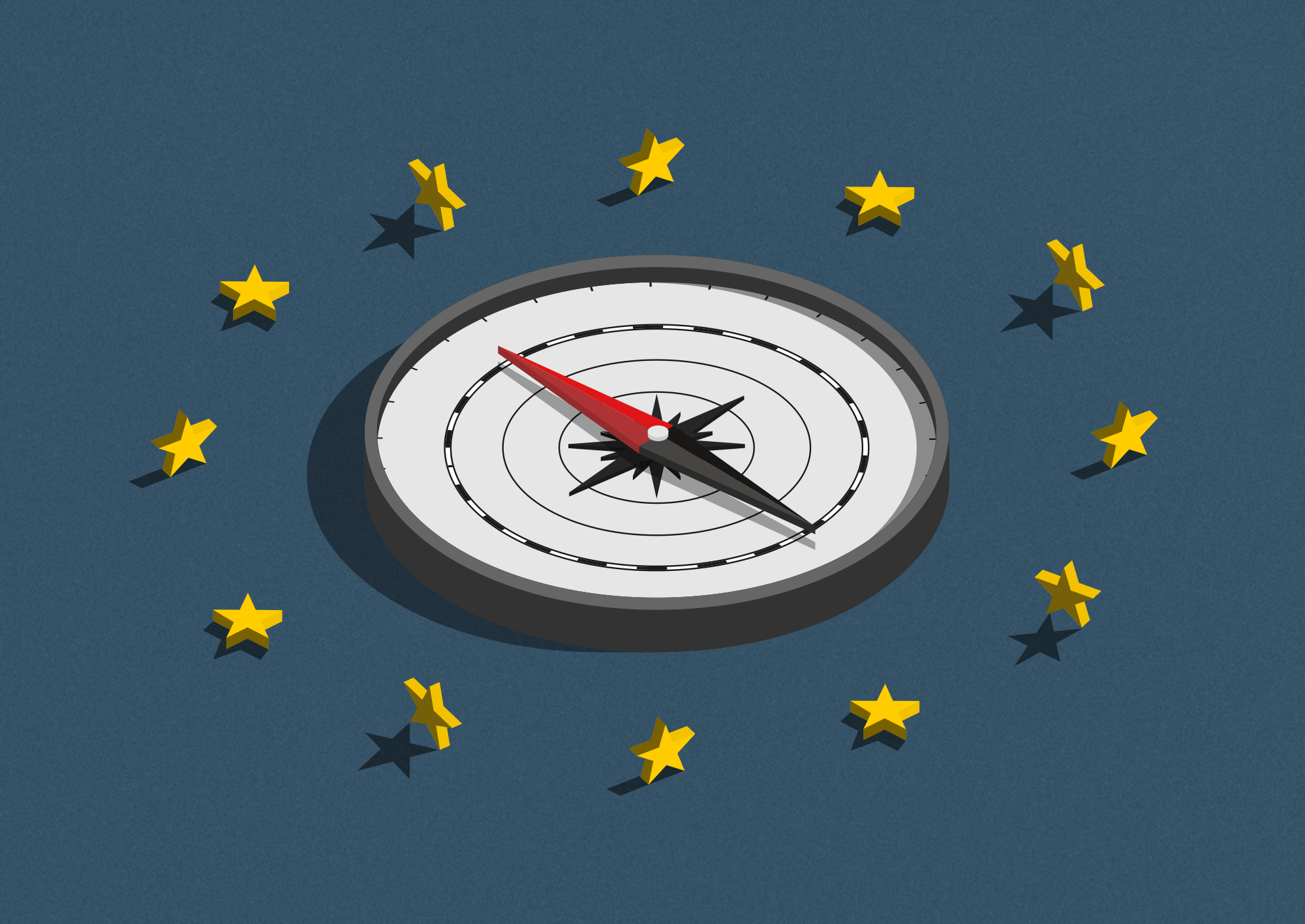
Image Credit: Euro Prospects
By Bianca Guerrini, International Affairs Correspondent
Edited by Golo Vanden Eynde, Defence & Foreign Policy Correspondent
10 November 2026

Introduction
When a new global conflict erupts, the question is rarely whether Europe will be there. From the Sahel to the Black Sea, the EU and its member states sanction, mediate, train soldiers, fund weapons, and send envoys. The real question is what kind of actor the EU wants to be: it can act as a single strategic power that sets priorities and follows through, or remain a collection of governments and institutions reacting case by case, without a wider plan.
Political fragmentation is often identified as the key factor separating these two scenarios, as EU foreign policy must reflect the interests of twenty-seven governments, often watering down the result to their lowest common denominator. It also explains why EU institutions hold so little executive power in foreign policy, as member states that disagree are unlikely to delegate authority to them. But institutional weakness then becomes a problem in its own right: even when member states agree, the tools and channels the EU can use are limited, and its authority is divided among institutions whose competences overlap and increasingly compete.
The European response to the Ukraine conflict since 2022 exhibits this tension. The degree of political alignment member states have shown is rare to say the least, which is what makes the case revealing: even in agreement, the response had to run through stretched or improvised instruments, opt-outs and member states’ own stocks and budgets rather than established EU processes. The crisis in Libya in 2011 offers an interesting contrast to the Ukraine case: here, political agreement was nearly absent, and European states acted through France, Britain, and NATO. What both cases have in common, however, is a response improvised around limited EU authority. Until something in its institutional design changes, the way the EU shows up in global conflicts will keep depending on momentary politics.
Defining the constraints
Although intertwined and easily confused, there are two distinct constraints that affect the EU’s role in global conflicts. The first is political fragmentation: member states retain veto powers over common foreign policy, so disagreement over aims among them can hold up European action until all can agree on what, if anything, should be done. The second is institutional capacity: once aims have been harmonised among member states and a decision is taken, what tools does the EU effectively have at its disposal to carry it out? These can include executive power, a command structure, and a budget it controls. The EU’s authority is also split among institutions whose competences overlap and, increasingly, compete – think, for instance, of the reported Franco-German proposal to ‘fold’ the European External Action Service into the Commission.
Here, an objection follows: if institutional weakness comes from political disagreement, it is not a separate problem, but rather a symptom of lacking political will. In other words, if governments wanted a stronger EU, they would build one. This argument misses what happens when disagreement eases – institutions do not rebuild themselves once alignment arrives. The way the EU’s institutions function did not change between its 2014 and 2022 sanctions responses to Russian aggression, even though the second was far stronger than the first. The Peace Facility, created in 2021, added a financing tool but not a way of deciding without unanimity. Political will can stretch the instruments, but stretching is slow and improvised, and it leaves the underlying limits in place. That is why the second constraint deserves attention separate from the first, and why the Ukraine case, where political will was at its strongest, is the perfect test for it.
The Ukraine case: aligned politics, improvised tools
When it comes to conflict engagement, Ukraine since 2022 has shown what the EU can achieve when it acts as a bloc: with the shared sense of urgency that a war on Europe’s doorstep brings, governments largely agreed over aims. But what the EU has achieved, it has done through instruments it had to stretch or build as it went. The European Peace Facility, which reimburses member states for weapons they send, had never financed lethal equipment before the first Ukraine package in February 2022. A plan to use frozen Russian assets was also on the table for some time and was then dropped due to concerns over legal and financial risks. The €90 billion loan that replaced it was built so that most of it could forgo unanimity, but it was still needed to amend the EU budget. Because of this constraint, the loan was approved in April only after Hungary lifted its veto, and the joint borrowing left out Hungary itself, Slovakia, and Czechia. The new defence financing is also voluntary: the SAFE instrument offers up to €150 billion in loans for joint defence procurement but leaves purchasing choices with national capitals, and record defence spending has not translated into joint acquisition, with collaborative procurement at 24% of equipment spending in 2025, still below the 35% benchmark. Unity does not flow through the EU’s decision-making channels – it flows around them.
The Libya case: divided politics, same constraint
Looking at European engagement with the Libya crisis of 2011 offers relevant context. There, politics were not aligned in the first place, with the UN Security Council vote splitting the European Members. Germany abstained, France and Britain led the campaign, NATO took over command, and American capacity filled in the gaps. The political conditions were nearly opposite Ukraine’s, yet the institutional picture looked similar. In Libya the response ran through coalition and NATO, while in Ukraine it did so through workarounds and short-term fixes to EU channels. What both responses share is that they were assembled from what was available in spite of limited EU capacity.
This is the posture this article describes: not one strategy applied to different circumstances, but a new combination of coalition, workaround, and borrowed capacity each time. What changes between the two cases is the presence or absence of political alignment among member states; what remains is that established EU channels were not the main vehicle for European action.
Strength where competence lies
Many who defend the EU’s capabilities as a foreign policy actor would object that the Commission shows institutional strength rather than weakness: it holds together trade, finance, and enlargement as a sort of geopolitical toolbox, and Ukraine has shown that it can act fast. This is true, and the Commission is arguably the EU’s most capable external actor. However, this supports the argument of this article rather than undermining it, showing that the EU is strongest where supranational institutions hold competence: the Commission proposed the loan and administers SAFE. On the intergovernmental side, where conflict engagement actually happens, is where it is weakest: the Peace Facility, funded by member states and decided by unanimity, saw a €6.6 billion programme blocked by a Hungarian veto for more than three years.
Conclusion
None of this means the EU cannot act. It means that when it does, it must do so despite significant institutional constraints and on the terms of the moment: a coalition in one crisis, a set of workarounds in the next. In Ukraine, the stronger result came from the political context, not from a more capable EU, so it offers no assurance that a future crisis would be met as efficiently. If Europe wants to be an actor that sets priorities rather than one that assembles responses, something has to change in how its institutions are designed and how they decide.
The debate now under way risks pointing the wrong way. Proposals to reshuffle the foreign policy roles of External Action Service and the Commission treat the problem as one of organisation. But analysts have argued that no rearrangement between the two will resolve the veto problem, and a former EU diplomat quoted by the Irish Times says that where the service sits matters less than how decisions are taken. A merger that keeps unanimity would move the problem rather than solving it.
The real choice is harder. The EU can either expand its supranational role to foreign policy, which means changing who decides and how: wider majority voting, a mandate to act that does not depend on twenty-seven governments agreeing each time, and established tools it controls. Or, in conflicts, it can scale back its ambitions and remain a forum for twenty-seven foreign policies, at the cost of a coherent EU posture and the authority that comes along with it. The question that opened this piece, of what kind of actor the EU wants to be, has an answer only if its member states choose one. Right now, foreign policy integration is stuck between two options: member states giving up veto powers to give the EU some real decisional leeway or accepting that each member will conduct its own foreign policy where it really matters. The middle path, a common line wherever twenty-seven governments happen to agree, is not a third option but the stall itself. Conflicts move fast, and a response improvised case by case is slow to assemble. The cost of staying there grows with every crisis.
Disclaimer: While Euro Prospects encourages open and free discourse, the opinions expressed in this article are those of the author(s) and do not necessarily reflect the official policy or views of Euro Prospects or its editorial board.


International Affairs Correspondent
Bianca Guerrini is an Italian graduate researcher specialising in Transnational Governance at the European University Institute in Florence. She holds a BSc from University College Dublin, where she studied Politics, International Relations, and Philosophy. Growing up in a family of journalists, Bianca developed an early interest in how global events are understood, narrated, and contested. Her interests center on European governance and security policy, which she approaches through a critical, interdisciplinary lens – drawing on political economy, feminist theory, and critical social thought. She is committed to analysis that remains attentive to questions of power, justice, and the perspectives of those most affected by international processes.
Edited by Golo Vanden Eynde, Defence & Foreign Policy Correspondent | Follow our European journalism