The Case for a European Security Architecture Beyond the EU’s 35 Chapters
The Case for a European Security Architecture Beyond the EU’s 35 Chapters
On September 15, an unidentified drone entered Lithuanian airspace. Earlier the same day, a top Kremlin aide warned Poland that it would take just two or three days for Russia to make Poland disappear. In the first 15 days of September 2026, Germany, Denmark, Moldova, Lithuania and Poland have all lodged complaints against Russian aggression.
In such troubling times for Europe, the following article proposes a defence alliance covering all European nations facing the Russian threat. It proposes a defence industrial mechanism, troops, funding, how to run it and clear command. Everything an alliance needs to be successful.
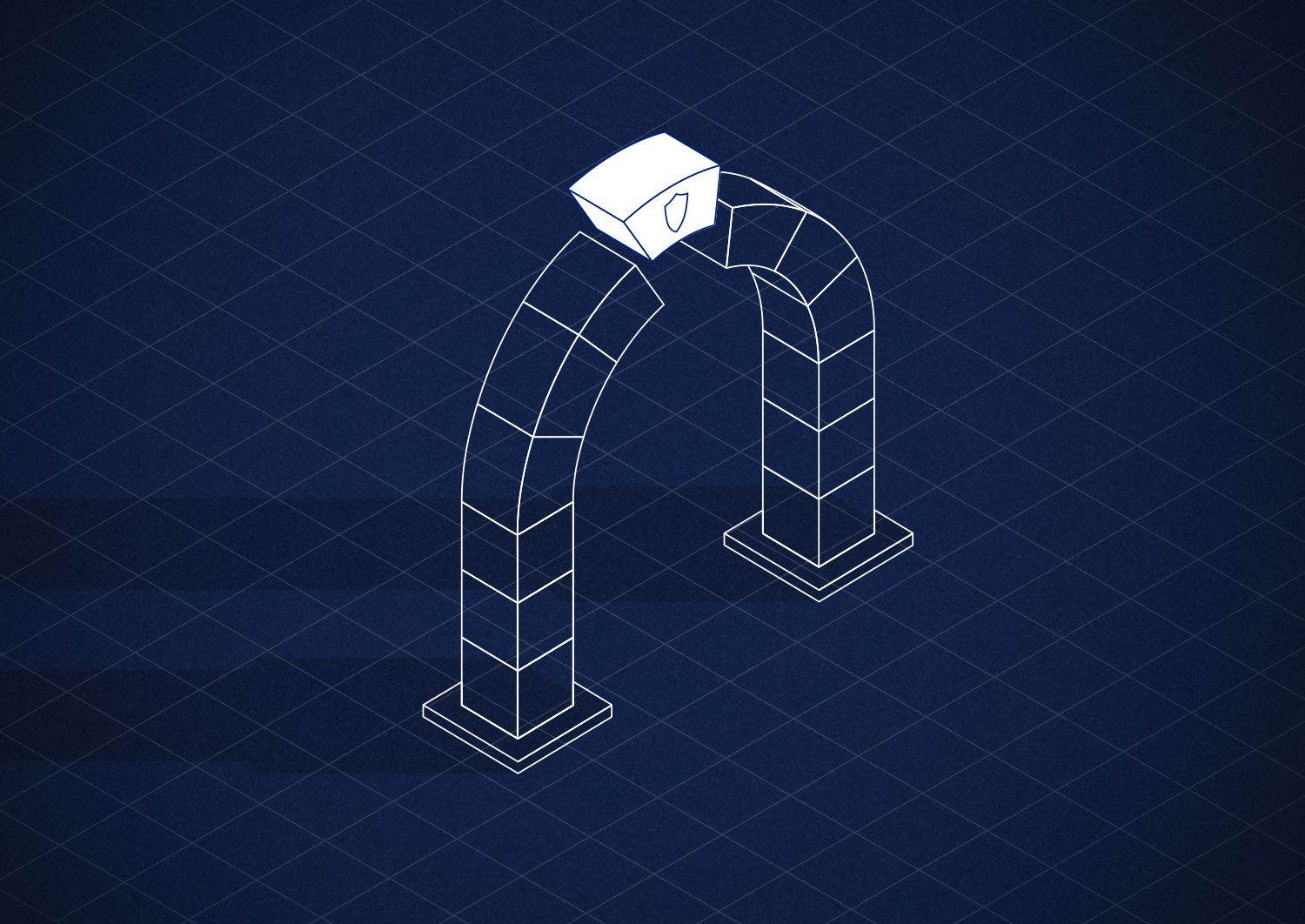
Image Credit: Euro Prospects
By Vikrant Singh, Guest author
Edited by Golo Vanden Eynde, Defence & Foreign Policy Correspondent
2 October 2026

The Mecca Precedent
The protracted war in the Middle East has managed to bring about a new world order, one in which the President of the United States is hell-bent on fracturing the transatlantic relationship. In addition, his unpredictable behaviour has contributed to the creation of an unlikely alliance between three nations that have little in common: the Mecca Pact, signed in early August between Pakistan, Turkey and Saudi Arabia. The pact vows to be like NATO’s Article 5, which says that an attack against one is an attack against all. However, the Mecca Pact has its limitations. It lacks institutional depth and real commitment, which was evident when the Houthis attacked Saudi Arabia, when Pakistan and Turkey did nothing more than condemn.
Though the Mecca Pact lacks biting teeth, it nevertheless offers an idea: that if a threat looms over the sky, a security alliance should be made despite other grievances. Security should always take precedence. The same idea should push European nations, who already face and will continue to face the threat of Russian aggression, to form a security alliance of their own. Earlier this month, the German interior minister categorically stated that Russia was behind the fire at Leipzig-Halle Airport in early August 2026. Leipzig-Halle Airport is a logistical hub for NATO equipment moving to the alliance’s eastern flank. Polish Prime Minister Donald Tusk confirmed that a fire at a drone factory in Skarżysko-Kamienna was deliberate arson and that Russia was behind it. Danish intelligence (PET) recently raised alarms over intelligence stating that Russia is actively preparing for sabotage operations against Danish defense firms. On September 8, Russian drones struck the Starokazacie border crossing on the Ukrainian side, about one kilometre from the Moldovan border, killing two people and injuring two to three others. These are reported incidents from Europe in less than 15 days of September 2026.
A Prototype Already Running
The threat of Russian aggression is no longer a topic of debate in think tanks. It is real, and it is here. The following is a proposed formation of a security alliance that transcends both the EU and NATO. Every European nation that faces an imminent threat from Russia should form a defence cooperation pact. In fact, the arrangement already exists, though it lacks proper institutions and real power: the Coalition of the Willing. Formulated by the UK and France, it outlines how, following a ceasefire in Ukraine, countries will send military contingents to the country to maintain peace and further defence cooperation. So far more than 30 countries have signed it.
The problem with this arrangement is that it is limited only to Ukraine, and it is incoherent at best.
EU Accession Bottleneck
The European Union’s Article 42.7, the Mutual Assistance Clause, says that if an EU state is a victim of armed aggression on its territory, other EU states have an obligation to aid and assist it by “all the means in their power.” The problem, however, is that accession to the EU is a tougher trek than Mount Everest. There are 35 chapters an applying nation must fulfil on each criterion before it gets a permanent seat in the EU. It has been 13 years since any nation succeeded in becoming part of the EU. German Chancellor Friedrich Merz has himself said that Ukraine will not be getting EU membership till 2027, and there are many nations in the queue, like Moldova, Georgia, Albania, Montenegro, North Macedonia, Bosnia and Herzegovina, and Kosovo, suffering from Russian aggression and, for most of them, still far from getting under the EU umbrella. Ukraine has been defending itself for the past four years. Georgia has been a victim of Russian aggression since 2008. In Moldova, Russian troops are still lodged in the eastern region of Transnistria.
Europe’s security problem will not go away merely by making accession faster. The Mutual Assistance Clause looks good on paper, but it is structurally weak, with no joint command, no automatic trigger, and no military readiness. France invoked it after the 2015 Paris attacks, but even that produced no coordinated military response, just bilateral pledges. So, in reality, every European nation that is not shielded by NATO is basically defenseless against Russia, but the expansion of NATO is a trigger point for Russia.
The Architecture
This is where the article’s proposal for a security alliance gets its validation. The alliance should be open to all European nations aggrieved by Russian animosity. EU, non-EU, NATO, and non-NATO nations should form an alliance. The core principle should be what each alliance partner brings to the table; their membership will be determined by their contribution to the alliance. Contributions like troops, arms production, capital or geography. Nations like France, Germany, the UK, Poland, Ukraine, Turkey, Norway, Iceland, Finland, Georgia, and Moldova would anchor the alliance through what they contribute directly, troops, geography, production. France, Germany, Poland, and the UK would anchor it differently, through governance and capital rather than frontline exposure.
How Alliance Partners Will Contribute
Manpower and defence manufacturing: When Russia invaded Ukraine, Ukraine was almost entirely reliant on US and European military aid. After four years of fighting, it has become a producer of some of the most battle-tested drones in the world. Zelenskyy has signed a 10-year defence agreement with several Arab nations. More than 200 Ukrainian air-defence and counter-drone experts have been deployed to Saudi Arabia, the UAE, Qatar and Jordan.
Then there is Turkey. Turkey has been a producer of the world-class Bayraktar drone programme for the past two decades and has completely reshaped the military doctrine of smaller military powers. Though Turkey hedges with Russia and has been a Russian defence partner despite being a NATO member, and has always been a mediator between Russia and Ukraine. Even so, it has more to gain from remaining inside a Western-led security alliance than from siding wholeheartedly with Russia.
Capital and industrial depth: The UK tops the list because it is a nuclear power and has industrial depth in the shape of BAE Systems. It has nuclear submarines and has not been shy about its defence spending, plus it was the original founder of the Coalition of the Willing. Norway, too, has capital depth deeper than its oil rigs. Norway has undeniable wealth, and beside that wealth it has Kongsberg, a military industrial powerhouse that produces state-of-the-art missiles and defence electronics.
Geography: The 1936 Montreux Convention says that Turkey controls the Bosphorus and the Dardanelles and has the authority to stop Russian ships in the Black Sea and the Mediterranean. Iceland sits on the GIUK gap, a highly significant place to monitor Russian misadventures. Norway shares an Arctic land border with Russia and controls Svalbard. Finland shares a 1,300 km border with Russia. Georgia sits on the Black Sea-Caucasus corridor linking Russia to the Middle East and Central Asia. And for Moldova, Russian troops remain in Transnistria.
Who Will Run It
The chairmanship should rotate, weighted by what a nation brings to the table: capital, troops, and geography. France should be a permanent member because it is a nuclear power, holds a UNSC seat and jointly formed the Coalition of the Willing with the UK. The UK has the same advantages as France, plus a healthy defence spending budget. Germany has a deep industrial base and has always been at the forefront in aiding Ukraine in an ongoing war. Poland is exposed to Russian aggression. On September 15, Kremlin aide Nikolai Patrushev claimed Polish statehood would cease to exist within “two or three days” if Warsaw entered a military conflict with Russia. Poland, additionally, takes the Russian threat seriously and has the highest NATO defence spending share of GDP.
Coverage should be similar to a NATO Article 5-type agreement. Hit one, and every member will respond. The response will be varied. For example, Ukraine and Turkey aid with troops and military hardware, Norway with its capital might, Iceland with its geographic advantage. The most important thing to note is that the alliance should be forward-looking. It should only be triggered by renewed Russian aggression, so as not to get entangled in the current Ukraine war. The purpose should be deterrence. Actual war should always be the last option. Take Estonia. Russia frequently violates Estonian airspace, and Estonia absorbs it and does not push to trigger NATO Article 5. The mutual understanding between the members should be smart and logical, but not cowardly.
In 1950, Europe already tried a joint military force but failed after the French parliament rejected it. There is, however, Eurocorps, a combined force of French, German, Belgian, Spanish and Luxembourgish troops. But it does not have a mutual defence trigger or its own funding.
There is also the NATO overlapping issue. The simple fix is for Turkey, Norway, the UK and other national governments to decide case by case with which alliance they should align when they are needed for both NATO and the proposed one.
Funding will be procured through NATO’s existing 3.5 percent of GDP spending commitment. However, non-NATO members should be given different criteria. Ukraine should be given a five-year exemption since it has already been draining 40 percent of its GDP in an ongoing war. The rest of the members, even non-NATO members, should be putting in 3.5 percent of their GDP.
Beside this, there is also the issue of bilateral relations. Hungary will never go head-on with Moscow. Greece has a bilateral animosity with Turkey over the Aegean and Cyprus. Athens will never call Ankara a trusted partner, and it doesn’t need to. There should be an opt-out clause in the mutual defence, if they agree. With one commitment, an opt-out clause should be confidential. It should not be for the world to know, for the very reason of befuddling Moscow, so that Moscow does not find out the hole in the alliance and strategise accordingly. But opting out should only cover defence obligations. Funding or geographical commitment should stay as it is.
Why It Pays Off
This alliance will give European NATO members a place to spend the defence commitment they pledged at The Hague, and it also gives members a way to coordinate for a shared goal. Talking of coordination, take a look at what happened with the FCAS deal, a 100 billion euro project that collapsed in June 2026 after nine years of signing, because of a lack of coordination between Dassault and Airbus. It will also help Europe build its own security umbrella, which until now has relied heavily on the US. Additionally, it will provide ample manufacturing jobs for Europeans, a welcome stimulus for many of Europe’s largely stagnant economies.
The Will Already Exists
The Russian security threat is real and has been acknowledged by almost every European nation. And time and again European nations have shown that they have good faith in Brussels. Norway built deep ties with Brussels through the EEA without ever joining. Iceland just voted no to opening talks on joining the EU, but the majority won merely by six points. The UK left the EU but has wholeheartedly supported Ukraine and founded the Coalition of the Willing.
Brussels, too, understands this predicament, and that it needs to alter the rule where it needs to be altered. It dropped its strict 100 percent ban on new combustion engine cars for 2035. Additionally, the EU signed an FTA with India in early 2026, even though New Delhi does not stand up to EU governance parameters. The EU has smelled the coffee and is getting flexible, as it should be. This alliance promises European nations the safety net they desperately need at this hour. The alliance will make Europe as it was after 1945: strong, resilient and not to be trifled with.
Disclaimer: While Euro Prospects encourages open and free discourse, the opinions expressed in this article are those of the author(s) and do not necessarily reflect the official policy or views of Euro Prospects or its editorial board.
VS
Vikrant Singh
Geopolitical Analyst · Guest Contributor
Vikrant Singh is a geopolitical analyst who shares insights on Substack. He is a member of the Common Future Conversations at Chatham House. Vikrant specializes in geostrategy and geoeconomics, with his work focusing on the Indo-Pacific region and Europe.
Edited by Golo Vanden Eynde | Follow our European journalism