Can UK-French Nuclear Cooperation Substitute for US Extended Deterrence?
Washington’s 2026 National Defence Strategy rests conspicuously silent on the future of its nuclear umbrella over Europe. Growing Anglo-French cooperation is being framed as the continent’s most plausible fallback, though its doctrinal limits mean it still falls short of a genuine substitute.
The Procurement Mentality Undermining European Defence
Europe’s defence spending surge has a clear winner: American suppliers. National procurement decisions are undermining strategic autonomy before Brussels has finished debating it.
Europe’s Improvised Autonomy on Ransomware, Without Washington
In July 2026, the EU and Britain sanctioned Russian hackers without waiting for Washington to act first, proving that the Union can already impose costs on its adversaries. The next step is turning that proven capability into a lasting, repeatable policy.
How Russia’s NATO Grievance Became a Grievance Against Europe
For twenty years, Russia cast NATO as an existential threat to justify its aggression. Now, as Washington pulls back, that same grievance is being pointed at Europe itself.
Trial by Fire? Why NATO 3.0 Is a Speed Test for European Defence Innovation
Europe is spending more and taking on greater defence responsibility within NATO. The harder test is whether its defence ecosystem can deliver capabilities at the speed this new role demands.
Ireland’s Balancing Act on Russia, Big Tech, and the Limits of EU Neutrality
The rotating presidency of the Council of the EU is designed to serve the collective interest of the Union. Ireland’s six months in the chair may prove the design leaves room to defect.
Europe’s Search for Strategic Autonomy in Space
Waves of new-generation satellites and launchers continue to be built by Europe, but institutional fragmentation still stands between it and genuine strategic autonomy.
Resilience Building Against Hybrid Threats: A Baltic Self-Help Guide
With NATO losing reliability, and in spite of Europe’s promises to step up security, should we be concerned about Baltic hybrid resilience, or should we learn from it? Here is what we know so far.
Forgotten Civil War: What Are the EU’s Interests in Myanmar?
While headlines centre around conflicts in Iran, Palestine, Ukraine and Sudan, an ongoing conflict in Southeast Asia that has claimed over 100,000 lives persists with little coverage.
The EU Is Ceding Influence and Running Out of Time in the South Caucasus
How can the EU project real influence in a region where China, Russia, and Turkey move faster? Can Brussels balance its need for Azerbaijani gas with its own democratic principles? And what will it take for Europe to secure Armenia’s pivot to the West while preventing Georgia’s descent into authoritarian isolation?
EU Border Externalisation Is Testing the Migration Pact’s Own Human Rights Commitments
With the EU’s New Pact on Migration and Asylum now fully applicable, its pillar on embedding migration in international partnerships is testing the EU’s ability to commit to the Pact’s own human rights obligations.
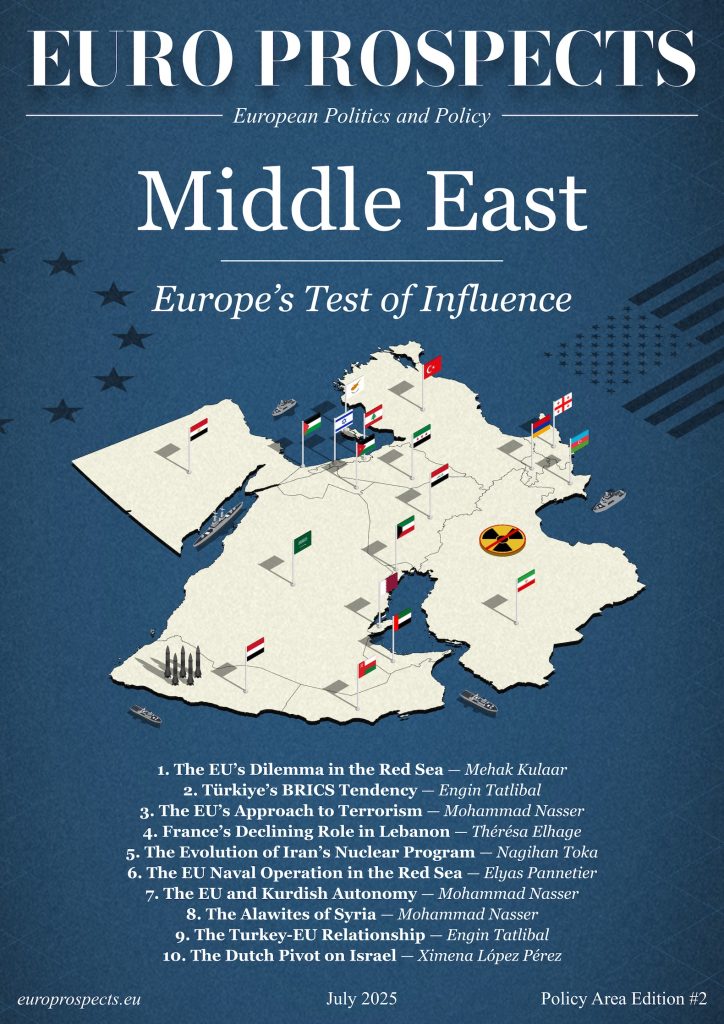
From Shia Ascendancy to Sunni Resurgence: The Emerging Middle East Europe Has Little Role In
The Shia Crescent built by Iran over two decades has fractured with startling speed. What is emerging in its place is a contested Sunni resurgence, and Europe has been absent from every pivotal moment of this transformation.