The New Great Game in Greenland
The New Great Game in Greenland
Competition over Greenland is quickly heating up. Commission President Ursula von der Leyen has made it her ambition to strengthen the EU’s ties with the Arctic island, but there is still a long way to go.
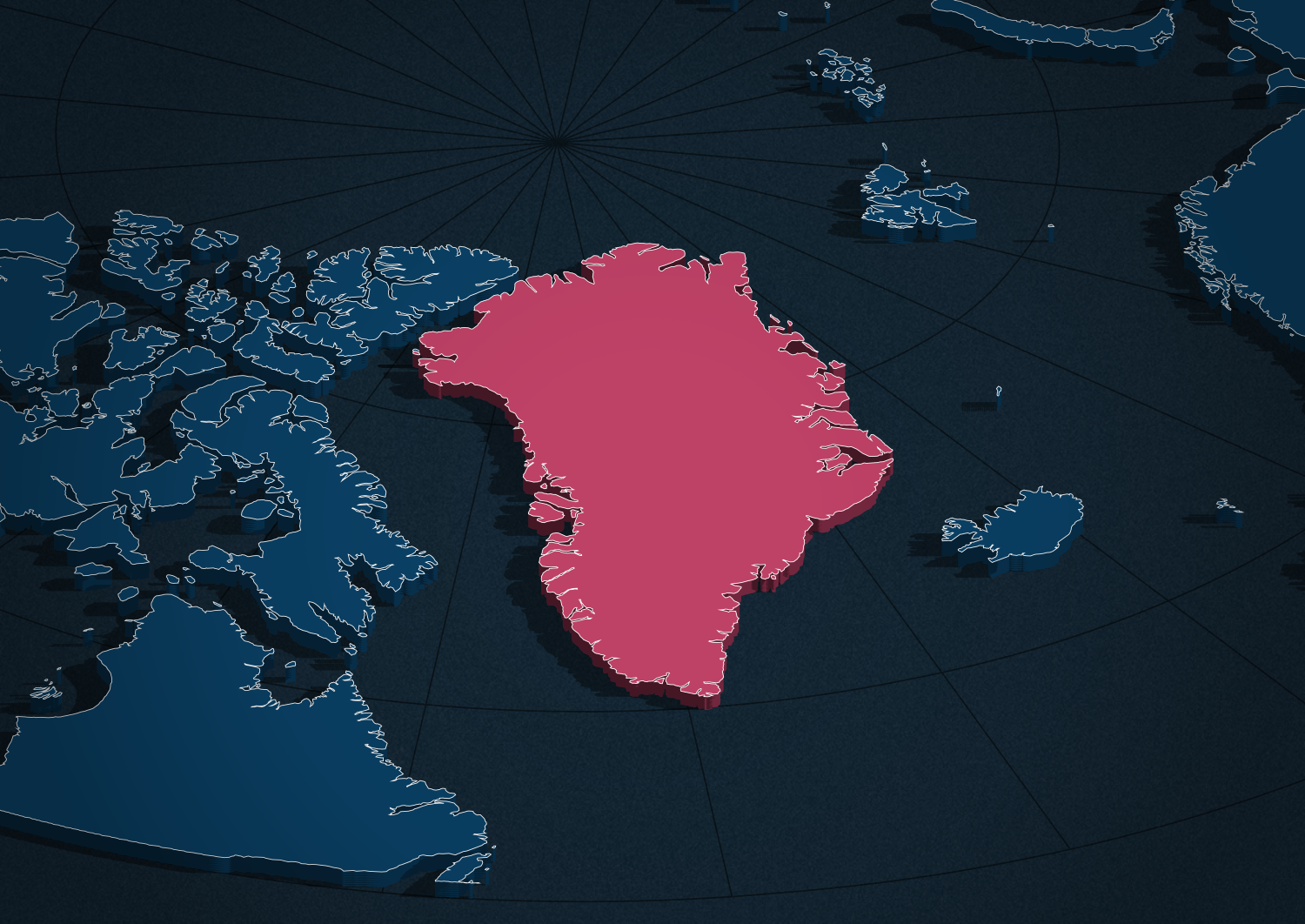
Image Credit: Euro Prospects
By Golo Vanden Eynde, Defence & Foreign Policy Correspondent
Edited by Bianca Guerrini, International Affairs Correspondent
12 November 2026

Due to its strategic location and abundance of critical materials, Greenland, a semi-autonomous territory within the Kingdom of Denmark, has become a focal point for great power competition in the Arctic, with Russia, China, the EU and US as the main players. Having left the EEC in January 1985, Greenland is currently not a full member of the EU, although it is associated with the EU as an Overseas Country and Territory (OCT). This article examines what the EU can do to increase its influence in the region. After all, Greenland’s rapprochement with Europe should not be taken for granted.
Canada’s closer alignment with the EU could be seen as a positive sign for the future, indicating that Europe continues to be an attractive ally for democratic countries looking for a stable and reliable partner. Yet, given the recent referendum result in Iceland, rejecting the prospect of deeper political integration with the EU, we should beware of being overly optimistic. A closer partnership with, or political integration into the EU, will be contingent on Europe’s ability to persuade the people of Greenland of the practical benefits of EU membership.
Greenland’s strategic significance
Greenland is important for several reasons.
First of all, there is the location. Greenland sits directly on the shortest flight path for Russian and Chinese missiles headed to the United States, making it a cornerstone of America’s missile surveillance and detection system. Since its establishment in 1951, when the Cold War was starting to heat up, the US has continuously operated Thule Air Base, nowadays known as the Pituffik Space Base, on the island’s northwestern coast. It serves as a forward outpost for detecting long-range bombers and ballistic missile threats. Greenland also rests at the westernmost end point of the GIUK Gap, a naval choking point in between Greenland, Iceland and the UK, that NATO uses to monitor and potentially restrict submarine movements between the Arctic and Atlantic Ocean.
Secondly, there is the likelihood of lucrative trade routes emerging as an unintended side-effect of climate change. Ever since 2007, both the Northeast Passage (running along the Russian coastline) and the Northwest Passage (running along the Canadian coastline) have experienced ice-free periods. Most important of all, the emerging Transpolar Sea Route (which is the shortest connection between Europe and Asia, stretching roughly 3,900 km across the central Arctic Ocean) lies largely outside the territorial waters of any Arctic state. Greenland is ideally positioned to help manage, and therefore benefit from, the resulting rise in Arctic shipping.
Thirdly, there is a vast abundance of rare earths, critical minerals, and untapped energy supplies. The island contains many important materials, which are essential for electric vehicles, wind turbines, defence technologies, and many other highly strategic sectors. These deposits include the Kvanefjeld, Tanbreez, and Citronen Fjord excavation sites, as well as many suspected oil and gas reserves. With China dominating global supply chains in critical minerals, and with the EU’s recent push for open strategic sovereignty and greater resource security, Greenland’s enormous mineral wealth gives it significant geopolitical weight.
Yet development is not straightforward: Kvanefjeld, one of Greenland’s most important excavation sites, has effectively been frozen due to a 2021 ban on mining ore with uranium concentrations above 100 ppm. Since Kvanefjeld’s uranium ore averages roughly 250 to 350 ppm, the law has effectively put the project on permanent hold.
Trump’s attempt at establishing “permanent control”
Following threats by President Trump to use military force to annex the Arctic island (an unprecedented act of intimidation by a sitting US president against one of America’s oldest and closest allies) the NATO mission ‘Arctic Sentry’ was formed to diffuse transatlantic tensions and to reassure the president of NATO’s operational readiness in the region. Nevertheless, in September of 2026, the US pressured Denmark into agreeing to a deal, reshaping the relationship vis-a-vis Greenland in favour of American interests.
Up to that point, American involvement in Greenland had been shaped by the 1951 Defense of Greenland Agreement, which had been renewed and updated by the Igaliku Agreement in 2004. The 1951 treaty let the US operate the air base under a NATO framework, required the Danish flag to fly alongside the American one, and gave both Denmark and Greenland liaison rights at the base. Yet, by 2026, only about 150 US military personnel remained there, down from 6,000 during the Cold War.
The new agreement, signed by Denmark, Greenland, and the US on 22 September 2026, has a number of interesting provisions. Experts at CSIS, among others, have pointed to three main changes in particular.
Firstly, it enables the United States to build a stronger military presence. It grants the US permanent basing, access, and overflight rights, authorizes expansion at Pituffik, and establishes two new defence areas at Narsarsuaq in the south and Mestersvig in the east, with the preamble explicitly mentioning a ‘Golden Dome’ missile defence system.
Secondly, it grants the US the legal right to block any non-Western (i.e., non-EU and non-NATO) country from investing or establishing a military presence in Greenland. It explicitly bans non-NATO countries from building military bases in Greenland and bars adversaries from sensitive investments in critical infrastructure such as undersea cables, ports, telecommunications, and rare-earth minerals. It also grants unrestricted undersea access for US vessels within Greenlandic territorial waters.
Thirdly, the agreement would continue to apply even if Greenland were to gain its independence from Denmark. The new deal has no end date and even contains rules on investment screening and construction projects near defence areas, effectively giving Washington a veto over who Greenland may work with, even after independence.
On the upside, the agreement has momentarily diffused tensions within NATO regarding the status of Greenland, without having to grant the US anything truly ‘tangible’ in return. On the downside, however, it has increased American influence in the region, at the expense of both Denmark and the EU. Even though Denmark has formally retained its sovereignty and Greenland its right to self-determination, the agreement seems to confirm Trump’s claim that the US has secured “permanent control” over Greenland’s security.
What the EU could do to gain Greenland’s support
The emerging power politics surrounding the Arctic in general and Greenland in particular has come to resemble another major geopolitical dispute from history: the ‘Great Game’ from the nineteenth century, in which the British and Russian Empire competed for control over territory in Central Asia, squeezed in-between British India and the endless Russian steppes. It still remains to be seen, of course, whether this quietly unfolding conflict can remain ‘cold’ forever, or whether it will eventually spill over into a truly ‘hot’ one after all. For now, however, the former seems like the more plausible scenario.
In a similar fashion to its nineteenth-century counterpart, the new Great Game in Greenland is playing out over a long period of time, without a major military clash in the conventional sense between the foremost contestants, but with ever-increasing levels of economic and diplomatic influence. The main aim is to project power, exert control, extract resources and exploit energy supplies, without having to risk a conventional military confrontation. This raises an important question: what could Europe actually do to prevent the region from drifting any closer to the US?
There are two options: the first, ‘safe’ option entails the accession of Greenland into the EU, transforming Greenland from a mere Overseas Territory outside the EU into an Outermost Region within the EU, while still remaining an integral part of the Kingdom of Denmark.
This is not without precedent. After all, Greenland already was part of the EEC, the EU’s main predecessor, from 1973 to 1985. Its decision to leave was inspired by the desire to regain control over its fisheries policy — which, incidentally, was exactly the same topic that persuaded many Britons to leave the EU in 2016 and convinced many in Iceland to vote ‘no’ on exploring the possibility of joining the EU in 2026. Clearly, island nations like to control their own waters. Nevertheless, the mounting pressure on Greenland coming from the US, together with the fact there is already a precedent, still make this into the least problematic of the two scenarios.
The second, politically much more sensitive option, involves Denmark granting full sovereignty to Greenland, in return for Greenland’s accession to the EU as an independent state. This is the more difficult option, for two reasons. Firstly, it is contingent on Denmark’s consent, which is far from certain. After all, the loss of Greenland would hurt Denmark’s position in the region and likely result in political backlash at home. Secondly, accession to the EU takes time: any new candidates must align its legislation with the acquis communautaire, across a wide range of negotiation chapters. Even for a law-abiding nation like Greenland, the process might take a while to complete.
The main advantage of this strategy, however, lies precisely in the fact that it offers the people of Greenland something very valuable in return for agreeing to EU membership: full political sovereignty. Perhaps the EU has a unique opportunity to make the people of Greenland ‘an offer they cannot refuse’; an offer benefitting both parties, defending Greenland’s integrity against any future incursions, be they American, Russian, or Chinese, and stretching Europe’s wings to the northernmost nation on earth.
Disclaimer: While Euro Prospects encourages open and free discourse, the opinions expressed in this article are those of the author(s) and do not necessarily reflect the official policy or views of Euro Prospects or its editorial board.


Defence & Foreign Policy Correspondent
Prior to joining Euro Prospects, Golo Vanden Eynde studied History and European Studies at KU Leuven, and International Relations in Historical Perspective at Utrecht University. In addition, he pursued further education at the Clingendael Institute in The Hague, and worked as a journal editor at the Nexus Institute in Amsterdam, where he still remains active as a volunteer. His research interests include the history of pan-European federalism, the origins of neofunctionalist theory, the importance of crisis as a driving factor behind the European integration process, and the gradual transformation of the European Union from ‘Maastricht’ to the present. Above all, he feels passionate about improving the EU’s Common Foreign and Security Policy, reforming its decision-making procedures, and strengthening Europe’s strategic sovereignty.
Edited by Bianca Guerrini, International Affairs Correspondent | Follow our European journalism