The EU in the Indo-Pacific: A Geopolitical Actor in Trade, a Bystander in Security
The EU in the Indo-Pacific: A Geopolitical Actor in Trade, a Bystander in Security
The European Union’s strong economic and regulatory influence in the Indo-Pacific is undermined by its lack of credible military power, leaving its geopolitical ambitions half-fulfilled.
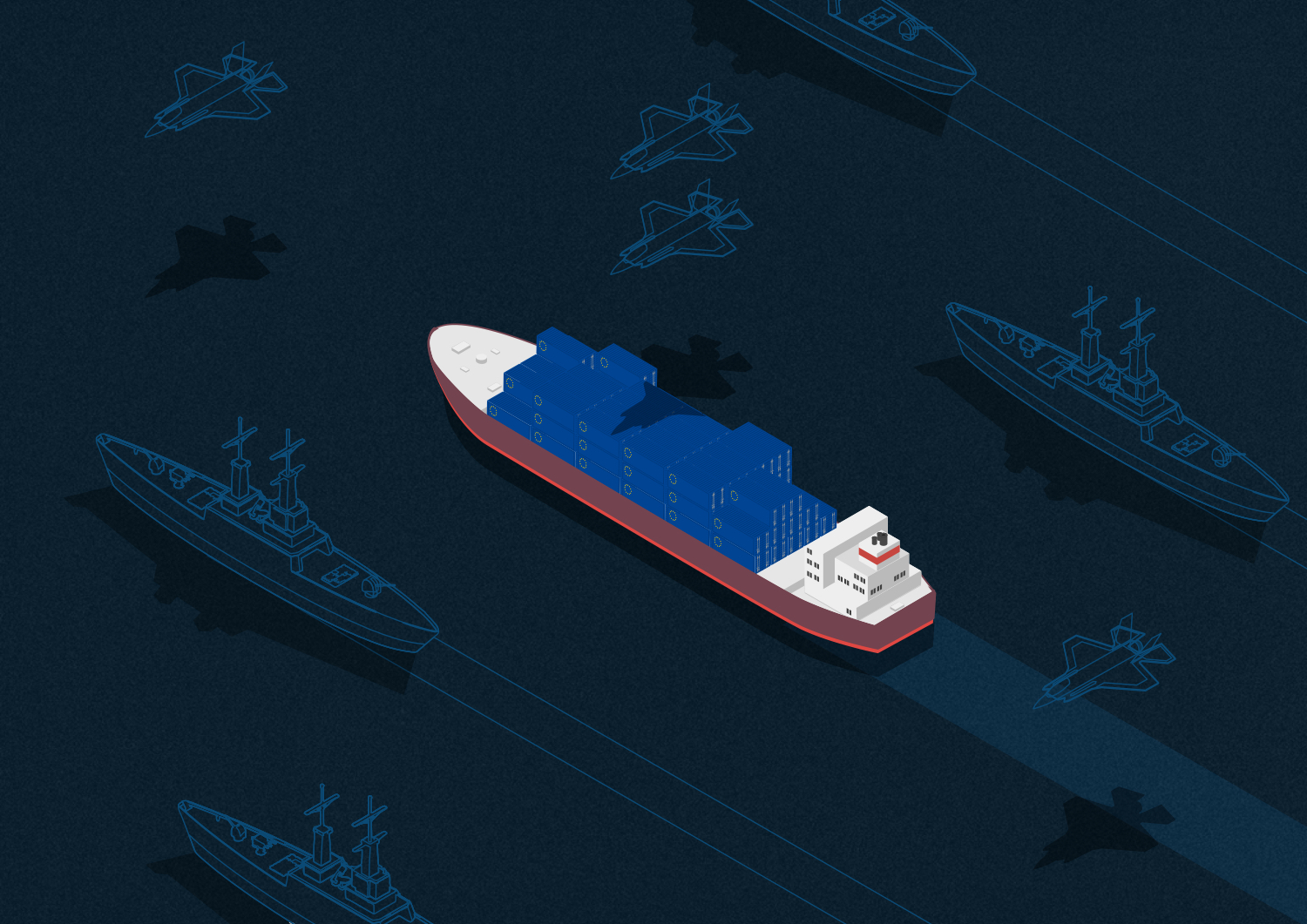
Image Credit: Euro Prospects
By Dori Gnadig, International Affairs Correspondent
Edited by Mariona Fortuny Jané
September 27, 2026

Introduction
The European Union released its comprehensive Indo-Pacific strategy in 2021 with ambitious goals in economic collaboration and security. It was updated in 2025, reaffirming the initial values: positioning the EU as a viable geopolitical actor. However, this strategy is proposing more than it can achieve. The strategy aims not only to position the EU as a commercial actor but also as a security provider to ensure its relevance in the region. The strategy reveals that the EU is a viable economic actor able to set and influence regulatory frameworks, even though this power is mostly restricted to like-minded states (states that represent similar values and norms to the EU), limiting the EU in collaboration with more diverse countries. In the defence sector, this normative limitation of the EU’s foreign policy is more apparent, confining it to largely discursive actions beyond limited cooperation in naval training exercises with regional actors and international organisations.
Despite its 2021 and 2025 strategies casting the European Union as a comprehensive geopolitical actor in the Indo-Pacific, the EU’s actorness remains sharply uneven: it has consolidated real influence as an economic and regulatory power, but its fragmented member-state policies and limited hard-power capabilities leave it unable to establish comparable credibility as a security provider, revealing that EU power in the region is not a function of intent, but of the type of power being exercised.
Background
Japan first coined the term ‘Indo-Pacific’ to counter or diffuse China’s regional influence. The term itself is contested, as Japan first used it to highlight certain normative aspects in line with situational geopolitical considerations; it emphasised different elements of its policy depending on context and target audience. Moreover, the term is constantly evolving, mostly because Japan has not published a public written strategy. This allowed the EU to buy into the normative aspects of the elusive term, and the US administration under Trump could frame the concept as such to become synonymous with their Sino-American strategic rivalry.
The EU aims to provide a “third way“, entailing a certain autonomy for the countries in the region. This means providing an alternative framework for cooperation to both China’s coercion and the US’s increased protectionism. Through this policy, the EU aims to establish itself not only as an economic ally, but also as a partner in climate change and a strong security collaborator. To do so, the Union aims to uphold the rules-based international order, emphasising the rule of law and monitoring human rights issues (Council Resolutions, 2021). These goals are reaffirmed in the 2025 Council Conclusions, where the EU once again increased its commitment to combine economic influence, normative leadership, and security cooperation.
The region is becoming one of the most important theatres of geopolitical competition, as it is accountable for more than half of the world’s GDP, around two-thirds of global growth and is the second-largest destination for EU exports. Moreover, the region concentrates semiconductor production and other strategic manufacturing on which European supply chains depend. Hence, the Indo-Pacific is not only important owing to economic opportunities, but also because diversifying supply chains is crucial for achieving the EU’s ambitions in strategic autonomy.
Moreover, as the rivalry between the US and China sharpens, political space opens up that the EU could fill. To do so, the EU has to balance between the two powers and their rather exclusionist strategies. The US pursues a strict anti-China policy, meaning its actions aim to counter or minimise Chinese influence in the region, while China is aiming to extend its military and maritime power while engaging in infrastructure building through the BRI programme. Both of these policies demand a certain level of commitment from the regional states to support their great-power rivalries. However, the EU approaches interstate relations from a more normative perspective, allowing regional powers more freedom to navigate the international stage and allowing non-commitment between the two great powers. This scenario is complicated by the fact that while the EU is viewed as a credible economic actor, it still lacks security credibility.
Analysis
The EU demonstrates credibility in three key areas in the Indo-Pacific: climate actions, economic engagement and digital governance. However, there is a noticeable deficit when it comes to security and defence matters. This is the crucial area that would differentiate a credible geopolitical power in the region, which would provide an alternative to the US and China. Thus, the EU Indo-Pacific strategy should facilitate the build-up of these crucial capacities while adhering to the EU’s values and norms. This implies that the EU needs to show that it is not just a reliable economic power, but is also a capable and consistent security provider. Security, however, could not only mean military hard power, but also include human or environmental security. Within these sectors, the EU is already launching projects in cooperation with regional actors. Still, even though the academic discussions around security have broadened the concept, military power is still regarded as the core of security by many. Hence, a military presence within the region remains crucial for a credible defence posture.
This article examines the EU’s positioning within the Indo-Pacific region, focusing on two key dimensions: its economic achievements and its role as a security provider. These fields were deliberately selected because they represent two contrasting dimensions of the EU’s engagement in the region: economics is often regarded as an under-politicised issue, whereas security is highly politicised. Examining the EU’s position across these two dimensions therefore provides a more comprehensive understanding of its overall standing in the Indo-Pacific and allows for an assessment of whether its influence extends beyond its traditional role as an economic actor.
Economic Evaluation
As the EU has more capacity in trade relations, it also approaches the region primarily through the lens of providing market access to European firms and concerns itself with competitiveness. Hence, the EU embedded its 2021 Indo-Pacific strategy into the Global Gateway initiative, which unofficially functions as an alternative to the Chinese Belt and Road Initiative (BRI). This way, the EU can maintain its perception as a geopolitical actor in the region and keep its reputation as a viable economic partner even if it is unclear how much of an alternative it actually can be. The reason for this is that many regional partners already have trade agreements in place. Hence, free-trade agreements may not be sufficient for the countries.
Nonetheless, relationship building is crucial for the EU, as China could capitalise on the region through trade restrictions, which could affect European industries in sensitive sectors like semiconductors and renewable energy. Moreover, it destabilises supply chains and meticulously cultivated trade relationships.
While the EU has many bilateral trade agreements in the region, these are with like-minded partners that align themselves with the EU’s normative framework (like EU-Australia, EU-Indonesia, EU-Philippines agreements). However, diversification in this segment would benefit the strategic autonomy of the Union while also strengthening its credibility as a capable geopolitical power. To achieve this, the EU lacks a comprehensive trade policy. The EU countries pursue bilateral relations without a comprehensive vision that would unite these individual policies. They set priorities on their own, instead of leveraging the EU’s power as a bloc in these negotiations. This makes the EU’s presence in the region fragmented without a united vision for the Indo-Pacific.
This fragmentation is central as the European markets are also facing increased volatility due to the protectionist policies of the US, which disrupt supply chains and undermine shared market stability. Combined with aggressive Chinese economic coercion, this could push countries to seek alternatives, granting an opportunity to the EU to take advantage with innovative trade policies that champion open markets and stringent regulatory standards. The Indo-Pacific strategy positions the EU as a viable economic partner with which countries would like to engage and take advantage of the offered trade relations, making the EU a strong commercial power in the region.
Security
Even though the EU is cautious about projecting hard power beyond its neighbourhood, it has made important steps toward building security in the Indo-Pacific. This is especially true for France, which has ramped up its security presence with naval deployments, freedom of navigation operations (FONOPs) and participation in multilateral exercises. However, there is still no aligned policy in ‘classical security’, meaning that the EU lacks traditional capabilities (like warships and submarines) to project credible hard power in the region. However, these competences have increased. Moreover, for years the EU has engaged in human security projects and environmental security collaborations with several regional actors. Still, the region does not view the EU as a security provider. They are focusing on their own regional collaborations like ASEAN or the Quad to build up a security umbrella. Additionally, this level of collaboration between countries is also challenging, as states in the region have competing interests, for example, when it comes to delimitation and hence delimitation of exclusive economic zones (EEZs). This makes coordinating a common policy in a highly politicised area such as security challenging in the region.
Nonetheless, the two most important European states in this matter are France and Germany, with two different focuses: France prioritises maritime security and territorial integrity, while Germany is focused on economic exchange. Balancing these two priorities results in the lack of a comprehensive security policy that could provide an alternative to the middle powers of the Indo-Pacific region and leaves them questioning the capabilities of the EU. This matter is increasingly relevant as the Chinese build up their own military capabilities and escalate their naval presence, which could deteriorate the security environment significantly.
However, the EU has funded projects like ESIWA that target practical cooperation in counter-terrorism, crisis management, cyber and maritime security, or the CRIMARIO, providing critical maritime domain awareness and information-sharing tools to track grey-zone activities and illegal fishing. These partnerships have increased, and there is more collaboration between the EU and regional platforms like ASEAN. However, these efforts still do not function as a viable alternative to the Quadrilateral Security Dialogue (Quad), which is an informal strategic partnership between Australia, India, Japan and the US. This functions as a counterweight to the increased Chinese influence. However, this collaboration requires states to pick a side between the US and China. Unlike a non-aligned offer, however, the Quad is widely read in the region as implying alignment with Washington, even if India’s participation complicates that reading. This is the space where a non-aligned EU offer could compete, if it had the security credibility to back it.
A Third Way in Practice: Ocean Governance as an Entry Point
The gap the EU could most easily fill is ocean governance, where it could position itself as a leader and build on its existing regional activities (for example, collaborations in sustainable and inclusive prosperity and green transition) while coordinating security and defence action with member states that are already proactive in the Indo-Pacific, namely France, Germany and Italy. This would help close the gap between the EU’s declared ambitions and the widespread regional perception that it is not a credible security actor.
Conclusion
In conclusion, the Indo-Pacific Strategy is ambitious and aims to put the EU on the map as a credible geopolitical actor offering a third way in the region; however, it falls short in positioning itself as a credible security actor and remains largely seen as a soft-power partner. Nonetheless, the EU is regarded as a reference for regulatory and economic frameworks. This is reflected in increased cooperation between countries on trade, maritime governance, and the green transition. In all of these sectors, the EU is regarded as a highly competent and important actor within the region. However, this cooperation is limited to the countries that promote values similar to the EU. Moreover, the EU so far has focused mainly on partnerships with international organisations, barring itself from broader cooperation. Meanwhile, in the security sector, the EU has not managed to build credibility with such success. Its fragmented commitments, compared to the clear and reputable US framework, remained unconvincing for many states in the region. Additionally, these states are also not necessarily looking for a big global power to provide them with a security umbrella; rather, they are aiming to strengthen their regional security collaborations. Even though the region is not necessarily looking for hard power, it is still crucial that the EU presents a homogeneous front in the security sector as well. This would elevate the EU’s status from a benevolent trading partner to a strategic ally capable of projecting military power when necessary. Hence, for the EU to become a viable power in the region, it is not enough to focus on economics. It needs to build up its security capacities as well.
Disclaimer: While Euro Prospects encourages open and free discourse, the opinions expressed in this article are those of the author(s) and do not necessarily reflect the official policy or views of Euro Prospects or its editorial board.

International Affairs Correspondent
Dori is a Politics student at the University of Amsterdam with a focus on international relations, security, and conflict studies. Originally from Hungary and based in Amsterdam, she specializes in analyzing global affairs, foreign policy, and international security. Her work draws on experience in policy research, editorial leadership, and diplomacy simulations, with a particular focus on making complex geopolitical developments accessible to wider audiences.
Edited by Mariona Fortuny Jané | Follow our European journalism