Burden-Sharing or Burden-Shaping? Europe Rewrites the Rules of Rearmament
Burden-Sharing or Burden-Shaping? Europe Rewrites the Rules of Rearmament
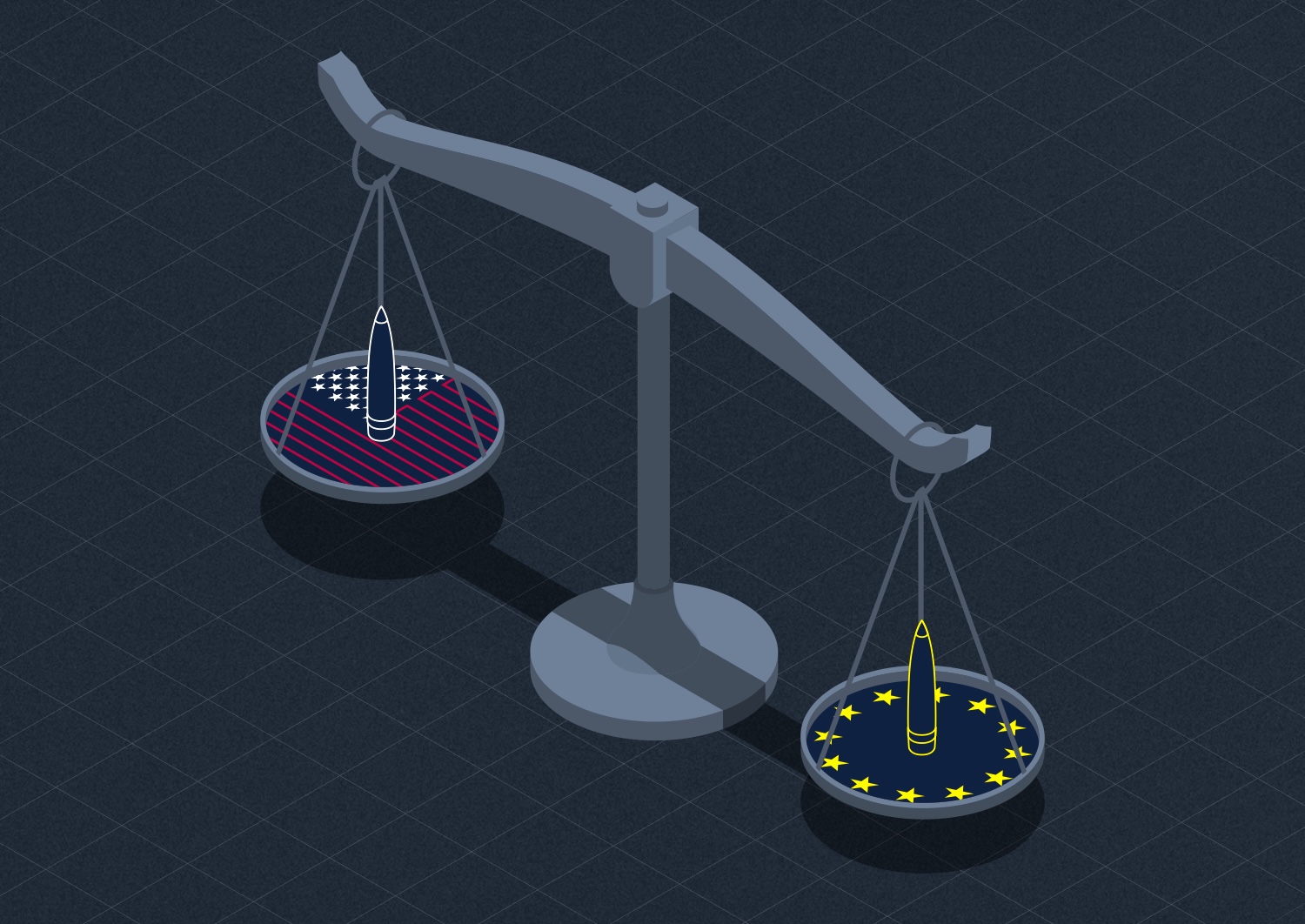
A United States committed to burden-sharing cannot simultaneously insist on burden-shaping
Image Credit: Euro Prospects
By María Gil Martínez, Transatlantic Relations Analyst, Security & Defence Unit (S&D)
Edited by Matteo Nilsson, NATO Analyst, Security & Defence Unit (S&D)
September 26, 2026

For decades, Washington pushed its European allies to shoulder more of the continent’s security burden, a demand President Trump made explicit recently, posting that it was “ridiculous” for the U.S. to continue a relationship that he described as “one-sided” and “non-reciprocal”. It was a notable accusation for a president who has spent years demanding exactly what Europe now claims to be delivering: higher defence spending. Europe is now responding, through unprecedented investment and new initiatives such as ReArm Europe and SAFE. Europe studied how to spend, designed a plan, and put it into motion. But the result was not quite what Washington had in mind. Was the pursuit of European strategic autonomy ever compatible with continued dependence on the United States? This article argues that in answering America’s call, Europe has ended up redefining the terms of the answer itself.
The origins of the burden-sharing debate
At the heart of the U.S. demand for greater European defence spending lies a longstanding concern: that European allies, confident in America’s protection, would under-invest in their own defence and free-ride on U.S. security guarantees.
With the end of the Cold War, the threat that had justified decades of high defence spending (the Soviet Union) disappeared, and European governments gradually deprioritised defence investment. Even before 2014, warnings were already circulating: former Defense Secretary Robert Gates cautioned that if Europe’s declining defence capabilities went unaddressed, future U.S. leaders might no longer see NATO as worth its cost. That warning proved farsighted: at the 2014 Wales Summit, NATO allies agreed to a target of spending 2% of GDP on defence within a decade, with 20% of that spending budgeted for equipment and Research and Development (R&D).
Progress has been slow but real. By 2024, 23 of NATO’s 32 members had met that target, up from just three in 2014. And the debate is already moving past that baseline: officials increasingly describe 2% as “a floor, not a ceiling,” with figures as high as 3% (Poland) and calls for the United States to reach 5% (U.S. Senator Roger Wicker) now on the table. And this is not a new demand born of the Trump era: the U.S. Congress has required annual reporting on allied defence contributions since 1985, and a 2025 bill (S. 2152) sought to reinforce that requirement; evidence that burden-sharing has long been a structural, bipartisan expectation.
Europe’s new approach to rearmament
So what did Europe actually do when it decided to respond? Between 2021 and 2025, EU member states’ defence spending grew by more than 31%, reaching €326 billion (1.9% of the EU’s combined GDP) in 2024, with defence investment alone nearly doubling to €102 billion over the same period. Europe’s answer has gone beyond simply spending more. The European Commission’s ReArm Europe Plan/Readiness 2030, presented in March 2025, proposes to leverage over €800 billion in defence investment through national fiscal flexibility, a new €150 billion loan instrument (SAFE) for joint procurement, potential redirection of cohesion funds, and expanded European Investment Bank support, alongside efforts to mobilise private capital through the Savings and Investments Union.
At the centre of this plan is SAFE, whose eligibility rules reveal Europe’s underlying priority. The instrument covers two categories of defence products: simpler, urgent capabilities such as ammunition, artillery and military mobility (Category I), and more complex, high-technology systems such as air defence, AI and cyber (Category II), this second group subject to stricter conditions given their strategic sensitivity. Crucially, the cost of components originating outside the EU, the EEA/EFTA states, or Ukraine cannot exceed 35% of the estimated cost of the final product, and companies must be established and based within the EU, EEA/EFTA states, or Ukraine, free from third-country control. This “European preference” is framed as a way to strengthen the European Defence Technological and Industrial Base (EDTIB) and avoid the fragmentation that has long weakened European procurement.
Experts remain divided on whether this translates into genuine industrial integration. Daniel Fiott (CSDS) questions whether this spending will produce a more integrated EDTIB or simply reinforce national fragmentation, warning that wealthier member states may not need SAFE’s loans at all, which would reduce the program’s collective impact. For him, the real test is whether Europe ends up spending “better and together”. Bertrand De Cordoue (Jacques Delors Institute) goes further, calling for the €150 billion instrument to follow a Next Generation EU-style model, with strict conditions limiting joint purchases to a predefined list of capabilities. Janssens et al. (Freshfields), meanwhile, warn that the push for “Buy European” carries the risk of damaging international alliances by limiting third-country participation in joint buying; a tension that, as the next section shows, is already playing out in Washington. It is also worth noting that member states continue to disagree on defence priorities and procurement preferences, and whether SAFE will translate into a genuinely integrated European defence market (rather than 27 parallel national efforts) remains an open question.
A changing transatlantic bargain?
Washington’s demand for greater European burden-sharing has rarely been purely altruistic, and its response to Europe’s shift toward strategic autonomy has unfolded across three fronts: rhetorical, regulatory, and industrial. The 2025 National Security Strategy makes this explicit: the U.S. envisions a “burden-sharing network” in which allies who take on more regional responsibility are rewarded with more favourable treatment on trade, technology-sharing, and defence procurement, a framework that ties European rearmament to continued American commercial advantage.
That expectation has collided with Europe’s actual trajectory. As early as December 2025, U.S. Deputy Secretary of State Christopher Landau privately criticised European NATO allies, in a closed-door meeting, for prioritising their own defence industry over American arms suppliers. Months later, Trump made the frustration public, posting a chart comparing U.S. defence spending ($999 billion) with the UK’s ($90.5 billion), France’s ($66.5 billion), Italy’s ($48.8 billion) and Poland’s ($44.3 billion), calling the relationship “one sided” and complaining allies “were not there for us.” The timing was not incidental: it came as the EU’s revised defence procurement directive, expected to introduce binding “European preference” rules, neared adoption.
Washington’s response to that directive has been far more concrete than private remarks or a social media post. In an official submission to the European Commission’s public consultation, the U.S. Departments of State and War warned that if EU member states adopted European-preference measures in national procurement law, Washington would review the general exemptions currently given under the Reciprocal Defence Procurement Agreements: bilateral deals signed by 19 of the EU’s 27 member states that currently give European firms access to the U.S. defence market. Washington described European preference as “protectionist and exclusionary” and warned it would trigger a “reciprocal response.”
Markets are already reacting to this change. Over the past five years, shares in Rheinmetall have risen 1,316%, Leonardo 412%, and Rolls-Royce’s defence arm 290%, compared with gains of just 30-60% for major U.S. defence firms over the same period, a divergence which, while shaped by many factors, is consistent with investors increasingly framing European rearmament as an European industrial story. Beneath these official statements, European industry is moving in the same direction: because ITAR’s (International Traffic in Arms Regulations) “see-through rule” allows Washington to block the resale of any weapon with American parts, European companies now advertise their products “ITAR-free,” so governments don’t have to depend on U.S. permission for their arms sales. Achieving that independence remains “a huge challenge”, as defense companies admit, because American components are inside almost all dual-use systems.
Taken together, these responses suggest that Europe is redefining the terms on which it answers: channeling that spending into its own industrial base, technological sovereignty, and strategic autonomy, even at the acknowledged cost of transatlantic friction.
Conclusion
Europe has learned that if it wants genuine security, it cannot simply outsource the thinking to Washington. What is emerging is a delicate balancing act where Europe must invest in its own industrial and technological autonomy without eroding the trust that still holds back NATO’s collective defence, and that will require care on both sides. Brussels will need to prove that “spending better and together” strengthens the alliance instead of fragmenting it; and Washington, for its part, will have to accept that the responsibility it long demanded of Europe can’t come with American strings attached forever. A United States committed to burden-sharing cannot simultaneously insist on burden-shaping. If the transatlantic relationship is to remain a partnership rather than a hierarchy, both sides will have to renegotiate who ultimately decides what that spending is for.
Disclaimer: While Euro Prospects encourages open and free discourse, the opinions expressed in this article are those of the author(s) and do not necessarily reflect the official policy or views of Euro Prospects or its editorial board.

Transatlantic Relations Analyst, Security & Defence Unit (S&D)
María is completing a Double Bachelor’s Degree in Political Science, Public Administration and International Relations at Pablo de Olavide University in Seville, Spain. During her nine-month Erasmus exchange at Sciences Po Bordeaux, she developed strong interests in European security and defence. Her focus areas include transatlantic relations, intelligence analysis, NATO, and European defence cooperation. Beyond academics, María serves as Vice-President and Vice-Coordinator of her local Scout group, demonstrating her dedication to leadership and civic engagement.
Edited by Matteo Nilsson, NATO Analyst, Security & Defence Unit (S&D) | Follow our European journalism