The Politics of “Being a Man”: Why Masculinity Matters in the Far-Right
The Politics of “Being a Man”: Why Masculinity Matters in the Far-Right
The far-right often associates with a predominantly male voter base and reflects toughness in its media discourse appealing to men. This article delves into how European far-right parties increasingly embody traditional masculine traits as the political landscape shifts further to the right.
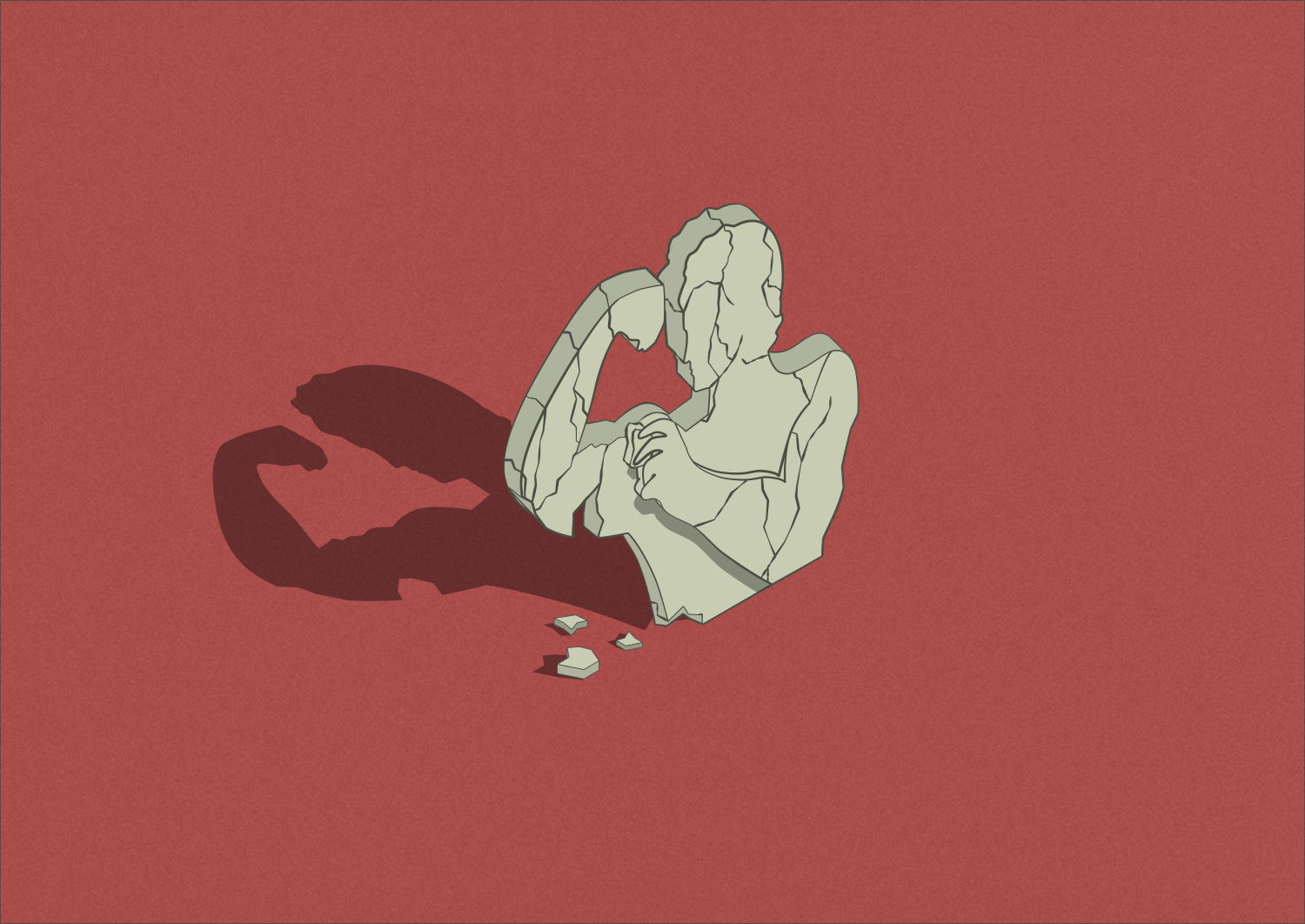
Image Credit: Euro Prospects

The manosphere meets politics
Recently, there has been a surge in the popularity of extreme-right parties in Europe. Not only is Europe shifting to the right, but young men are also voting more conservatively than ever before. The radical right has demonstrated a clear gender gap among voters: only 40% of its voters are female, while 60% are male. Following the German elections, statistics of the far-right party Alternative für Deutschland (AfD) showed that approximately a quarter of its voters were young men between 18 and 24, making it the most popular party within that demographic. An important point to note is that men generally have a higher voter turnout than women, which may contribute to this imbalance. Furthermore, younger men appear to be voting more similarly to older men, whereas younger women are significantly less likely to vote for far-right parties than older women. Additionally, statistics indicate that women are less likely to support right-wing populism than men. The trend of the rising extreme right is closely associated with the rise of the portrayal of masculinity in the media. Masculinity in right-wing media is commonly portrayed as tough, strong and emotionally restrained.
The portrayal of this masculinity is often linked to sexism and the notion that men are, and should remain, dominant, while women should adhere to traditional gender roles. The manosphere, the red pill/blue pill ideology, incels, and similar online movements have become recurring buzzwords in newspapers and across social media platforms. Research has found that 69% of men and 72% of women are concerned about sexist discourse on social media. These phenomena are often perceived as distant, existing solely online or only in extreme cases; however, they may be much closer to everyday society than we realise, merely concealed beneath a different guise.
Right-wing leaders, both male and female, have increasingly leveraged masculinity as a political tool to attract voters, often through the dissemination of images or videos on social media. Although right-wing supporters and leaders do not explicitly state that men are the superior sex or that women should remain confined to their traditional gender roles, this article argues that the portrayals of masculinity can implicitly reinforce such ideas. However, to understand how masculinity operates as a political and cultural tool within far-right discourse, it is first necessary to define how masculinity is conceptualised in this article.
The politics of being “man enough”
Masculinity thus functions as an additional tool that helps bind far-right discourses together. To define masculinity, however, it is important to recognize that the concept is not inherently tied to sex or gender. In this context, masculinity is understood as a social relation: it refers to how individuals construct and perform masculinity. It is not connected to men per se, but rather to the performance of what it means to “be a man”.
Furthermore, it is important to note that existing definitions and interpretations of masculinity fall under a broad conceptual umbrella, and no single definition fully captures the term. Masculinity is a multifaceted concept that can take many forms. In this article, however, masculinity is understood in its traditional sense, namely as strong, emotionally restrained, and tough.
Two key concepts emerge when examining masculinity in relation to politics: hegemonic masculinity and toxic masculinity. Hegemonic masculinity is defined as “a practice that legitimizes men’s dominant position within society and justifies the subordination of women, as well as other forms of masculinity, as it constitutes the most socially valued form of masculinity”. This concept is closely linked to toxic masculinity, which is defined as “a social phenomenon involving dangerous behaviours — such as violence, trans/homophobia, misogyny, and the inability to express emotions — used to maintain hegemonic dominance”.
Both definitions suggest that hypermasculinity can be associated with sexism and the reinforcement of male dominance. However, this raises the question of why political leaders and supporters continue to emphasize this form of masculinity, given that men already occupy a dominant position in many societies.
Gender politics: the fear of feminization
Masculinity is often utilized within the framework “gender populism”, a form of politics that formally acknowledges gender equality between men and women, while continuing to base its discourse on perceived biological differences between the sexes. This type of politics often promotes a return to the nuclear family, in which men and women occupy traditional gender roles.
As discussed, men continue to occupy a dominant and privileged position in many societies. However, the potential loss of this dominance is often perceived as a threat. Given this entrenched position of privilege, the possibility of losing it can, paradoxically, be interpreted by some as a form of oppression, which in turn can lead to a crisis of identity. Hypermasculinity is closely associated with fears of the “feminisation” of society and the erosion of male dominance. In this context, the idea of women attaining equal power is frequently framed as a direct challenge to men’s privileged status. Combined with a male identity crisis, in which men feel like they no longer have a clear place within contemporary society, this insecurity can easily be exploited.
In response to these anxieties, some men are drawn to far-right leaders who embody hypermasculinity, perceiving them as figures capable of protecting the nation from perceived feminisation. For instance, men who experience insecurity about their masculinity may seek to reaffirm their sense of “real” manhood by supporting assertive, aggressively masculine leaders. Such leaders often adopt strict or authoritarian policies to demonstrate strength and toughness or promote policies aimed at restoring traditional gender roles. Consequently, any association with femininity is rejected by male leaders in order to maintain a sense of dominance and privilege. Conversely, female leaders often use femininity in its traditional sense, adopting a nurturing and caring discourse. This dynamic can contribute to a broader political shift, driving support to the right, while left-wing parties lose voters.
A political figure often associated with these dynamics is Viktor Orbán, former Prime Minister of Hungary, who not only embodies masculine traits in his public persona but has also incorporated gender politics into strategy. In 2018, Orbán banned gender studies programmes at Hungarian universities, a move widely interpreted as politically motivated. More recently, his government has sought to restrict the Pride marches held annually in the country. These actions target feminist and LGBTQ+ communities, which, within this rhetoric, are often framed as opposing traditional masculinity. Additionally, Orbán and his government have justified such measures by claiming that gender studies are ideological rather than scientific, thereby reinforcing conservative definitions of gender roles. In doing so, they not only promote a conservative political agenda but also reinforce traditional constructions of masculinity and femininity.
Sunglasses and chest hair: Masculinity in media performance
The media serves as a powerful tool for performing masculinity and disseminating it to a broader audience. Through speeches, interviews, written discourse, and images, far-right actors are able to promote their political agenda while simultaneously constructing and displaying masculinity. Media communication consists of an ensemble of practices, styles, and gestures that contribute to the discourse through which masculinity is performed and reinforced.
A key mechanism in this process is charismatic political leadership. Since these leaders actively engage with social media, their performances of masculinity can circulate widely and become embedded in everyday political discourse. Such male leaders often project an image of strength, decisiveness, and authority. They may adopt a “bad boy” persona, using coarse language and displays of aggression in both visual and verbal communication. At the same time, they frequently present themselves as protective, father-like figures who act decisively on behalf of the nation. This dual performance can resonate with followers who perceive themselves as threatened by social or cultural change.
However, Ben-Shitrit et al. also highlight the importance of female leaders within far-right media discourse. According to the authors, the inclusion of women can soften the image of these radical-right parties, thereby making them appear less extreme. Conversely, female leaders often portray themselves as maternal figures: strong and decisive, while simultaneously embracing traditionally feminine gender roles.
A contemporary example of media-driven performances of masculinity can be seen in the case of Emmanuel Macron. Macron has frequently attracted media attention for his carefully curated public image, including his appearance wearing “Top Gun”-style sunglasses during the World Economic Forum in Davos. Although the sunglasses were reportedly worn for medical reasons, the photographs were widely circulated and interpreted by some commentators as reinforcing a confident and authoritative persona. However, this is not the first time that the French president has attracted significant media attention because of his confidence and masculinity.
In 2024, pictures depicting Macron boxing also went viral. Although these images appeared innocuous, they were released at a highly strategic moment. While this example may appear spontaneous, it also illustrates the broader ways in which political leaders increasingly rely on visual symbolism to construct authority, strength, and control in international politics.
The female face of the far-right
Although right-wing populism is predominantly male-dominated, it is important to note that women can also occupy leadership positions within radical-right parties. Examples include Giorgia Meloni and Marine Le Pen. This raises the question of how women are able to gain prominence in a political space that is strongly coded as masculine.
It has been argued that female leaders strategically utilise heteronormative and patriarchal worldviews to their advantage. In doing so, they often emphasise traditionally gendered roles, presenting themselves as caring, protective, and maternal figures who defend the nation against perceived elites and softening the image of radical-right parties. Additionally, research suggests that anti-feminist right-wing populist parties have been given more credibility when women are involved.
A prominent example is Giorgia Meloni, Prime Minister of Italy, whose political communication has often been analysed in relation to the construction of a “softened” radical-right image. While her public persona may appear moderate or aligned with traditional values, her policies reflect a strongly conservative and nationalist agenda. For example, her government has supported measures granting anti-abortion organisations access to family counselling centres, a policy widely criticised for potentially influencing women seeking reproductive healthcare. In addition, debates surrounding same-sex adoption rights in Italy have continued under her leadership, reflecting her government’s broader commitment to conservative family policies.
Meloni also actively constructs her public image around themes of motherhood and traditional family values. Through social media and public appearances, she often presents herself as a Christian mother, reinforcing the ideological emphasis her party places on family and tradition. For instance, following the elections, she has shared personal photographs with her daughter on social media, contributing to a political image that blends political leadership with motherhood.
The politics of masculinity revisited
In conclusion, masculinity emerges as a central political strategy employed by charismatic leaders to attract voters through media channels. The performance of masculinity in political communication is closely linked to broader patterns of exclusion, particularly in relation to gender, as it often constructs an implicit hierarchy in which the “ideal” subject is coded as a white male. The media therefore functions as a key tool through which masculinity is mobilised in European right-wing populist discourse, notably through charismatic leadership, the visual representation of strength and physicality, and the promotion of traditional family structures. Together, these performances demonstrate that masculinity is not only a personal characteristic of political leaders, but a carefully constructed communication strategy through which perceived legitimacy is reinforced among key voter groups.
Disclaimer: While Euro Prospects encourages open and free discourse, the opinions expressed in this article are those of the author(s) and do not necessarily reflect the official policy or views of Euro Prospects or its editorial board.

European Politics Correspondent
Edited by Kristóf Hermann | Follow our European journalism
“`