The Mecca Joint Defence Agreement: The Implications for Europe’s Energy Security
The Mecca Joint Defence Agreement: The Implications for Europe’s Energy Security
The new agreement between Saudi Arabia, Pakistan, and Turkey exposes Europe to hidden Gulf energy shocks, making true economic resilience a vital priority.
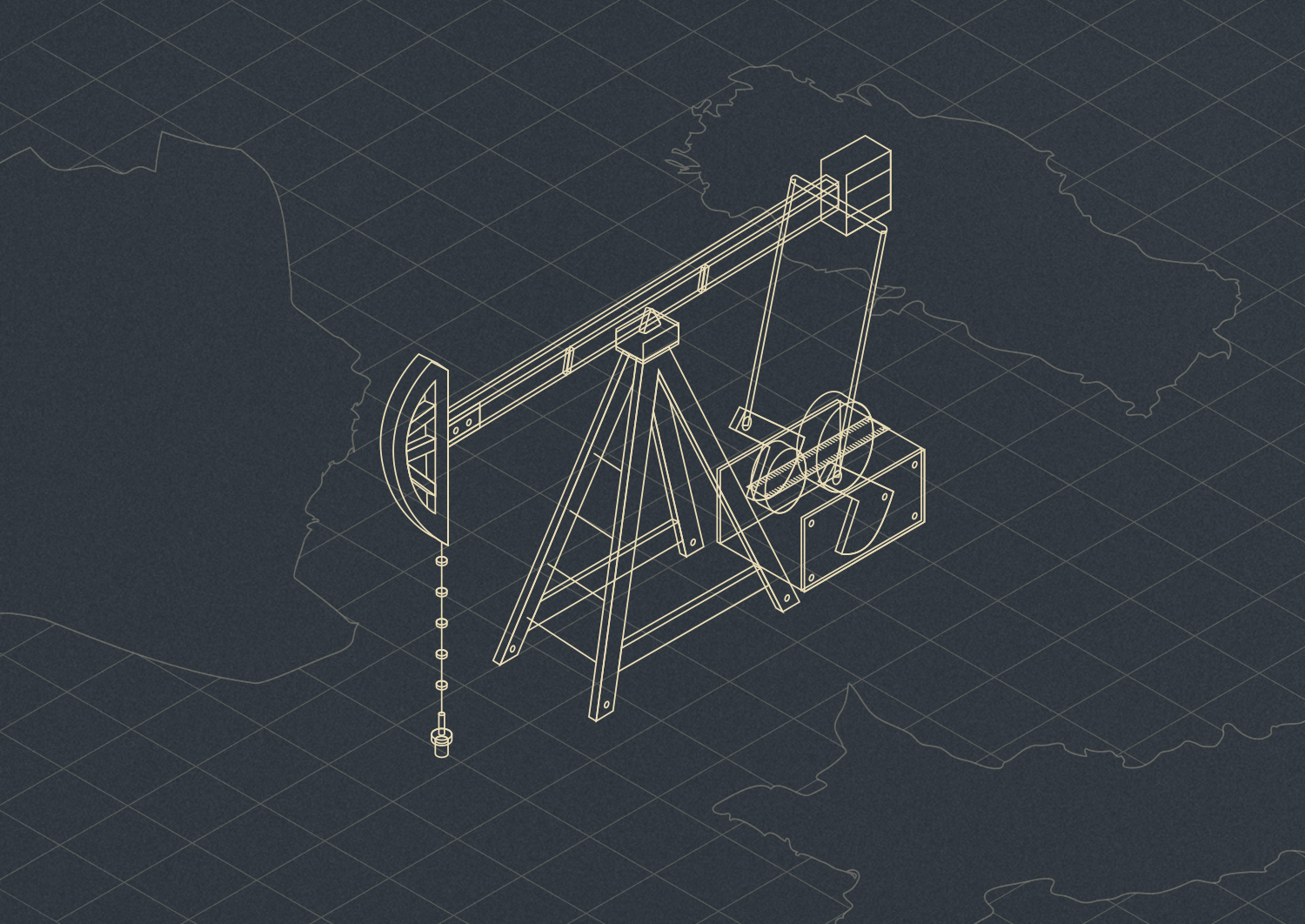
Image Credit: Euro Prospects
By James Murphy, Socio-Economic Development Correspondent
Edited by Rimsha Arif, Energy Market Resilience Analyst, European Strategic Policy Unit
11 October 2026

The Mecca Joint Defence Agreement between Saudi Arabia, Turkey and Pakistan marks a significant development in the Middle East’s evolving security architecture. This article examines its implications for European energy security, arguing that Europe’s vulnerability to Gulf instability extends beyond direct dependence on Middle Eastern energy. Disruption to Gulf production, maritime chokepoints and critical infrastructure can generate global price shocks and wider economic costs for European consumers. The agreement could strengthen deterrence around Saudi energy infrastructure, but may also contribute to regional escalation. Europe must therefore move beyond supplier diversification towards greater geopolitical and infrastructural resilience.
The Emerging Security Architecture in the Middle East
The Mecca Joint Defence Agreement (MJDA), signed by Saudi Arabia, Turkey and Pakistan in August 2026, is primarily a regional security arrangement. Yet its significance extends well beyond the three signatories. Saudi Arabia sits at the centre of global energy markets, Turkey is deeply integrated into European trade and energy infrastructure, and both the Persian Gulf and Red Sea have become increasingly vulnerable to military disruption.
The agreement comes at a time when the 2026 Iran War has already demonstrated how quickly instability in the Middle East can translate into higher energy prices and wider economic costs. The three governments describe the MJDA as a defensive arrangement intended to strengthen collective deterrence, with an armed attack against one signatory regarded as an attack against all. The agreement was subsequently institutionalised through a Strategic Political and Defence Committee, with the three states agreeing to establish a permanent secretariat and expand defence-industrial cooperation.
For Europe, however, the significance of the pact is not simply whether it creates a new Middle Eastern security bloc. Its importance lies in what it reveals about the changing relationship between regional security, energy infrastructure and global markets. Europe’s energy-security challenge is increasingly not just where its energy comes from, but whether the infrastructure and geopolitical relationships that allow energy to move around the world remain resilient.
Saudi Arabia’s security problem is becoming Europe’s energy problem
The EU is less directly dependent on Gulf energy that might initially be assumed. Saudi Arabia supplied 8% of EU imports of oil and petroleum products in 2024, while the United States, Norway and Kazakhstan supplied larger shares. Nevertheless, oil and petroleum products account for 67% of all EU energy imports that year, while the EU’s overall energy-import dependency stood at 57%.
This distinction is important. Europe’s vulnerability is not necessarily that Saudi Arabia supplies an irreplaceable proportion of its oil. Rather, disruption to Saudi or wider Gulf production can affect the global market in which European consumers compete for supplies. In March 2026, Szymon Kardas wrote that Europe’s principal vulnerability to a Gulf shock is indirect: Asian countries losing Gulf energy supplies would compete with European consumers for alternative cargoes, increasing prices even where Europe itself does not rely heavily on Gulf imports.
The economic consequences are already visible. The International Energy Agency estimated that Gulf oil exports in August 2026 were around 13 million barrels per day, almost half their pre-Iran War level. Brent crude was trading at approximately $105 per barrel on 11 September, around 45% above pre-Iran War levels. Gulf diesel and gasoil exports had fallen to only around a quarter of their pre-Iran War level, demonstrating that disruption is affecting refined products as well as crude oil.
The European Commission has consequently estimated that the EU spent an additional €100 billion on fossil-fuels imports between the beginning of the conflict in February and September 2026. Europe’s energy supplies may remain physically available, but the cost of securing them is rising. This helps explain why the MJDA matters. Saudi Arabia has increasingly sought to diversify the security partnerships protecting its territory and critical infrastructure. Rory Miller and Saban Kardas argued that uncertainty surrounding the US security commitment, combined with the GCC’s longstanding difficulties in developing effective collective defence, has encouraged Gulf states to pursue alternative security relationships. While Millar and Kardas reflected that the region may not be ready to end their security reliance on the US, the MJDA brings together Saudi Arabia with two substantial military powers outside the traditional Gulf security architecture. This, at the very least, represents a push towards alternative solutions with potential to secure regional autonomy.
A stronger deterrent could therefore benefit European consumers by reducing the likelihood of attacks on Saudi energy infrastructure. Yet the pact should not be treated as an automatic military guarantee. The agreement contains collective-defence language, but does not establish a NATO-style Article 5 mechanism, and previous Saudi defence arrangements have not necessarily resulted in automatic military responses.
The European interest consequently lies in the pact’s deterrent credibility. If it discourages attacks, it could contribute to energy-market stability. If it instead draws additional states into a wider regional war, it could amplify the disruption it is intended to deter.
Europe’s problem is no longer just Hormuz
The vulnerability of Gulf energy supplies has traditionally been associated with the Strait of Hormuz. Yet the current crisis demonstrates the danger of thinking about energy security through a single chokepoint.
Saudi Arabia has invested heavily in infrastructure that allows it to bypass Hormuz, most importantly through its East-West pipeline and Red Sea export facilities. During April and May 2026, Saudi Arabia exported between three and four million barrels of oil per day through the Red Sea, almost twice the volume transported through the Bab el-Mandeb Strait in 2024. This makes the Red Sea increasingly important to global energy security. It also creates a new vulnerability. Houthi attacks have demonstrated the ability of armed groups in Yemen to threaten Saudi energy infrastructure and shipping, while wider instability across Sudan, Somalia, Ethiopia, and Eritrea is increasing the security risks surrounding the Gulf of Aden and Bab el-Mandeb.
The result is a geographical paradox. Infrastructure designed to make Saudi oil exports less dependent on Hormuz can increase the importance of alternative routes that are themselves vulnerable to disruption. Europe therefore faces a chokepoint problem, rather than simply a Hormuz problem. If Gulf producers cannot export normally through Hormuz, they may attempt to use alternative routes. If those routes are also threatened, global supply falls further and prices rise. Europe’s exposure is therefore determined not simply by the quantity of Saudi oil arriving at European ports, but by the resilience of the entire network connecting Gulf producers with global consumers.
The MJDA consequently has an energy-security dimension that extends across the Arabian Peninsula and into the Red Sea. A security arrangement that protects Saudi infrastructure could help stabilise these alternative routes. But if the pact contributes to a wider military confrontation, it could expose more infrastructure and shipping routes to attack.
Turkey makes the agreement a European economic question
Turkey is the element that gives the MJDA its clearest connection to Europe. EU-Turkey goods trade reached €217.6 billion in 2025, while the European Commission describes Turkey as a major energy-transit country. Approximately 10% of EU gas imports reach the European market through Turkey’s land borders. Turkey’s involvement in the MJDA therefore does not necessarily represent a movement away from Europe. Instead, it reflects Ankara’s ability to maintain relationships with multiple geopolitical groupings simultaneously. The necessity of doing so is becoming more evident. Turkey needs to maintain relations with Europe through EU candidacy and NATO membership, yet those commitments are separate from their ties to the new Syrian government and concerns over Israel’s airstrikes against Abu al-Duhur Air Base in Northwest Syria.
This is the product of a broader Turkish-Gulf rapprochement. Relations between Turkey and Saudi Arabia deteriorated during the 2010s because of disagreements over the Muslim Brotherhood, Egypt, Libya and the Khashoggi affair. The relationship began to improve following the 2021 Al-Ula summit, with Erdogan subsequently pursuing agreements covering trade, investment, energy and security. Betul Dogan-Akkas describes this process as “compartmentalisation”: Turkey and the Gulf states have learned to separate areas of disagreement from areas where their interests overlap. Economic cooperation has consequently facilitated greater defence cooperation, including Saudi investment in Turkish defence technology and agreements involving Baykar, ASELSAN and other Turkish companies.
This matters for Europe because Turkey can function as a bridge between two increasingly interconnected systems: European economic structures and the emerging Gulf security architecture. The EU does not need to become a participant in the MJDA to benefit from this relationship. Existing economic and institutional ties with Turkey provide potential channels for cooperation over energy infrastructure, transport corridors and regional security.
From supplier diversification to infrastructure resilience
The broader implication is that Europe needs to reconsider what energy diversification means. Replacing one supplier with another is useful, but it does not necessarily eliminate geopolitical risk if all suppliers depend upon the same vulnerable infrastructure.
The proposed India-Middle East-Europe Economic Corridor illustrates this problem. IMEC is designed to connect India and Europe through the Gulf using maritime, rail and road infrastructure. An expanded network could provide alternatives to the Strait of Hormuz, Bab el-Mandeb and Suez Canal, reducing the vulnerability created by reliance on individual maritime chokepoints. Saudi Arabia is central to this concept as well, forming the largest geographical component of the proposed network, while Turkey could provide an important northern connection through the Syrian node of IMEC which thereby connects the Gulf to European markets.
The strategic lesson is that Europe requires redundancy. Multiple ports, pipelines, railways, shipping routes and energy suppliers make it harder for a single conflict or blockade to generate a systemic shock. The same principle applies to energy: strategic reserves, diversified LNG supplies, alternative oil suppliers and reduced fossil-fuel consumption all reduce the consequences of disruption.
This is also why the European energy transition has a geopolitical dimension. Popescu and Riley argue that Europe’s response to the Hormuz crisis should include greater investment in renewable energy, secure gas supplies, nuclear capacity and reduced dependence on oil. Energy transition is therefore not simply a climate policy objective; it can also reduce Europe’s exposure to geopolitical shocks.
Europe’s next energy-security problem is one of geopolitical resilience
The Mecca Joint Defence Agreement does not directly determine Europe’s energy security. Its significance lies instead in the wider transformation of the Middle Eastern security environment surrounding Saudi Arabia, the Gulf and the Red Sea.
A more credible regional security architecture could help protect Saudi energy infrastructure and reduce the probability of supply disruption. But the agreement could also become entangled in a wider conflict, potentially drawing Turkey and Pakistan deeper into confrontations involving Iran or the Houthis. The agreement’s ultimate consequences for energy markets will therefore depend less on its existence than on how credible its deterrence becomes and how it is used in future crises.
For Europe, the central lesson is that energy security is increasingly a problem of geopolitical resilience. The EU can reduce its vulnerability by diversifying suppliers, as evidenced by their uptake of LNG from Nigeria earlier this year and upcoming talks with Azerbaijan concerning future gas supply, but that is insufficient if energy continues to pass through a limited number of vulnerable chokepoints. It must also diversify routes, strengthen strategic reserves, protect critical infrastructure, develop alternative transport corridors and accelerate the transition away from fossil fuels.
The MJDA therefore matters to Europe not because Saudi Arabia, Turkey, and Pakistan have created an inherently anti-European alliance, but because it is another indication that the security architecture surrounding the world’s energy is changing. Europe’s next energy-security challenge may not be a shortage of oil or gas. It may be the geopolitical instability that determines whether the global systems can move them safely.
Disclaimer: While Euro Prospects encourages open and free discourse, the opinions expressed in this article are those of the author(s) and do not necessarily reflect the official policy or views of Euro Prospects or its editorial board.

Socio-Economic Development Correspondent
Originally from Ireland and based in London, UK, James is an early-career geopolitics and policy analyst with a Master’s degree in International Social and Public Policy from LSE and a Bachelor’s degree in Economics and Political Science from the University of Glasgow. James specialises in covering social, economic, and political developments across EMEA. This research has covered topics such as Irish asylum policy, international climate initiatives in the Sahel, education policy in Sub-Saharan Africa, and geopolitical and geoeconomic relations between the EU and Saudi Arabia. James aims to further explore Europe’s relationship with the Middle East and add to the research covering recent socio-economic developments in the EU.
Edited by Rimsha Arif | Follow our European journalism