The EU Cannot Win Its Eastern Neighbourhood Through Normative Power Alone
Policy Brief
10 October 2026
Eastern Neighbourhood
The EU Cannot Win Its Eastern Neighbourhood Through Normative Power Alone
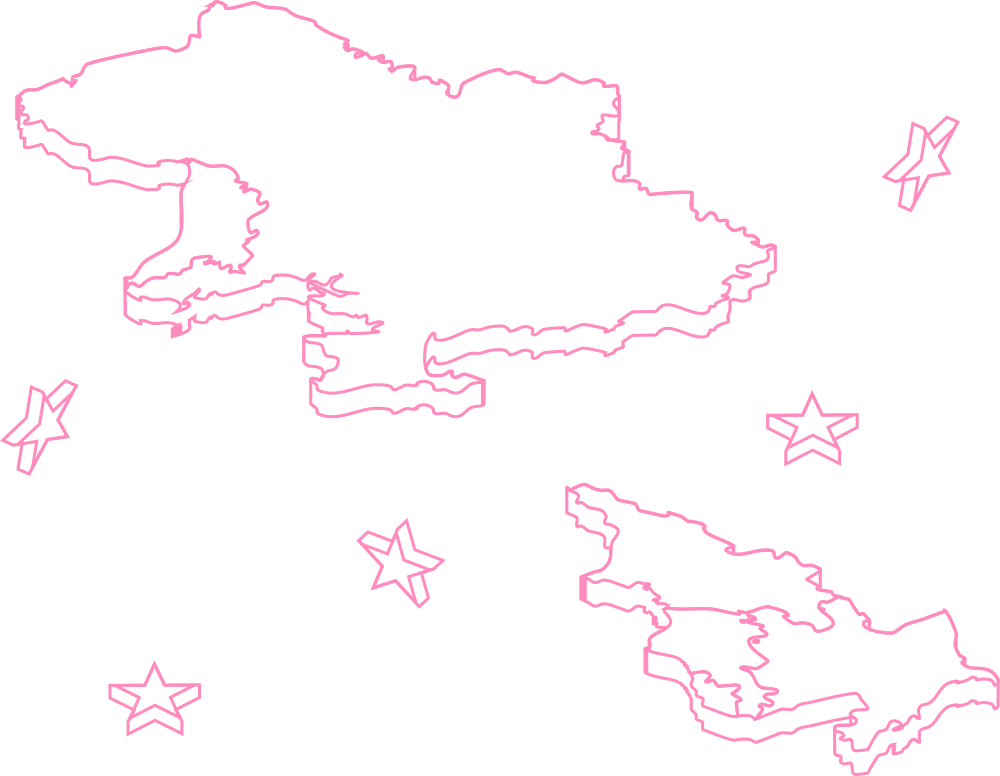
The EU’s Eastern Neighbourhood is being contested by actors who move faster, ask less, and deliver sooner, yet its policy strategy remains calibrated to a less competitive environment.
Executive Summary
The Eastern Partnership was designed for a region that no longer exists in the form that justified its creation. Launched in 2009 as an instrument for gradual political and economic approximation, it assumed a neighbourhood where the EU, alongside Russia, was the dominant external actor. At the time, prospective benefits of closer integration were sufficient motivation for difficult domestic reform. The principal risk to that logic was internal resistance rather than external competition. Each of those assumptions has since been tested, and each has come up short. Russia’s war against Ukraine has redrawn the neighbourhood’s geopolitical landscape. China has expanded its infrastructure and financing presence across the region without attaching democratic conditions, offering speed and scale that EU multilateral financing cannot currently match. The United States has re-entered the region through security-adjacent frameworks that combine institutional architecture with hard capital commitments. Türkiye, simultaneously a NATO ally and a regional power pursuing its own strategic agenda in the South Caucasus, adds a layer of competitive complexity the EaP was never designed to navigate.
The EU is therefore operating an Eastern Neighbourhood policy calibrated for a less contested era in a region where great power interests now increasingly shape the choices available to partner governments. From the South Caucasus to Moldova, partner states are currently making external alignment choices based on speed, conditionality tolerance, and material benefit. The case here is not for abandoning the EU’s normative agenda, but for complementing it with a two-sided, smart conditionality toolkit capable of engaging partner states on shared pragmatic terms and competing credibly in a neighbourhood where great-power interests increasingly shape outcomes on the ground.
Armenia, Georgia, and Moldova indicate how this structural mismatch between the EU’s existing Eastern Partnership framework and the strategic realities facing partner governments plays out differently across the neighbourhood, and what a more effective European course of action would require in each.
Key Recommendations
1
Corridor Strategy and Structural Engagement
- Replace the Eastern Partnership’s single approximation logic with a formally differentiated engagement framework distinguishing between active accession candidates, strategically pivoting states, and drifting states, each with a distinct instrument mix rather than a shared normative template applied uniformly.
- Conduct a formal mapping of third countries’ strategic economic and financial engagement across the Eastern Neighbourhood, covering Chinese-sponsored development investments, American security-anchored frameworks, Turkish geoeconomic expansion, other relevant capital flows, and residual Russian energy leverage, identifying where these directly overlap with EU vital interests.
2
Investment and Redundancy
- Develop a fast-disbursement financing mechanism within Global Gateway for Eastern Neighbourhood strategic infrastructure, with streamlined conditionality for partner states and a suspension tripwire covering financial assistance disbursements, preferential trade benefits, and association agreement implementation, activatable as quickly as the disbursement process itself.
- Empower EU Special Representatives in the Eastern Neighbourhood to signal credible preliminary financing commitments within pre-approved parameters.
- Seek formal EU co-investment status in the TRIPP corridor process while simultaneously deepening engagement in the broader Middle Corridor framework.
3
Security and Risk Management
- Establish dedicated security dialogue tracks with key partner states, decoupled from democracy conditionality and structured as a separate institutional track under the European Peace Facility, with its own benchmarks distinct from accession criteria.
- Operationalize Moldova’s 2024 Security and Defence Partnership as a replicable model for security engagement.
Analysis
The Normative Framework and the Limits of Conditionality
The EaP’s conditionality logic assumed a neighbourhood where the EU’s offer was structurally unmatched and where democratic reform, regulatory alignment, and the prospect of integration would progressively coalesce partner states under Union standards. This uniform approach is problematic given the partners’ divergent trajectories: Ukraine and Moldova are in accession negotiations; Armenia is pursuing EU integration; Georgia has suspended its accession path; Belarus and Azerbaijan remain largely detached from EU strategic policy alignment.
As used here, a strategic pivot refers to a partner state shifting away from a previous patron toward a new external partner, following a specific political or security trigger and implying a reorientation of its relationship with the EU. Drift describes a gradual weakening of EU alignment without formal reorientation, driven by domestic political consolidation and selective diversification toward alternative partners. The distinction has direct implications for the EU’s strategic calculation, as pivot states require rapid, credible support to consolidate their choice, while drift states call for a governance track that separates core geopolitical interests from democratic conditionality.
Georgia and EU’s Competitive Gap
The Georgian case demonstrates the trajectory of drift and the limits of conditionality as the sole available measure. The ruling party halted the accession process until at least 2028 and declined EU budget support, all while remaining nominally within the accession framework. EU financial assistance to Georgian authorities has been suspended since June 2024 in response to rising Euroscepticism and democratic backsliding under Georgian Dream, with the EU later also halting visa-free travel for Georgian diplomats.
As EU engagement with Georgia has contracted, the retrenchment has created an enabling environment, expanding the space and opportunities for alternative partners to consolidate their positions in Georgia’s strategic infrastructure, such as China. Having established a Free Trade Agreement and Visa-Free Regime with Georgia and elevated the bilateral relationship to a strategic partnership in July 2023, Beijing views Tbilisi primarily as a connectivity node: a means of linking Central Asia with the South Caucasus through the Middle Corridor and gaining direct access to the Black Sea and, ultimately, European markets. Trade between Georgia and China reached USD 2.08 billion in the first eleven months of 2025, an 8.6 percent year-on-year increase, making China Georgia’s fourth-largest trading partner overall. Significantly, Chinese companies formally withdrew from the Anaklia deep-water port consortium by July 2026, with the Georgian government shifting to a so-called landlord model with no confirmed replacement investor, leaving the region’s most strategically significant port development without a financing partner and the EU without a foothold at a critical connectivity artery.
The infrastructure dimension, covering pipelines and corridor assets that remain operational and strategically significant regardless of the bilateral political relationship, has been absorbed into the accession conditionality track, despite warranting separate governance engagement on transit routes. A dedicated EU-Georgia infrastructure dialogue could instead focus on pipeline transparency, corridor continuity, and port governance standards, separate from the accession process and democratic reform benchmarks. This would allow Brussels to maintain cooperation on infrastructure and connectivity critical to its energy and trade security without overlooking or appearing to condone Georgia’s democratic backsliding.
Armenia and the EU’s Window of Opportunity
In contrast to Georgia, Beijing’s approach toward Armenia has largely been measured and limited rather than substantive: Armenia matters to China as a potential future connectivity link but not yet as a core Belt and Road Initiative (BRI) partner. This paradoxically leaves more space for EU engagement in Armenia than in Georgia or Azerbaijan. Following the CSTO’s failure to respond to Azerbaijani military actions in 2020 and 2023, Yerevan made a calculated shift from a Russia-dependent vector toward EU and Western partners. As such, Armenia is the most consequential live test of whether the EU can act strategically and pragmatically when need be.
This strategic pivot was reinforced at the first EU-Armenia Summit in Yerevan on 5 May 2026, where both sides agreed on a connectivity partnership spanning transport, energy and digital infrastructure. As part of the agreement, EU investment in Armenia is expected to reach EUR 2.5 billion under the Global Gateway initiative. Driven by a large Armenian diaspora and decades of bilateral ties, France has interestingly moved even faster at the bilateral level than with the EU collective framework, thereby bypassing veto gridlock. Between 2023 and 2024 alone, Armenia placed EUR 278.5 million in defence orders with French arms exporters, followed by a strategic partnership signed on 5 May 2026 covering defence, cybersecurity, AI, and infrastructure.
The EU’s summit on 5 May 2026 produced a set of distinct security and resilience measures, including EUR 30 million in European Peace Facility assistance, the establishment of a two-year EU Partnership Mission in Armenia, and the initialling of a Frontex-Armenian Interior Ministry working arrangement on border and migration management. The EU package thus provided concrete security, resilience, and border-management support, but through a set of separate instruments rather than an integrated bilateral strategic framework. France has therefore complemented, rather than substituted for, EU-level cooperation.
The Armenia case also highlights the need for the EU to account for third-country actors who influence the environment in which the Eastern Partnership operates. There is a sense in both Brussels and Ankara that common ground could be found in the South Caucasus, particularly in supporting the Armenia-Azerbaijan normalisation process. Yet such cooperation is unlikely unless the EU moves beyond long-standing assumptions about Ankara’s regional posture and prevents bilateral disputes, particularly the unresolved Cyprus issue, from overshadowing shared interests. Türkiye’s role in the South Caucasus therefore creates both risks and opportunities for EU strategy.
The United States, for its part, is pursuing a more targeted approach through the Trump Route for International Peace and Prosperity (TRIPP), a U.S.-backed transit corridor linking Azerbaijan with its Nakhchivan exclave through Armenia, offering a clear example of a framework backed by concrete capital commitments that can move faster than EU multilateral processes. With Brussels holding no formal stake in TRIPP’s 49-year development plan, the EU risks being left without an effective role in a connectivity initiative directly relevant to its supply security.
Moldova and EU’s Strategic Stress Test
Moldova, meanwhile, represents a case of contested alignment under sustained external pressure, and it is where the EU’s security mechanisms have advanced furthest while strategic exposure remains most acute. Moldova became the first country to sign an EU Security and Defence Partnership in 2024 and is advancing in accession negotiations, with Romania serving as Chisinau’s most active EU partner through the Odesa Triangle format alongside Ukraine. Yet the country’s structural vulnerabilities run deeper than any bilateral partnership has so far been able to address. Russia has used energy as a direct lever of political destabilisation, with the 2025 energy crisis orchestrated to damage the ruling pro-European government ahead of elections and raise the political cost of Moldova’s EU accession process. The EU responded with emergency financial assistance but did not resolve the underlying dependency.
Beyond energy, Russia has run a continuous hybrid campaign against Moldova comprising influence operations, the fueling of popular unrest, and the use of Transnistria as a platform for political pressure, all designed to slow Moldova’s EU integration without triggering a conventional response. Moldova’s constitutional neutrality limits its ability to formally request collective defence, creating an ambiguous security space that allows these operations to continue with limited external counteraction.
The EU’s response has been reactive and instrument-specific rather than strategic and integrated. The most immediate practical step available to Brussels is to extend the Security and Defence Partnership through a dedicated hybrid threat protocol, formalising EU monitoring capacity adjacent to Transnistria and establishing clear escalation triggers that do not require Moldova to invoke NATO-related language its constitution prohibits. Again, the EU has the right tools in its arsenal but has not yet pushed them to their operational limits.
“The EU has the right tools in its arsenal but has not yet pushed them to their operational limits.”
Towards a Smarter Conditionality Strategy
The EU’s competitive advantages in the Eastern Neighbourhood are abundant but underexploited. The EU is limited precisely where its competitors are strongest: speed, sequence, and the political willingness to engage partner governments on their own terms rather than as reform recipients. As used throughout, a reciprocal realistic approach means structuring flexible engagement around the strategic interests and material needs of partner states rather than requiring democratic reform as a precondition for all substantive cooperation; smarter conditionality is the specific mechanism within it, referring to pre-agreed triggers to suspend conditionality covering financial assistance, preferential trade benefits, and association agreement implementation, tied to operational benchmarks rather than the broader accession process.
The central concern is that this could be interpreted as acquiescence to democratic backsliding. The EU can address this risk by linking political conditionality to the accession process and political dialogue, rather than applying it broadly to connectivity and security initiatives. This distinction would preserve the EU’s leverage on governance and democratic standards without allowing disagreements over domestic politics to impede cooperation in areas where its broader strategic interests are at stake.
A smarter conditionality strategy would not compromise or replace the EU’s traditionally values-based approach, but strengthen it by translating political commitments into operational action with tangible outcomes that matter to partners choosing between Brussels, Beijing, and Washington. Where the EU has moved fastest, as in Moldova’s security partnership and France’s defence cooperation with Armenia, targeted, interest-driven cooperation has complemented the normative toolkit. Scaling this modus operandi at the EU level while maintaining institutional accountability and restoring competitiveness is the central challenge for the next phase of Eastern Neighbourhood policy.
“A smarter conditionality strategy would not compromise or replace the EU’s traditionally values-based approach, but strengthen it by translating political commitments into operational action with tangible outcomes that matter to partners choosing between Brussels, Beijing, and Washington.”
The Eastern Neighbourhood sits at the centre of the EU’s post-Russia energy diversification corridor, a key alternative trade route to Central Asia, and the frontline of Russian hybrid pressure on EU-aligned democracies. Getting the framework right is therefore not simply a matter of foreign policy ambition, but of energy security, trade resilience, and the credibility of EU enlargement as a geopolitical lever. The EU needs to demonstrate as much resolve in pursuing its strategic interests as it does in articulating them.
More from the ESP Series
Explore the other ESP policy briefs, each offering actionable recommendations on a strategic challenge facing the EU.
View All ESP Policy Briefs →About Euro Prospects
Euro Prospects is an independent platform for in-depth analysis of European political affairs. We publish articles on the issues shaping Europe today, from the EU–Mercosur trade agreement and Europe’s semiconductor supply chains to the European Union’s strategic shift on Syria and Serbia’s global arms trade, to name a few.
But informing readers is only part of our Mission. Euro Prospects was founded to help cultivate a European public sphere — a transnational space of political curiosity and civic engagement among Europe’s citizens.
Visit Euro ProspectsAbout ESP
The European Strategic Policy Unit (ESP) is Euro Prospects’ dedicated think tank department. We produce forward-facing, policy-actionable analysis on European strategic sovereignty across defence, technology, trade, energy, industry, and digital infrastructure.
Partnerships
Interested in citing, discussing, or building on this research? ESP is actively building relationships with researchers, institutions, and publications working on European strategic policy.
Contact UsESP Members
Francesco Bernabeu FornaraHead of Unit; Editor-in-Chief, EP
Giulia ConvertiniDigital Systems Sovereignty
Finn Sands RobinsonTrade & Industrial Strategy
Rimsha ArifEnergy Market Resilience
Matilde MinettiEU-China Strategic Competition
Orla HarrisDigital Infrastructure Sovereignty
Jerfi WigleySupply Chain Resilience
Annika GerbigDefence Industrial Autonomy
Trinabh BanerjeeStrategic Digital Security
Luka OkropirashviliEastern Neighbourhood
Juan Carlos LeunissenTransport & Energy Connectivity
Antoine Cerqueira Da CostaFintech Sovereignty Analyst
Sofia CigoliniEU Fiscal & Monetary Sovereignty Analyst
Erik Giuliano WürthnerESP Outreach & Partnerships Coordinator