The EU’s Military AI Gap: Why AGILE Will Not Be Enough
The EU’s Military AI Gap: Why AGILE Will Not Be Enough
With just a 90-minute notice, the US cut off its allies from the use of its most powerful AI system. Will this be a wake up call for Brussels?
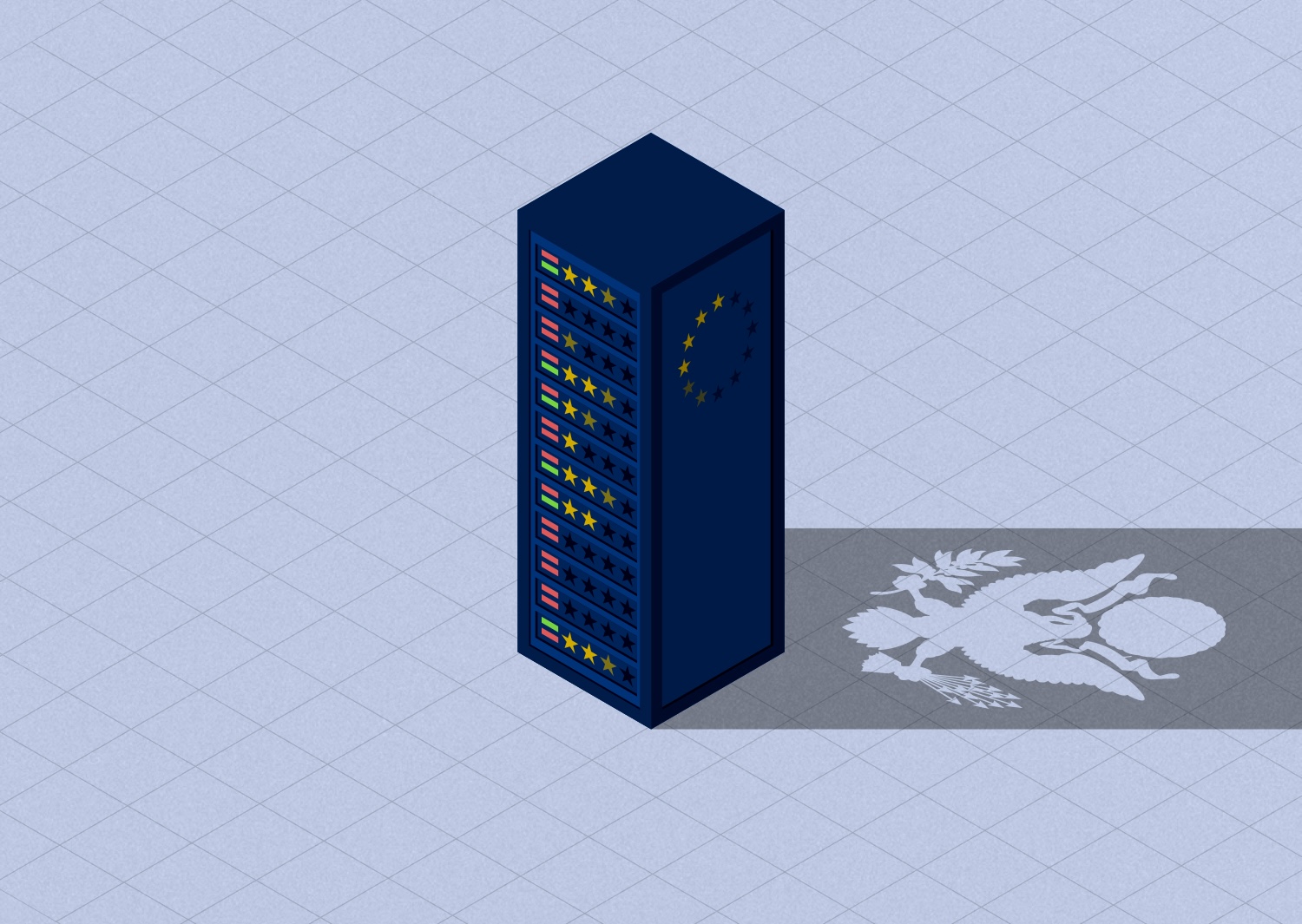
Image Credit: Euro Prospects
By Luca Rastelli, AI & Defense Governance
Edited by Margherita Rossi, Cyber Defense Analyst, Security & Defence Unit (S&D)
September 20, 2026

On June 12, 2026, the US government issued an export control directive to suspend access to Anthropic’s Mythos 5 and Fable 5 cutting-edge AI technologies to any foreign national, whether inside or outside the United States, including allies. With just a 90 minutes notice, both models were offline due to their possible failable safeguarding systems that could cause national security concerns. The ban was eventually lifted 18 days later, but the message was clear: as Canadian Prime Minister Mark Carney said during the following G7 meeting in Evian, “the situation we are in collectively now with Mythos and Fable is something that can happen with overreliance on certain models.” Reactions in continental Europe, while spreading in some countries, were overall few and not radical. However, the first ever AI ban should be a strong wake up call for the EU, which still heavily relies on US technologies and know-how, especially in the defense sector. As these commercial technologies were reported to be used by Washington during high-stakes operations, as the ones in Colombia and Iran, their impact on the security domain, and especially in warfighting and defense, is now even more obvious than before. In the face of geopolitical shifts and growing global competition, it is fundamental for the 27 Member States to come together and decide on the steps to take to start a strategic decoupling from the US defense systems networks, and the AI sector may be the first one. However, the latest EU’s answer to the problem is unlikely to make substantial changes.
EU Governments and Military AI
European governments have been long curious about AI applications in the military domain, but they are just now starting to implement them directly. Frontier models such as the ones produced by Anthropic and OpenAI improve intelligence, surveillance and reconnaissance operations (ISR), as well as decision making processes, and their practical implications are daily witnessed on the ground of the Russian war of aggression against Ukraine. Drones and other types of autonomous weapons are now at the forefront of a new military revolution. However, Brussels is still lagging behind, creating an operational defect in case of need. In fact, in the US driven and negotiated NATO sphere, differences in technologies can bring about cooperation difficulties in case of need, making supporting efforts more costly and less efficient. While some AI service providers are present in Europe, of which France’s Mistral is the most prominent one, and companies are starting to sign deals with defense contractors, they pale when confronted with the size and funding of US companies which, as of now, still supply 65% of the European cloud services market, the backbone of most AI training and developing networks. For the same time period, the year 2025, European defense startups cumulatively raised $8.7B, while Anduril alone, the California-based company specializing in autonomous systems, has an annual revenue of around $2.1 billion. While financing of research and development (R&D) on novel technologies, especially for military purposes, has been raised over the years, the problems run deeper than raw numbers.
Being composed of 27 different procurement standards, the EU market is deeply fragmented and unfitted, as of now, to accommodate solid commitments by buyers, with companies needing to navigate overlapping NATO standards, security reviews and export controls that can take up to 36 months, significantly slowing down procurement efforts. This problem brings about an important issue of scale, where European VCs are not able to scale up the same way the American counterparts do, lagging behind in terms of innovation and of buyer consolidation.
Different Financial Instruments for the Same Aim
The Commission has proposed various types of actions, most of which revolving around the different financial systems; they are, however, still not enough. ReArm Europe offers 800 billion euro combining national fiscal flexibility with EU-backed loans for joint procurement. The historic cornerstone project of EU defense spending, the EU Defense Fund (EDF), has a budget of just 1 billion euro for 2026 and its area of application spans from conventional defense systems to more modern unmanned vehicles. Coupled with that, the EUDIS enabling instrument, that builds from EDF, allocates around 231 million euro to lower entry barriers to defense SMEs that are the core of the EU market. All these instruments, however, are of general application, and do not clearly tackle the issue of the dependencies on the AI sector.
To try to solve this issue, the von der Leyen’s Commission proposed, in March 2026, the new Program for agile and rapid defense innovation (AGILE) that is clearly designed to accelerate the deployment of disruptive defense technologies in European startups and SMEs. The program sits in between the existing EDF, which backs longer-term products across new and conventional capacities, and the EU Defense Innovation Scheme (EUDIS), which supports early stage development. The 115 million euro proposed bill that would be operational until 2027, however, is not to be summed up with the present funding; instead, since it stems from the reorganization of previous efforts the result is just marginally better coordination between companies, while no meaningful increase in spending is present. However, the proposed deeper cooperation with Ukrainian defense contractors, now at the forefront of innovating defense approaches, may serve to start building the necessary know-how, infrastructure and systems by using their battlefield data and experience which eventually would prove essential for the development of a properly sovereign and sound-working European military AI. While AGILE improves access to funding for late-stage development and deployment, the overall funding pool is limited, and scaling beyond it will still depend on national procurement efforts. That being said, it is clear that the proposed directive does not completely fulfill the aim for which it was created: given its short term commitment and marginal funding, AGILE will not be able to sustain innovation into deployed capability at scale.
Aside from financing, governance will have to be tackled
Even if the Commission’s proposals and funding were to be efficient to solve the estimated 10-year gap in technology improvements with the US, another major issue would be the governance of this new technology. While Washington has recently moved away from the assumption of the man in the loop and meaningful human control, Brussels would need to put forward a number of safeguards ensuring that the use of autonomous systems complies with EU requirements, especially the ones stemming from the rule of law and the protection of human rights, which have been at the core of the Union since its beginning. At the international level, however, discussions on the regulation of AI systems are still ongoing and are far from the enactment of any type of act. With the creation of the AI act, in 2024, Brussels chose to clearly rule out the possibility of applying it to the military use of such technology as stated in art 2(3). This choice, strongly supported by France, one of the EU’s biggest military spenders, is grounded in the division of authorities between the Union itself and the Member States on issues regarding national security; however, this does not mean that the issue is now living in a legal vacuum: standards on military AI are present in the NATO sphere, but what is missing is a true European effort to champion the quest of the governance of this new, disrupting technology. Having clear boundaries on the issue will serve the aim of legitimizing the use of these discoveries while providing more legal certainty on the possible redress solutions.
Conclusion
In a time where transatlantic relations are at their lowest point in decades, the EU should start taking concrete steps to decrease its reliance on US security assurances, which could end overnight. While European defense systems still heavily rely on Washington’s support, the novel era of military AI could be the first area where the Union could exercise true control over its own security. The development of a new and comprehensive European military AI is still decades away; nonetheless, an increase in funding for R&D is a clear message on the position Brussels wants to take on the issue. Better coordination between the Member States, more funding, and the creation of a true defense industrial base would incredibly serve the aim of creating strategic independence. However, these efforts cannot fail to consider the need for a regulatory framework within which these technologies can be lawfully implemented. It is, thus, fundamental that, while research is undergoing, serious talks on governance approaches are to be taken by all the States together.
Disclaimer: While Euro Prospects encourages open and free discourse, the opinions expressed in this article are those of the author(s) and do not necessarily reflect the official policy or views of Euro Prospects or its editorial board.

AI & Defense Governance
Luca is an aspiring researcher in Security and Defense based in Italy. With a background in International Law and Security Studies, he specializes in non-proliferation and the governance of emerging technologies in the defense sector. His professional experience spans diplomacy and research, with a keen interest in EU-ASEAN relations and AI applications in the nuclear field.
Edited by Margherita Rossi, Cyber Defense Analyst, Security & Defence Unit (S&D) | Follow our European journalism