‘Made in EU’ Could Come at a Cost to Its External Partners
‘Made in EU’ Could Come at a Cost to Its External Partners
The EU’s proposed ‘Made in EU’ policy may strengthen Europe from within, while also challenging the distinction between EU membership and strategic partnership.
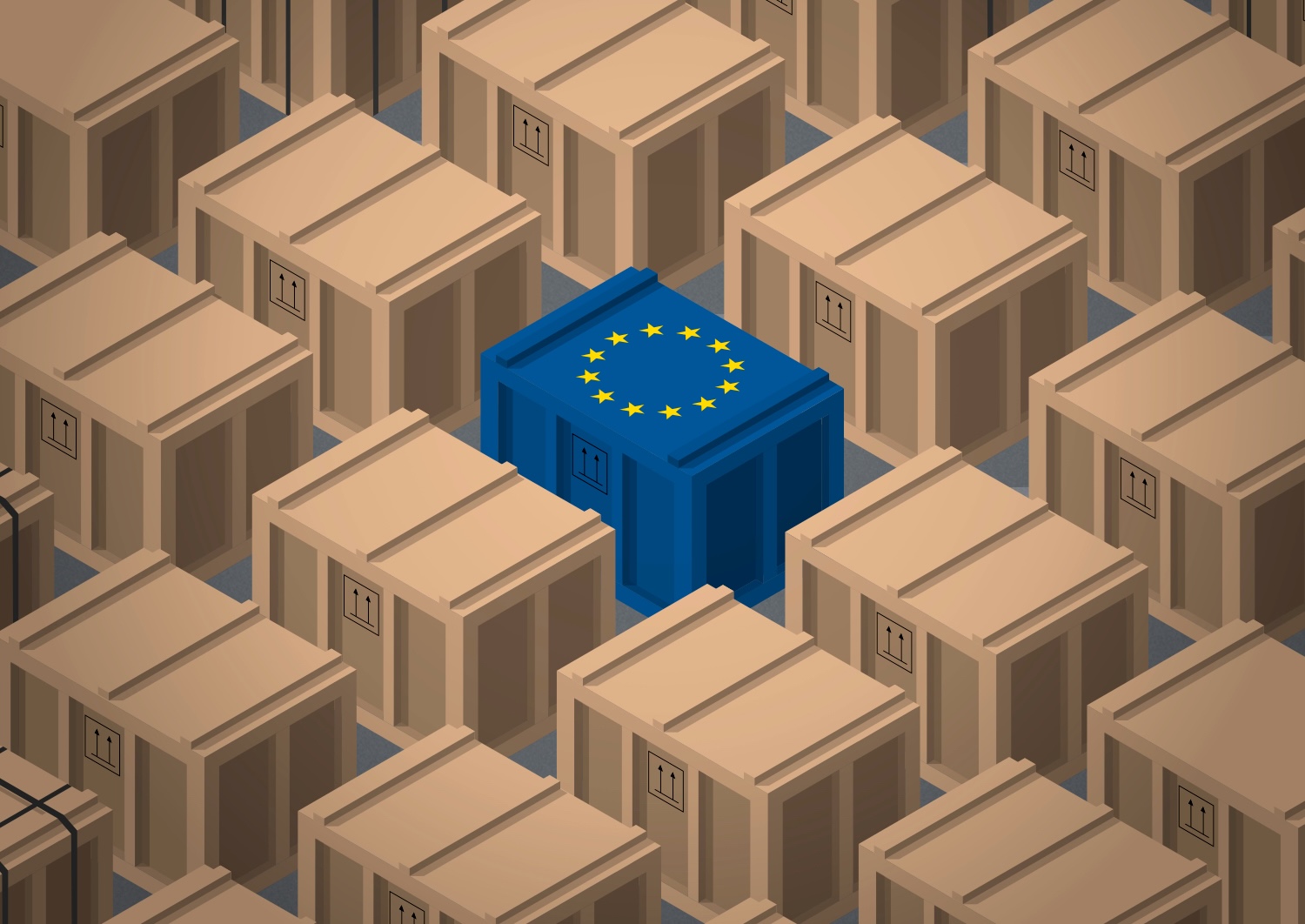
Image Credit: Euro Prospects
By Aurelia Leertouwer, European Politics Correspondent
Edited by Golo Vanden Eynde, Defence & Foreign Policy Correspondent
18 November 2026

On 4 March 2026, the European Commission presented its proposed Industrial Accelerator Act (IAA), which would introduce ‘Made in EU’ and low-carbon requirements for public procurement and public support in strategic sectors, including steel, cement, aluminium, automotive and net-zero technologies. Since then, the proposal has progressed through the EU’s legislative process, with a European Parliament draft report published in September 2026 and discussions continuing in the Council. The proposal reflects the EU’s growing effort to strengthen its own industrial base and rely less on external suppliers in strategic sectors. Yet prioritising European production also raises questions about the limits of that autonomy. Should its benefits remain primarily within the EU’s twenty-seven member states, or can they extend to close partners outside the Union? The debate surrounding the UK makes that tension visible.
‘Made in EU’ and the turn towards strategic autonomy
‘Made in EU’ is politically significant because it would use public procurement and financial support schemes to increase demand for European-made products. This reflects a form of European preference, where products manufactured in Europe receive an advantage when public authorities purchase goods or provide financial support. The proposed requirements would differ between sectors, with some focusing on European origin and others on low-carbon production.
The Commission introduced these measures in response to concerns about Europe’s dependence on external suppliers and growing international industrial competition. Supply-chain disruptions and Russia’s invasion of Ukraine have exposed vulnerabilities in Europe’s economy, while its dependence on Russian energy and growing international industrial competition have reinforced concerns about the political risks of relying on external suppliers. These concerns have also strengthened the EU’s pursuit of strategic autonomy, which refers to its ability to make and implement political and economic decisions without relying too heavily on external actors.
‘Made in EU’ shows how this ambition is starting to shape EU policy, making industrial capacity a more concrete part of the EU’s pursuit of strategic autonomy. Autonomy increasingly depends not only on the ability to take common political decisions, but also on having the industrial capacity to implement them.
The EU is not seeking to end external economic ties. As the Commission has emphasised, remaining open to international trade is still considered important to Europe’s economic strength and resilience. This creates a tension between supporting production within the Union and maintaining cooperation beyond its borders.
Strategic autonomy through membership or partnership?
European preference also has implications for the distinction between EU membership and external partnership. When public procurement and support measures are used to favour European production, there is a clear rationale for ensuring that these resources strengthen production, employment and resilience within the Union itself. This means that European-made products would receive priority when governments purchase goods or provide financial support, although products from outside the EU would not automatically be excluded.
The situation becomes more complicated when these benefits are extended to countries outside the EU. Under the IAA, products from certain non-EU countries could receive treatment equivalent to EU-made products, depending on existing trade agreements and relevant conditions. However, extending preferential treatment too widely could weaken the incentives to invest in production within the Union itself.
The UK as a test case
Britain’s relationship with the EU illustrates the tensions involved in pursuing strategic autonomy beyond the Union’s borders. Since leaving the EU in January 2020 and the Single Market at the end of that year, Britain has occupied a different position within Europe’s economic framework. Yet political and security cooperation has since strengthened. At the first EU–UK summit in May 2025, the two sides agreed a new strategic partnership and established an EU–UK Security and Defence Partnership. The Council of the EU also recognises that their security challenges and interests are closely interconnected. This relationship is set to develop further at a second EU–UK summit on 20 November 2026, where both sides are expected to discuss their future cooperation.
However, the proposed ‘Made in EU’ requirements raise questions about how the EU intends to balance its industrial priorities with its closer relationship with Britain. According to the UK government, British and EU industries remain closely connected, particularly in the automotive and chemical sectors, where production often depends on supply chains operating across both markets. In the automotive industry, for example, components may cross borders during production before a finished vehicle is assembled. While the Union is strengthening its strategic partnership with Britain, its industrial policies may still prioritise production within the EU, even where cooperation with Britain contributes to European economic resilience. European preference is therefore not only about supporting European industry, but also about deciding how far those benefits should extend beyond the Union’s borders.
The UK government’s position also reveals an important distinction. While British content would generally receive equivalent treatment under the proposal, specific automotive provisions could still disadvantage manufacturers operating across both markets. This means that Britain’s close economic relationship with the EU does not necessarily guarantee that its manufacturers will benefit equally from the proposed requirements. Similar difficulties could also arise for other non-EU partners whose industries are closely connected to European supply chains.
Conclusion
‘Made in EU’ is ultimately about more than where a product is manufactured. It reflects an EU that is increasingly willing to use its economic weight to strengthen its strategic autonomy. Yet prioritising European production also raises questions about how the Union should balance its industrial interests with cooperation beyond its borders.
The UK case illustrates the difficulty of drawing a clear distinction between EU membership and strategic partnership when European industries remain closely interconnected. Strengthening production within the Union may reduce certain dependencies, but restricting cooperation with established partners could also create new vulnerabilities. The success of ‘Made in EU’ will therefore depend on whether the EU can strengthen its own industries while recognising the role that external partners play in its economic resilience.
Disclaimer: While Euro Prospects encourages open and free discourse, the opinions expressed in this article are those of the author(s) and do not necessarily reflect the official policy or views of Euro Prospects or its editorial board.

European Politics Correspondent
Aurelia is a European Studies student at the University of Amsterdam, majoring in European law and politics. Having recently completed the second year of her bachelor’s degree, she will enter her final year. Her main interests include international affairs, governance, European integration, and democracy. Alongside her studies, she works as a student ambassador, informing prospective students about European Studies and student life in Amsterdam. She is Dutch, fluent in English, and has professional working proficiency in German. At Euro Prospects, she covers political developments across Europe and their international impact.
Edited by Golo Vanden Eynde | Follow our European journalism