Competing European Agendas Are Weakening the EU’s Role in Libya
Competing European Agendas Are Weakening the EU’s Role in Libya
France, Italy, and Greece are weakening the European Union’s influence in Libya by backing rival approaches just as a U.S.-sponsored power-sharing initiative offers a chance to end the country’s more than 15-year conflict, with stakes for Mediterranean security, migration, and energy.
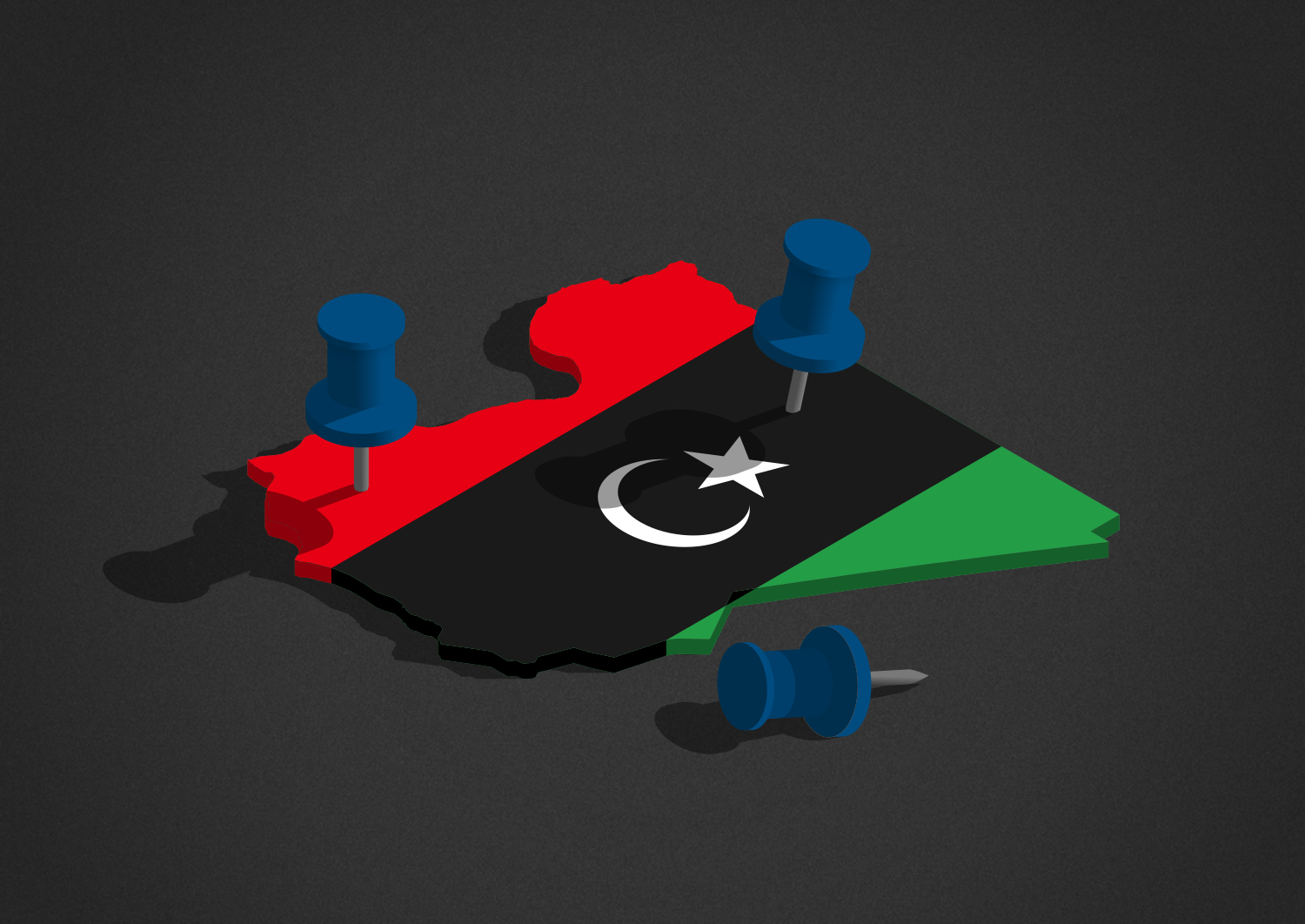
Image Credit: Euro Prospects
By Naid Makhmudov, International Affairs Correspondent
Edited by Dori Gnadig, International Affairs Correspondent
17 November 2026

With a recent US-sponsored initiative to unify Libya by a power-sharing deal, the Libyan conflict has a chance to be resolved after more than 15 years since the start of the first civil war. The EU and its member states have been supporting or engaging with two rival governments. Beyond the domestic crisis, the fate of Libya has direct impact on the EU and its member states in Mediterranean security, migration affairs, and energy diversification. Yet, the different approaches of France, Italy, and Greece, key European actors in Libyan conflict, have undermined the EU’s ability to pursue a coherent policy and exert influence.
Summary of the Libyan conflict
By the beginning of the 20th century, Libya had become an Italian colony. After the Second World War, France had assumed control over the Fezzan region in southern Libya. And by 1951, Libya became an independent kingdom, constituted of three parts – Tripolitania, Cyrenaica and Fezzan. According to its 1951 constitution, Libya had proclaimed two capitals – Tripoli (in the west) and Benghazi (in the east).
In 2011, following the Arab Spring, revolution broke out in Libya. By mid-March, France and the UK had launched a military operation against Muammar Gaddafi, the country’s longstanding ruler. By the end of the month, the operation’s command was handed over to NATO forces. It was these actions that led to the first civil war and sowed the seeds for the instability in Libya that persists. Since 2014, the second civil war has turned Libya in effect divided into western and eastern parts. Prime Minister of the UN-recognized Government of National Unity (GNU) Abdul Hamid Dbeibeh is headquarted in Tripoli. Field Marshal of the Libyan National Army Khalifa Haftar, ex-colonel under Gaddafi and ex-CIA asset took control of the eastern part of Libya and became de facto leader of the Government of National Stability (GNS) in Benghazi.
In 2019, with the Libyan National Army, Haftar tried advancing towards Tripoli and to reclaim the western part of the country. However, the GNU, with the support of Türkiye, has stopped Haftar, who was backed by France, Greece, Cyprus, the UAE, Egypt and Russia. While the EU, together with the UN, have called for a ceasefire and diplomatic resolution to the conflict, the different approaches of the EU member states have made the resolution hard.
The EU vs France, Italy and Greece in Libya
Despite the instability, Libya continues to play a vital role in the EU’s strategic interests. The EU is devoted to the so-called 2020 “Berlin Process”, which supports a diplomatic resolution of the Libyan conflict. The European Bloc formally recognizes the GNU. The European Union is the largest provider of the humanitarian support to Libya and is interested in managing migration flows from Libya. In 2015-2021, the EU provided €465 million, and, in 2021-2024, €220 million to Libya, with most of the sum oriented on migration programs. Moreover, the EU assists the Libyan Coast Guard in Tripoli under the Common Security and Defence Policy (CSDP). Since 2026, the EU started to cooperate with eastern Libyan authorities on migration issues despite the EU not recognising them.
Energy is another key sector of mutual interest. Before 2011, almost 85% of Libyan oil was exported to the EU countries, including Germany, France, Spain and Italy. Moreover, all Libyan gas flowed to Italy. When it comes to the renewable energy, Libya has a big potential to become a solar energy hub for Europe. With the current instability in the Strait of Hormuz and Bab el-Mandeb, Libya could provide energy solutions to the EU. In addition, Libya is the door to the Sahel region, which has strategic interest for the EU security. Toppling Qaddafi has provided the ground for instability, through ongoing movements of arms and militants in the Sahel region. These movements start from Fezzan region in southern Libya. Moreover, smugglers facilitate migration from Sahel through Libya to the Southern Europe, primarily Italy.
Libya, as a Mediterranean neighbour, is one of the key actors in Italy’s foreign policy. Both countries share common history, as Libya was once Italian colony. After initial hesitation, Italy took part in NATO operations in Libya in 2011, providing bases and aircraft. Libya provides interest for Italy in migration, energy and security areas. That is why Italy works with the GNU, the UN-recognized government of Libya. Moreover, Italian prime minister Giorgia Meloni has pursued a policy of “Wider Mediterranean”, destined to expand Italian economic, security and energy interests in the region. Meloni has also pursued the so-called “Mattei Plan”, aimed at establishing equal partnerships with regional countries, including Libya, promoting private sector involvement rather than donorship and conditionality like the EU. And in its pursuit to become an energy hub, Eni, Italy’s state-owned energy company, has signed gas deals with Libya, Algeria, Egypt and Israel. Since the beginning of the first civil war in 2011, Italy has been trying to support the Eni’s position in the Libyan oil market.
While Sub-Saharan states see decline of French influence, Libya continues to attract attention of Paris. Among the EU countries, it was France, together with the UK, who supported the Libyan rebels against Gaddafi. Libya is vital for France, as Paris wants to prevent migration flows to the country. In addition, France is interested in the Fezzan region, due to its proximity to Sahel, where French interests collide with counterterrorism operations. In this regard, France sees Haftar as a strong leader and a reliable partner. France is also the second largest importer of Libyan oil. It hopes that Haftar will secure oil flow to Paris and support French energy giant Total’s oil interests in Libya. However, after the defeat of Haftar in 2019, France has tried to revisit its support for Haftar. In 2025, France met with GNU representatives to talk about economic investments. For Italy, it means the continuation of French-Italian rivalry, as both EU countries compete in energy sector and geopolitical influence.
Historically, Libya was not a foreign policy priority for Greece. Yet, the Eastern Mediterranean dispute between Greece, Cyprus and Türkiye has made Libya vital for Greece. This maritime dispute started with a 2019 maritime memorandum between Libya’s Government of National Accord, superseded by GNU in 2021, and Türkiye. The memorandum, which Greece has since objected and considers illegal, establishes exclusive economic zones (EEZs), while ignoring Greek islands between Libya and Türkiye. That is why Greece supports Haftar, even going as far as providing military vehicles to Haftar, in violation the UN arms embargo. Despite this, in June 2026, the Acting Minister of Foreign Affairs Taher Al-Baour from the GNU and Greece’s Deputy Foreign Minister Alexandra Papadopoulou discussed bilateral relations, focused on energy and economic partnership.
New US plan for the united Libya and the EU
A new US plan was proposed by Donald Trump’s special adviser on African and Arab affairs, Massad Boulos. The plan attempts to unify Libya, its state budget and oil revenue shares between the Libyan west and east. Under the plan, Saddam Haftar, son of Khalifa Haftar, becomes next president and Ibrahim Dbeibeh, nephew and adviser of Abdul Hamid Dbeibeh, becomes next national security advisor. Boulos has already met with officials from both the western and eastern parts of Libya. Despite mutual confrontation and mistrust, representatives of the western and eastern Libya have discussed the US plan. Türkiye, France and Greece also support this vision for Libya, while other EU countries are hesitant.
Within Libya, there are opposing voices to the American plan. For the Libyan population, this plan would occur as a failure of the promise by Western powers, especially the EU, for a democratic transition. In Western Libya, forces opposing the GNU government are against the plan, as they fear being left out from future political landscape. In eastern Libya, there are also factions against the plan, due to their opposition to foreign interference. On top of this, voices in both western and eastern Libya continue to propose a return to a constitutional monarchy.
An alternative to Trump’s plan exists. The United Nations Support Mission in Libya (UNSMIL) has proposed presidential and parliamentary elections in view of forming new unified government. The EU declared its support but didn’t propose its own plan.
Conclusion and Recommendations
The Libyan crisis is just one of numerous examples underlining a common challenge for the EU: its fragmentation. Seeking consensus on sensitive foreign policy strategies between 27 members is no easy task, especially when the alternative of pursuing them at a national level is always there.
After the 2015 migration crisis, member states did agree on a shared vision to stop migration through Libya. And continued common interests in Libya remain: the EU and its member states continue to see Libyan energy as an opportunity and consider stabilization of Libyan security a priority. At the same time, countries like France, Italy and Greece are focused on their own post-colonial legacy, proximity to Libya, attempts to establish dominance within the regional arena or historic rivalry with neighbours. Yet, the division is establishing fragmented leverage in the Libyan conflict and weakens the EU position as an international actor, while other actors like the USA, Türkiye, the UAE, Egypt and Russia strengthen their role.
As the complexity of EU-US relations continue to increase, the challenge to Trump’s plan could add more scrutiny to the upheaval. The EU needs a long-term unified strategy to either facilitate democratic elections or continue to cooperate with both rival parties in a uniform way. The EU could also endorse the American plan or the UN plan or modify them and provide its own plan.
Disclaimer: While Euro Prospects encourages open and free discourse, the opinions expressed in this article are those of the author(s) and do not necessarily reflect the official policy or views of Euro Prospects or its editorial board.


International Affairs Correspondent
Based in the Netherlands, Naid Makhmudov is an international relations specialist with academic credentials from Saint Petersburg State University, the University of Bologna, the University of Macedonia, and the University of Pannonia. He holds multiple master’s degrees focusing on International Relations, Political Science and European studies. Naid has conducted research and contributed to initiatives related to the EU foreign policy, Post-Soviet states, MENA region, Western Balkans, Türkiye and geopolitics. His diverse academic and professional background allows him to explore cross-regional cooperation, external relations, and the evolving role of regional and global powers in international affairs.
Edited by Dori Gnadig, International Affairs Correspondent | Follow our European journalism