Germany’s Zeitenwende Is Still Incomplete
Germany’s Zeitenwende Is Still Incomplete
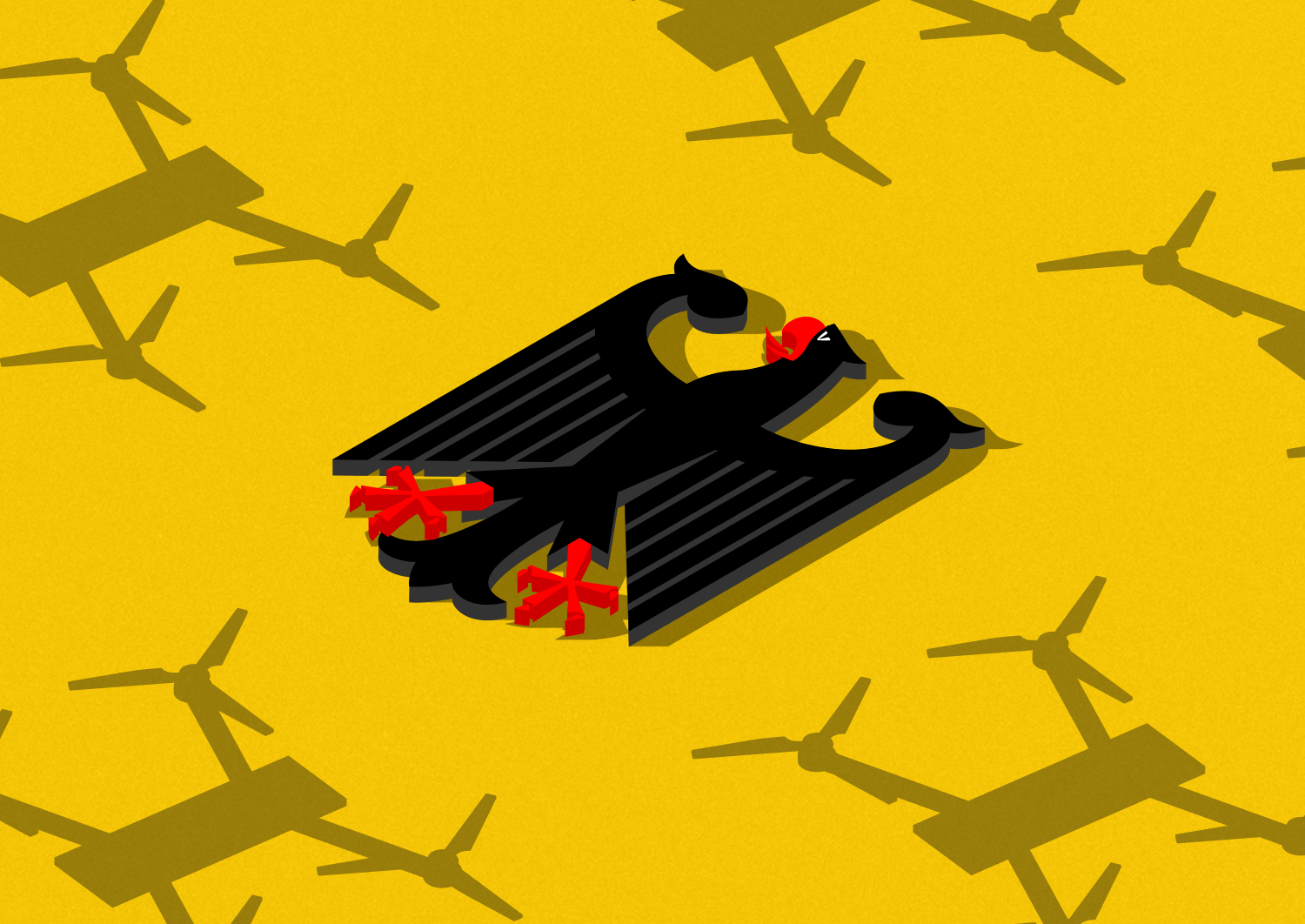
Germany wants to build Europe’s most powerful conventional military, and it is spending accordingly. But four years after Olaf Scholz proclaimed a Zeitenwende (or ‘Turning Point’) in German security policy, Germany is building the largest army, but not the one it needs: FPV drones, longrange missile systems and layered air defense now rule the battlefield, but German procurement lags behind.
Image Credit: Euro Prospects
By Miles Davies, Ad hoc contributor
Edited by Erik Giuliano Würthner, ESP Outreach & Partnerships Coordinator
31 October 2026

Germany has of late taken a leading role in European defence. In a strident policy U-turn back in 2022, the country decided to overhaul its post-Cold War foreign and security policy dynamics, but the changing nature of modern warfare has had a disruptive effect, and it is unclear how successful this shift has been so far. Has Germany sufficiently adapted to lessons from the war in Ukraine? Has it managed to adequately anticipate U.S. disengagement as European governments contemplate the possibility of having to deter Russia, soon, with significantly less American support?
What is this new Bundeswehr actually for?
There is no questioning the scale of Germany’s transformation. Berlin has moved from decades of underinvestment to defence expenditure on a scale few European countries can match, while German industry is undergoing its own conversion towards military production.
A recent analysis by the Kiel Institute suggests the answer to Germany’s capabilities is far from certain. Germany ordered approximately €85 billion of military equipment in 2025, more than the UK and Poland combined. Yet the proportion devoted to technologies associated with the changing character of warfare has fallen sharply. Before Russia’s full-scale invasion of Ukraine, 21% of German orders went towards innovative systems. Today, Kiel puts the figure at just 9%. Poland, by comparison, has increased its investment in ‘modern’ technologies from 3% in 2020-2021 to 16% today. In short, the significant role of autonomous systems and cost-efficient drones, as well as deep strike systems, do not appear to be reflected in German budgetary commitments. “Germany is procuring more of the same, but not the right things,” Guntram Wolff, one of the report’s authors, concluded. The Zeitenwende, he argued, has so far been “primarily a quantitative, not a qualitative, shock”.
Defence Minister Boris Pistorius underlined the importance of reviving the German industrial capacity in February 2024 when he stated that “Without a strong defence industry, we will not be able to invest in equipment, arms and ammunition. In Germany, new production lines have been opened.” But the problem identified by Kiel is not the German industrial capacity in itself but what Germany is buying. Investment in semi-autonomous platforms, drones, AI-enabled command systems and networked air defence has remained broadly constant since 2020, even as overall procurement has exploded. Countries like Poland seem to have a firmer grip on new battlefield realities, reflected by their investments.
The political dimension must be considered as well. Kiel notes that German strategy remains firmly anchored in NATO and the transatlantic relationship. This would be feasible, if it were not for the heavy doubts European governments are casting, regarding the reliability of the U.S. military support for future crises. This is precisely where Germany’s Zeitenwende appears strategically unfinished. Berlin has identified Russia as the principal threat and committed enormous resources to conventional rearmament, but has not yet fully reconciled that policy with the possibility of a less dependable United States. As then-Foreign Minister Annalena Baerbock put it in February 2025, “We do not know today whether we can still rely on our U.S. friends for our defence.” In July 2026, Chancellor Merz appeared to acknowledge the new role NATO must assume in light of a resurgence of American isolationism, stating that “NATO must become more European so that it can remain transatlantic. […] In recent years, we have done too little for our own security. We are now making up for that.”
Inherent contradiction in policy
But it is far from clear whether the achievements are already consistent with the narrative. Indeed, the Kiel research identifies a pronounced national bias in European procurement. Germany buys overwhelmingly from German suppliers or through partnerships involving German industry, while direct cross-border European procurement remains limited.
This is of particular significance when considering the high-end missiles segment of the capabilities Europe strives to implement urgently. The war in Ukraine, and more recently US operations in the Gulf, have underlined how both offensive and defensive missiles have become essential to high-intensity warfare. The EU’s defense White Paper similarly identifies air and missile defense, alongside strategic enablers and ammunition and missiles, among Europe’s priority capability areas.
Yet Germany’s response continues to combine growing European ambitions with substantial non-European dependencies. On the defensive side, Berlin has made the European Sky Shield Initiative (ESSI) a cornerstone of its approach. This German-led initiative to build a groundbased missile defense system, launched by Scholz after the Russian invasion of Ukraine, seems to exclude the French and Italian developed SAMP/T missile defense system in favor of the American Patriot and Israeli Arrow 3 systems. This is especially confounding, given that Germany itself hosts a substantial share of MBDA’s (the producer of the SAMP/T) industrial base.
On the offensive side, while European armed forces are scrambling to acquire a high-end cruise missile equivalent to the U.S. Tomahawk, but free of constraints on employment and supply, Germany has repeatedly sought to procure precisely this foreign system. Washington’s response has been erratic, with repeated ups and downs, although the latest indication, in July, finally appeared to confirm Berlin’s access to the Tomahawk. In any event, deliveries are likely to come only in small numbers given the Pentagon’s own priorities. Yet this has not prevented the Merz government from continuing to shun, almost ostentatiously, genuinely European solutions that are independent of American suppliers, such as MBDA’s Land Cruise Missile, the only sovereign European equivalent to the Tomahawk expected to be available before the end of the decade.
Is this a question of time?
One might argue that these non-European solutions are driven by urgency, but Germany’s longer-term projects suggest that this non-European preference runs deeper. Berlin is pursuing alternative projects that, once again, involve potential partners from outside the EU, including Ukraine through the Brave Germany initiative, and potentially even Türkiye: German Deputy Defence Minister Nils Schmid told Anadolu that Berlin was examining different options for long-range missiles adding: “We are of course also looking at ideas coming from Türkiye.”
Other compatible partners, such as the UK, have already initiated close cooperation: in the Trinity House framework, London and Berlin are developing a family of weapons with ranges exceeding 2,000 kilometres, potentially encompassing cruise and hypersonic missiles launched from land, air and sea. But this is not expected to enter service before the 2030s, and, in doing so, it does not motivate forging an alliance with another EU capital, but with a country equally clinging on to its “special relationship” with the United States.
Ultimately, Germany’s ambition suffers from a two-sided problem: a technical-operational one, with budgetary efforts focused on “traditional” capabilities that sustain an industrial base in crisis, rather than to address the modern military requirements for the 2030s; and a strategic one, in which a narrow definition of national interests, seemingly confined to those of certain domestic industries, appears to take precedence over European obligations, all despite the emphasis placed on the latter in Berlin’s official narrative. As the Kiel study concludes: “If Germany continues on its current course, it risks building Europe’s largest conventional army—ready for yesterday’s war, but not for tomorrow’s.”
Disclaimer: While Euro Prospects encourages open and free discourse, the opinions expressed in this article are those of the author(s) and do not necessarily reflect the official policy or views of Euro Prospects or its editorial board.
MD
Ad hoc contributor
As a consultant in strategy and international affairs, Miles assist companies with their expansion projects, penetration of new markets and global development. With previous experience in the civil service (Defence Administration), he has in-depth knowledge of the challenges inherent in the public sector and the imperatives of operational excellence.
Edited by Erik Giuliano Würthner | Follow our European journalism