Europe’s Search for Strategic Autonomy in Space
Europe’s Search for Strategic Autonomy in Space
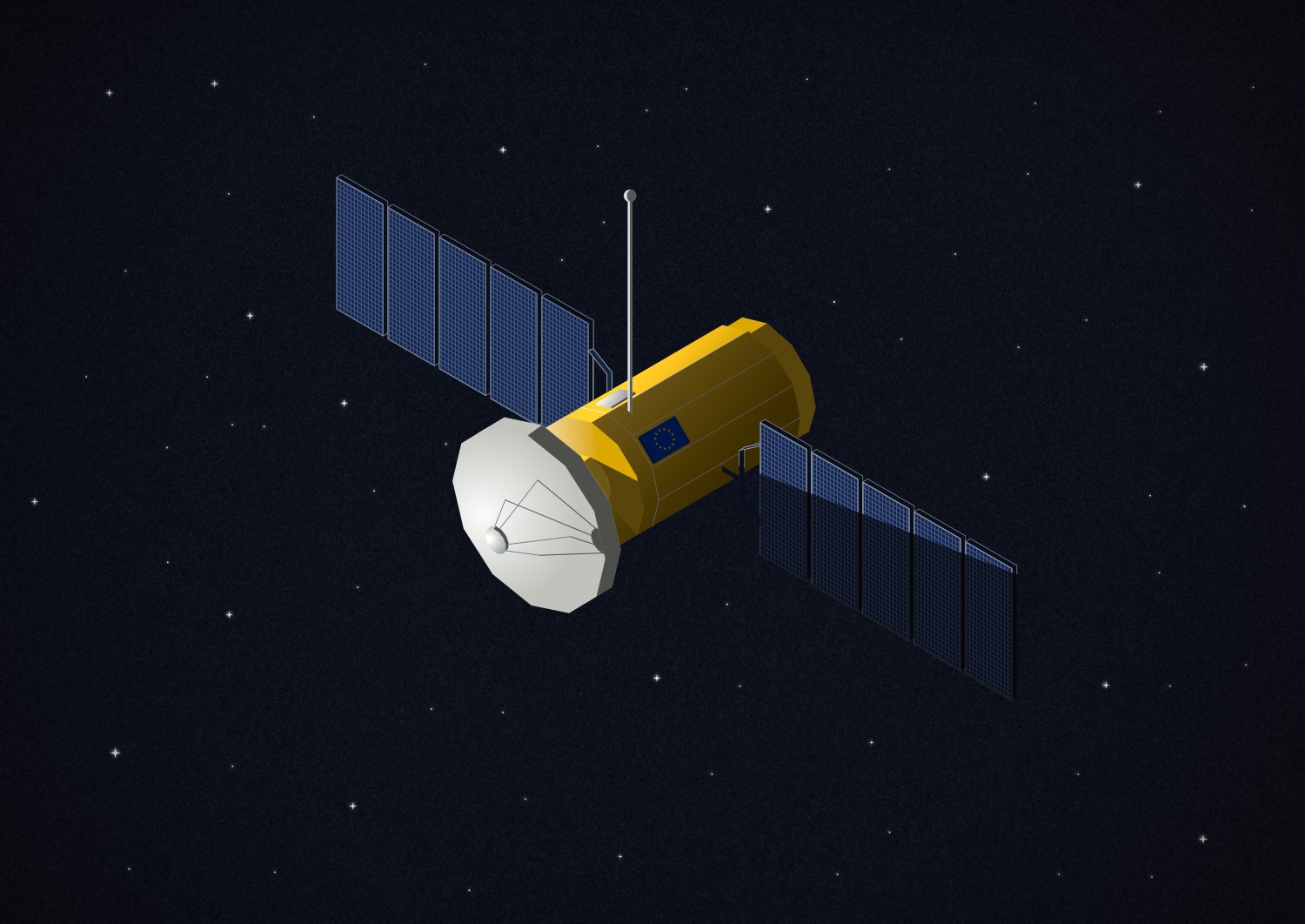
Waves of new-generation satellites and launchers continue to be built by Europe, but institutional fragmentation still stands between it and genuine strategic autonomy.
Image Credit: Euro Prospects
By Pierre Sabot, Space Security Analyst, Security & Defence Unit
Edited by Maryna Mincheva, Next Generation Defense Analyst, Security & Defence Unit
Unit Head: Jake Taltson Southerland, Director of Security & Defense Team
10 September 2026

Changing transatlantic relations: why is Europe adapting?
Space technologies and innovations have long been a sector dominated by a handful of powers like the USA, Russia and, in recent years, China. Middle powers like European countries, Canada or Japan have traditionally played a secondary role in this domain, often cooperating with traditional space powers to enhance their use and access to space technologies. This dependence has been particularly visible in positioning, communications, and human spaceflight. European Space Agency astronauts, for example, have relied on Russia’s Soyuz or America’s Crew Dragon to access the International Space Station, while GPS was the backbone of positioning services in Europe.
Simultaneously, space technologies have become increasingly relevant for the conduct of modern warfare. Space systems continuously support military activities, as demonstrated by the war in Ukraine and the consequences of disrupted Starlink access for Russian forces. With a return to great power competition and eroding trust in the trans-Atlantic alliance, Europe is ever more concerned about its ability to independently defend its interests and sovereignty. In response, European and national officials have increasingly called for greater strategic autonomy, prompting the EU to develop alternative capabilities in space. The main question, then, is how close the EU has come to achieving its ambitions for space autonomy.
Building capabilities: the European constellation programs and launcher development
Long before the first Trump presidency and the war in Ukraine, Europe was taking its first steps towards greater autonomy. With Copernicus and Galileo respectively announced in 1998 and 2003, the EU aimed to develop its sovereign infrastructures at a time when its security and American support were almost unwavering. Until Galileo became operational in 2016, Europe had been reliant on foreign systems, principally the US’s GPS and, to a lesser extent, China’s Beidou system and Russia’s GLONASS. With Galileo, Europe developed an independent positioning system controlled by civilian authorities. Nowadays, navigation software combines data from all those different systems to improve reliability and accuracy. However, the development of Galileo means that Europe is no longer entirely dependent on foreign navigation infrastructure and can maintain access to positioning services even if access to other systems is disrupted. Similarly, Copernicus, the EU’s Earth-observation system, was designed to provide independent data to support agriculture, environmental monitoring, or disaster response. While not phasing out foreign systems, Galileo and Copernicus significantly improve Europe’s strategic autonomy by enabling it to rely on its own capabilities.
However, this strategic autonomy remains incomplete in the field of satellite communications (or satcom). The EU currently lacks its own satcom systems and relies on a handful of satellites owned by some of its member states, such as France’s Syracuse or Italy’s SICRAL for government communications. This fragmentation limits Europe’s ability to provide secure and resilient communications independently at the intergovernmental level. At the same time, the US and China are deploying large constellations, thus reducing the available orbital slots. Planned to become operational in 2029, IRIS2 is the EU’s answer to its security concerns regarding independent satcom. With this program, Europeans aim to build a multi‑orbital satellite constellation that provides secure, resilient, worldwide communications for EU institutions, Member States, and, later, commercial users. Unlike Starlink, IRIS² prioritises public and governmental services, with commercial services forming a complementary component rather than the primary driver of the system. IRIS² therefore reflects different strategic and political objectives, focusing on secured government communications rather than simply competing on commercial performance. However, analysts argue that its commercial potential could be further enhanced to extend secure connectivity to regions such as the Arctic, the Baltic and the Mediterranean. As the backbone of a broader European connectivity ecosystem, IRIS² could strengthen the continent’s satcom industry by creating a common infrastructure around which companies could develop new services and compete internationally.
Another significant obstacle being tackled right now is the gap in European launch capabilities. Compared to the US, Europe continues to lag in key areas, particularly launch cadence, cost competitiveness, and reusability. The bloc has traditionally relied on state-backed launcher programs like Ariane and Vega developed through the European Space Agency and funded by member states’ contributions. With the European Launcher Challenge (ELC) competitive program, established in 2023, ESA is attempting to change how Europe develops and builds rockets by increasing private ventures. Companies that successfully carry out an orbital launch by 2027 at the latest become eligible for ESA contributions to operational launches and scaling up. ESA describes this new strategy as a move towards “privately-led launch services” to strengthen “Europe’s position in the global space market and ensure sustainable and competitive access to space to European and worldwide customers”. While public funding is still a part of this endeavour, the structure is different, with ESA supporting commercially developed launch services and buying launch capacity rather than simply commissioning an ESA-designed launcher. By moving away from the publicly funded development model, Europe is aiming to foster a new launcher ecosystem that would be competitive, more sustainable and based on European companies.
Remaining gaps and the European objective
Despite these developments, Europe’s progress towards strategic autonomy remains incomplete. The main challenge is that the European space sector remains highly fragmented, both institutionally and industrially. Space policy is shared between the EU, the European Space Agency (ESA), and national governments, while European companies continue to depend heavily on national markets and funding. This fragmentation can make it difficult to establish common priorities, pool resources, and develop programmes at the scale required to compete with the United States or China. Rather than operating as a single European space market, Europe still has several national industrial ecosystems competing for public funding and strategic projects. Moreover, Europe still lacks the political will at the scale of its economic and technological power to become a fully autonomous space power. The Draghi Report on EU competitiveness stresses that until then, Europe runs the risk of lagging behind global competitors in the space sector, and all other sectors of the economy enabled and transformed by it.
Most importantly, Europe is still short of responsive space capabilities, generally defined as the ability to quickly replace a lost asset or service. While Europe is making progress in developing new space infrastructure to disentangle itself from the US, it will not be fully autonomous until it is capable of swiftly adapting, redeploying, or replacing these systems. Developing new launchers through the ELC is a first step but won’t suffice. Responsive space requires spaceport developments and manufacturing cadence to match commercial and governmental launch needs. While the US has already demonstrated operational responsive launch capabilities, European efforts remain at an earlier stage. These limitations point to a broader issue: Europe’s challenge is no longer simply to acquire individual sovereign capabilities, but to connect them into a space system of institutions, industries and infrastructures that can function coherently and resiliently.
The progress made through Galileo, Copernicus, IRIS2 and the ELC nevertheless demonstrates that Europe is moving in this direction. These programmes have reduced European dependence on navigation, Earth observation, secure communications, and access to space, laying the foundations for a more sovereign European space sector. However, reducing external dependencies does not in itself constitute strategic autonomy. Rather, the extent of Europe’s autonomy depends on whether it possesses the sovereign capabilities required to maintain critical space services and act independently when necessary. Autonomy should therefore not be understood as autarky or disengagement from allied systems. As cooperation with the US and other allies remains an important pillar of the EU’s strategy, interoperability with allied systems is meant to complement European capabilities, rather than substitute for them. With changing transatlantic relations, increasing tensions with Russia and ever higher reliance on space technologies for military actions, ensuring Europe’s position in space is a pressing matter. True autonomy requires the ability to maintain such capabilities under pressure or, as put by the EU’s current framing, to “design, manufacture, launch, operate, protect and replace” critical space systems.
For the EU, strategic autonomy in space should consequently be understood not as complete independence from external actors, but as the capacity to retain meaningful freedom of action across all stages of the space value chain. This entails not only developing sovereign capabilities, but also ensuring that the institutions, industrial base, infrastructure and supply chains underpinning them are sufficiently resilient, coordinated and responsive. The objective is therefore not to eliminate interdependence, but to ensure that Europe can choose when and how to depend on others.
Disclaimer: While Euro Prospects encourages open and free discourse, the opinions expressed in this article are those of the author(s) and do not necessarily reflect the official policy or views of Euro Prospects or its editorial board.

Space Security Analyst, Security & Defence Unit
Pierre Sabot is a security analyst based in The Hague. Originally from Lyon, he completed a bachelor’s degree in International Relations and Organisations and a master’s in Crisis and Security Management from Leiden University. With a focus on space politics and security, he promotes a European and multilateral approach to the challenges of the space age.
Edited by Maryna Mincheva, Next Generation Defense Analyst, Security & Defence Unit | Unit Head: Jake Taltson Southerland, Director of Security & Defense Team | Follow our European journalism