Europe Must Set the Price of Russia’s Hybrid War Before the Next Attack
Europe Must Set the Price of Russia’s Hybrid War Before the Next Attack
In September 2026, Germany blamed Russia for an explosive drone found next to a cargo plane at Leipzig airport. Russia’s hybrid attacks in Europe are no longer deniable, so the real question is who will make Moscow pay and how that price can become predictable.
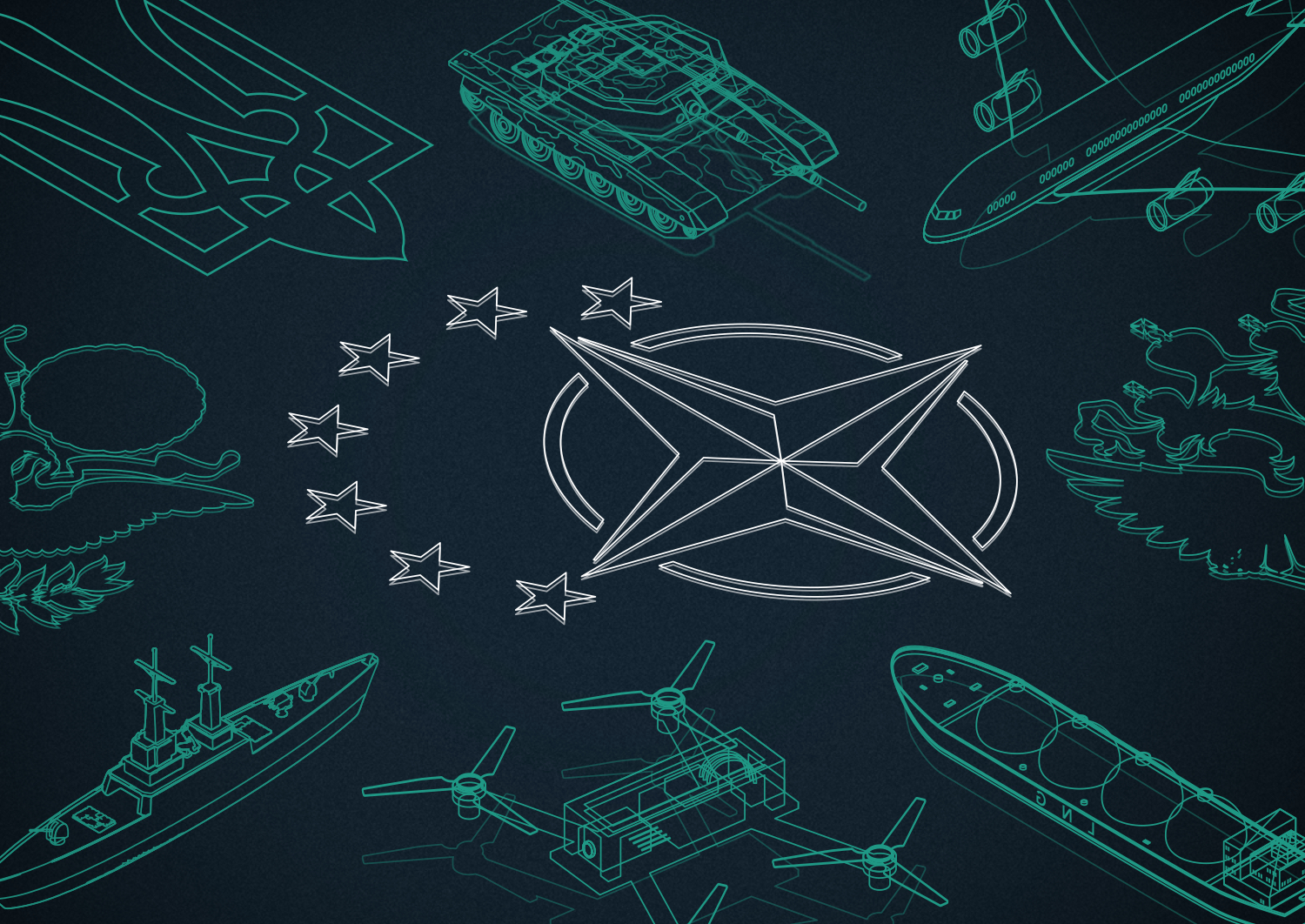
Image Credit: Euro Prospects
By Berk Tuttup, International Security Correspondent
Edited by Oskar Genney, International Affairs Correspondent
19 November 2026

On the night of 4 to 5 August 2026, a drone carrying explosives was found next to a Ukrainian cargo plane at Leipzig/Halle Airport. The device failed to detonate because of a faulty trigger. On 1 September, Berlin formally blamed Russia, closed the Russian consulate in Bonn and promised tighter controls on Russian citizens.
For Germany, this was a strong reaction. For Moscow, probably not. Former CIA officer David Gioe argued in Foreign Policy that such steps are almost costless for the Kremlin, because Russia escalates step by step while Europe answers each step alone.
The debate around this has changed. Writers in Foreign Affairs and experts at the EU-NATO Hybrid Centre of Excellence now say the same thing: resilience alone does not deter. But one question remains unanswered. Who in Europe should decide the costs, and should they do it before or after the next attack?
From deniable to undeniable
Hybrid warfare means using non-military tools such as sabotage, cyberattacks, disinformation and pressure on infrastructure, to weaken an enemy without open war. Since 2022, Russia has increasingly used these tools in Europe.
The numbers show a clear trend. A CSIS dataset counts 3 Russian attacks in Europe in 2022, 12 in 2023 and 34 in 2024. An IISS study, as reported by Texty, finds a similar rise. In Germany alone, authorities recorded 320 suspected sabotage cases in 2025 and 165 between January and August 2026.
The methods have also changed. After many Russian intelligence officers were expelled from European capitals, Moscow began recruiting local people online. A study by the International Centre for Counter-Terrorism found that about 95 percent of 172 perpetrators had no formal link to Russian intelligence. The targets have moved too. Today they are often the weapons and logistics chain that supports Ukraine.
Former US ambassador to NATO Julianne Smith describes this as a move from deniable to undeniable attacks. Leipzig is the clearest example: an explosive drone at a civilian airport is no longer a small grey act.
Why the grey zone works for Moscow
The “grey zone” is the space between peace and war. Russia uses it for three reasons. First, attribution is slow. A democracy must prove who is responsible before it acts. Berlin needed almost four weeks for Leipzig. By the time a response comes, the public has moved on and the link between the act and its cost is weakened.
Second, the threshold is unclear. NATO said in 2016 that hybrid attacks could lead to Article 5, but it never said when. In September 2025, when around 20 Russian drones entered Polish airspace, Warsaw chose Article 4 consultations, not Article 5. This was wise, but it also told Moscow where the line was not.
Third, Russia believes it can win a contest of nerves. Political scientist Alexander Lanoszka showed already in 2016 that hybrid tactics are designed to make a strong military answer look risky. A 2026 HCSS study by Alexander Mattelaer goes further. It calls the hybrid campaign a partial deterrence failure: NATO still deters a tank invasion, but Moscow thinks European democracies fear escalation more than Russia does.
So Article 5 itself is not broken. It works for the war it was designed for. Russia just acts in the space where it can not reach.
The debate between resilience and punishment
Deterrence theory, going back to Glenn Snyder, separates two ideas. Deterrence by denial makes an attack fail. Deterrence by punishment makes the attacker pay. In the current debate on Russia’s hybrid war, experts and governments mostly disagree about which of these two approaches Europe should choose.
The resilience camp argues that democracies should use their own strengths. Mikael Wigell’s idea of democratic deterrence focuses on transparency, strong institutions and an active civil society. Others, like Jennifer Kavanagh in War on the Rocks, warns that visible retaliation against a nuclear power could turn probes into a real crisis.
The punishment camp has grown fast since 2025. Samuel Greene and Christopher Walker argue in Foreign Affairs that late, legal responses break the link between act and cost. Seth Jones at CSIS asks for costs that are clearly tied to Russian behaviour. A third group, including Liana Fix at the Council on Foreign Relations, argues that Europe should respond via Ukraine, for example by providing long-range weapons after each serious attack.
Even the EU-NATO Hybrid Centre of Excellence now warns that a posture built only on resilience signals reluctance and can invite more attacks. The resilience camp is right that denial matters and escalation is a real risk. But denial alone cannot protect thousands of airports, factories and cables at the same time.
Why case-by-case punishment fails
Europe does punish Russia. It expels diplomats, seizes tankers and adds names to its hybrid sanctions list. The problem is how it punishes.
The Israeli scholar Uri Tor has a useful idea here: cumulative deterrence. Against repeated low-level attacks, credibility does not come from one big threat. It comes from a long record of responses that are reliable and visible– a record Europe currently lacks. Each capital reacts alone, with different tools and on a different timeline, and EU sanctions often take months. For Moscow, the cost of the next attack remains a guess.
The data also suggests that Europe’s punishment often hits the wrong level. After the mass expulsions of 2022, Russia did not stop. It switched to recruiting proxies online. Arresting these disposable agents is necessary for justice, but it costs the Kremlin almost nothing. If punishment is meant to deter, it has to reach the Russian state, its intelligence services and its revenues.
Who should decide the price?
Most recent proposals ask for “predictable costs”. Few explain who would set them. NATO cannot impose sanctions or expel diplomats. The EU can, but it needs unanimity, and one member state can block a decision. On 28 September 2026, Kaja Kallas proposed an EU emergency protocol for hybrid attacks. It is a useful step, but without agreed consequences it may stay only a consultation tool.
A more realistic answer is a coalition of the states that are most exposed and most willing to act: the Nordic and Baltic states, Poland, Germany, France and the UK. The European Policy Centre suggests a similar model, where responses come from national governments who have the legal powers to act. Such a coalition could agree on a short menu in advance, building on an ICDS matrix that links attack types to countermeasures:
- Damage to cables or energy links: joint port bans and inspections for shadow fleet tankers, as Polish researchers have recommended.
- Sabotage against defence industry: coordinated expulsions in all coalition states at once, plus sanctions on the intelligence units involved.
- Explosives near civilians, as in Leipzig: additional long-range weapons for Ukraine, or a fund from frozen Russian assets that, in Gioe’s idea, makes each attack pay for its own damage.
The menu does not need to be public. Thomas Schelling’s old point about threats that “leave something to chance” still applies: Moscow only needs to know that a response will come, not exactly what it will be. To avoid slow attribution, the coalition could act on a joint high-confidence assessment, as Western states did after the Skripal poisoning in 2018. There are real risks. Retaliation can escalate, and in Germany offensive cyber measures still face legal limits. But doing nothing new also has a cost, and that cost keeps growing.
Can Europe deter what is designed to avoid war?
Europe has become better at defending itself, and the debate has moved past the idea that resilience is enough. What is still missing is a credible answer to a simple question: what will happen to Russia after the next Leipzig? Article 5 remains strong for the war it was built for. Russia knows this, and that is why it acts below it. Europe does not need a new treaty to respond. It needs a group of states willing to agree on the price before the attack, not after it.
After Leipzig, Chancellor Merz promised that those behind hybrid attacks would pay a price. The next step is to make sure Moscow knows that price in advance.
Disclaimer: While Euro Prospects encourages open and free discourse, the opinions expressed in this article are those of the author(s) and do not necessarily reflect the official policy or views of Euro Prospects or its editorial board.


International Security Correspondent
Berk Tuttup is an international security correspondent based in Istanbul, Türkiye. He has a deep interest in Geopolitical Strategy and studies on Democratic and Autocratic Governance. He provides insightful and detailed analyses on the complex dynamics shaping both European and Global Security landscapes. His areas of expertise include the analysis of Democratic and Autocratic Governance, Global Peace and Conflict Resolution, and International Security.
Edited by Oskar Genney, International Affairs Correspondent | Follow our European journalism