Only a Fully Backed IRIS² Can Deliver Europe’s Sovereign Alternative to Starlink
Policy Brief
12 July 2026
Digital Systems Sovereignty
Only a Fully Backed IRIS² Can Deliver Europe’s Sovereign Alternative to Starlink
Satellite connectivity has moved, in the span of three years, from a niche industrial concern to a core aspect of European security. Yet the continent’s response has been to build a shared constellation while quietly hedging with national ones. IRIS² cannot deliver sovereignty if Member States do not unreservedly back it.
Executive Summary
The Russian invasion of Ukraine has transformed space from being a niche industrial sector and a long-term innovation project into a critical infrastructure and a matter of strategic autonomy. As satellites power, among other things, our phone’s localisation systems, car navigation, commercial planes’ takeoffs and landings, and emergency response systems, space has also become Europe’s next service frontier and an increasingly geopolitical sector.
With a focus on space connectivity and the key role that Space X’s Starlink plays in the Ukraine war, this policy brief assesses the ongoing EU Space Policy Initiatives such as the EU Space Act and IRIS² in order to highlight their limits, as well as calling for true coordination across Member States in building sovereign European space capabilities.
Europe is called on to act strategically, building on the successful space exploration and observation initiatives of Galileo and Copernicus, and ensuring Europe’s leadership in the global space sector prevails. It should foster coordination among Member States and scale up the EU space and satellite ecosystem, positioning itself as a key player in the new space race. As such, harmonising rules and national approaches as well as ensuring long-term investment in the European Space Infrastructure will be crucial, especially as satellite connectivity becomes ever more vital to the EU’s technological sovereignty.

Key Recommendations
Consolidation
Member states operating or developing sovereign military satellite systems should commit to a structured convergence plan under IRIS², modelled on the consolidation logic that underpinned Galileo, the EU’s Global Navigation Satellite System (GNSS). This does not require the immediate decommissioning of existing assets, but it requires political commitment to ensure that future investment flows toward the shared European constellation rather than parallel national ones.
Spectrum
The Commission’s MSS proposal correctly identifies the 2027 frequency transition as a strategic inflection point. Member states, particularly France and Spain, which have already backed the proposal, should push for the framework to be binding rather than indicative, with EUSPA empowered to enforce spectrum allocation against non-European operators seeking access to the reserved blocks.
Investment Architecture
The upcoming Multi-Annual Financial Framework should establish a dedicated structural investment mechanism for European satellite communications, administered through EUSPA with observer status on the space and defence advisory board. The Compact should set measurable consolidation targets, condition access to EU space funding on alignment with IRIS² architecture, and open cooperation frameworks with strategic third countries — beginning with EEA partners and extending to MENA partners where geopolitical alignment supports it.
Analysis
The Increasing Importance of Space for European Strategic Autonomy
Russia’s full-scale invasion of Ukraine in February 2022 did something that years of EU space policy debate had not: it made satellite connectivity viscerally legible as critical infrastructure. Starlink replaced degraded Ukrainian communications networks almost overnight, enabling civilian coordination, government continuity, and military operations that encompassed the targeting, reconnaissance, and drone guidance in ways that reshaped how military planners across the continent understood the strategic value of Low Earth Orbit.
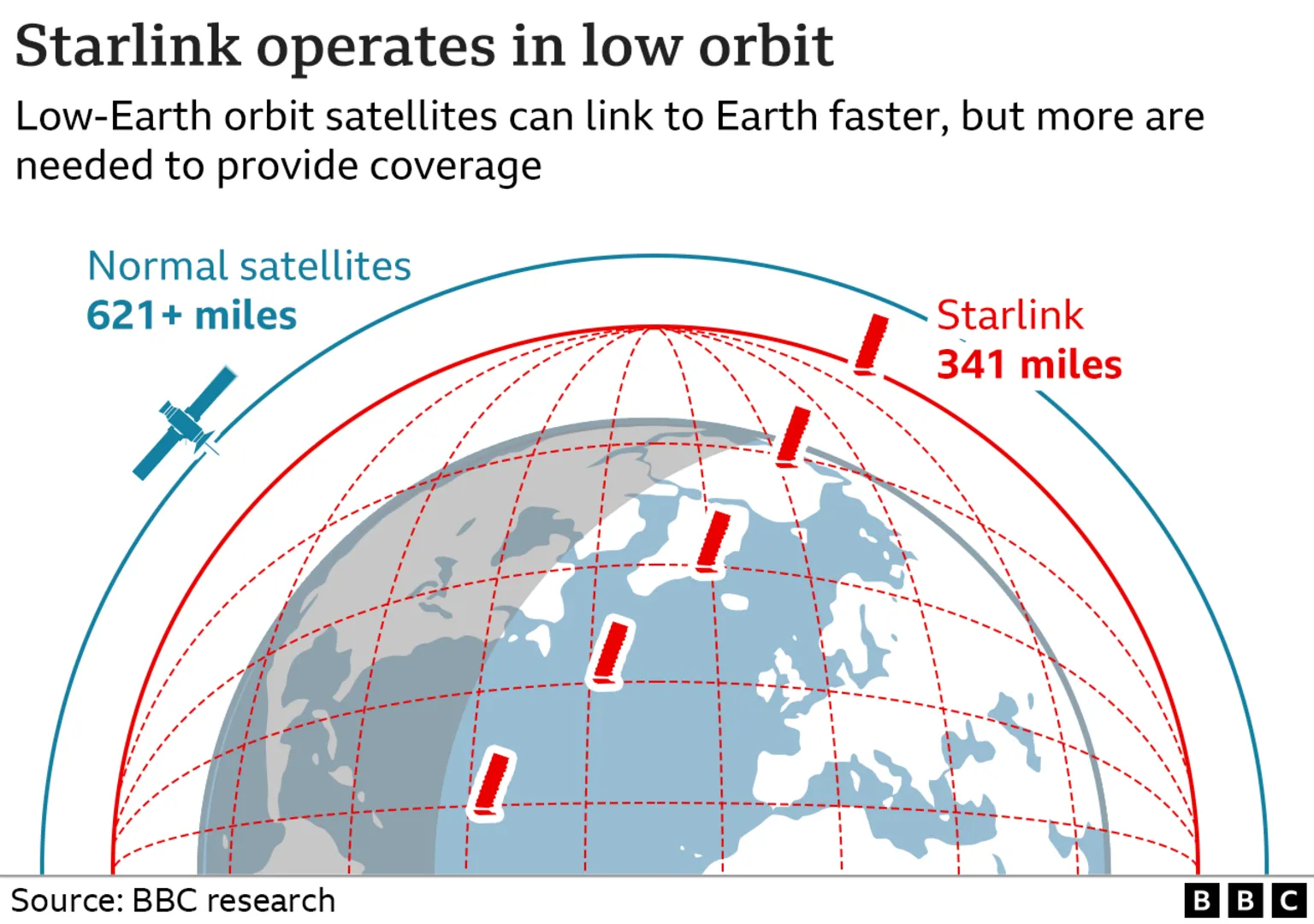
Figure 1. Source: Starlink: Why is Elon Musk launching thousands of satellites? BBC, 2022.
With the establishment of the European Union Space Programme and the European Union Agency for the Space Programme (EUSPA), as well as the launch of EU flagship initiatives Galileo and Copernicus, EU Space Policy adapted to the Ukraine war by reframing itself into an agenda driven by resilience, strategic autonomy, and security.
Within this framework, the Galileo and Copernicus initiatives were recognised as critical dual-use infrastructure in defence operations. The EU also launched IRIS² (Infrastructure for Resilience, Interconnectivity, and Security by Satellite), which is set to build a constellation of 290 satellites across the Medium Earth Orbit (MEO) and Low Earth Orbit (LEO), and is expected to be operational by 2032.
IRIS²’s key goal is to offer a sovereign, secure, and multi-orbital communications infrastructure that is strategically designed to reduce dependencies on foreign providers; a critical necessity in times of crisis. Ahead of the IRIS² launch, GOVSATCOM will ensure governmental Satellite Communications and allow for the pooling and sharing of resources to better manage crises like humanitarian emergencies and natural disasters.
The EU Space Act, which is currently being negotiated, aims to harmonise rules for space activities, empowering new services and fostering a single market for space, with a focus on boosting innovation to prevent collisions, ensuring the cybersecurity and sustainability of satellites. A proposal for expanding EUSPA’s role and responsibility, progressively including secure connectivity, technological sovereignty and support to the EU space economy and cyber security is also being discussed. Such developments paint a clear picture of the direction of EU space policy at a time when it becomes increasingly vital for European security, strategic autonomy, and technological sovereignty.
The Fragmentation Problem
Europe has to deal with its dependence on US commercial satellite communication systems and their importance for European security. Starlink’s dominance in the Low Earth Orbit, counting over 11,000 satellites available, together with its scale, makes it very hard for alternatives to successfully establish themselves.
“IRIS² cannot deliver sovereignty if Member States do not unreservedly back it.”
IRIS² will work as a sovereign European-owned satellite constellation operating 290 satellites, which is a small number compared to Starlink’s scale. The risk is that it will only partially address the EU’s dependence on a US foreign provider in satellite communications. Major European countries are supporting IRIS² while also building their own national sovereign satellites, such as Germany’s SATCOM BW and France’s SYRACUSE IV. This exposes Europe to the risk of fragmenting resources and hampering the achievement of scale in the EU space industry.
In this sense, a structural gap, and hence a dependency, remains: Europe has declared space sovereignty as a strategic goal while quietly building the conditions for continued dependency into its own programme architecture.
“Europe has declared space sovereignty as a strategic goal while quietly building the conditions for continued dependency into its own programme architecture.”
Towards a European Satellite Sovereignty Compact
Copernicus and Galileo initiatives’ success in pooling resources at the EU level was driven by national governments’ acknowledgment of the fact that, according to Agnieszka Łukaszczyk, such capabilities were too strategically important and expensive to duplicate nationally. This awareness should drive IRIS² as well, as the dilution of industrial capacity, launch capability, and money across Member States would naturally lead to the fragmentation of the very resources that are needed to develop a credible European alternative to Starlink.
Moreover, the European Competitiveness Fund, as part of the upcoming MFF, is set to put in place structural investments in the space sector. By guaranteeing EUSPA observer status in the space and defence advisory board, a European Satellite Sovereignty Compact could be created to ensure a stable and credible investment framework.
IRIS² represents a grounded starting point for Europe’s strategic autonomy in space, and its commitment to cooperation with non-EU states, such as Iceland and Norway, could be expanded to foster global cooperation in the space sector. Engaging at EU level with countries from the MENA region would also be of strategic importance, given their role in the ongoing global race for space dominance.
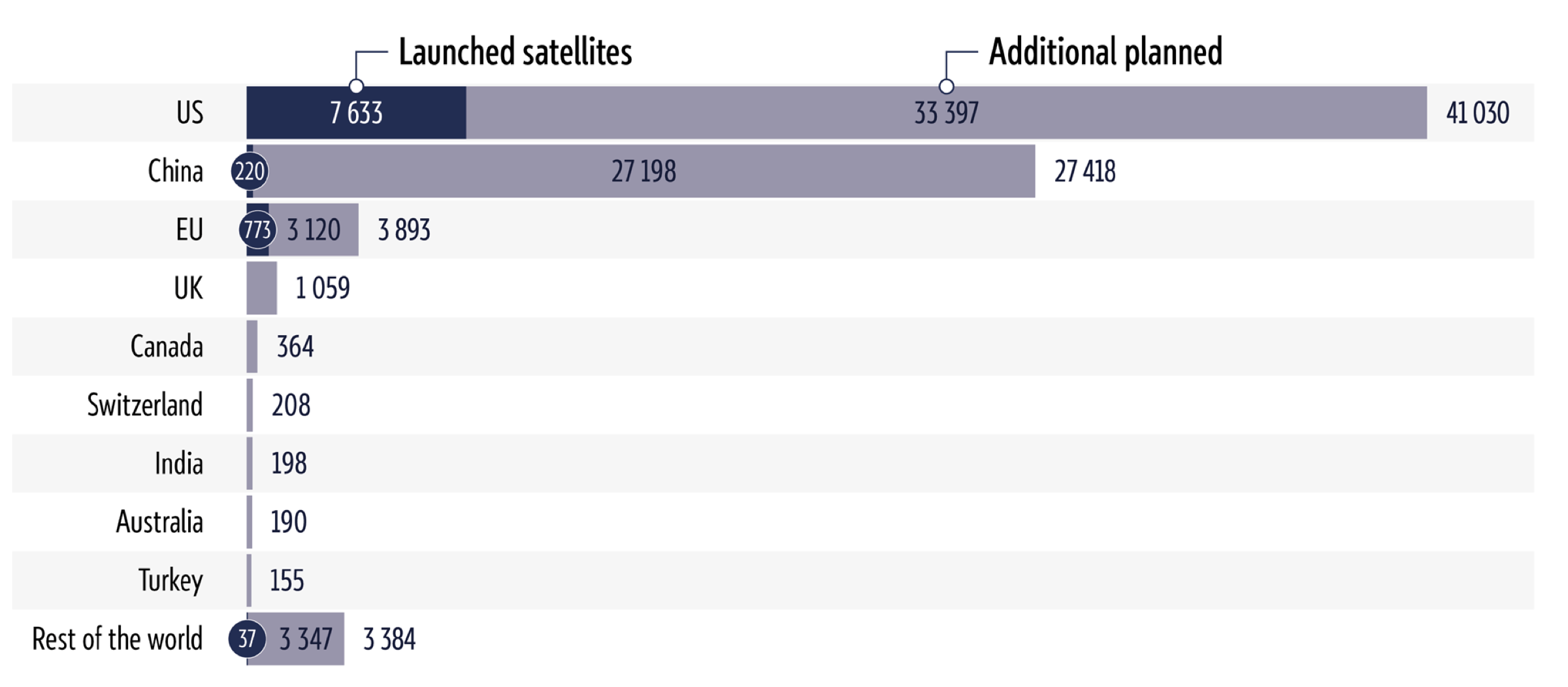
Figure 2. Satellite communication constellations (total launched and planned). Source: Detecon International GmbH 2025.
The Spectrum Window Europe Cannot Afford to Miss
The European Commission’s recently launched proposal for the EU-level authorisation of systems providing mobile satellite services (MSS) correctly frames satellite connectivity as a fundamental part of European technological sovereignty. The MSS plans to reserve satellite frequencies for European operators when a prized spectrum band opens in 2027, transitioning away from the current frequency bands, which have been controlled since 2009 by US operators Viasat and EchoStar.
The Commission’s framework would split the available frequencies into three blocks: one reserved for secure governmental communications through IRIS², a second earmarked for European startups, and a third open to European or non-European operators on competitive terms. In the current context, the European spectrum should be fully reserved to European operators and use the opening to build the competitive base that European satellite startups currently lack.
As the orbital environment becomes increasingly congested, competition for spectrum is expected to intensify. Thus, the MSS proposal is crucial and timely in securing EU sovereign space and satellite capabilities. It is yet to be seen how the US administration might welcome Europe’s bid to retain its control over such critical assets and limiting access to US companies such as Starlink or Amazon LEO. Nevertheless, this is a crucial step towards reducing dependencies, backed by EU Member States such as Spain and France.
“Space is central to Europe’s strategic autonomy and critical in Europe’s push for tech sovereignty.”
Space is central to Europe’s strategic autonomy and critical in Europe’s push for tech sovereignty, and it represents a window of opportunity for establishing itself as a key actor and enabler in the space sector. Ultimately, ensuring a collaborative approach is paramount to Europe’s long-term security and global influence.
More from the ESP Series
Addressing Europe’s Strategic Dependencies — ten policy briefs inaugurating our European Strategic Policy Unit.
View All ESP Policy Briefs →About Euro Prospects
Euro Prospects is an independent platform for in-depth analysis of European political affairs. We publish articles on the issues shaping Europe today, from the EU–Mercosur trade agreement and Europe’s semiconductor supply chains to the European Union’s strategic shift on Syria and Serbia’s global arms trade, to name a few.
But informing readers is only part of our Mission. Euro Prospects was founded to help cultivate a European public sphere — a transnational space of political curiosity and civic engagement among Europe’s citizens.
Visit Euro ProspectsAbout ESP
The European Strategic Policy Unit (ESP) is Euro Prospects’ dedicated think tank department. We produce forward-facing, policy-actionable analysis on European strategic sovereignty across defence, technology, trade, energy, industry, and digital infrastructure.
Partnerships
Interested in citing, discussing, or building on this research? ESP is actively building relationships with researchers, institutions, and publications working on European strategic policy.
Contact UsESP Members
Francesco Bernabeu FornaraHead of Unit; Editor-in-Chief, EP
Giulia ConvertiniDigital Systems Sovereignty
Finn Sands RobinsonTrade & Industrial Strategy
Rimsha ArifEnergy Market Resilience
Matilde MinettiEU-China Strategic Competition
Orla HarrisDigital Infrastructure Sovereignty
Jerfi WigleySupply Chain Resilience
Annika GerbigDefence Industrial Autonomy
Trinabh BanerjeeStrategic Digital Security
Luka OkropirashviliEastern Neighbourhood
Juan Carlos LeunissenTransport & Energy Connectivity
Erik Giuliano WürthnerESP Outreach & Partnerships Coordinator