Will Trust in the EU’s Digital Identity Wallet Deepen European Integration?
Will Trust in the EU’s Digital Identity Wallet Deepen European Integration?
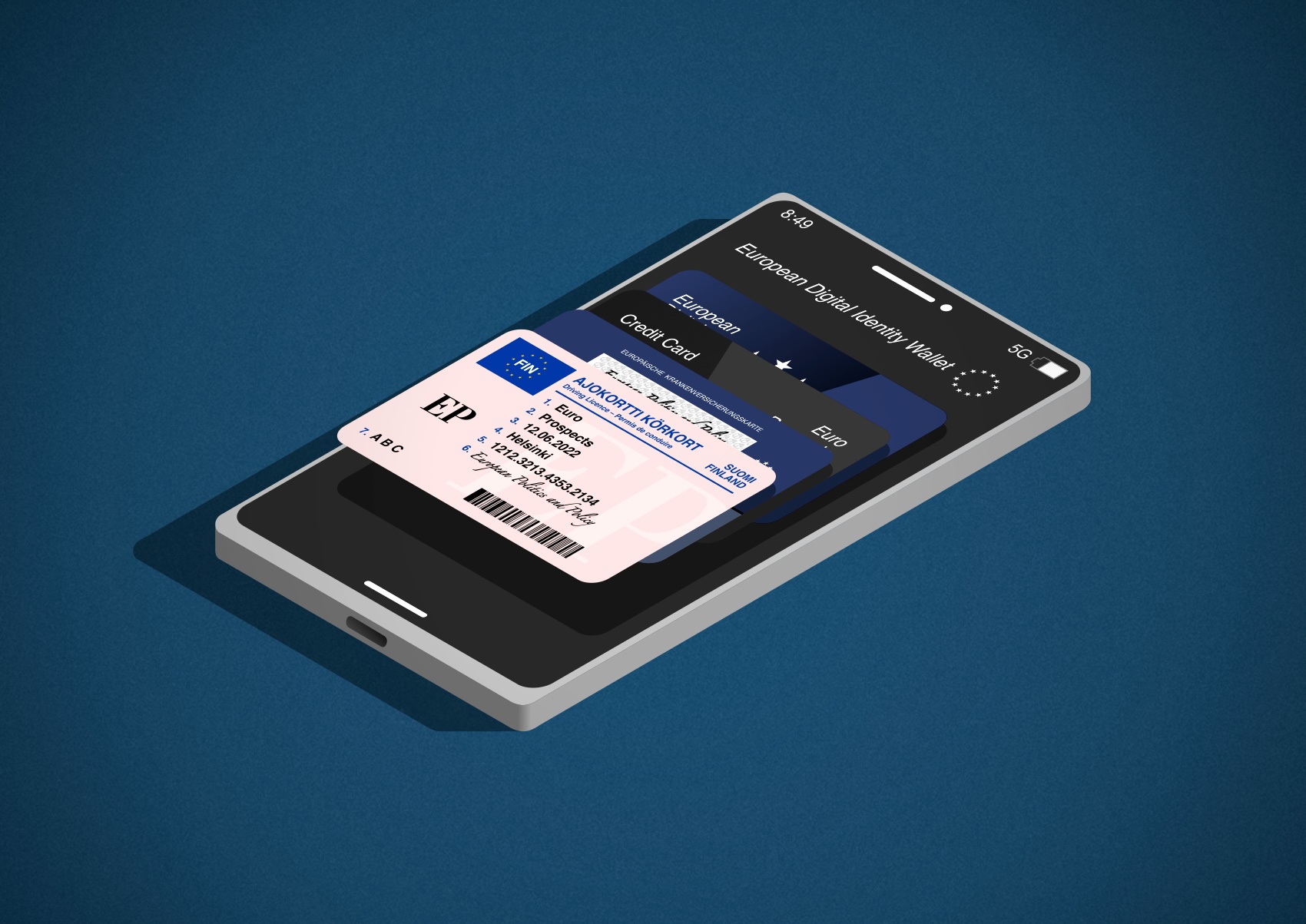
Europe’s new digital identity wallet could let EU citizens carry their licence, health card, and credentials all on a single app, if they trust it enough to actually use it.
Image Credit: Euro Prospects
By Aurelia Leertouwer, European Politics Correspondent
Edited by Orla Harris, Digital Infrastructure Sovereignty Analyst
29 August 2026

European integration develops as Member States become increasingly interconnected through shared legal frameworks, common systems and cross-border cooperation. Its significance also depends on how far these forms of integration become embedded in everyday life. The European Digital Identity (EUDI) Wallet brings this distinction into the digital sphere. Its wider significance will depend on whether convenience encourages regular use, whether individuals trust the safeguards surrounding their personal data, and whether uptake becomes broad enough to deepen integration beyond the institutional level.
A New Form of European Integration
The European Digital Identity (EUDI) Wallet can be seen as another step in the European Union’s (EU) digital agenda. Politically, however, it raises a broader question about European integration. The Single Market deepened European integration by reducing economic barriers, while Schengen removed routine controls at most internal borders between participating countries. Both reduced the practical significance of national borders, although in different ways. Wallet takes this further by creating a common EU framework through which individuals can identify themselves and exercise rights digitally. For example, this would enable the accessing of social-security benefits and storing their European Health Insurance Card (EHIC) in the Wallet.
Regulation (EU) 2024/1183 expands the EU’s existing rules on electronic identification and establishes the EUDI Framework. Each EU Member State (MS) must provide at least one EUDI Wallet based on common European specifications, with national Wallets designed to work across the Union. This reflects a familiar pattern, with rules set at EU level and MSs remaining responsible for national implementation.
What makes the EUDI significant is how its use will impact individuals everyday lives. As with Schengen and the Single Market, the EUDI could become another important layer of European integration. However, its significance would emerge in a different way, through its integration into daily digital interactions.
That gives the Wallet societal significance beyond its technical function. Digital identification increasingly shapes how people identify themselves when accessing public and private services. The EU is therefore furthering the harmonising of its single market, by adding a much-needed element, that of digital identities. Importantly, it is creating a framework that becomes part of everyday interactions between individuals, public authorities and businesses.
Thereby, the Wallet has the opportunity to deepen European integration on a legal and infrastructure level. Its broader societal significance will depend on the extent to which individuals adopt it and incorporate it into their everyday lives.
Is Convenience Enough?
The EUDI Wallet is designed to make digital identification easier and more convenient. This may make the Wallet more attractive to users, but convenience alone does not guarantee widespread adoption.
The EU’s original 2014 eIDAS framework already created the legal basis for national electronic identities to work across borders. Today, the Commission says that more than 90 per cent of Europeans can benefit from the existing system. Yet it also acknowledges that use remains limited as the system is not always straightforward to navigate, and private-sector adoption has been relatively modest. Only 14 per cent of key public-service providers currently allow cross-border authentication through eID.
This is important because the EUDI Wallet is, in part, designed to address these limitations. Under the original eIDAS framework, Member States could notify national electronic identification schemes for cross-border recognition, but they were not required to provide a national eID. The EUDI framework goes further by requiring Member States to provide a Wallet and expanding what individuals can use it for. Users will be able to store and present credentials such as driving licences and diplomas, access both public and private services, and selectively disclose only the information necessary for a particular interaction. These additional functions could make the Wallet more useful in everyday interactions, although they do not in themselves guarantee widespread uptake. The Wallet will remain optional, and individuals who choose not to use it must still be able to access services through alternative means.
These additional functions may make the Wallet more attractive, but that does not mean people will use it regularly. Even occasional use, for example when using the Wallet to prove a qualification or access social-security information in another Member State, could still be useful without necessarily leading individuals to rely on it more broadly for routine interactions, such as accessing government services, opening a bank account or signing contracts.
The Politics of Trust
Trust becomes particularly important because the Wallet can contain information individuals may consider sensitive, such as medical prescriptions, identity data and official credentials. The European Digital Identity Regulation therefore places data minimisation and user control at the centre of the framework. It provides for selective disclosure, allowing individuals to disclose only the information necessary for a particular interaction, as well as records of Wallet transactions that users can review. Each Member State must make at least one Wallet available, either directly, through a provider acting under its mandate, or through an independent provider recognised by the Member State. Wallet providers are also restricted in the personal data they may process. They may not collect information about Wallet use beyond what is necessary to provide the service or combine personal data with data from other services unless the user expressly requests otherwise. For instance, if a company providing a Wallet also operates a payment or other digital service, information generated through a user’s Wallet activity could not be used to enrich the commercial profile held about that person through the other service. This reduces the scope for cross-service profiling and strengthens users’ control over their personal data. The Commission says the Wallet is also being designed around local data storage, a privacy dashboard and privacy-preserving tools including selective disclosure and zero-knowledge proofs.
These protections matter and importantly, public trust in this system will depend on how the privacy measures withstand in practice. Most individuals are unlikely to examine the Wallet’s technical architecture or read the regulation governing it in detail. Their judgement is more likely to depend on whether individuals understand which organisation is requesting their data, what information is being requested and for what purpose. Privacy is therefore distinct from the technical security of the Wallet itself. It also depends on whether individuals can act on that information by disclosing only what is necessary and later reviewing which data was shared and with whom.
The gap between privacy safeguards and technical implementation requires careful attention. The European Data Protection Supervisor warned that privacy risks cannot be assessed from the framework regulation alone and stressed the importance of preventing separate Wallet transactions from being linked to the same individual. If different interactions can be connected in this way, information from otherwise separate uses of the Wallet could be combined to reveal patterns of an individual’s behaviour or use of services, creating the possibility of tracking or profiling.
Public opinion reinforces concerns about how the Wallet’s privacy safeguards will function in practice. In the 2026 Digital Decade Eurobarometer, 92 per cent of Europeans said privacy and security should be priorities for EU digital policy. At the same time, the latest Standard Eurobarometer found that 51 per cent of Europeans trust the EU. Together, these two surveys show that institutional trust cannot be taken for granted when technology-related policy involves the use of personal data.
For the Wallet, privacy is therefore not just an optional safeguard, but rather, it is an essential component that will determine whether citizens regard that technology as private enough to use.
When Does Integration Become Meaningful?
There is an important difference between integration through law and integration through use. The EUDI framework already creates common rules and technical standards across the Union. For example, a Wallet issued in one Member State is designed to be recognised in others, allowing individuals to use it to access public and private services across borders. The rules and infrastructure established through the EUDI framework therefore deepen European integration at an institutional level, even before the extent of its uptake becomes clear.
The EU’s ambitions illustrate this. Under the Digital Decade, the goal is for all citizens to have access to secure electronic identification by 2030. Access alone does not reflect whether individuals actually increase the uptake in digital identity systems.
The Regulation states that people who choose not to use the EUDI Wallet should not be disadvantaged and that appropriate alternatives should remain available. Individuals therefore retain considerable influence over how far this European Framework impacts and reaches everyday life. The EU can establish the rules and technical conditions for the Wallet to function across Member States, but it cannot ensure that individuals will use it regularly.
Conclusion
Simply put, if individuals embrace the Wallet, it has the potential to increase European integration. Cross-border rights and common European rules would not only exist in treaties or become visible while travelling, but it would become part of routine digital interactions.
On the other hand, if individuals do not embrace the Wallet, the EU may have created a substantial common infrastructure, but one with limited social and political relevance. At the level of law and infrastructure, the EUDI Wallet already represents a deeper form of European integration. How far that integration reaches beyond those foundations will depend on whether individuals trust and use it.
Disclaimer: While Euro Prospects encourages open and free discourse, the opinions expressed in this article are those of the author(s) and do not necessarily reflect the official policy or views of Euro Prospects or its editorial board.

European Politics Correspondent
Aurelia is a European Studies student at the University of Amsterdam, majoring in European law and politics. Having recently completed the second year of her bachelor’s degree, she will enter her final year. Her main interests include international affairs, governance, European integration, and democracy. Alongside her studies, she works as a student ambassador, informing prospective students about European Studies and student life in Amsterdam. She is Dutch, fluent in English, and has professional working proficiency in German. At Euro Prospects, she covers political developments across Europe and their international impact.
Edited by Orla Harris, Digital Infrastructure Sovereignty Analyst | Follow our European journalism