Why Transport Connectivity Can Accelerate the Credibility of EU Enlargement
Policy Brief
6 October 2026
Transport & Energy Connectivity
Why Transport Connectivity Can Accelerate the Credibility of EU Enlargement
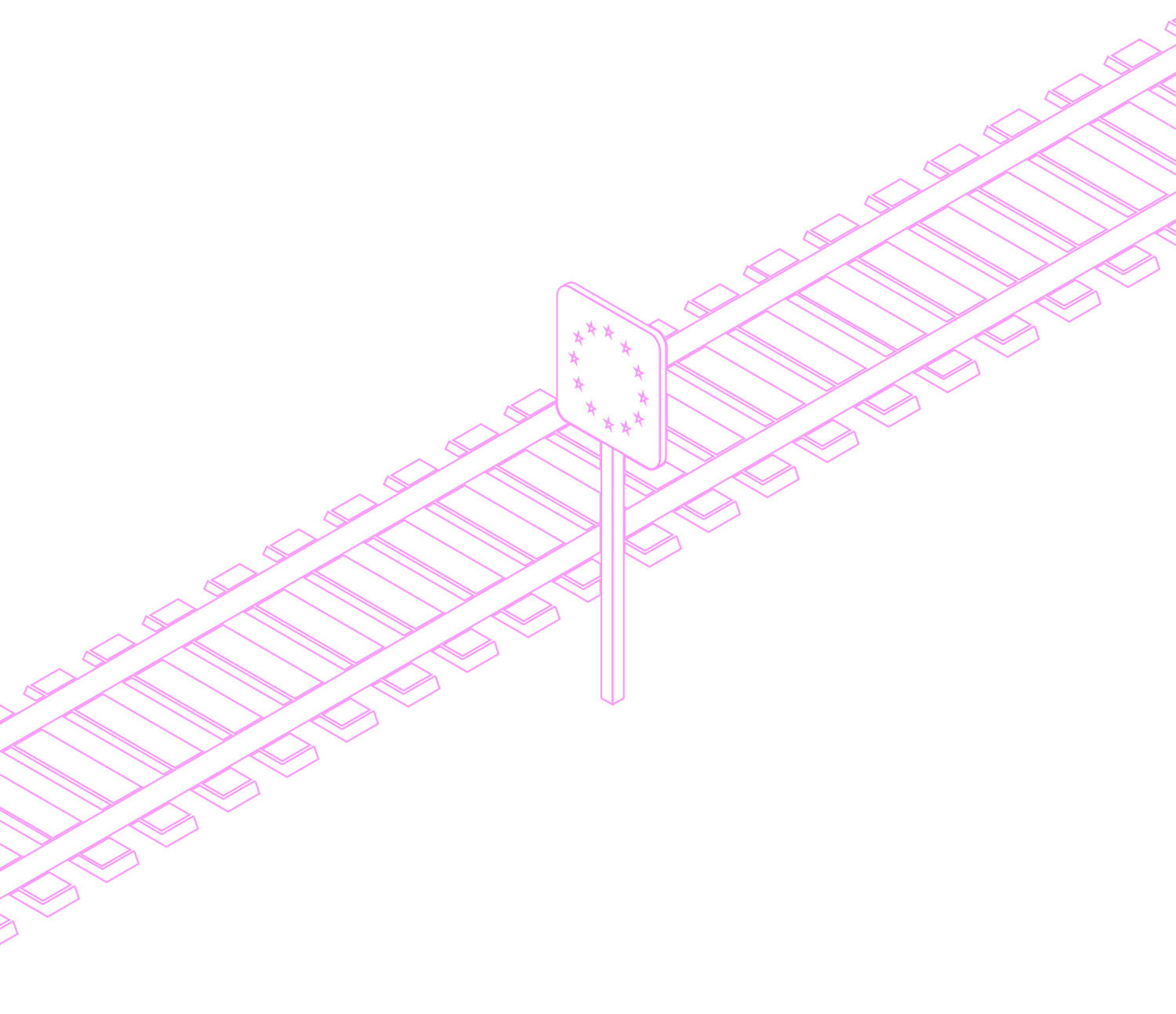
How functional integration and corridor-wide network development can reinforce EU Accession in the Western Balkans, Ukraine and Moldova.
Executive Summary
EU enlargement is formally assessed through adopting the acquis in national legislation. The transport sector however, highlights an important dynamic: candidate countries are already becoming functionally integrated into the EU transport area before membership. This functional integration can advance in parallel with the formal accession process, through projects of the Trans-European Transport Network (TEN-T), the Connecting Europe Facility (CEF) for Transport, and Solidarity Lanes.
Long-term investment in cross-border connectivity can make the enlargement process more credible and can provide tangible benefits before membership, such as economic development, strategic alignment and military mobility. However, this network development should not be seen as an alternative to acquis implementation. It should proceed in parallel with formal reforms in order to preserve the incentives for full EU membership.
The current assessment architecture for EU enlargement remains predominantly national and chapter-based. This is necessary for monitoring legal obligations, but insufficient for measuring corridor performance. The EU should add a corridor-based layer of monitoring that better captures how connectivity can strengthen the credibility of the enlargement process, both for candidate countries and for the EU.
Key Recommendations
1
Systematise Network Assessments
The European Commission should complement formal acquis-based assessments systematically with the network-level assessments such as the Transport Community’s TEN-T assessments and Solidary Lanes studies, identifying priority corridors and network bottlenecks.
2
Enhance Pre-Membership Participation
For the Western Balkans, the European Commission should provide negotiating candidate countries with meaningful participation opportunities before membership. This could include official association with CEF Transport, building on the associated member participation of Ukraine and Moldova or formal participation in the European Union Agency for Railways (ERA).
3
Link Integration Benchmarks
The European Commission, together with the Transport Community, should cooperate on complementing the recently announced roadmap with clear benchmarks linking progressive functional integration in transport with progress towards membership. It should connect identified priority transport measures to reforms under the acquis.
4
Target Corridor Bottlenecks
Cross-border investment packages should target the functioning of entire corridors and their binding bottlenecks rather than treating infrastructure primarily as a collection of country-specific projects. This should include coordinated investments on both sides of EU-candidate borders.
5
Maximise Inclusive Growth
Corridor development should generate visible benefits for economic centres, logistics nodes and regions in candidate countries, so that functional integration is tied to domestic economic benefits and societal connectivity with the EU. DG MOVE and EU Delegations should strengthen the cooperation with Chambers of Commerce and logistics companies and civil society in the region.
6
Boost EU Capacity
EU Member States should invest in their own integration capacity and should go ahead with reciprocal commitments and the transport systems and corridors on the EU side. The European Commission should support this through offering finance mechanisms such as WBIF and CEF.
Analysis
Mario Draghi described transport as “a vector of integration”. He called for future EU enlargement countries to be embedded more closely in TEN-T, including Ukraine, Moldova and the Western Balkans. Harmonised transport networks connect regional economic centres, strengthen supply-chain resilience, provide opportunities for military mobility and provide better access to the Black Sea, the South Caucasus, Central Asia and beyond. Geopolitical uncertainty has offered even more incentives for such integration.
Discussions around EU enlargement have returned to the foreground and while both the EU and the enlargement countries assess their readiness for integration, this raises a question about what “readiness” for enlargement actually means. Do we mean legal alignment with the acquis, or the functional integration of corridor-wide transport networks?
EU transport legislation alone accounts for about 25% of the EU acquis, bringing it to the centre of the enlargement discussion. The Commission’s annual Enlargement Reports assess legal alignment and implementation with the candidate country as the main reporting unit. In transport, they recognise cross-border dependencies, but the architecture remains organised around a national negotiation process and separate acquis chapters. Yet, functional integration is crucial for corridor performance. For instance, in the acquis for Ukraine, Chapters 14 and 21 are not yet formally opened, while functional integration already provides clear economic benefits; Solidary Lanes have already materialised €304 billion in trade since May 2022.
“Geopolitical uncertainty has offered even more incentives for such integration.”
The value of functional integration is also visible in the Transport Community which aims to integrate candidate-country transport markets into the EU, based on identical systems and standards. In an interview with its director, Matej Zakonjšek, the transport integration process is described as “very complex and vast” because of the amount of legislation that must be transposed. Yet, he argues that European transport networks can only function fully when the Western Balkans, Ukraine and Moldova operate as integral parts of them.
Reducing average waiting times at border crossings for truck drivers in the Western Balkans by three hours could raise GDP by up to 3% in each Western Balkan economy over the medium term. EU Accession was predicted by the World Bank to amplify this GDP rise by an additional 6% and also neighbouring EU Member States could experience significant economic gains from increased trade with the Western Balkans.
Functional Integration Before Accession
Candidate countries already increasingly operate under EU transport rules, connect to EU corridors, enter customs and transit systems and participate in EU transport markets before accession. This gradual functional integration allows for monitoring with EU regulations before accession. The gradual integration process is described as a possible way to accelerate candidate participation, bringing infrastructure to common performance standards and creating spillovers for other sectors. The extension of the TEN-T to the Western Balkans can create such spillover effects.
Recent assessments such as in Serbia illustrate the gap between relatively advanced formal alignment and incomplete operational materialisation. The 2025 Serbia enlargement report assesses Serbia as having a high level of alignment with the rail acquis, but formal adoption of the EU Technical Specifications for Interoperability is still pending and the European Rail Traffic Management System (ERTMS) is not yet fully implemented. On a regional scale, only 17% of the Western Balkan Core Rail Network meets the operating-speed standard and ERTMS deployment is only 2.62%. The 2025 TEN-T Annual Report shows the operational side: ERTMS is operational on the reconstructed Belgrade–Subotica line, but further deployment in Serbia is still planned. High acquis alignment therefore does not automatically mean interoperability across the network.
“High acquis alignment therefore does not automatically mean interoperability across the network.”
In Ukraine and Moldova, we observe the opposite, where functional integration materialising while enlargement reports still identify important alignment gaps. Ukraine still needs further alignment in road and rail transport, while Moldova remains only partially aligned in road transport and has no existing rail-interoperability regulations. Nevertheless, both countries have moved even further within the EU’s frameworks. Association with the Connecting Europe Facility allows actors from Ukraine and Moldova to apply independently for EU funding. Solidarity Lanes, established to keep Ukraine’s imports and exports flowing in the face of Russia’s full-scale invasion of Ukraine, go even further. The Commission explicitly links their long-term development of Solidarity Lanes to Ukraine’s reconstruction and future Single Market integration. This shows how geopolitical necessity can accelerate governance. The EU can harness the momentum by advancing network integration while reforms and chapter implementation continue simultaneously.
The Western Balkan Five-Year Rolling Work Plan notes that infrastructure development alone is not enough and describes transposing the acquis into national law as only the first step, before implementing those rules for TEN-T compliance. Yet, in reality, infrastructure development and acquis implementation can advance in parallel. Chapter 21 of the Ukraine Enlargement Report explicitly states that network development should occur “in parallel to the implementation of reforms.”
A bigger risk is that offering benefits before full accession could give leeway to partial accession alternatives such as merely Single Market access. In the context of the Western Balkans, these alternatives could become substitutes for full membership and would be detrimental for the region’s future. Transport can provide a practical way to provide concrete benefits before membership, while more difficult reforms continue.
Network Development as Strategic Commitment
Investment in regional transport systems can contribute to credibility in EU enlargement. Advancing transport is of strategic importance for the EU to strengthen its presence in the region and helps create path dependencies in geopolitical orientation. Enlargement countries receive long-term investments such as the multi-year TEN-T project pipelines in the Western Balkans, the Iași–Ungheni–Chișinău–Odesa TEN-T axis in Moldova and railway connections according to European gauge widths in Ukraine. The scale of these investments gives these commitments substantial financial weight. Material investment cannot guarantee membership, but it can make the integration trajectory more tangible by creating sunk assets, common standards and institutional relationships. This addresses one of the bigger challenges of EU enlargement: the loss of credibility when visible integration stagnates.
In addition, advancing transport connectivity in the enlargement region provides the EU with strategic comparative advantages. Following attacks affecting Black Sea and Danube traffic, Ukraine, Romania, Moldova and the European Commission confirmed willingness to activate additional alternative routes. Various analytical reports such as IISS, ECFR and the European Parliament’s EPRS alert to the importance of military mobility and cross-border integration for dual-use infrastructure and for moving forces over long distances towards eastern Europe.
Besides, functional integration can provide political weight to strengthen the EU’s own absorption capacity. Von der Leyen has already alerted to building a “true Transport Union” during the recent Connecting Europe Days. Enlargement reports show that various border projects require the implementation of coordinated efforts, such as Moldova’s links with Romania in the Ungheni-Iași connections, North Macedonia’s cooperation with Bulgaria in Corridor VIII and CEF investments in solidarity lanes that require the cooperation with Poland, Slovakia, Hungary and Romania. This creates incentives to advance network development, including the EU’s own absorption capacity.
Strategic Network Readiness
To harness the advantages of convergence of transport systems, networks and standards, the EU should approach network development in a more holistic, regional and corridor-based way. It can identify cross-border challenges through proposing key actions for corridor development, similar to or aligned with the EBRD Study on sustainable transport connections with Central Asia.
Consider, for instance, the enlargement report for Moldova. Chapter 14 assesses road and rail interoperability; Chapter 21 assesses TEN-T connectivity with Romania and Ukraine; and Chapter 29 assesses customs interoperability, such as the New Computerised Transit System and preparations for the Common Transit Convention. A truck or train, however, will experience these issues simultaneously. The network only functions well when all dimensions of integration work well together.
“The network only functions well when all dimensions of integration work well together.”
Importantly, corridor performance should not be aimed merely at EU-centric transit, but must provide advantages for economic centres in enlargement countries themselves. The strategic value of enlargement will be stronger when connectivity integrates candidate economies rather than simply passing through them. The EBRD Central Asia study followed this logic by identifying connections between major cities and economic centres in the region, while also focusing on the connections to Europe. The recently launched Cross-Regional Connectivity Agenda Platform mobilises International Financing Institutions for connecting the EU with Ukraine, Moldova towards the Black Sea, South Caucasus and Central Asia. A corridor-level assessment layer could complement existing structures such as TEN-T, CEF and WBIF. This would be particularly relevant as the Global Europe component of the next EU Budget incorporates instruments such as IPA III and the Western Balkans Facility. The financing architecture already moves partly in this direction. CEF allocates 78% of its transport funding to projects about cross-border connectivity and harmonised traffic-management systems.
“The strategic value of enlargement will be stronger when connectivity integrates candidate economies rather than simply passing through them.”
A national chapter-based assessment is required to monitor legal alignment under the acquis, but it cannot by itself monitor the function of enlarged European networks. Corridor-based monitoring should complement the EU acquis by assessing strategic network readiness, so that functional integration can advance in parallel with the formal accession process.
More from the ESP Series
Explore the other ESP policy briefs, each offering actionable recommendations on a strategic challenge facing the EU.
View All ESP Policy Briefs →About Euro Prospects
Euro Prospects is an independent platform for in-depth analysis of European political affairs. We publish articles on the issues shaping Europe today, from the EU–Mercosur trade agreement and Europe’s semiconductor supply chains to the European Union’s strategic shift on Syria and Serbia’s global arms trade, to name a few.
But informing readers is only part of our Mission. Euro Prospects was founded to help cultivate a European public sphere — a transnational space of political curiosity and civic engagement among Europe’s citizens.
Visit Euro ProspectsAbout ESP
The European Strategic Policy Unit (ESP) is Euro Prospects’ dedicated think tank department. We produce forward-facing, policy-actionable analysis on European strategic sovereignty across defence, technology, trade, energy, industry, and digital infrastructure.
Partnerships
Interested in citing, discussing, or building on this research? ESP is actively building relationships with researchers, institutions, and publications working on European strategic policy.
Contact UsESP Members
Francesco Bernabeu FornaraHead of Unit; Editor-in-Chief, EP
Giulia ConvertiniDigital Systems Sovereignty
Finn Sands RobinsonTrade & Industrial Strategy
Rimsha ArifEnergy Market Resilience
Matilde MinettiEU-China Strategic Competition
Orla HarrisDigital Infrastructure Sovereignty
Jerfi WigleySupply Chain Resilience
Annika GerbigDefence Industrial Autonomy
Trinabh BanerjeeStrategic Digital Security
Luka OkropirashviliEastern Neighbourhood
Juan Carlos LeunissenTransport & Energy Connectivity
Antoine Cerqueira Da CostaFintech Sovereignty Analyst
Sofia CigoliniEU Fiscal & Monetary Sovereignty Analyst
Erik Giuliano WürthnerESP Outreach & Partnerships Coordinator