Russia’s Shadow Fleet Finds a Safe Harbor
Russia’s Shadow Fleet Finds a Safe Harbor
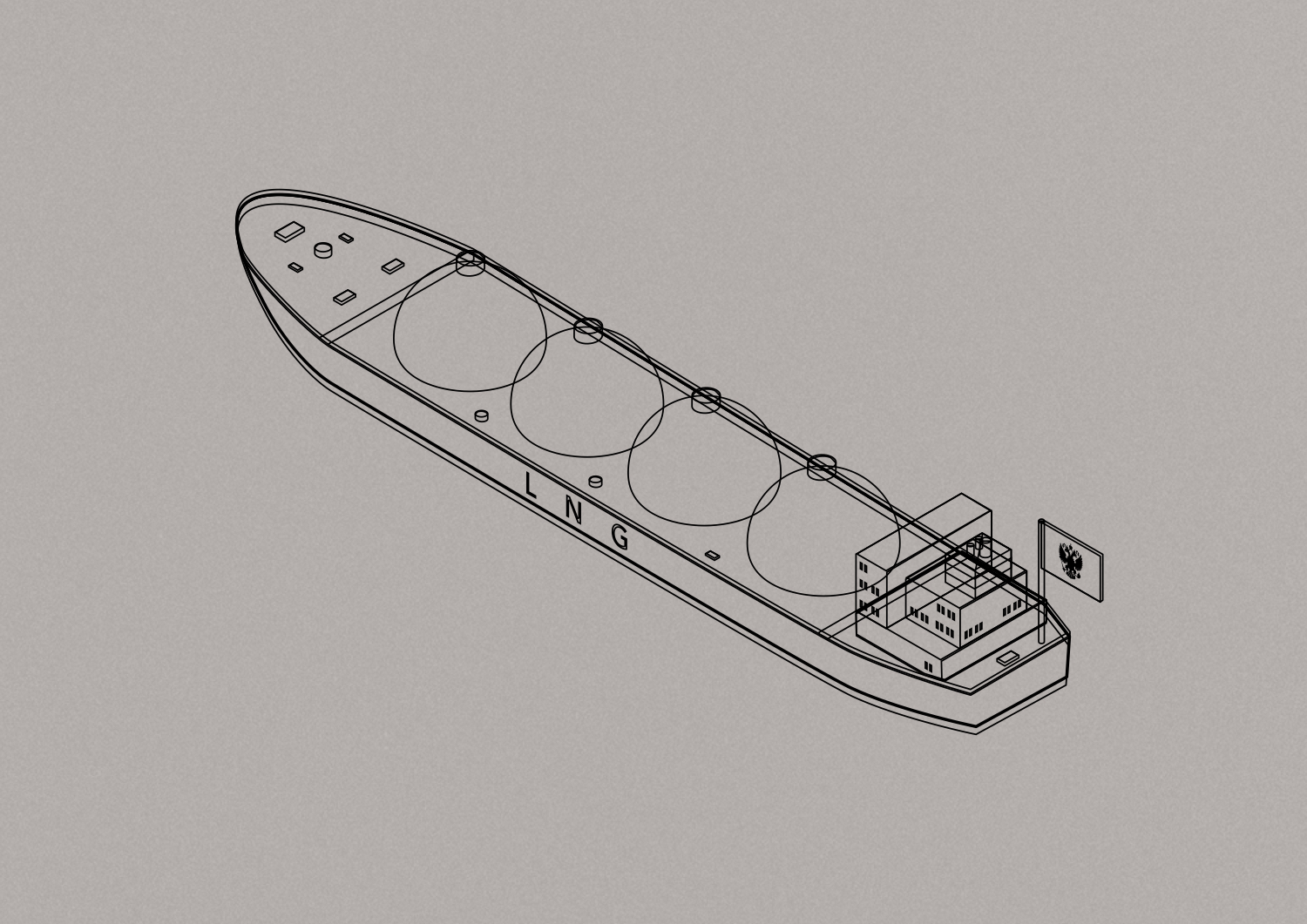
As Europe steps up boardings of Russia’s shadow fleet, Moscow is moving its tankers under the Russian flag, the one registration Europe cannot challenge at sea without confronting Russia itself.
Image Credit: Euro Prospects
By Simone Sandrini, Security & Eastern Europe Correspondent
Edited by Arturo Simone, Hybrid Threats Analyst
24 October 2026

Overnight between 28 February and 1 March 2026, in the Belgian Exclusive Economic Zone (EEZ), a Belgian boarding task force rappelled from a French Navy helicopter onto the deck of the oil tanker Ethera. The ship flew a Guinean flag, but it was fake. That was enough to treat it as a stateless vessel and enough to legally justify a boarding operation that would otherwise be difficult to defend. The Belgian inspectors found 45 violations, almost all involving forged certificates and technical defects. “The ship was sailing under a false flag and is on the European Union’s sanctions list”, said Defence Minister Theo Francken. “When such indications arise in our EEZ, we take action”. Belgium then set a €10 million bond. In March, the shipowner took Belgium to court, contesting both the bond and the legality of the boarding.
Operation “Blue Intruder” worked for one reason only: the Ethera’s flag was worthless. With an authentic registration, the Belgians would have had to let it pass.
From the outside, the Ethera case may look like a piece of a chaotic mosaic. Belgium boards ships, Germany questions tankers about their insurance, the Netherlands still lacks a law to intervene. Ukraine, being at war with Moscow, strikes the ships with drones. The target is the same: the so-called shadow fleet Russia uses to evade Western oil sanctions. Ukrainian intelligence lists more than a thousand vessels and, according to the Kyiv School of Economics, in June 2026 more than half of the tankers carrying Russia’s seaborne oil exports belonged to this fleet.
Whatever their differences, almost all of these approaches rest on a single precondition: a flag that does not hold up, because it is false, duplicated, or revoked. Moscow has spent the past two years making sure its ships no longer offer one. Between January 2025 and June 2026, more than 100 shadow fleet vessels abandoned flags of convenience or false flags and switched to the Russian registry. Against a genuine flag, European tools on the high seas have little grip.
DIFFERENT TOOLS, ONE KEY
The seeming disorder actually has its own logic. Each state acts where its legal position (as a coastal state, with police powers or a belligerent) gives it grounds to act. But almost all tools that allow a ship to be stopped share one unstated premise: the flag must be irregular.
The only exception is Germany, which chose the more cautious route. Since 1 July 2025, together with Sweden, German vessel traffic centres have radioed tankers passing Fehmarn, on the route to the Danish straits. They ask about their insurance coverage against pollution. No vessel is stopped. According to Transport Minister Patrick Schnieder, the more complete the picture, the sooner Baltic partners can act, up to listing the ship for sanctions. It is the only tool that does not depend on the flag, and in some respects also the weakest.
Other countries go further, but always through a flag defect. Estonia led the way in April 2025 by detaining the stateless tanker Kiwala. The Netherlands lagged behind: in June, Infrastructure Minister Vincent Karremans promised that a law against flagless ships or falsely flagged ships would soon reach Parliament. It did so on 9 October.
Belgium, France and, since June, the UK have chosen boarding and prosecution. In mid-June, Royal Marines from 42 Commando and National Crime Agency officers, supported by the frigate HMS Sutherland, boarded the Smyrtos in the English Channel, off the coast of Portland. The ship flew a Cameroonian flag that London suspected was false. Its master, Indian national Ajay Pant, 38, has been charged with transporting Russian oil products to a third country. The same pattern applies beyond oil. In March Sweden stopped the cargo ship Caffa, carrying stolen Ukrainian grain under a false Guinean flag, and seized it in April; in August, its Supreme Court cleared transfer to Ukraine.
On the other hand, Ukraine is playing a different game. As a belligerent, it strikes ships it considers part of the Russian war effort. With Operation “Molochka”, launched on 6 July, Kyiv claims to have hit around 285 vessels with naval and aerial drones in ten weeks, including oil and gas tankers, cargo ships and ferries. By 19 July, ferry capacity across the Kerch Strait had fallen by 75%.
Ukraine aside, there is one key: a false, double or revoked registration makes a vessel stateless. Statelessness provides the strongest legal basis for exercising the right of visit on the high seas. It works well, as long as the premise holds.
THE MARINERA CASE
Washington was the first one to try to test the legal boundaries, on 7 January 2026, in an operation related to its sanctions on Venezuelan oil. In December, the tanker Bella 1 had refused a Coast Guard boarding on its way to Venezuela. During the escape, the crew renamed it Marinera and registered it in Russia a few days before its capture. US special forces and the Coast Guard seized it about 300 km south of Iceland, under a federal court warrant. Washington deemed the Russian registration invalid and the vessel stateless.
Here sanctions enforcement became a law-of-the-sea issue. According to an analysis published by Just Security, the Russian registration was “prima facie, effective”, because the genuine link requirement between ship and state sets a low bar. Hence “it is very difficult to see how the boarding and seizure of the Marinera was lawful” under UNCLOS. RUSI pointed to the political cost: “if the West doesn’t abide by the laws largely of its own making, why should revisionists?”
Europe’s written response was more cautious. On 26 January, 14 Baltic and North Sea coastal states, including the UK and Norway, sent a joint letter to shipowners and flag states. It recalled the technical obligations of transiting vessels and noted that, under Article 92 of UNCLOS, a ship sailing under two or more flags may be treated as stateless. In other words, it targets false flags, not valid ones (unlike Washington with the Marinera). Washington has since changed course: on 16 October Trump waived the new sanctions of the Graham Act.
The same limit applies to EU naval operations. Since March 2026, Irini has been able to board ships suspected of false flagging in the Mediterranean, under Article 110 of UNCLOS. In July, the same authorisation was extended to Atalanta in the Indian Ocean. “We are matching our sanctions with action at sea”, Kaja Kallas said. On 30 August, south of Sicily, Irini boarded the tanker Sun, the sixth boarded by the EU in a few months. Once its papers were checked, the ship sailed on. The new mandate approved by EU ambassadors on 30 September lists the shadow fleet among its declared targets, but within UNCLOS.
MOSCOW’S REPLY
The Russian registry had become a refuge before European boardings gathered pace. According to the Centre for Research on Energy and Clean Air (CREA), 107 ships switched to the Russian flag and the registry grew by 36%. 87% were already sanctioned between January 2025 and June 2026. The peak arrived in December 2025, with 25 new registrations in one month, while flags of convenience were yielding to Western pressure and the United States was tightening the blockade on Venezuela. By June 2026, new registrations had fallen to three.
This data must be read with caution: in the first quarter of 2026, Russian-flagged ships made up about a quarter of the shadow fleet, according to the Kyiv School of Economics. The rest still fly flags of convenience or false flags, but the latter group is shrinking: according to CREA, the ships with fake flags dropped from 101 in October 2025 to 45 in June 2026. European tools still work in many cases, but less every day. And the ships that matter most to Moscow are moving to the only flag Europe cannot challenge without contesting Russia itself.
The shift has a price for the Kremlin too. Registering the vessels means giving up deniability and acting as flag state for old, poorly insured ships. It also means protecting them. Russian warships have escorted tankers in the Gulf of Finland since 2025, and through the English Channel since April 2026. On 8 April the frigate Admiral Grigorovich escorted two of them. On 31 July the destroyer Admiral Levchenko, redeployed from the Northern Fleet to the Baltic, was spotted off Fehmarn, according to German media, to protect the shadow fleet.
There is also a less visible way out: the Northern Sea Route, in Russian Arctic waters. According to Bellona, in the first two months of the 2026 summer season, 50 oil tankers and 18 gas carriers sailed the route, compared with 38 and 13 in the whole previous season. The majority flew the Russian flag.
On 12 August, during Pacific Fleet exercises in Yuzhno-Sakhalinsk, Vladimir Putin warned that, if the seizures continue, Russia will be “forced to respond in kind”, wherever it deems necessary. Since then, no seizures of European vessels have been reported. One possible explanation is that Moscow finds it more convenient to bring the fleet into compliance than to risk an escalation at sea.
THE REMEDY EUROPE CANNOT USE
Most of the specialist literature urges Europe to hit harder. According to the Foundation for Defense of Democracies, Europe plays “catch and release” (in one French case, “more akin to traffic enforcement than law enforcement”), and should create an explicit forfeiture authority. In September, the EU Institute for Security Studies (EUISS) proposed using other UNCLOS provisions, beyond Article 110, and seizing vessels rather than detaining them for a few days.
Against a falsely flagged ship, that is the right answer. Against a validly Russian-flagged ship, it is exactly what CNA warns could “undermine a cornerstone of the law of the sea”. And the party with most to lose is not Moscow, which runs old, expendable ships. It is Europe, whose merchant fleets rely on the guarantee that a state’s flag counts even when nobody likes it. The most effective tool is the one that Europe cannot use, and Moscow has understood it.
The conclusion is less spectacular than the one often repeated, but more practicable. On the high seas, Europe must keep targeting false flags while they last, as France did on 12 October with the DF Peak, boarded south of Réunion over a doubtful Beninese flag. The game for the part of the fleet that matters most is played where flags do not.
Insurance is one lever: Germany’s checks off Fehmarn work whatever the flag, as long as the papers are actually verified, not just logged. Services are another. The EU’s 21st sanctions package, adopted on 23 July, now covers vessels that supply the fleet and, for the first time, a crewing agency. Then there are people, as the EUISS suggests: a ship’s master facing a British court is a problem no ship registry can fix.
It is a slower, less photogenic strategy than boarding. But it has an advantage that Moscow did not miss, and that Europe should quickly grasp: it does not require anyone to dismantle the principle on which their own fleet sails.
Disclaimer: While Euro Prospects encourages open and free discourse, the opinions expressed in this article are those of the author(s) and do not necessarily reflect the official policy or views of Euro Prospects or its editorial board.

Security & Eastern Europe Correspondent
Simone is a geopolitical analyst specialising in Russia, the post-Soviet space, and European security, with a particular focus on hybrid threats and the EU’s evolving strategic autonomy. He studied at the University of Bologna, where he is completing his Master’s degree in International Relations and East-European and Eurasian Studies (MIREES), with additional research experience at Tbilisi State University on South Caucasus regional security, and previously earned a Master’s degree (Red Diploma) from Saint Petersburg State University, where his thesis examined EU-Russia cybersecurity relations. His professional interests centre on Russia’s internal and external political dynamics, grey-zone and hybrid warfare tactics, and Europe’s broader defence and security integration. He currently contributes analysis to the Italian think tank Osservatorio Russia, covering the post-Soviet space, including the Caucasus, Central Asia, Ukraine, Moldova, and Russia. Simone is fluent in Italian and English, with intermediate proficiency in Russian.
Edited by Arturo Simone | Follow our European journalism