Quantum Sensing Has Reached the Battlefield. Europe Needs to Catch Up
Quantum Sensing Has Reached the Battlefield. Europe Needs to Catch Up
Will Europe lose its way on tomorrow’s battlefield?
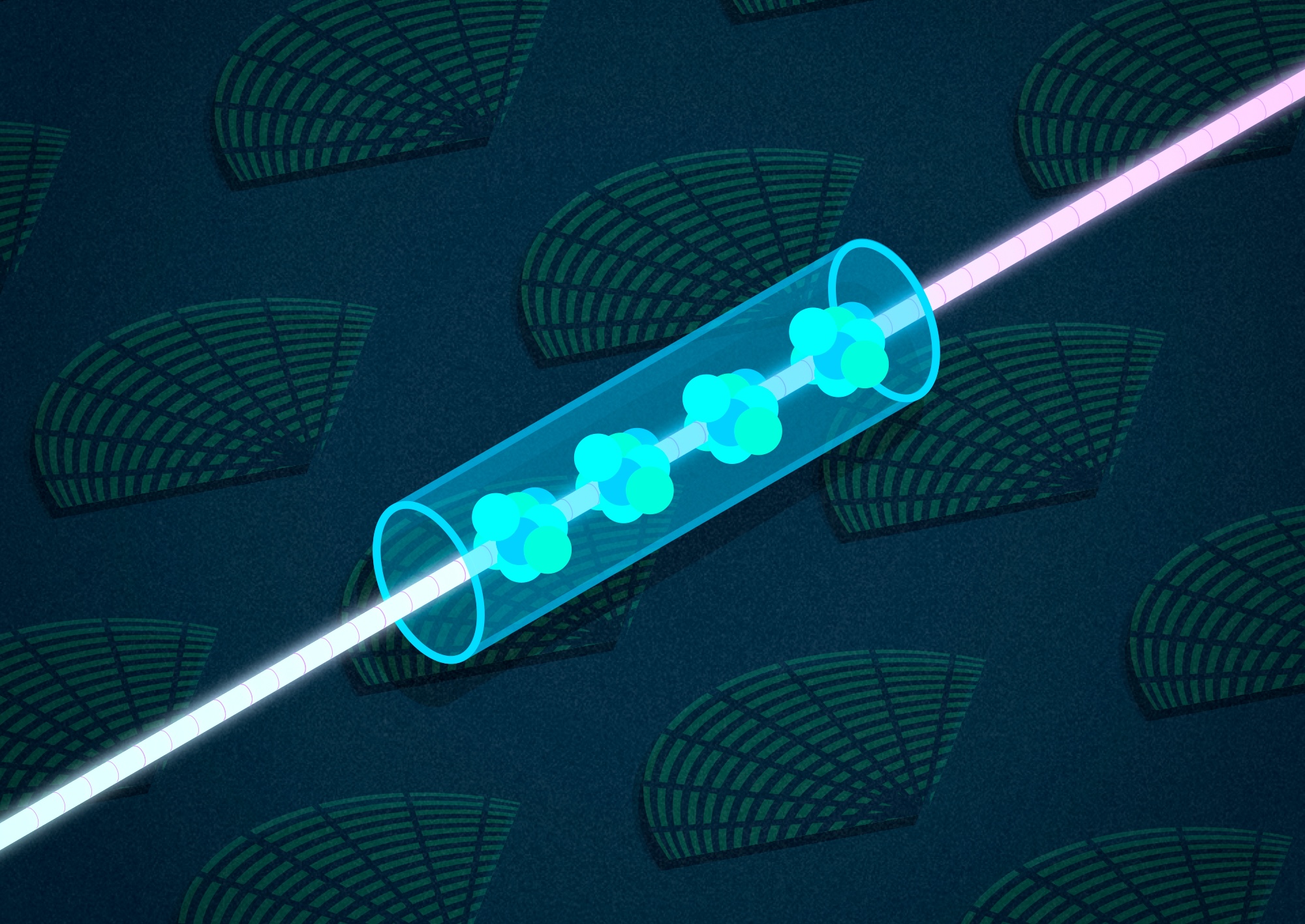
Image Credit: Euro Prospects
By Swann Ashworth, Guest Author
Edited by Jake Southerland, Security & Defence Unit Head
15 August 2026

In early April 2026, an American F-15E was shot down over central Iran, and its weapons systems officer, ejecting into a sparsely populated stretch of desert, survived nearly two days behind enemy lines before a rescue force successfully extracted him. Beyond the airman’s tenacity, the mission was a notable success supposedly due to the use of an experiential quantum sensor program, called Ghost Murmur. Thanks to the latest development of artificial intelligence, Ghost Murmur can detect a single soldier’s heartbeat amid the electronic traffic jams of the modern battlefield. The device belongs to the same family of diamond-based sensors that already work quietly at sea and underground. Its appearance in a high-stakes rescue mission, however, brought quantum sensing into the public spotlight against the backdrop of conflicts being defined by jamming and spoofing, from Ukraine to the Gulf. Europe, while it has the capability to do so, is not ready for this new era of electronic warfare. It can close the gap, however, by treating quantum sensing as a defence priority, by pairing homegrown startups with established industry powerhouses, and ensuring that European supply chains can not only rely on existing hardware, but also explore the latest technological developments.
Since the start of the full-scale invasion, Russia has been using electronic warfare to disturb Ukrainian drone navigation capabilities by either blurring communications between the operator and the drone (jamming), or by providing false information to the operator on its location (spoofing). These two methods render GPS-reliant technologies nearly obsolete. The American Excalibur guided shell relied on it. Since then, its hit rate fell from about 70% to under 10%, forcing Kyiv to look for other alternatives. A self-contained quantum sensor might provide the best solution. Quantum sensors provide potential solutions to rising issues in this newest era of warfare: how to navigate without emitting signals an adversary can pinpoint. They do this by measuring a platform’s own acceleration and rotation, and the Earth’s magnetic and gravity fields, with atomic precision and without sending or receiving any signal, so there is nothing an enemy can jam or spoof.
A race Europe does not lead
The competition is already intense, and Europe risks falling behind. With its extensive networks of national laboratories and defense contracting, the U.S. sets the standard for the latest in defense innovations. The Chinese, however, are not far behind, with public showings of their latest creations on a consistent basis. The European Union (EU) has made some strides via the Quantum Strategy, individual member state programs, and collaborations with the ESA, EDA, and other adjacent organizations. The issue, like many in the EU’s tech races, is that efforts remain fragmented, thereby reaching the field slowly.
Startups, primes and the missing link
Turning that science into fielded capability is less a matter of discovery than of how Europe organises the passage from laboratory to operations. The connective tissue between them is partnership between small companies and established firms. In Arms and Innovation, James Hasik conveyed that small firms, quicker and more strategic than the incumbents, have driven some of the most consequential recent military systems, the Predator drone among them, by winning competitive contracts. What holds such firms back is their access to capital and to customers, which they can overcome by forming alliances, whether with one another or with a prime. Europe needs that remedy for sovereignty as much as for speed, because a startup drawn into partnership with a European prime is drawn with it into a discipline of accreditation, security clearance, export control and confidentiality that keeps its technology inside the Union. Public money bridges the gap in the middle, from the readiness ladder to the NATO Innovation Fund, and the surge of dual-use capital since 2022, now running to tens of billions a year, shows the alliance model working where the pathways exist.
The price of consolidation
In 2026, Europe opened a competition to build the sensor a jammed battlefield demands. The Grand Challenge on Quantum Sensors for Inertial Navigation set guidelines for a jamming-proof navigation system and carries the winner toward scale in two phases, with convertible loans from the European Investment Bank in the second. The sensor itself is dual-use, since the same instrument that guides a freighter or a survey aircraft can guide a submarine, but navigation without GPS is above all the need of a battlefield under electronic attack. The call opened on 15 January under Horizon Europe, the Union’s civilian research programme. One day after it opened, the Council adopted Regulation (EU) 2026/150, which gathered quantum technologies into the European High Performance Computing Joint Undertaking, a body built for supercomputing, and entrusted it with “the strategic autonomy and technological sovereignty of the Union” in quantum technologies, sensing included.
The consolidation is defensible, and in part welcome. Gathering the Union’s quantum work under one roof lets knowledge move between computing, communication and sensing, and it reduces the very scattering described above. Nor is the undertaking a stranger to the instrument, since it already runs the first phase of the Grand Challenge model that gives a startup capital and helps to grow. What it lacks is the judgement that comes from having funded these technologies, the ability to weigh how useful a quantum sensor is and how ready it is, which the EDA and the ESA built through their own navigation and communication calls. Strengthening a single institution obliges it to catch up with the state of the art. The cost is already visible: a call written without that sensing judgement sets a target for technologies the field cannot yet build, while the science the two agencies fund runs on beside it, feeding neither the instrument nor the market it was meant to serve. The remedy is not to move the competition again but to draw the agencies that can judge the technology into writing it.
The delivery gap
None of this closes the gap that matters. European universities turn out more graduates in the relevant fields than any comparable bloc, and it is home to roughly a third of the world’s quantum companies. Yet it files only 6% of the patents, and draws about 5% of global private quantum investment, due to fairly self-explanatory reasons. A capital market fragmented across 27 jurisdictions leaves growth rounds too small to industrialise hardware, and the talent the universities produce drains steadily toward better-paid work abroad. The failure is of delivery, and it recurs across instruments.
Sovereignty runs deeper than finance. It boils down to the materials a sensor is made from. Photonics, control electronics and, for the diamond devices, a specialist substrate all rest on inputs the Union already calls strategic. The Critical Raw Materials Act lists gallium, germanium and the rare earths among its seventeen strategic materials, and China, which mines close to 90% of the world’s gallium, put both under export licences in 2023 on dual-use grounds. The exposure reaches past the ore into the processed materials on which no European maker holds the whole. Quantum technology is not yet a named strategic sector in the Union’s raw-materials policy, and that is the gap a defence framing would close: the materials military capability depends on then become prioritised in law and diplomacy, rising up the queue for stockpiling, recycling and trade. A capability the armed forces rely on in a crisis cannot sit on a supply chain a rival can close at will.
But the case for moving rests on opportunity as much as on threat, because the path from military to civilian use is historically well worn, with startups and industry leaders leading its transition. A technology funded for defence is fielded first by the military and only later remade for civilian life, in the same way satellite positioning was after the American military built it and civilians came to depend on it. The quantum sensors now built to find submarines are giving medicine wearable brain scanners, while others are being used to map underground water and survey for critical minerals. Each of those civilian markets is larger than the defence one that seeded it. Europe’s quantum spending is better understood as industrial investment with a double return than as a defence subsidy.
What Europe should do now
Three things should follow from this, and they reinforce one another. Member states need to bring quantum sensing, and the technologies behind it, into their arsenals while the tensions that give it value are still rising. The Union’s institutions should use the dual-use character of the field to act on both flanks of sovereignty at once, tightening the export controls where Europe leads and securing the raw-material supply chain where it is exposed, ahead of the shortage that would otherwise force the decision. And the whole effort should be prospective, because access to a decisive technology can be closed off from one day to the next, and whoever is left outside it pays the price. Sustained defence spending on research and development is the engine of all three, and its returns spill into the civilian economy over time.
Building the system that delivers all this is the work Europe has still to do. Quantum sensing has already reached the battlefield and is on its way to the clinic, with Europe holding the scientific expertise for both. What it lacks is the system to turn that science into capability it owns. Now is the moment to build it, before the next airman in the next desert is found by something Europe bought instead of built, or worse, not found at all.
Disclaimer: While Euro Prospects encourages open and free discourse, the opinions expressed in this article are those of the author(s) and do not necessarily reflect the official policy or views of Euro Prospects or its editorial board.

Guest Author
Swann Ashworth is an Associate Research Assistant at CEPS in the GRID UNIT – Cybersecurity@CEPS Initiative, with an interest in the intersection of cybersecurity, emerging technologies, and public policy. He completed a bachelor’s degree at ESPOL, in European policy, with a thesis on “Analysing ransomware group typologies to enhance EU cybersecurity policy”. He is currently enrolled at Maastricht University, in the programme of European Studies, Science and Technology (ESST), with a specialisation at Tallinn University of Technology (TalTech) on the relation of Innovation and the State, with an emphasis on Digital Public Infrastructure. From April to November 2025, he was rapporteur for the CEPS Task Force on Strengthening the EU transition to a quantum-safe world.
Edited by Jake Southerland, Security & Defence Unit Head | Follow our European journalism