How Russia’s NATO Grievance Became a Grievance Against Europe
How Russia’s NATO Grievance Became a Grievance Against Europe
For twenty years, Russia cast NATO as an existential threat to justify its aggression. Now, as Washington pulls back, that same grievance is being pointed at Europe itself.
Image Credit: Euro Prospects
By Kit Newman, Russia Analyst, Security & Defence Unit
Edited by Arthur Langley, UK & Nuclear Policy Analyst, Security & Defence Unit
Unit Head: Jake Taltson Southerland, Director of Security & Defence Team
13 September 2026

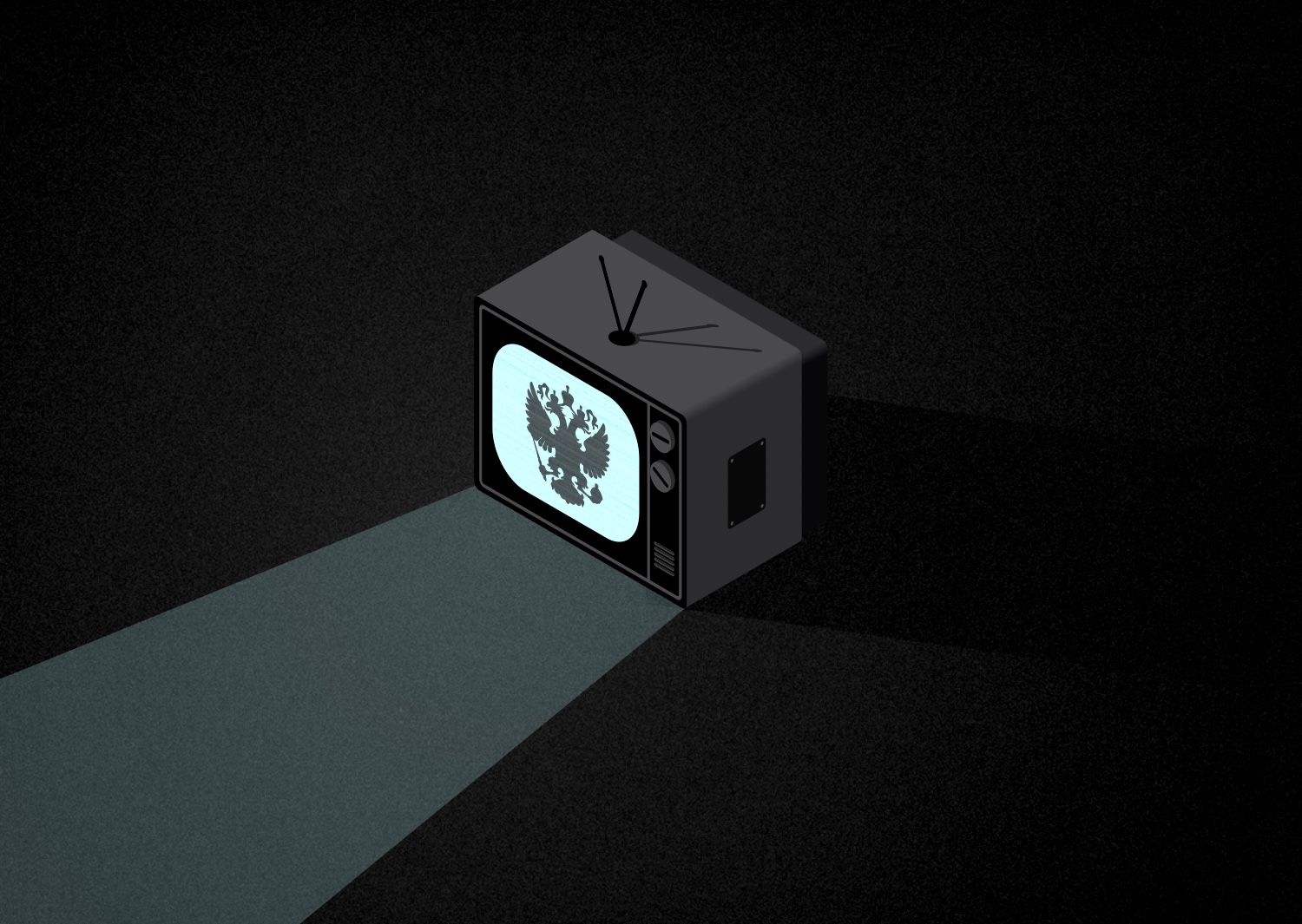
During an evening broadcast on January 11, 2026, influential TV host Vladimir Solovyov proclaimed that America is the de facto owner of Europe, capable of chasing them back “into the barn”. Coming at the height of tensions between European nations and the USA over President Donald J. Trump’s threats to acquire Greenland, Solovyov’s comments highlight Russia’s political use of discourse to heighten tensions among members of the transatlantic security order. This tension comes at a particularly vulnerable moment for the web of institutions, treaties, and norms that has shaped European security since the Cold War.
The transatlantic security order has been in a disorienting restructuring since the invasion of Ukraine in 2022, which the re-election of President Trump has exacerbated. President Trump’s administration has shifted US policy emphasis towards US domestic priorities, the rise of China, and great-power politics that empower Russian President Vladimir Putin. As Royal United Services Institute analysts Ed Arnold and Darya Dolzikova put it, the rise of populism on both sides of the Atlantic is producing “unprecedented and simultaneous internal political instability, fraying Western unity and multilateral collective action.”
Russia has not been a passive observer of this fragmented relationship, and analysis of Russia’s narration reveals elements of its strategic thinking. This piece traces how Russian political discourse has framed the transatlantic relationship across three distinct periods, from the pre-2022 ‘grievance’ narrative built on NATO’s eastward expansion from as early as 1999 and the Kosovo crisis, through the invasion of Ukraine itself, to the rhetorical pivot that followed Trump’s re-election. This rhetorical shift has seen the US under Trump recast as a reluctant ally to a warmongering Europe, in sharp contrast to the pre-Trump narrative, in which the US was the reluctant ally.
Historical roots of discourse
Russian attempts to undermine the Atlantic security order are not new. The opportunistic use of the political turmoil of the overlap between the war in Ukraine and the second term of President Trump is the most recent iteration of an aggregation of 19 years of Russian aggression across Europe. Its clearest starting point is NATO’s 1999 intervention in Kosovo, which Russian politicians of the era regarded as a humiliation and shaped Putin’s own rise to power. The alliance’s willingness to act unilaterally, over Russian objections and outside of a UN mandate, became the foundational grievance.
The Russian 2008 invasion of Georgia and the 2014 annexation of Crimea were not only violent attempts to undermine the foundations of the transatlantic security order, but were backed by discourse that drew from the Kosovo crisis to portray transatlantic security treaties as causes of Russian aggression. While Georgia in 2008 and Crimea in 2014 were tests of the transatlantic security order, RUSI analysts describe the invasion of Ukraine as a “violent attempt to overthrow and replace it”.
In combination with the Kosovo crisis, President Putin and the Russian political elites have traditionally presented the North Atlantic Treaty Organisation (NATO) as a threatening “Other” whose expansion threatens the very existence of Russia. Putin used this discourse in 2007, framing NATO as a key factor in the breakdown of trust between Russia and the West. Putin stated at the 2007 Munich Security Conference that NATO “does not have any relation with the modernisation of the Alliance itself or with ensuring security in Europe” but instead “represents a serious provocation that reduces the level of mutual trust.” The following year, at a summit in Bucharest, Putin expanded upon this, claiming that further eastward expansion was a “direct threat to the security of our country.”
The same argument resurfaced, with Kosovo utilised as the reference point, in the lead-up to the annexation of Crimea. At the 2016 Valdai Discussion Club, Putin drew the comparison explicitly, stating, “bombing Belgrade was clearly an intervention outside the norms and rules of international law… The United States did it unilaterally… What about Crimea? What you did in Yugoslavia is nothing compared to it.” Sergey Lavrov, the Russian Foreign Minister, made the same case in more legalistic terms, citing NATO’s support for Kosovo at a UN Security Council meeting in February 2022 as a reason to disregard Western criticisms of Russia, and describing the Yugoslav war, at a 2014 youth forum, as being conducted “in violation of all conceivable norms and responsibilities.”
Across these episodes emerges not a series of isolated justifications but a durable narrative. NATO, and by extension the United States, is cast as the actor that first broke the rules in Kosovo, Bucharest, in the eastward expansion that followed reunification promises Moscow insists it was given. Russian action, however aggressive, is then framed as a belated, proportionate response to a prior violation. This same justification was used to underpin the invasion of Ukraine in 2022, and would later be redirected toward Europe following the rift between the continent and the United States.
Discourse used to justify the invasion of Ukraine
Russian discourse utilising NATO and the transatlantic security order to justify regional aggression reached new heights to justify the “special military operation” in Ukraine in February 2022. Putin justified his full-scale invasion of Ukraine, because Kyiv’s “long-proclaimed strategic course on joining NATO” would violate the 1999 OSCE Charter for European Security as well as the 2010 OSCE Astana Declaration, as it would threaten “Russian security”. This is regardless of both documents asserting every state’s right to choose its own security arrangements and Putin’s violation of over 400 security pacts since 2008.
Putin stated, “Ukraine joining NATO is a direct threat to Russia’s security.” He returned once more to the threat that NATO expansion and Atlantic security treaties pose to Russia, emphasising the promises not to expand NATO further. Putin continues to use history to generate this image of NATO that applies to the invasion of Ukraine, citing assurances given to the Soviet leadership “not to lead to the spread of NATO’s military organisation to the east”. Furthermore, Putin claimed an undisclosed NATO document named Russia as the principal adversary to Euro-Atlantic security, making Ukraine “an advanced bridgehead” for a future strike.
Kosovo did not disappear from this reasoning. Putin’s attempted use of Kosovo both sets a precedent and sends a message. As Jade McGlynn summarised Putin’s perspective, “if the West can redraw borders for Kosovo, then we can redraw borders for the Donetsk and Luhansk People’s Republics in eastern Ukraine.” In Putin’s explanation, NATO had fabricated a genocide to justify intervention in 1999. He said he was following the precedent set by the Atlantic security order.
There was a shift within Lavrov’s rhetoric during this same period, one that contradicts a far larger pivot that would follow Trump’s re-election two years later. Addressing the Security Council in late February 2022, Lavrov broke from the standard NATO-centred framing to cast the war explicitly as an American project directed against Europe: “it is surely time for Europeans… to wake up and understand that with the help of Vladimir Zelensky’s regime, the United States is not only waging a war against Russia, but also pursuing the strategic objective of sharply weakening Europe as an economic rival.” At the time, this was a minor attempt to sow discontent within the alliance by suggesting that Europe was being used. It sits oddly alongside the pro-American tone Russian discourse would adopt after 2025. But the underlying instinct, that Europe’s interests and America’s interests could be prised apart and Europe cast as the loser, would return with far greater force.
Narratives following rupture in the transatlantic security order
Trump’s second term as president saw the US pivot away from the transatlantic alliance. Russian discourse has interpreted this as vindication of its critique of the Atlantic security order. While Russia’s political discourse on this topic is constantly in flux in response to the Trump administration’s volatile foreign policy, a trend has emerged. The US and Trump are increasingly portrayed more positively as peace-seeking. In contrast, Europeans are increasingly portrayed as warmongers, painted with the same brush previously applied to NATO and the transatlantic security order more generally.
The emerging rift in the transatlantic security order in 2025 saw Russia’s critiques of NATO quickly and deliberately recast as critiques of European political actors. When discussing Washington, Putin’s tone was almost conciliatory, stating, “Our countries, as we know, have many points of disagreement… the most important thing is how to resolve these disagreements”, adding that the current administration states its political interests bluntly, “but without any unnecessary hypocrisy.” In the same press conference at the Valdai Discussion Club in Sochi on October 2, 2025, the tone changed entirely when speaking about Europe, stating that “the ruling elites of united Europe continue to whip up hysteria. It turns out that war with the Russians is practically on the doorstep… They’re either incredibly incompetent if they truly believe it… or they’re simply dishonest.”
Expanding on this, Putin claimed that the responsibility for the continuation of the fighting in Ukraine lay “with a minority in Europe that is constantly escalating the conflict,” a militarisation he warned would provoke a Russian response that would be “very convincing.”
Read against two decades of Russian rhetoric about the transatlantic order, this contrast in tone shows clearly how Russian political elites are exploiting the current fracture. While Lavrov’s 2022 discourse cast President Joe Biden’s administration as the warmongering element of the wider transatlantic security apparatus, this pivot since the breakdown in relations is imperative to portraying European countries as the aggressors.
This reframing is further exemplified in 2026. In April, Medvedev, the deputy head of Russia’s Security Council, warned the EU can turn “into a full-fledged and extremely hostile military alliance against Russia, in some ways worse than NATO.” By late May, Medvedev dropped the conditional tense altogether, stating “European countries are direct participants in the war against Russia, and no one disputes this anymore.” Notably absent from this claim was any mention of the United States, with the focus entirely on the European countries. Lavrov struck the same note in more measured, official language in May, arguing the EU had become “almost indistinguishable from NATO,” transformed from “an economic bloc, designed to enhance the welfare of European citizens” into “a semblance of the North Atlantic Alliance.”
This rhetoric shows how Russian political figures are navigating and exploiting the rift in the transatlantic security order, applying narratives that have traditionally been applied to the collective order, or specifically to the US, onto European countries and the European Union. This shift reflects changes in the security order driven by the Trump administration’s policies and Russia’s potential to sow discontent and exploit the resulting disharmony for geopolitical gain.
In conclusion, a durable narrative structure emerges across these three periods. The same logic once directed at NATO as an institution has, since the rupture that followed Trump’s re-election, been redirected toward Europe. Russian political figures are not improvising in response to transatlantic strain; they are applying a long-established framework to a new target in the contemporary geopolitical context, using the realities of the rift inside the transatlantic security order.
Disclaimer: While Euro Prospects encourages open and free discourse, the opinions expressed in this article are those of the author(s) and do not necessarily reflect the official policy or views of Euro Prospects or its editorial board.

Russia Analyst, Security & Defence Unit
Now based in London but originally from Scotland, Kit pursued an undergraduate degree in History at the University of Edinburgh with an emphasis on Cold War, Russian, and colonial history. Kit is currently completing an MA in Conflict, Security and Development at King’s College London, taking additional courses in Russian foreign policy and open-source intelligence collection methods. The combination of historical and contemporary studies informs his research interests, which are primarily focused on Russia-West relations, the war in Ukraine, and the use of open-source research methods to examine the proliferation of disinformation on social media.
Edited by Arthur Langley, UK & Nuclear Policy Analyst, Security & Defence Unit | Follow our European journalism