10 min read — Energy | Economy | Global Europe | Trade
Europe’s Energy Lifeline: Where Does the Continent Go for Fossil Fuels?
Europe needs fossil fuels. The question then is where, and from whom, Europe will get them.
By Pedro Ursua Marinho — EU Foreign Policy Correspondent
Edited/Reviewed by James Murphy
June 10, 2026 | 13:05
For the second time in three years, Europe has been forced to confront a brutal truth. It does not have a safe energy supply. The prosperity of the continent rests, in no small part, on energy it cannot produce itself. The 2022 Russian invasion of Ukraine, and the decision to phase out Russian gas, shattered the continent’s gas supply architecture almost overnight. Today, the conflict in the Middle East threatening the Strait of Hormuz, through which approximately 20% of the world’s oil and liquefied natural gas (LNG) passes, is awakening the same horrors, even if Europe’s position today is considerably stronger than it was in the darkest days of 2022.
The European Council acknowledges it clearly: “EU member states do not house any large oil reserves” so, as of today at least, Europe does not produce its own energy. In 2024, 97% of crude oil used across the EU was still imported. It is true that electricity generation from renewables has surged, with wind and solar overtaking fossil fuels as a share of EU power generation for the first time in 2025, however, electricity represents only around 23% of Europe’s total energy consumption. The buildings, transport, and heavy industry sectors remain firmly dependent on oil and gas.
Europe needs fossil fuels. The question then is where, and from whom, Europe will get them.
The Russian Exit
The most consequential shift in European energy geography over the past four years has been the almost total elimination of Russian supply. In 2021, Russia provided over 40% of the EU’s pipeline gas imports. By 2025, that figure had collapsed to around 6% for pipeline gas, and roughly 12% for gas overall when LNG is included, according to data from the European Council. In January 2026, the EU Council adopted a regulation formally prohibiting both LNG and pipeline gas imports from Russia, with effect from March 18, 2026 , drawing a definitive line under decades of energy interdependence.
The story with oil is equally decisive. After the EU ban on seaborne Russian crude oil entered into force in December 2022, followed by an embargo on refined products in February 2023, Russia’s share of EU petroleum oil imports fell from over a quarter of the market to just 1.4% by the final quarter of 2025, as Eurostat shows.
A relationship that had made Russia the continent’s largest single energy supplier has been dismantled in under three years. Even though this risky over reliance was successfully eliminated, the problem did not disappear. Furthermore, the ban has also exposed, or created, political fractures within the bloc itself. Hungary has long opposed the measures, while rising fuel prices since the Iran conflict began have prompted others to reconsider. For example, Belgian Prime Minister Bart de Wever has suggested negotiating with Russia, Slovak Prime Minister Robert Fico voted against the ban, and Bulgaria abstained from the final vote. In Italy, politicians including Rossano Sasso have criticised the ban’s impact on utilities and agriculture costs. The consensus that made the ban possible becomes harder to sustain as prices climb.
Norway: The Bedrock
Before examining new dependencies, it is worth acknowledging what has not changed. Norway has been a pillar of European gas supply for decades, and that role has expanded dramatically since 2022. Norwegian gas exports to the EU grew from 79.5 billion cubic metres (bcm) in 2021 to 89.3 bcm in 2025, and Norway now accounts for roughly 29% of all gas imports and over 52% of gaseous natural gas imports to the EU. Since late 2024, approximately half of all EU piped gas originates in Norway according to Eurostat.
Even though production from mature fields is gradually declining, substantial remaining reserves and ongoing investment mean that Norway will remain Europe’s most important gas partner for the foreseeable future. For pipeline-dependent states in central and northern Europe, Norwegian supply stability is the single most important factor in near-term energy security.
The American LNG Revolution
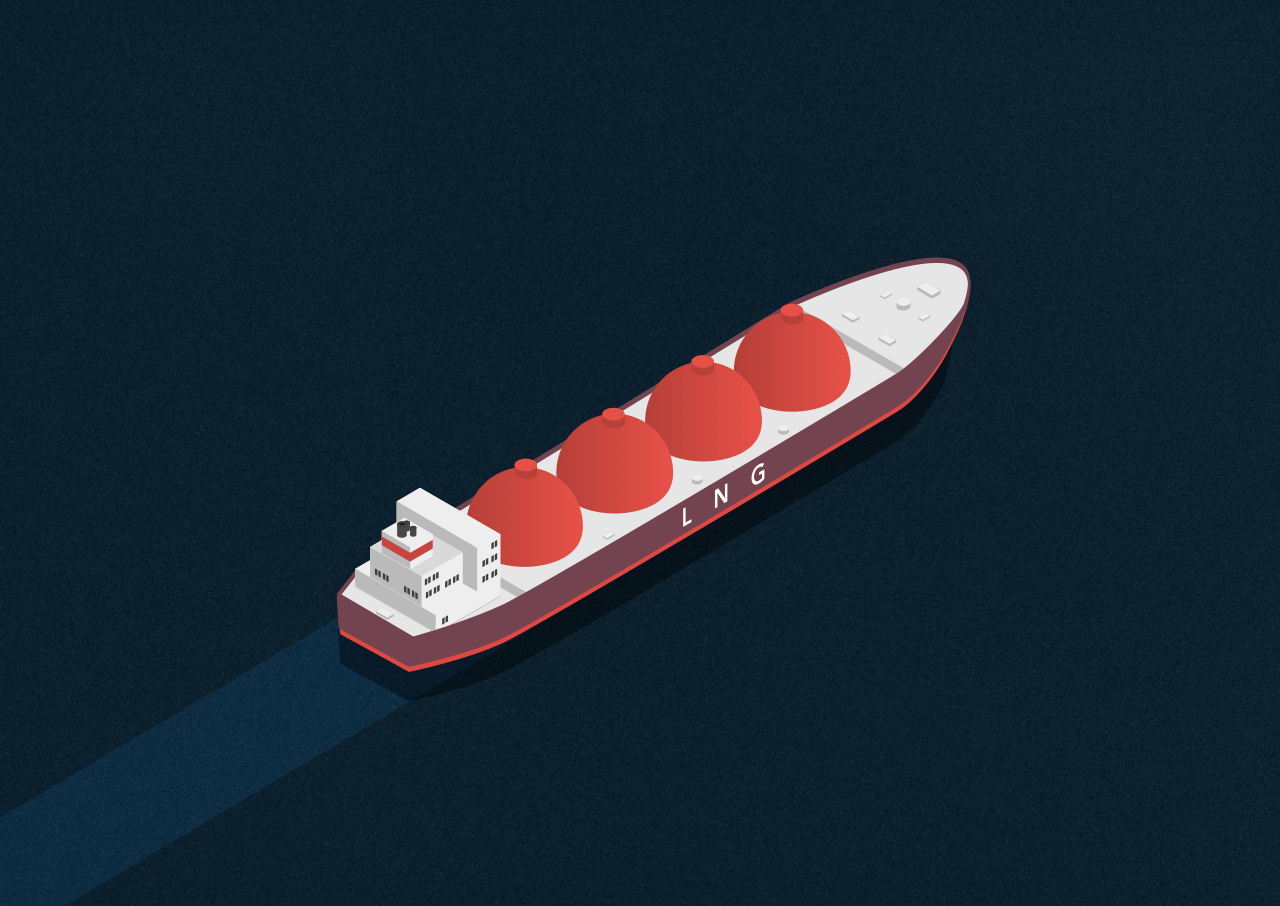
The most dramatic striking structural change in European energy supply over the past three years has been the surge of American liquefied natural gas. US LNG exports to Europe increased from 18.9 bcm in 2021 to 75.6 bcm in 2025. In 2025, the United States was the largest single supplier of LNG to the EU, accounting for 56% of all LNG imports, a figure that had tripled from 2021 levels according to the Institute for Energy Economics and Financial Analysis. Fourteen EU countries now receive American LNG directly. France, the Netherlands, the United Kingdom, Spain, and Turkey are the largest individual importers.
This new situation and dependence has deep geopolitical consequences. Being heavily reliant on American LNG, at a time of significant transatlantic friction over trade and tariffs, introduces a different kind of vulnerability. Price volatility, too, remains a concern, for instance, the EU’s power sector gas import bill rose to €32 billion in 2025, a 16% year-on-year increase, driven in part by higher LNG prices during peak demand periods.
Algeria and the Southern Corridor
Algeria remains Europe’s most important African supplier. It provides 17.4% of the EU’s gaseous natural gas via pipelines, with the Medgaz pipeline running directly to Spain and the Transmed system running through Italy, and 6.6% of the EU’s LNG imports. Relations between Algeria and certain EU member states, notably France, have been strained at times by wider political tensions, but supply has remained broadly reliable, and the EU has signed formal agreements with Algiers to maintain and expand exports.
Egypt and Israel have also emerged as new gas exporters to Europe, following agreements signed with the European Commission since 2022. Their export volumes remain limited, but they represent genuine diversification of the southern corridor. There is a significant caveat, however. Oil and LNG from these countries must transit the Bab el-Mandeb Strait in the Red Sea, itself a chokepoint vulnerable to disruption. Somali piracy has resurged in recent years, with tens of thousands of barrels already seized and removed from the market, adding another layer of supply risk to Europe’s southern energy corridor.
Nigeria is also emerging as a longer-term African option for both oil and gas. Europe has already turned to Nigeria for jet fuel, with the Dangote refinery shipping cargoes to the UK as Middle East supply disruptions bite. On gas, the proposed Trans-Saharan Gas Pipeline, a 4,128-kilometre pipeline running from Nigeria through Niger to Algeria, where it would connect to existing Mediterranean export infrastructure, could deliver up to 30 bcm per year to Europe after 2030. Algeria, Nigeria, and Niger signed key agreements to accelerate the project in early 2025, with a first operational phase now projected for around 2029–2030. The pipeline faces significant challenges, including a $13 billion price tag, political instability in the Sahel, and competition from a rival Atlantic route via Morocco. But, as a potential land-based alternative to vulnerable maritime obstacles, it is attracting growing European interest.
Azerbaijan supplies around 8% of gaseous natural gas to the EU via the Trans-Adriatic Pipeline (TAP), which feeds directly into the Italian grid and beyond. Baku has signed long-term supply commitments with Brussels, and an expansion of the Trans-Anatolian Pipeline (TANAP) to 31 bcm per annum is planned by 2026. Azerbaijan has limitations, its reserves are far smaller than those of major Gulf producers, but as a non-Russian, politically stable pipeline source, it occupies a strategically important niche that must be acknowledged.
Qatar and the Middle East: The New Vulnerability
Before the latest Middle East crisis, Qatar was already a significant LNG supplier to Europe, holding an 8.9% share of EU LNG imports in 2025. That share is growing, with QatarEnergy’s massive NorthField East expansion project expected to begin production in mid-2026, targeting an increase in annual LNG output from 77 to 126 million metric tonnes.
Recent conflict now threatens these developments. Iranian strikes on the Ras Laffan LNG export complex, the world’s largest, have halted operations and sent spot LNG prices sharply higher. Italy and Poland, which sourced 30% and 17% of their LNG imports from Qatar respectively, are now competing aggressively for alternative cargoes on global spot markets. EU gas storage levels, which stood at around 30% in early 2026, are dangerously low heading into the critical summer refilling period. In just the first seventeen days of the Iran conflict, the EU was forced to spend an additional €6 billion on fossil fuel imports due to soaring prices.
Europe’s oil supply picture is also more complex than it appears. The three largest petroleum oil suppliers to the EU in 2025 were the United States (15.1%), Norway (14.4%), and Kazakhstan (12.7%), with meaningful contributions from Libya (9%), Saudi Arabia (6.5%), Nigeria (5.9%), and Iraq (5.2%). Oil, unlike gas, is a genuinely global commodity, it travels by tanker and can be redirected. But price shocks triggered by Middle East conflict are fully global, and Europe cannot insulate itself from them simply through diversification of formal suppliers.
The Structural Problem
What this landscape reveals is that Europe has successfully ended its dependence on a single dominant supplier, Russia, by constructing a more distributed portfolio of dependencies. Norway, the United States, Algeria, and Qatar now collectively provide what Russia once provided alone. This is unambiguously progress. The risk of deliberate supply weaponization by any one state has been substantially reduced.
But the structural exposure to fossil fuel price shocks has not been eliminated, only redistributed. As researchers at Nature Energy have argued, what Europe needs is not another scramble for fossil fuel imports, but a fundamental reduction in the demand that makes these shocks so damaging. Clean energy investment across the EU more than doubled to €418 billion in 2025. EU carbon emissions are expected to fall 47% by 2030 under current policies. And the Iran war itself appears to be accelerating that shift. Since the conflict began, green energy stocks have outperformed fossil fuel companies across European markets. According to a report by Dutch newspaper Trouw, Germany’s Nordex surged over 70%, Denmark’s Ørsted rose 40%, and Belgium’s Elia Group gained 26%. The S&P clean energy index climbed nearly 15% in the same period, with €2.6 billion flowing into clean energy index funds in April 2026 alone, the largest monthly inflow since 2021. Public sentiment is moving in the same direction. A new survey by POLITICO of the six major European countries shows more than three-quarters of Europeans now favour prioritising domestic renewable investment over imported fossil fuels. Twenty-three countries across five continents have announced accelerated clean energy programmes since the war began, many citing energy security as the primary motivation. The direction is clear, and it is being set by the crisis itself.
In the meantime, for as long as European homes need heating, European trucks need diesel, and European industry needs natural gas for feedstocks and processes, the continent will require fossil fuels it cannot produce domestically. The map of where those fuels come from has been redrawn dramatically since 2022. Whether the new map is more stable, or simply differently fragile, will be answered, in part, by what happens in the Strait of Hormuz.
Disclaimer: While Euro Prospects encourages open and free discourse, the opinions expressed in this article are those of the author(s) and do not necessarily reflect the official policy or views of Euro Prospects or its editorial board.
Write and publish your own article on Euro Prospects
Subscribe to our newsletter – stay informed when we publish articles on pressing European affairs.