Defence Spending Alone Cannot Produce European Defence Integration
Defence Spending Alone Cannot Produce European Defence Integration
On the 9th and 10th of September 2025, roughly twenty Russian drones intruded upon Polish national airspace, calling for a NATO response involving air-defences from several allies – this scramble exposes how the EU relies on NATO and individual national capabilities for rapid and coordinated defences rather than a stable and unified infrastructure.
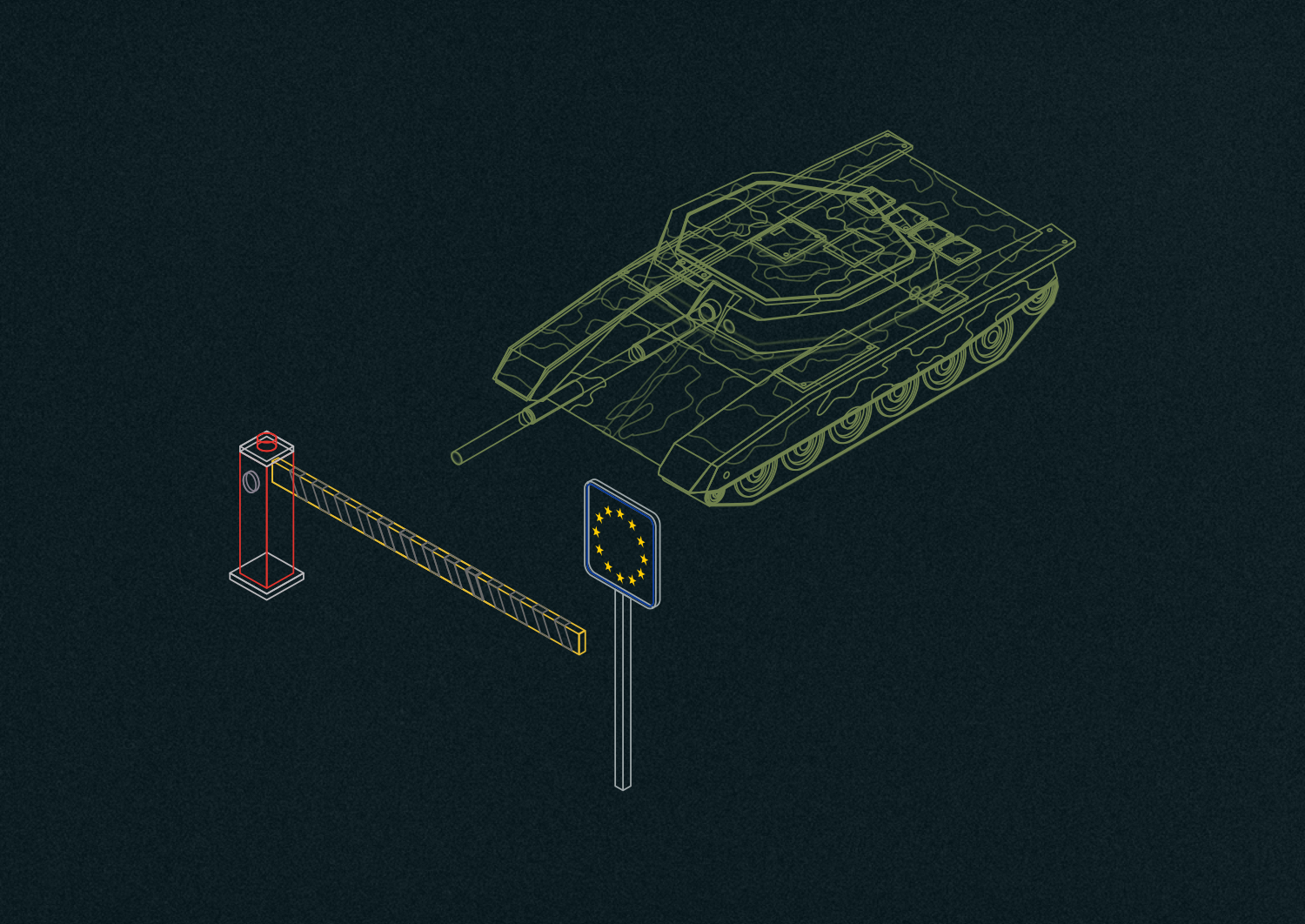
Image Credit: Euro Prospects
By Oskar Genney, International Affairs Correspondent
Edited by Milán Major, Operational Readiness Analyst, Security & Defence Unit (S&D)
14 October 2026

For decades, debates on European defence have focused on military spending. Since Russia’s full-scale invasion of Ukraine, that conversation has shifted. Increasing defence budgets alone does not guarantee an improved mobilisation of European troops across borders, especially as purchases of military assets do not presuppose interoperability with allies. Allied tanks are only useful if they can cross your bridges, and ammunition is only valuable if production and transportation demands can be met. Reinforcements are simply non-existent in a setting where customs, export-controls, regulations and opposing procurements cloud that mobilisation. The alarming events and witnessed inefficiencies of mobilising troops when needed have urged the European Commission to seek something far greater and ambitious than higher defence spending: the creation of a common defence infrastructure. But do recent initiatives represent genuine integration, or are they primarily political signalling?
What the rhetoric is and why it has become important
Russia has exponentially become one of the EU’s biggest security threats over the past decade. Since the invasion of Ukraine in 2022, the EU has rolled out several programmes and operations in effort to increase national defences, interoperability and the Member State’s defence industrial capacity. As the European Commission increases defence funding in an effort to strengthen military gaps, collaboration and integration of military assets within the EU by implementing initiatives such as ‘Military Schengen’. Their institutional ally, NATO has followed suit and collaborated closely with the Commission’s strategy of funding and fulfilling the industrial, military and strategic gaps. All the while, Russian incursions into EU airspace have been growing: 19 drones in Poland, one in Romania and several aircraft in Denmark. In response, NATO forces reacted on an ad hoc basis after the fact. But to what extent has this effectively changed anything?
Military mobility issues
There are several and severe military mobility issues across Europe such as national procedures, red-tape bureaucracy and differing regulations in transport infrastructure. The consequences of these individual differences cause major delays for military equipment rendering them useless instead of being rapidly moved and used where they are needed. As a response to this, the European Commission has initiated programmes and strategic plans in effort to increase effectiveness of military mobility.
The ‘Military Schengen’ aims to establish a common regulatory framework to facilitate more effective military mobilisation across Europe by harmonising border procedures and transport infrastructure regulations. To achieve this goal set by the European Commission, the Military Mobility Package establishes a regulatory framework that addresses cross-border procedures and issues regarding transport infrastructure related to the moving of military assets. Within this framework set by the Military Mobility Package, EMMERS (European Military Mobility Enhanced Response System) has provided a specific mechanism in an effort to improve coordination to ultimately achieve a rapid and smooth response to requests for cross-border infrastructure. Whereas the Military Schengen proposes a broader objective, the Package provides the regulatory framework and the EMMERS constitutes one of several mechanisms used to support the strategic goal.
Together, these initiatives aim to tackle the same broad problem with its underlying implications, the areas that lack and cause major delays for transporting military assets. However, whereas mobilisation, regulations and border crossing issues are being solved, the European Commission knows that to create and facilitate an independent strategic defence and security-hub, it has to implement programmes and initiatives that increase the member state’s industrial capacities, production rates and more.
Industrial Capacity
Effective deterrence and military readiness, however, lies not only in effective, coordinated military mobility procedures but equally in the military industrial capacity the EU wields. European defence production has always been fragmented and with limited procurement. In 2021, defence production in the EU was at 18%, way below the benchmark at 35%. As of today the EU founded EDIP (European Defence Industry Programme) that focuses primarily on strengthening the production capacity and supply chains; EDF (European Defence Fund) that aims to support research and development within defence production; and lastly, SAFE (Security Action for Europe) complements these two funds by providing loans up to €150 billion to Member States that aim to increase their defence infrastructure and joint procurement production. Interestingly, today the “big-five” arms producers are France, Germany, Sweden, Spain and Italy, accounting for approx. 55% of Europe’s defence industry revenue, highlighting the concentration of a small number of European states. EDIP and SAFE are intended to narrow the gap down between the defence-industrial gap between Western and Eastern Flank countries by supporting Poland, Estonia, Latvia, Romania and Bulgaria and Lithuania in expanding their industry production capacities. The EDF, on the other hand, seeks to boost research and defence development funding.
Altogether, these three initiatives focus on different aspects and stages of defence production, the aspect of research, development, production and to create a joint production plan throughout the EU.
The EU is moving beyond rhetoric of just defence spending to strategic visions
The EMMERS, Military Mobility Package, EDIP, ‘Military Schengen’ and SAFE all serve as different individual frameworks furthering a EU defence infrastructure. The White Paper on European Defence presented on 19 March 2025 included Readiness 2030 (or ReArm Europe and was first proposed on 4 March 2025) provides a clear strategic vision for strengthening European defence.
“Europe faces a fundamental choice about its future. Does it want to muddle through the years ahead … Or, does it want to decide its own future, free from coercion and aggression, ensuring that the people of Europe are able to live in security, peace, democracy and prosperity?” – White Paper, introduction
Readiness 2030 is explained in the White Paper as operationalising the strategic vision that it presents. Readiness 2030 identifies and prioritises the industrial gaps within its capabilities and what has to develop within those gaps in order to ensure that the White Paper’s vision can be fulfilled. The White Paper and Readiness 2030 are stepping stones for the EU to unify, develop and strengthen its defence, collaboration and nationalisation of a defence infrastructure, industry and other capabilities in order to protect the EU member states.
Regarding Military Mobility and joint procurement, the White Paper illustrates an EU without border-crossing implications, a joint procurement to invest and provide the same services and an EU where its military equipment will be far more interoperable than those of today.
Why integration remains incomplete
There are four main constraints within the EU that have produced this vision: procurement fragmentation, funding difficulties, sovereignty questions and time.
Procurement fragmentation
The Russian invasion of Ukraine has shown the EU that even though their member states might use the same military equipment, small domestic means can cause inefficiencies in practice, just as the European Commission reported in Ukraine. NATO-standardised 155mm artillery ammunition is mostly interchangeable but differences in national production, qualifications and certification requirements can still cause inefficiencies in how ammunition is produced and supplied. Due to these national differences, the issue is more than interchangeable equipment. The EU seeks to streamline the procurement of weapon systems by addressing the differences in technical requirements, certifications and procurement specifications between member states.
The EU has already established some mechanisms to facilitate joint procurement, this includes PESCO projects and EDIP’s Common Procurement Actions. Despite this, cooperation can still expose issues member states could have when they can not converge on the technical specifications for the equipment being procured. This fragmentation suggests that the problem is not a question about sufficient funding but rather national requirements can be reconciled efficiently enough to allow integrated procurement.
The strategic aim therefore goes beyond ammunition standardisation towards reducing the national certification, qualification and procurement requirements that could hinder an already standardised equipment whilst also tackling differences in weapon systems, technical procedures and command systems.
Funding –
The question of funding is a central part of the EU’s attempt to strengthen its defensive infrastructure. The European Commission with its Readiness 2030 scheme has proposed €800 billion towards defence funding that include improving factories, infrastructure to support transport of military assets, networks, contracts and personnel, however this does not represent the €800 billion EU fund. Approximately €650 billion is expected to be funded through national initiatives that is enabled by the Stability and Growth Pact’s national escape clause along with €150 billion is provided by the SAFE loan. The plan combines a greater national defence spending with EU investments and financial support to ensure joint procurement and the production of key defence capabilities.
The EU seeks to reduce regulatory barriers with this investment, the Defence Readiness Omnibus, June 2025, aims to enhance the start-up of defence projects through measurable variables such as faster permitting, simplification of procurement regarding production procedures and easier access to EU financing. This plan portrays how the EU’s approach is more than increasing the defence budget and expenditure but is also changing the regulatory and industrial key areas for a unified procurement and the conditions that this expenditure takes place.
These measures raise a broader question for a European defence: If an increased national spending that combines with EU level financing and coordination, will this translate into a greater integrated defence infrastructure for Member States rather than a simple increase in defence spending?
Sovereignty –
Moving from joint procurement and funds to the political, democratic and sovereign aspect of this all. The strategic vision and the funds the European Commission has established is positive, but to what extent can the EU implement a unified defence infrastructure without impeding on Member States sovereignty. Interestingly, the started operations such as the EDIP and EDP along with Readiness 2030, primarily aim towards the “Eastern Flank Watch” that includes the Baltics, Scandinavia and Balkans due to their vulnerable geopolitical positions.
If countries such as Latvia, Bulgaria and Poland receive funding by the European Commission’s EDIP in an effort to increase their national arms production does this not indirectly cause any political influence over these countries and encourages members states to integrate into the EU’s defence policies, procurements and procedures in order to align with their defence politics even more? At the same time, despite the EU’s ability to provide support it is constrained by Member States sovereignty. Decisions that are made under the Common Foreign and Security Policy are mostly subject to unanimity in the Council, meaning that Member States can prevent a collective and unified EU action.
Time –
As mentioned earlier, this problem has occurred due to an under-investment by the European Commission and its member states and as the White Paper stresses the importance of understanding the geopolitical world and its authoritarian actors that are threatening Europe. Time in this matter is incredibly valuable and the EU knows it, but this begs the questions – how much time does the EU have left and is it perhaps too late? Firstly, Russia’s annexation of Crimea and now the ongoing invasion of Ukraine, how much longer until China turns their head towards EU interests or the U.S which in recent times have threatened Denmark to take Greenland under their “wings” of protection against Russia? Can the EU really integrate its member states fast enough to defend its interest, member states and political influence on the global theatre? This is not something that can be done overnight, this takes years of planning and execution with unthought of fault along the way.
Has the EU moved beyond simple security rhetoric?
Ultimately, it seems that the EU has certainly moved beyond the old “defence spending” rhetoric of buying tanks, jets, drones and weapons. Today the European Commission takes a step forward and by itself demands that its Member States invest in the ability to produce its defences from the first step to the last, making this process seemingly cheaper, more efficient and long-lasting. The European Commission sees the potential the EU has to become an influential actor meddling in different global problems, but it knows that for it to act on its global influence, its base has to be secure, hence wanting a stable infrastructure with interoperable military assets that can be interchangeably transported around its multinational territory defending it from any threats.
Disclaimer: While Euro Prospects encourages open and free discourse, the opinions expressed in this article are those of the author(s) and do not necessarily reflect the official policy or views of Euro Prospects or its editorial board.

International Affairs Correspondent
Oskar is a student at Malmö University, Peace and Conflicts studies. His academic interests include conflict analysis, peacebuilding, international relations and contemporary European security issues and policies. During his first year, he authored two research papers: one examining the role of the United Nations peacekeeping in Sierra Leone, and another analysing the United States’ discourse within the United Nations Security Council during the Rwandan Genocide. His work focuses on international security, peace operations, and the political dynamics of conflict and conflict resolution.
Edited by Milán Major | Follow our European journalism