Myanmar Needs Trust, Not More Paperwork
Myanmar Needs Trust, Not More Paperwork
Despite years of calls from Myanmar’s civil society for localisation, the EU has not substantially changed its aid delivery, leaving its transfers open to co-optation, and the way forward is trust-building rather than more bureaucratic requirements.
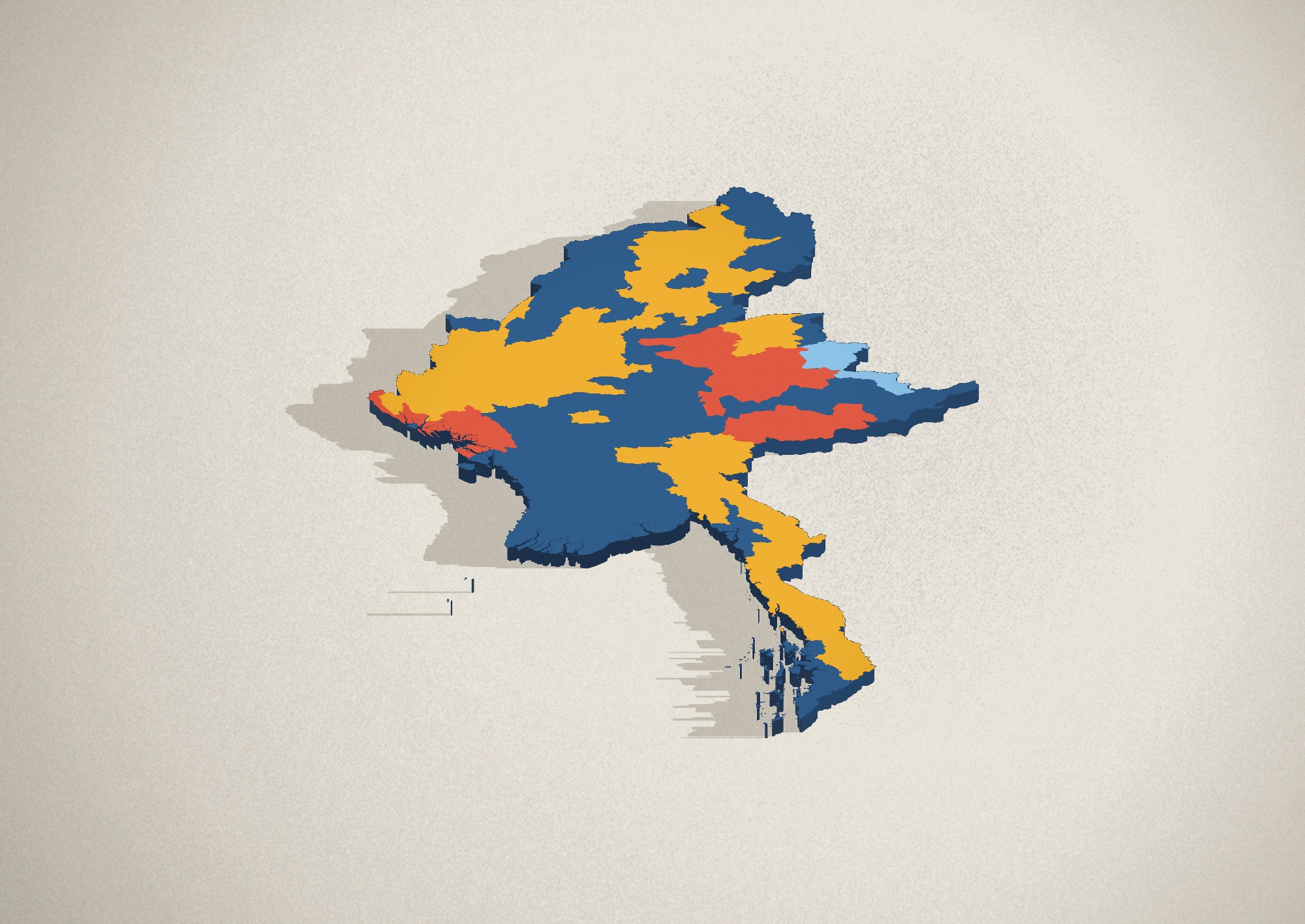
Image Credit: Euro Prospects
By Dori Gnadig, International Affairs Correspondent
Edited by Naid Makhmudov, International Affairs Correspondent
21 November 2026

Since 2021, Myanmar has been categorised as a failed state and has been subject to protracted conflict. A devastating earthquake struck central Myanmar in 2025. The disaster especially affected key agricultural regions, damaging irrigation systems and destroying crops and grain stores. Furthermore, the earthquake has ruined houses, dozens of roads, bridges and health facilities, disrupting essential services. As a result, severe shortages of food, fuel, and other essential items persist.
The EU has allocated 16.2 million in its humanitarian response plan, further highlighting its commitment to humanitarian help in the Indo-Pacific region. However, in the case of Myanmar, there are increased worries about the co-opting of humanitarian aid and using it to prolong the conflict. One reason for this is the international aid infrastructure, with its rigidity and inability to adapt to the particularities of different conflicts. The EU aid architecture is no exception. Despite years of calls from Myanmar’s civil society for localisation, the EU has not substantially changed its aid delivery, leaving its transfers open to co-optation. The EU should take these calls seriously and commit to reform how international aid is provided to avoid further prolonging the conflict by providing finances to the parties.
International donors, including the EU, entrust the government, alongside local civil society actors, to coordinate the allocation of these resources. However, the EU does not recognise the legitimacy of the junta. Hence, the Union needs to find alternative methods for aid provision. The European Community provides aid through either the UN institutions or vetted NGOs. The rigid structures of these organisations fail to account for contextual obstacles such as the Organisation Registration Law. This legislation effectively criminalises civil society organisations, many of which have dissolved legally for fear of reprisal while continuing to operate in practice. As a result, international donors, who rely on legally registered partners, can no longer fund them. Meanwhile, organisations that remain legally viable are often partially co-opted by the junta, which fuels concerns within the international community that aid is being weaponised.
Weaponisation of Aid
Humanitarian aid can be misused and manipulated by conflict parties, particularly governing authorities, to advance political or military objectives rather than addressing humanitarian needs. This includes disproportionately allocating resources to areas under their control, obstructing delivery to opposing regions, misappropriating supplies, using aid as a bargaining tool or exploiting aid operations for surveillance and intelligence gathering. Myanmar has been a victim of this practice.
Historically, the military (Tatmadaw) has been using ‘divide and rule’ tactics to instrumentalise aid to consolidate their power and suppress opposition. It has been reported that aid is often repackaged to appear as regime-sponsored assistance, diverting credit from international donors. Nonetheless, as Myanmar has been affected by conflicts, it is one of the most access-constrained environments for humanitarian aid organisations. For example, the de facto authorities have heavily restricted civilians and aid organisations in their movement of people and goods. Humanitarian organisations operating in Tatmadaw-controlled regions must obtain travel authorisations for any movement of either staff or resources, and these authorisations are often denied. Moreover, humanitarian workers are often arrested and detained, while the supplies are seized by the junta and distributed in the regions under their control. Obtaining visas and their renewal is also increasingly difficult. Hence, most formal international humanitarian response is limited to junta-controlled areas and official camps for internally displaced people, or operates along the border from neighbouring countries. This limits the effectiveness of international aid distribution and its geographical reach. If the agencies would like to increase this, they have to rely on local actors and run the risk of aid co-optation.
A solution to the constrained access would be to channel aid through local humanitarian and civil society organisations. However, the junta has enacted the Organisation Registration Law, which requires these organisations to register and abide by strict rules imposed by the de facto authorities. Hence, the co-optation of aid remains a threat if the given organisation has officially been registered, as the junta restricts agencies to work in areas under its control, effectively instrumentalising aid. If the organisation opts not to adhere to the law, then they are faced with severe penalties. However, many agencies have gone underground and operate illegally.
Provisionally, this places more strain on the international community, including the EU, to provide the necessary help. These actors are also confronted with the dilemma of continuing to collaborate with unregistered groups, requiring them to change approaches and reform their aid policies as the current infrastructure presupposes a legal sphere in which these operate. The other option is to continue with the current framework and distribute aid to local registered agencies, risking that aid might be weaponised. Both of these have severe implications for the people of Myanmar.
The EU Aid Infrastructure
The EU provides funds directly through humanitarian organisations, avoiding cooperation with the junta. The Humanitarian Implementation Plan of the EU acknowledges the complexity of the ongoing conflict in the country and also provides frameworks to provide financial help for displaced people who are outside the borders, including in Bangladesh, Thailand, and India. As for addressing the crisis within the borders of Myanmar, the Commission does acknowledge the risk of aid weaponisation and instrumentalisation while also keeping in mind the access limitations for NGOs.
The EU focuses on three main sectors when it comes to humanitarian assistance: (1) Peace and Governance, (2) Education and Human Development, (3) Sustainable Livelihoods and Green Growth. The policy explicitly focuses on the support of the most vulnerable communities. To achieve these policy goals, they emphasise the need for collaboration with civil society and local actors to deliver the aid most effectively and efficiently. However, this does not acknowledge the fact that many civil society organisations needed to go underground, dissolving their official bank accounts as well, in fear of Tatmadaw violence. Many of these organisations remain operating in the field, relying on their local networks to distribute aid. Those who have registered are subject to co-optation, as the junta can coerce them to distribute aid only in areas that are favourable to them.
The current EU aid infrastructure cannot address this issue. It requires the organisations to prove not only that they exist in the legal sphere, but also to provide detailed documentation about how the aid was distributed and who received it. These are often hard, if not impossible, to provide, as people fear the junta and would like to remain in the shadows. Moreover, the UN often requires that its officers visit sites to oversee how aid is distributed and verify the process. For this, they need to use UN vehicles, which expose the local NGO and draw attention to them, which they would like to avoid because of the junta and its violence. As a result, even though the EU invests and allocates aid to Myanmar, these monetary funds often remain outside the country due to access issues or are given to NGOs that are under threat of co-optation.
Localisation of Aid
However, the way forward is not to increase the bureaucratic requirements for these local organisations, but rather to focus on trust-building and strengthening local communities. To mitigate potential co-optation of aid, the target should be to support and strengthen civilian-led, inclusive and accountable governance systems and discard one-size-fits-all approaches.
Localisation of aid is not a cure-all.