One Storm, Two Models: How the EU and ASEAN Weigh Efficiency Against Equality
One Storm, Two Models: How the EU and ASEAN Weigh Efficiency Against Equality
Trade fragmentation and geopolitical shocks are testing two opposing answers to the same question.
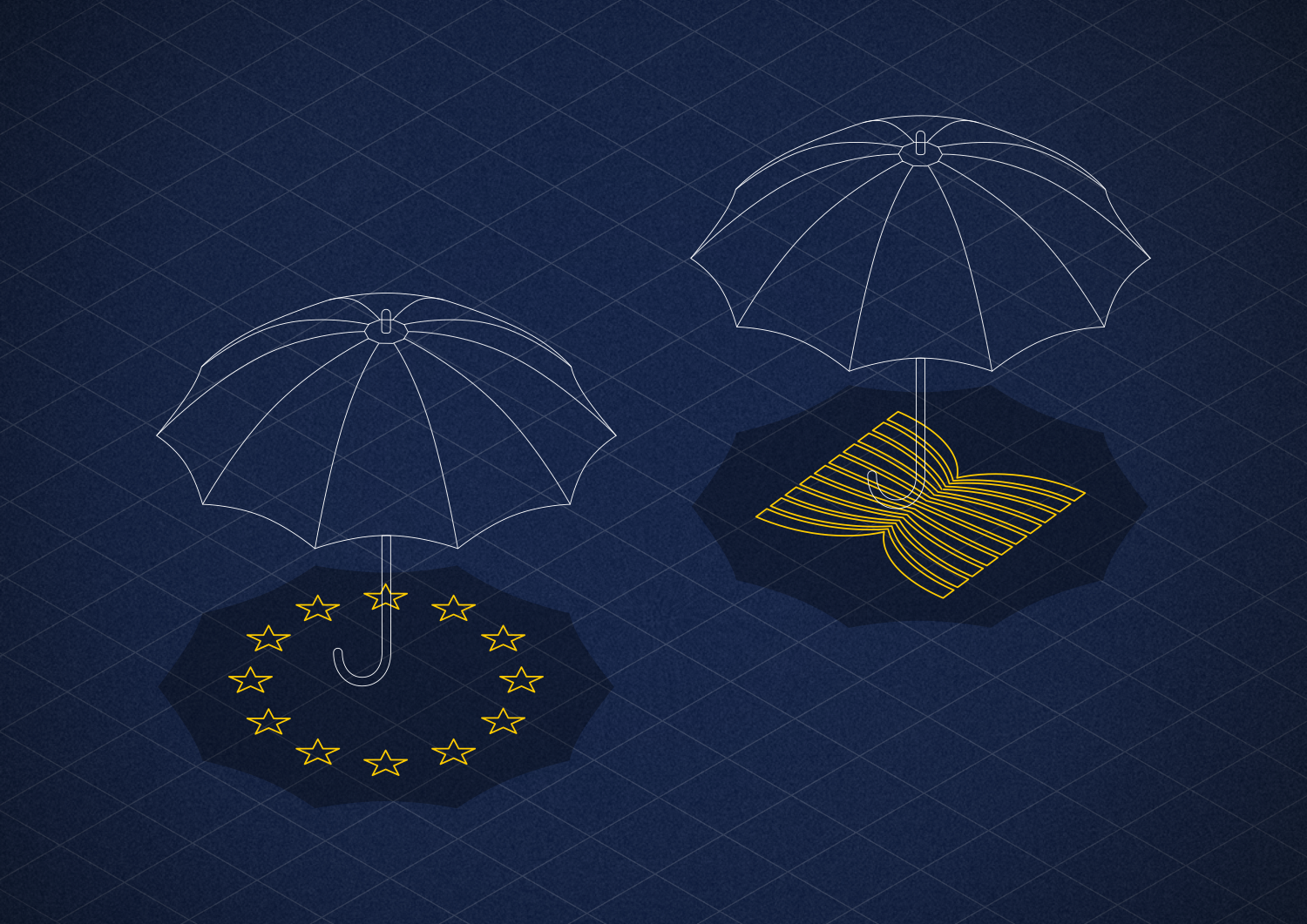
Image Credit: Euro Prospects
By Dr. Arsalan Ahmed, Economy Correspondent
Edited by James Murphy, Socio-Economic Development Correspondent
9 October 2026

The compounding pressures of U.S. tariff walls and a massive tidal wave of Chinese industrial overcapacity have subjected global supply chains to a brutal live stress test. For the world’s two most prominent regional blocs, the European Union and the Association of Southeast Asian Nations (ASEAN), this economic storm has brought a fundamental ideological friction point to a head: the trade-off between efficiency and equality. However, the battlefield is no longer just a commercial one. The prolonged war in Ukraine and the recent outbreak of a severe military conflict involving Iran have drastically complicated the calculus for both entities.
While the EU relies on deep structural integration and an extensive welfare state to absorb macroeconomic shocks, ASEAN operates on a lean, growth-first, non-interference model. As global trade friction and armed conflicts intensify across vital sectors, from green technologies to basic raw materials, external observers are deeply divided. Is the EU’s heavily managed solidarity proving to be an invaluable, resilient asset, or is it buckling under the dual weight of welfare and explosive defense spending? Concurrently, does ASEAN’s hyper-flexible, decentralized architecture position it as the ultimate economic survivor, or does it leave its workforce completely exposed to a volatile, hyper-weaponized world economy?
The EU Perspective: Defensive Solidarity or Fiscal Suffocation?
For decades, critics labeled the European Union’s heavy regulatory framework, rigid labor protections, and vast redistribution mechanisms as economically inefficient. In the face of massive trade imbalances, European institutions have shifted toward a highly defensive stance to protect domestic industries and the workers tied to them. When implementing sweeping trade interventions, the European Commission explicitly framed its measures as a shield for the labor market. According to the Commission, “the new rules on imports are designed to protect EU plants and jobs from ‘the damaging impacts of global overcapacity’ on ‘a strategically crucial European industry.’”
Proponents of the European model argue that this institutional firewall successfully prevents the sudden deindustrialization that would otherwise decimate local communities. However, a growing body of independent economic analysis suggests that this protective cushion is pushing multiple European social safety nets toward a breaking point under the weight of structural spending pressures. According to an extensive study published by the International Monetary Fund (IMF), a piecemeal fiscal approach across multiple European nations is rapidly running out of road due to the compounding costs of population aging, the energy transition, and necessary rearmament. The global financial institution warned: “If long-term spending pressures are left unaddressed, debt dynamics could be placed on an explosive path in many European countries… bringing public debt on an unsustainable path, reaching an average of 130% of gross domestic product by 2040.”
This crisis of the welfare state has expanded beyond a localized issue, triggering systemic budget emergencies across the Eurozone’s largest economies as they face the fiscal reality of long-term external conflicts. The European Union has locked in a massive €90 billion support loan to cover Ukraine’s structural and defense industrial capacity needs through 2026 and 2027, financed through heavy EU capital market borrowing. Simultaneously, the shockwaves of the war involving Iran have disrupted critical maritime trade lanes and stoked fears of a renewed migration crisis, forcing an immediate and costly pivot toward hard defense capabilities across the continent. This reality has forced historic shifts among some big EU nations. France and Belgium are nursing public borrowings that sit at or above the entire size of their economies, prompting the IMF to single them out for drawing urgent fiscal scrutiny amid slowing growth, massive deficits, and ballooning security priorities. Also, Germany, long considered the economic engine of Europe, has descended into a historic budget crisis. The European Commission officially initiated excessive deficit procedures under Article 126(3) against Germany, alongside nations like Bulgaria and Slovenia, to check compliance with fiscal treaties. The German government’s general deficit is projected to breach EU limits at up to 4.75% of GDP, forcing a rapid push of a package of 34 sweeping structural reforms across pensions, healthcare, and welfare eligibility. Rating agencies such as Fitch Ratings note that Germany’s structural challenges have suppressed its medium-term potential growth to a mere 0.7%, as external headwinds from China, the US, and massive defense restructuring weigh heavily on its manufacturing core.
The ongoing fiscal gridlock across the continent demonstrates that the EU’s “defensive shield” is becoming prohibitively expensive. With European trade officials openly admitting that current asymmetric trade balances are unsustainable, critics strongly argue that the EU’s institutional focus on equality is ultimately choking its systemic efficiency and long-term competitiveness.
ASEAN: The High Price of Hyper-Flexibility
In stark contrast, ASEAN’s “growth-first, equality-later” paradigm offers no such regional fallback. Built upon a strict doctrine of non-interference, the bloc lacks any centralized redistribution funds or collective labor protections. In theory, this allows individual Southeast Asian nations to pivot rapidly, positioning themselves as prime destinations for supply chain diversification as corporations flee Western tariffs and war-torn trade bottlenecks.
However, regional analysts point out that this hyper-flexibility exposes severe structural vulnerabilities for the region’s workers, who are forced to absorb macroeconomic shocks directly. Because ASEAN nations cannot legally coordinate a collective defense without violating the bloc’s core tenets, they are highly vulnerable to being leveraged individually by both Washington and Beijing across various commodity sectors. Independent analysts at the Southeast Asia Public Policy Institute observed this aggressive geopolitical pressure: “Within this strategic context, tariffs have become the United States’ most direct instrument of economic leverage over ASEAN. For 2026, the risk of broad-based or sector-specific tariffs is likely to no longer be treated as a contingent shock but as a standing policy tool that can be applied selectively.”
This selective bilateralism creates what experts call a “success penalty.” When a country like Vietnam or Malaysia successfully boosts its exports to Western markets, it instantly triggers intense American scrutiny regardingtransshipment and the utilization of cheap, state-subsidized Chinese intermediate components. The prolonged war in Ukraine and the volatile conflict in the Middle East have only exacerbated this vulnerability. As global energy prices fluctuate and shipping costs rise due to the maritime chokeholds driven by the Iran conflict, ASEAN countries must absorb these transactional costs on an individual level. Without a regional welfare state or collective bargaining power to buffer the blow, individual states must bear the financial burdens alone. When Washington adjusts tariff parameters or supply chains shift due to war-related blockades, factory operations face sudden shifts or immediate halts. Consequently, the local workforce bears the brunt through sudden layoffs, depressed wages, and heightened economic insecurity.
Two Divergent Paths: A Structural Question Mark
The ongoing fragmentation of global commerce has laid bare the stark costs and structural trade-offs embedded within both regional philosophies. Yet, as protectionism and geopolitical conflict become permanent features of international trade, economists and policymakers are forced to ask a more nuanced question: can either model truly claim definitive victory, or are both simply selecting which vulnerability they are willing to tolerate?
On one hand, the European Union’s heavy institutional approach suggests that a built-in social safety net and centralized economic defense can successfully immunize a workforce from external geopolitical crossfire. However, this raises critical questions about long-term sustainability. Can a heavily regulated, inward-looking trading bloc maintain global competitiveness when it relies so extensively on defensive tariff walls, costly social safety nets, and a multi-front defense build-up? Critics continue to ask whether this institutional “solidarity” is a genuine engine of structural resilience, or if it is merely a protective cushion masking a deeper decline in innovation and market agility.
Conversely, ASEAN’s agile, non-binding architecture remains highly attractive to global capital precisely because it avoids these heavy regulatory burdens. But at what point does market flexibility transform into structural instability for its citizens? When individual Southeast Asian nations compete against one another for manufacturing dominance in a world economy destabilized by war, they risk triggering a regional race to the bottom in laborstandards and worker security.
Ultimately, this live stress test leaves the global community facing a profound, unresolved dilemma. Will the EU’s heavily managed solidarity preserve its domestic social fabric at the expense of economic dynamism? Or will ASEAN’s decentralized flexibility continue to deliver high growth, even if it forces its individual factory workers to bear the terrifyingly direct costs of a volatile trade war and a fracturing global order? As supply chains continue to splinter, the ideal balance between systemic efficiency and human equality remains completely unwritten.
Disclaimer: While Euro Prospects encourages open and free discourse, the opinions expressed in this article are those of the author(s) and do not necessarily reflect the official policy or views of Euro Prospects or its editorial board.

Economy Correspondent
Based in Johor, Malaysia, Dr. Arsalan Ahmed is an economist with over a decade of academic experience, currently based in Malaysia and serving as Assistant Professor at the University of Southampton Malaysia. His research focuses on international trade, regional trade agreements, and the role of artificial intelligence in trade facilitation. He has collaborated with academic institutions in China, Pakistan, Malaysia, and the UK, and has also worked with the International Union for Conservation of Nature (IUCN). In addition to publishing in peer-reviewed journals, he actively contributes to curriculum development, academic quality assurance, and interdisciplinary research and teaching.
Edited by James Murphy | Follow our European journalism