Progressive Bulgaria and the Paradox of Power
Progressive Bulgaria and the Paradox of Power
Has stability finally come to Bulgaria? It appeared that it might have on 19 April 2026.
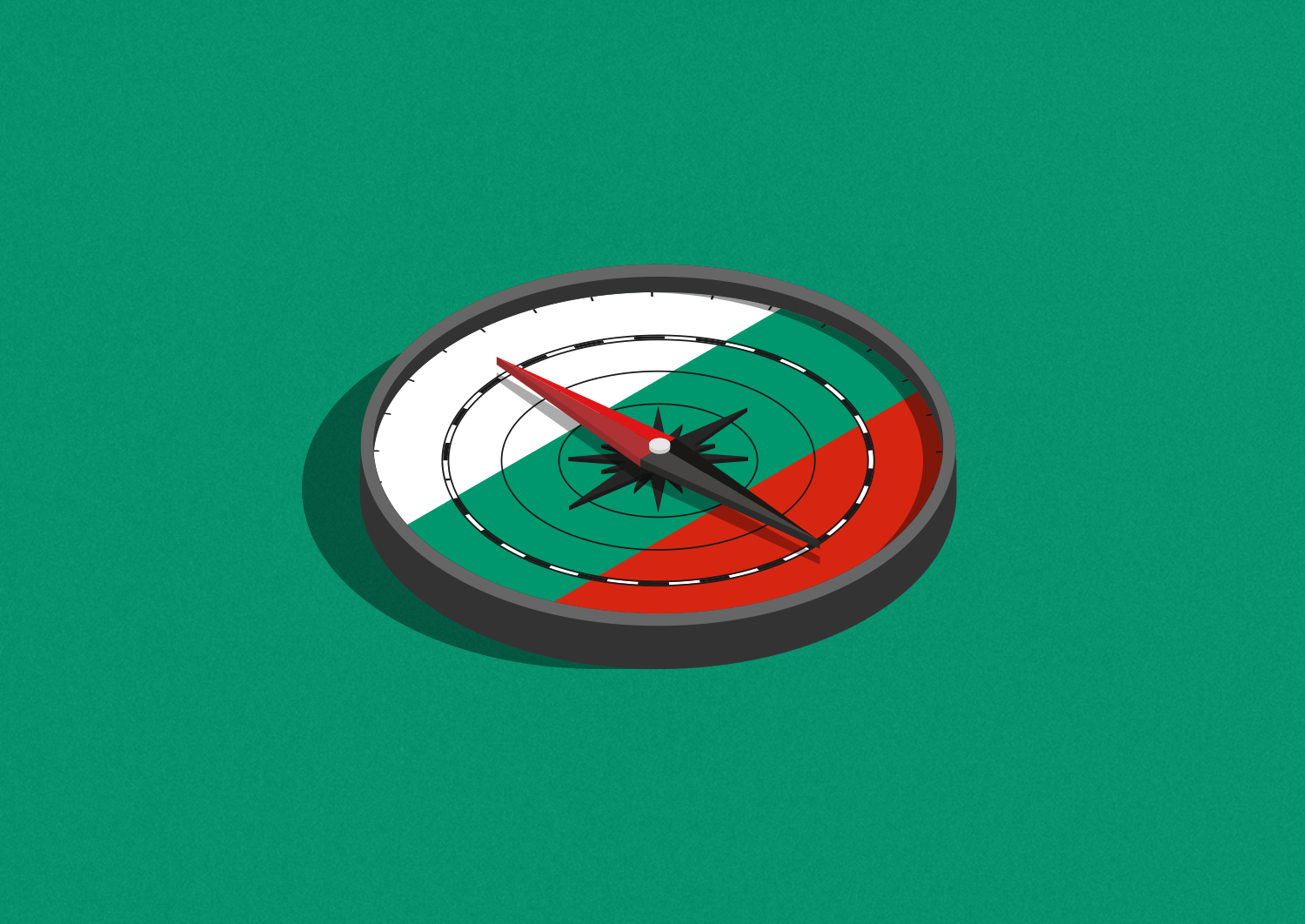
Image Credit: Euro Prospects
By Diana Yosifova, Bulgaria Correspondent
Edited by Wout Willemsen, European Politics Correspondent
4 October 2026

With 44.6% of the vote, former president Rumen Radev and his newly established Progressive Bulgaria party achieved in April the biggest election victory the nation had witnessed in twenty-five years. After eight elections in the past five years, coalition after coalition collapsing under the weight of corruption scandals, budget crises and political deadlock, and the largest protests Bulgaria had seen in decades, drawing over 150,000 people into the streets, the country finally had a government with the power to act.
It felt like a significant moment. Only a few months prior, Bulgaria had adopted the euro, an important milestone that had required years of painful economic discipline. Progressive Bulgaria promised fiscal responsibility, social progress and an end to oligarchic influence. It seemed like a new chapter.
Several months on, the picture looks rather different. The government has brought a degree of the stability Bulgaria had been craving. Still, its first months in office have raised new concerns about what Progressive Bulgaria actually represents and how far it is prepared to go in delivering the change it promised.
1. Domestic Governance
Budget
Progressive Bulgaria’s first major test came with the 2026 budget. Passed on 24 July with only the ruling party voting in favour, it sets the deficit at 5.7% of GDP, the highest Bulgaria has seen in three decades and almost twice the figure that helped bring down the previous government. The government has also authorised up to €10.1 billion in new borrowing for the year, while total spending is expected to reach a record €56.8 billion.
For a party that won office on a platform of economic discipline, the size of the deficit is striking. Furthermore, it has led to the EU initiating the excessive deficit procedure against Bulgaria, adding external pressure on a government already struggling to manage its public finances. The government argues that much of the deficit was inherited from the previous administration and maintains its goal of bringing it below 3% by 2028. However, this explanation is difficult to reconcile with the scale of the current deficit. At 5.7% of GDP, it is almost twice the figure that contributed to the previous government’s collapse, suggesting that the current administration has not simply inherited a difficult fiscal position but has also added to it. The budget also came under criticism for what it left out. Most notably, it provides no funding for the National Children’s Hospital, a project that has been promised for years and was intended to address the lack of adequate specialised medical care for children in Bulgaria. The budget also changes the way wages are increased. On wages, the government removed the formula that automatically linked certain wage increases to average salary growth, while freezing the minimum wage at €620.20.
For a party that campaigned on social progress and protecting ordinary Bulgarians, these decisions are difficult to align with its promises. The opposition’s criticism was summed up by Democratic Bulgarian MP Martin Dimitrov, who stated that there was “no pilot in the cockpit.” Whether that assessment is fair ultimately depends on what Progressive Bulgaria does with the money it is spending. A high deficit is not necessarily evidence of poor governance if it finances meaningful investments or structural changes. So far, the administration has found it challenging to show where that change is happening.
Anti-corruption & the Political Establishment
It is more challenging to evaluate Progressive Bulgaria’s record when it comes to the anti-corruption issue. Few figures were as important to Radev’s political identity as Delyan Peevski, the MP and businessman who was sanctioned by the United States and the United Kingdom over allegations of corruption and whose influence over Bulgarian politics and media had become a major source of public outrage. Dismantling that influence was a major part of Progressive Bulgaria’s campaign. For many voters, it was one of the main reasons to support the party.
Since taking power, however, the government has taken an institutional approach to fight corruption. Progressive Bulgaria allowed state institutions to investigate Peevski using current legal procedures. It withdrew state-funded security protection for Peevski and former Prime Minister Boyko Borissov, and an inquiry into Peevski’s use of private planes was initiated. The report covers 227 flights from 2018 to 2026, including 181 charter flights for more than €1.8 million. At the same time, significant questions about the sincerity of such an anti-corruption agenda can be posed. The officers who initially investigated Peevski’s flights are now themselves under investigation, while the government has rejected calls for a broader parliamentary inquiry. This makes it difficult to determine if Progressive Bulgaria is attempting to disassemble the networks of influence surrounding figures such as Peevski or simply allowing individual issues to be handled through existing procedures.
For a party that built much of its appeal around breaking away from the old political establishment, this distinction matters. Taking action against certain individuals is one thing; reforming the political and institutional structures that allowed their rise is another. As of now, it remains unclear how far Progressive Bulgaria is prepared to go.
2. A Sovereignty of Its Own
The official foreign policy position of Progressive Bulgaria is clear: Bulgaria’s strategic orientation remains based on EU and NATO membership. In practice, however, the government’s first months in power have revealed a different take on what such commitment should mean. Rather than rejecting Bulgaria’s place in the West, Radev appears to be pushing for greater room to pursue what he sees as Bulgaria’s own interests within it.
Ukraine
This approach is most visible in the government’s policy towards Ukraine. While Progressive Bulgaria continues to support Ukraine’s EU membership, it has chosen a far more cautious approach to military aid. The government tried to distance Bulgaria from initiatives that could increase its direct involvement in the conflict.
This was particularly clear on July 14, 2026, when Radev announced that Bulgaria will not join the “coalition of the willing,” a group of countries that support Ukraine with military aid and security assurances. During a visit to Paris, he stressed that the war should not be prolonged with additional military support and that diplomacy was the only way to resolve the conflict.
The government had already stopped sending weapons from Bulgarian military stockpiles to Ukraine. At the same time, it continued to support Ukraine’s EU membership, while Bulgarian defence companies remained free to sell weapons commercially. The distinction is important: Bulgaria ended direct military assistance from state reserves, but it did not completely withdraw from the broader European effort to support Ukraine.
Russia
Another instance of the shift in foreign policy can be seen in Progressive Bulgaria’s relations with Russia. While the government remains faithful to the EU’s broader sanctions strategy, Radev has often advocated for “pragmatic relations” with Moscow. He has also been more willing to criticise EU positions when he believes they contradict Bulgarian interests.
The biggest confrontation came over the EU’s 21st sanctions package. Bulgaria threatened to veto the package unless Patriarch Kirill of the Russian Orthodox Church was removed from the sanctions list. Radev argued that penalising religious figures went too far, and he voiced concern about the impact of sanctions on Bulgaria’s economic interests, notably Lukoil’s business in the nation.
Bulgaria ultimately secured the removal of Kirill, as well as Lukoil founder Vagit Alekperov, from the proposed list before agreeing to the wider sanctions package. The case is significant because Radev did not just criticise the EU’s agenda. Instead, he used Bulgaria’s position in the EU to negotiate exceptions before committing to the larger package. This demonstrates that Bulgaria’s foreign policy is shifting away from a choice between Brussels and Moscow and toward advancing its own interests within the EU. It is uncertain whether this indicates an actual change in Bulgaria’s foreign policy or simply a more assertive approach to its position within the EU.
NATO and the United States
Bulgaria’s NATO commitments have remained unchanged, but its relationship with the United States has been less straightforward. This was particularly visible in the debate over the presence of American military aircraft in Bulgaria. As president, Radev had repeatedly criticised the presence of US military aircraft on Bulgarian territory. As prime minister, however, he found himself dealing with the same issue from the other side. Earlier this year, US tanker aircraft were stationed at Sofia’s civilian airport without prior parliamentary approval. The decision caused controversy, and the aircraft eventually left Bulgaria on 30 June.
Radev then tried to link a possible new deployment to another Bulgarian interest. In May, he stated Bulgaria would approve the continued deployment of US aircraft only if Washington removed visa requirements for Bulgarian citizens. The US did not agree, and the aircraft left Sofia at the end of June. By 20 July, however, Radev had dropped that condition. He announced that the government would ask parliament to approve the deployment of up to eight US KC-135 refuelling aircraft at Bezmer Air Base to support American operations in the Middle East. The proposal was based on Bulgaria’s existing defence agreement with the United States and did not include a demand for visa-free travel.
At the same time, Radev stressed that military operations in the Middle East would not be conducted from Bulgarian territory. The government also secured assurances from the US aimed at reducing risks to Bulgaria’s national security, while the defence minister stressed that the aircraft would have no offensive capabilities and would be used only for refuelling missions. Parliament approved the deployment by 136 votes to 13, allowing up to eight aircraft and 250 US personnel to remain at Bezmer until 1 October. The first aircraft arrived on 31 July.
The episode shows the more complicated position Radev has taken towards Bulgaria’s Western partners. He has been willing to challenge the US and NATO when he believes Bulgarian interests are at stake, but he has also been willing to cooperate when he considers it necessary. This makes Progressive Bulgaria’s foreign policy difficult to describe simply as either pro-Western or pro-Russian. Instead, the government appears to be trying to remain within the Western alliance while giving Bulgaria more freedom to decide how it participates.
3. The Radev Problem
The main challenge facing Progressive Bulgaria is what the party is without Rumen Radev. Unlike Bulgaria’s established political parties, PB lacks a long ideological tradition or political identity of its own. It was established six weeks before the election and is almost entirely based on Radev’s popularity.
The problem is that the people surrounding Radev do not always appear to share the same political direction. Progressive Bulgaria brought together former politicians, members of Radev’s caretaker governments, and public figures outside of the political realm. Its candidate list included Olympic karate champion Ivet Goranova, world volleyball champion Vladimir Nikolov, long-distance swimmer Petar Stoychev, and gymnast Yordan Yovchev, who competed in six consecutive Olympic Games. The strategy worked electorally. Whether it translates into governing capacity is a different question.
These differences have also appeared within the government itself. The frequency with which Radev has had to clarify or separate himself from his own MPs raises a key question: how much influence does he truly have over the political movement that was built in his name? The clearest example occurred on 2 June, when MP Vladimir Nikolov proposed on morning television that Bulgaria’s two-year maternity leave should be reduced. Within hours, Budget Committee Chairman Konstantin Prodanov denied that the proposal was ever discussed. Later that day, Prodanov supported a proposal to lower pension benefits, despite Bulgaria having the EU’s lowest average pension. By the evening, Radev had intervened, declaring that there would be “no maternity cuts, no pension reductions.” What June 2nd showed was not simply a party struggling to coordinate its message. It is a party that does not yet know what it stands for when Radev is not in the room.
What Kind of Stability?
Has Bulgaria finally achieved stability? In some respects, the answer is yes. After years of political deadlock and multiple elections, Progressive Bulgaria has formed a government with enough parliamentary support to govern. That alone is not insignificant. At the same time, stability has come with its own challenges. The government’s 5.7% deficit clashes with its promise of fiscal responsibility, and its performance on social policy and anti-corruption has been mixed. Its foreign policy has become more assertive, with Radev becoming more inclined to question EU and US stances when he believes Bulgarian interests are threatened. Meanwhile, it remains unclear whether Progressive Bulgaria can establish a political identity beyond Radev himself.
The government has therefore brought Bulgaria something it has lacked for years: political stability. The question is what kind of stability it will be. Progressive Bulgaria now has the opportunity to use this stability to deliver the reforms it promised. If it fails to do so, it risks becoming a more stable version of the same political system it came to power promising to change. For now, the biggest question is whether Progressive Bulgaria will actually change that system, or simply learn how to govern it.
Disclaimer: While Euro Prospects encourages open and free discourse, the opinions expressed in this article are those of the author(s) and do not necessarily reflect the official policy or views of Euro Prospects or its editorial board.

Bulgaria Correspondent
Bulgarian writer and analyst focusing on Bulgarian and Eastern European politics. She holds a BA in Political Science from Vrije Universiteit Amsterdam, with minors in History and European Studies, and is currently completing an MSc in Modern Political Culture at Maastricht University. Her research interests lie at the intersection of democratic governance, EU foreign policy, and identity politics in post-communist Europe.
Edited by Wout Willemsen | Follow our European journalism