The Human Faces Behind Russia’s War
The Human Faces Behind Russia’s War
Five years into Russia’s full-scale war against Ukraine, the world has grown accustomed to a relentless stream of headlines: another missile strike, another apartment building destroyed, another death toll announced before the next story takes its place.
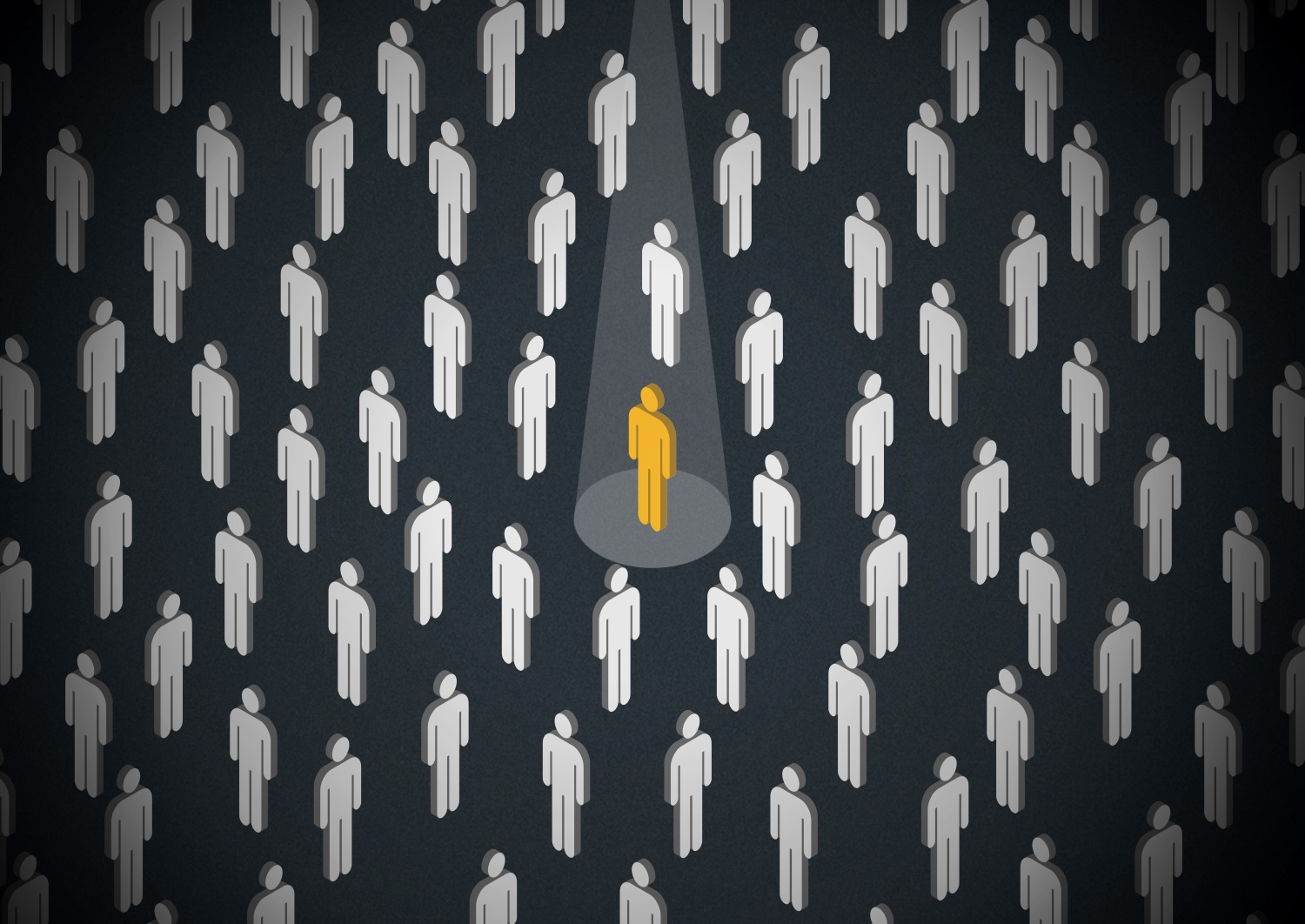
As the war drags on, unimaginable human suffering is increasingly reduced to numbers. Casualty counts, statistics, and daily updates dominate the news cycle, making it easy to forget that behind every figure is a person whose life was interrupted forever.
Image Credit: Euro Prospects
By Alina Tratorova, Russia Correspondent
Edited by Ofelia Dournel, EU Affairs Correspondent
27 August 2026

Humans Hidden Beyond the Numbers
There is a point in every prolonged war when numbers begin to lose their meaning.
Each new figure is larger than the last, yet somehow less shocking. Psychologists call this psychic numbing—the tendency for our empathy to fade as the number of victims grows. Faced with overwhelming suffering, the human mind often protects itself by turning people into abstractions.
But wars are not experienced in the abstract form. Every statistic is someone with a name, a family, a profession, ambitions, fears, and ordinary routines that ended because of violence. Every number represents a life that cannot be replaced.
Lives Taken
“Every person who died has the right to be remembered, and their families deserve just satisfaction. If the circumstances of their deaths are withheld, they die twice – both physically and on paper.”
— The Ukrainian Helsinki Human Rights Union (UHHRU)
One of the most horrific proofs of the Russian terror against Ukrainian civilians is the incident in Bucha that happened in 2022. Bucha became the first global shock of the war. When Russian forces withdrew after 33 days of occupation, Kyiv authorities confirmed over 1,400 deaths, including 37 children.
Ruslan Nechyporenko was riding bicycles with his fourteen-year-old son, Yura, when a Russian soldier appeared from around the corner. Before they had a chance to defend themselves, Yura saw the soldier shoot his father. There was nothing the teenager could do. When he raised his hands in an attempt to show that he was unarmed, a bullet struck him in the arm. He fell onto the asphalt and listened as his father died beside him.
As Yura later recalled, “We were biking right up until here. The Russian soldier came from around the corner of the building behind. First, the muzzle of his gun was pointed to the ground, but then he elevated the muzzle, so it was pointing directly at us and told us to halt in Russian.”
Yura survived by lying on the asphalt and waiting for the soldier to leave. Once the soldier was gone, he ran away.
Artem, 37-years old, was another victim of unapologetic crimes. He had gone into his garage to collect food supplies, but was later found dead. According to eyewitnesses, two soldiers were passing by Artem’s garage at the time. They opened the garage, and then two shots were then heard.
Another case that stands out is that of Ukrainian journalist Viktoriia Roshchyna. She was 27 when she disappeared after travelling to the Zaporizhzhia region in August 2023. It was later revealed that she had been captured by Russian forces while working on a report and was subjected to torture. In 2024, Russia acknowledged that it was holding her captive.
In August 2024, Viktoriia called her parents and told them that she would return home as part of a prisoner exchange in September. She never came home. On 14 February 2025, her body was returned to Ukraine under the number 757, together with the other bodies, and was listed as that of an “unidentified man.” Several organs were missing, including her brain, eyeballs, and part of her trachea. A DNA test showed a 99% match between the body and Viktoriia’s biological material.
In 2026, Russia launched multiple destructive attacks on Kyiv, Kharkiv, Sumy, and Zaporizhzhia, which became the biggest since the start of the war.
In the first six months of the year, UN monitors confirmed 1396 Ukrainian civilians killed and 7978 injured. On June 16–17, 2025, a combined drone and missile barrage killed at least 14 civilians and injured 114 in Kyiv. It was the deadliest attack on the capital in almost a year.
On July 30, a Russian missile strike killed almost the entire Voronov family at their home near Kryvyi Rih. The mother of the late Olena Voronova said that only three of the family’s children survived: the eldest daughter, Zakhar, and another son who serves in Ukraine..
President Volodymyr Zelenskyy shared a photo of the family on social media, saying that parents Artem and Olena, along with three of their children, Mark, Azariah Ilay, and Emilia, were killed by a missile that destroyed their home. Their other children, Dominika, Viorika, and Federica, as well as their grandson Artem, remain missing.
“Today, the Russians destroyed an ordinary home belonging to an ordinary family in Radushne, near Kryvyi Rih, in Ukraine’s Dnipropetrovsk region, with a ballistic missile strike,” Zelenskyy wrote on X.
The Price of Truth
Russia’s aggression also extends to its own citizens. According to data from Memorial, around 500 people in Russia consistently become victims of repression every quarter. The most common grounds for prosecution include spreading “fake news” about the Russian army, “discrediting” the armed forces, “rehabilitating Nazism,” treason, violating Russia’s “foreign agent” laws, and displaying prohibited or “extremist” symbols.
According to Verstka, since the beginning of Russia’s war against Ukraine, at least 1,904 people have been accused of treason, espionage, or cooperation with a foreign state. The identities of 1,498 of them have been established.
During the first six months of 2026, 312 people were convicted in Russia in cases involving these charges — 43 more than during the same period the previous year. According to the publication’s calculations, this is an absolute record. Only 4% of all defendants may have had access to state secrets, while a third were ordinary people with no such access.
Any Russian who publicly expresses an anti-war position, calls for support for the Ukrainian people, condemns the actions of the authorities, or speaks about war crimes committed by the Russian army can potentially face prosecution under these laws.
Being placed on Russia’s list of terrorists and extremists also no longer requires bombing, mining buildings or taking hostages. Displaying LGBTQ+ symbols or an image of Alexei Navalny can be enough.
One of the more recent cases is the arrest of Darya Shipacheva. She was detained in her apartment in Moscow on April 23, 2025. The Moscow City Court sentenced her to 12 years in prison. The materials that led investigators to accuse her of treason were not made public.
A similar case, also without the direct disclosure of the alleged evidence, is being pursued against another Russian journalist from Buryatia, Vasilisa Shishkina. Vasilisa has been in detention since July 17, 2025. The court rejected her appeal and upheld her 12-year sentence, while also cancelling the more favorable rules for counting time spent in pre-trial detention toward her sentence.
Earlier this year, a Moscow court handed down sentences to several opposition journalists from TV Rain. Valeria Ratnikova was sentenced in absentia to 7.5 years for spreading “fake news,” while Valeria Kichigina received a 10-year sentence for spreading “fake news” about the 2008 war in Georgia. In autumn 2025, Ksenia Luchenko was also placed on Russia’s wanted list, added to the “terrorists and extremists” registry, and arrested in absentia.
Unfortunately, no Russian who holds anti-war views and expresses them publicly is fully protected from a similar fate. This is the price of speaking out for the truth.
What We Carry
As time passes, some people begin to feel that the prolonged war has simply become background noise. Some have stopped reading the news or being shocked by the latest statistics. In the media space, questions are being heard more and more often: What is happening in Ukraine? Is the war still going on?
Yes, unfortunately, it is. And with each passing day, it is becoming more bloody. It destroys lives, takes away homes and futures, even from those who stand against it, risking their freedom, safety, and the place they call home.
It is important not to close our eyes, but to face the bloodthirsty militaristic machine of Putin’s aggression. And it is important to remember those who died defending Ukraine, fighting for the truth and finding the strength within themselves not to surrender.
War is not a headline in your newspaper or on your phone. It is here, in the real world, and it is happening to real people.
And every single number in statistics has a human behind it.
Disclaimer: While Euro Prospects encourages open and free discourse, the opinions expressed in this article are those of the author(s) and do not necessarily reflect the official policy or views of Euro Prospects or its editorial board.

Russia Correspondent
Alina is a Communications and Marketing specialist based in Amsterdam. Originally from the Moscow region, she holds a Russian degree in Advertising and Public Relations, where she studied political PR, law, and foreign policy. Focusing on the Russian perspective, Alina brings forward her core values of humanism, freedom, and giving a voice to those who cannot speak loudly. Alongside her background in marketing, communications, and SMM, she combines her professional expertise with a passion for analogue photography and digital culture.
Edited by Ofelia Dournel, EU Affairs Correspondent | Follow our European journalism