8 min read — Ukraine | Russia | Security | Conflict
How Ukraine Could Deal the Kremlin a Losing Hand in Crimea
“Ukraine is depriving Russia of this launchpad and drawing a line under its attempts to normalize war.” – Ukrainian President Volodymyr Zelensky.
At a March 2024 concert marking the 10th anniversary of Russia’s illegal annexation of Crimea, Vladimir Putin declared that Russia will continue to move hand-in-hand with the peninsula, stating that the shared relationship is what “makes us stronger.” Yet, two and a half years later, the future of his prized possession is beginning to look increasingly bleak.
Since 2014, it is estimated that Russia has invested around 1.3 trillion rubles (€14.7 billion) into Crimea. More importantly, it served as a launch-off point for the February 2022 invasion. With Russian gains in Southern Ukraine during the war’s opening months, Crimea had transitioned into a secure rear area for command centers and vital logistical infrastructure needed to sustain operations in occupied Ukrainian territory. Hitting the Kerch Bridge or other valuable targets in Crimea felt like wishful thinking. However, by June 2026, the situation had changed drastically. For the past few weeks, the Armed Forces of Ukraine (AFU) have relentlessly attacked key logistics centers, electrical substations, fuel depots, and other forms of critical infrastructure, causing severe disruptions for both military operations and civilian life. In addition to strikes on the peninsula, Ukraine has also launched its domestically-produced Flamingo cruise missiles and drones on logistics convoys operating in the land corridor of Southern Ukraine, as well as against Russian naval ports in the Black Sea and Sea of Azov. The end goal of these attacks, you may ask? It is to cut off all of Crimea’s links to Russia and to turn it into “an island.”
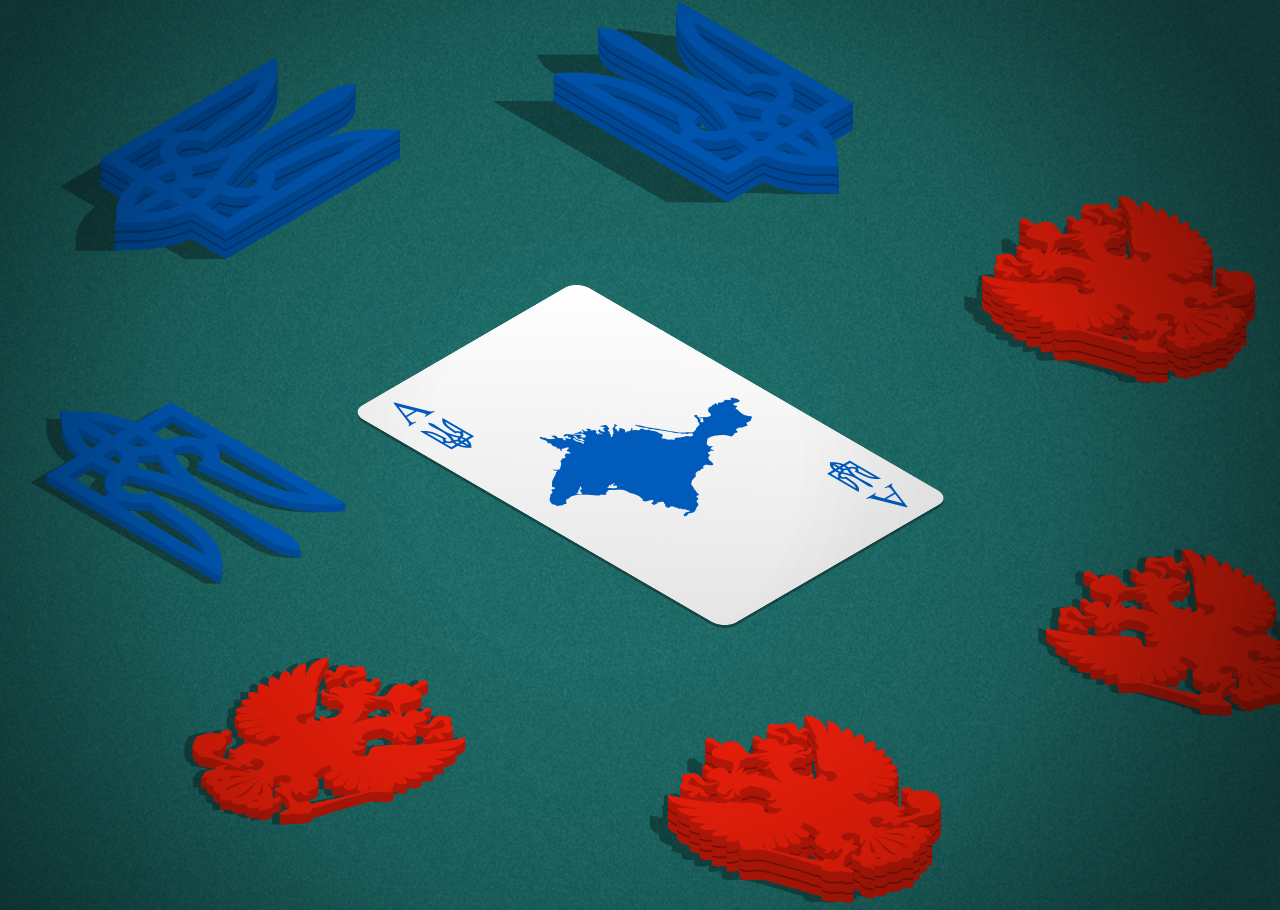
So far, Kyiv’s strategy has turned the situation from concerning to dire in a matter of days. On June 26th, local Kremlin-installed authorities declared an indefinite state of emergency, making any attempts by civilians to leave the peninsula increasingly difficult. The Kerch Bridge has been closed; trains to nearby cities on the Russian mainland face widespread cancellations, and ferries have been destroyed. Moreover, the head of the “Republic of Crimea”, Sergey Aksyonov, has decided to restrict fuel sales to the military, emergency services, and state agencies, while Ukrainian attacks on electrical substations have caused rolling blackouts to plague Sevastopol and other major population centers. With the situation on the ground getting worse by the day, it is clear that Ukraine is stacking the deck against Russia in Crimea. However, it raises the important question: how will Ukraine use this newfound advantage to potentially force Russia back to the negotiating table?
Breaking Down Russia’s Relationship with Crimea
The answer to that question boils down to an overarching theme: destroy the myth of Crimea’s impregnability. Before explaining how that is possible, it is important to briefly outline the peninsula’s historical and strategic significance. The area was predominantly inhabited by Greeks and, later, the Turkic-speaking Crimean Tatars. However, following Catherine the Great’s 1783 conquest, Crimea would remain under Russian control until 1991. In a gesture of goodwill or as many in the Kremlin would call it, an “illegal gift”, Soviet Premier Nikita Khrushchev would transfer control over to the Ukrainian SSR. At the time, the move generated little controversy, since political authority still resided in Moscow and, more importantly, no one could anticipate the Soviet Union’s breakup just a few decades later.
In the months leading up to the Soviet collapse, a majority of Crimean voters favored Ukrainian independence. A wish that was flushed into existence on December 25th, 1991. Following the USSR’s demise, Crimea would become an autonomous republic governed by local authorities with oversight from Kyiv. Yet, Russia kept its foot in the door – the Black Sea Fleet, which would remain moored in Sevastopol under a series of bilateral agreements between independent Ukraine and the newly formed Russian Federation. The enduring Russian presence in Crimea would prove decisive in 2014. Following Viktor Yanukovych’s overthrow in the Euromaidan Revolution, Russia viewed the ensuing chaos as an internal threat and a geopolitical opportunity. With remnants of the Yanukovych government busy in Kyiv, Putin’s “little green men” would begin to seize government buildings and key military installations. In a matter of weeks, the Kremlin declared that in a referendum, over 95% of Crimeans voted in favor of joining the Russian Federation, a result that Ukraine and the international community continue to deem illegitimate to this day.
For Putin, Crimea’s annexation was much more than a land grab. It was fixing “Khrushchev’s mistake” and justifying the humiliation of Russia following the USSR’s collapse, an historical event that he famously called “the greatest catastrophe of the 20th century.” However, more importantly, Crimea was a strategic acquisition for the Russian military, as it cemented Moscow’s influence and control over the Black Sea region. Due to the peninsula’s political symbolism and military importance, it is clear that Putin will do anything to keep Crimea under Russian control. Losing Crimea would not only be a strategic blow but also the nail in the coffin for his legitimacy. With this in mind, Crimea has become one of Ukraine’s most valuable pressure points, which points us back to the main objective: destroy the myth of Crimea’s impregnability. To accomplish this, Kyiv’s strategy is twofold: raise the cost of occupation and cultivate fears that Russia could ultimately lose Crimea altogether.
Raising the Cost of Occupation
By ramping up the pressure in Crimea, Ukraine forces Russia to divert much-needed troops, air defense installations, and logistical resources from other sectors of the frontline in order to sustain control over the peninsula. This not only creates opportunities for Ukrainian offensives elsewhere but also forces the Kremlin to shift Crimea from a secure rear area to a defense priority. In layman’s terms, Russia can no longer afford to treat the peninsula as a logistical “given” within the southern theater. Air defense systems that would typically be used to protect frontline installations are now forced to safeguard infrastructure in Crimea. Engineering and logistics units that would normally support offensive operations are reassigned to repair duties.
Over time, this predicament compounds. Each new Ukrainian attack disrupts at a greater cost, forcing the Kremlin to continually rebalance its southern strategy. The more resources hunkered down in Crimea means less operational flexibility the Russians have elsewhere on the front. The ongoing campaign turns Crimea into a clogged drain, one that grows more demanding as pressure increases.
Instilling the Fear of Losing Crimea
If raising the cost of occupation is about making Russia spend more, then instilling fear is about forcing Russia to doubt. Crimea has been a cornerstone of political narratives of renewed Russian strength and a valuable Kremlin propaganda tool, because it shows Putin’s capacity to reverse Russia’s post-Soviet decline. This link between territorial control and national prestige is what makes Crimea politically sensitive. It is Russia’s version of Alsace-Lorraine, where France’s loss of the territory created years of national embarrassment which was not fully resolved until the end of World War I.
This is evident in many expert analyses, such as retired Lt. Gen Ben Hodges, who argued that, “Crimea is the decisive terrain of this war, Ukraine does not necessarily need to take it, they just need to make it untenable for Russia.” The key argument in Ukraine’s constructivist pressure strategy is not physical control or military sustainability, but the political effect of undermining Russia’s perception. Once that perception is weakened, Crimea’s symbolism of Russian strength withers, so it becomes a politically sensitive topic that must be managed through military presence and political messaging. That shift matters because regimes do not rely solely on territorial control, but also on the belief that control is final. In this sense, it is about eroding the confidence that its status is irreversible, making the idea of remaining in Crimea futile for the Kremlin.
Conclusion
Combined in a cohesive strategy, these two dynamics play off each other. If Russia is determined to maintain the idea of Crimea being a symbol of Russian greatness, it has to pour more resources into not only defending the peninsula but also codifying the ongoing crises, making everyday life unattainable. If Ukraine continues its strikes at the current ongoing rate, it will slowly erode the perception of stable Russian control. By doing so, Kyiv is not just applying pressure militarily, but also changing Crimea’s political value. In order to save face, Russia could be pressured to return to the negotiating table if it senses Crimea is about to fall, regardless of whether it is through a Ukrainian amphibious assault or from chaos within.
In a nutshell, the Ukrainian approach does not rely on a single decisive breakthrough, but on the steady erosion of social and political confidence for Russia’s presence in Crimea. This becomes more important when even key Russian propagandists, such as Vladimir Solovyov and Margarita Simonyan, are broadcasting panic on Russian state TV. With his most recent statement, “the whole country is watching you… work, brothers,” it is clear that Putin has little wiggle room left. Several hundred thousand of Russian soldiers have already been killed in a war where Moscow has struggled with one of the most basic principles of military strategy: securing its own supply lines.
It would do Russia well to remember that their own history is replete with examples of military failures giving way to political upheaval, something both Tsar Nicolas II and Alexander Kerensky’s Provisional Government learned the hard way a little over a century ago. However, NATO must remain steadfast in its deterrence against Russia, especially as the Kremlin has repeatedly threatened to repeat history by invading Finland or the Baltic states, with recent chatter even suggesting that Moscow could invade Poland in the near future to test the alliance’s resolve. Showcasing yet another contemporary example of Putin’s go-to move of utilizing Machiavellian “scapegoating,” in which he designates an external foe to redirect the Russian populace’s anger towards in order to ease the blowback brewing from mounting domestic crises threatening Putin’s grip on power.
Disclaimer: While Euro Prospects encourages open and free discourse, the opinions expressed in this article are those of the author(s) and do not necessarily reflect the official policy or views of Euro Prospects or its editorial board.
Write and publish your own article on Euro Prospects
Subscribe to our newsletter – stay informed when we publish articles on pressing European affairs.