16 min read — Geopolitics | EU | European Integration | Global Europe
What Would It Take For Europe To Become a Global Geopolitical Power?
What would it take for Europe to become a truly autonomous actor on the world stage? What should be the relationship between the EU and its member states? How could national governments improve the interoperability of their defence forces? And where will Europe find the necessary resources and energy supplies to power its industrial engine?
By Golo Vanden Eynde — Defence & Foreign Policy Correspondent
Edited by Berk Tuttup & Pedro Ursua Marinho
June 27, 2026 | 13:30
In recent years, the term ‘strategic sovereignty’, or the ability to act more autonomously from external adversaries, has become something akin to a slogan among Europe’s political establishment. And for good reason. For many decades, Western European governments have neglected their military capabilities, lowered their defence spending, abolished mandatory conscription, and reaped the rewards of the peace dividend. As a result, Europe’s collective security currently finds itself under serious logistical strain.
With the fall of the Berlin Wall in 1989, and with the entry of many ‘Eastern’ European countries into NATO in 1999 and the EU in 2004, it seemed like Europe’s ‘break from History’ had finally arrived. Gone were the ghosts of the past. ‘Globalisation’ and ‘interdependence’ were the buzzwords of the day. In the same way that European governments increasingly allowed their industry to be outsourced to China and their energy supply to be provided for by Russia, they laid their national security firmly in the hands of the US. The inconvenient truth that by doing so, they made themselves dangerously dependent on the goodwill of others, was conveniently ignored…
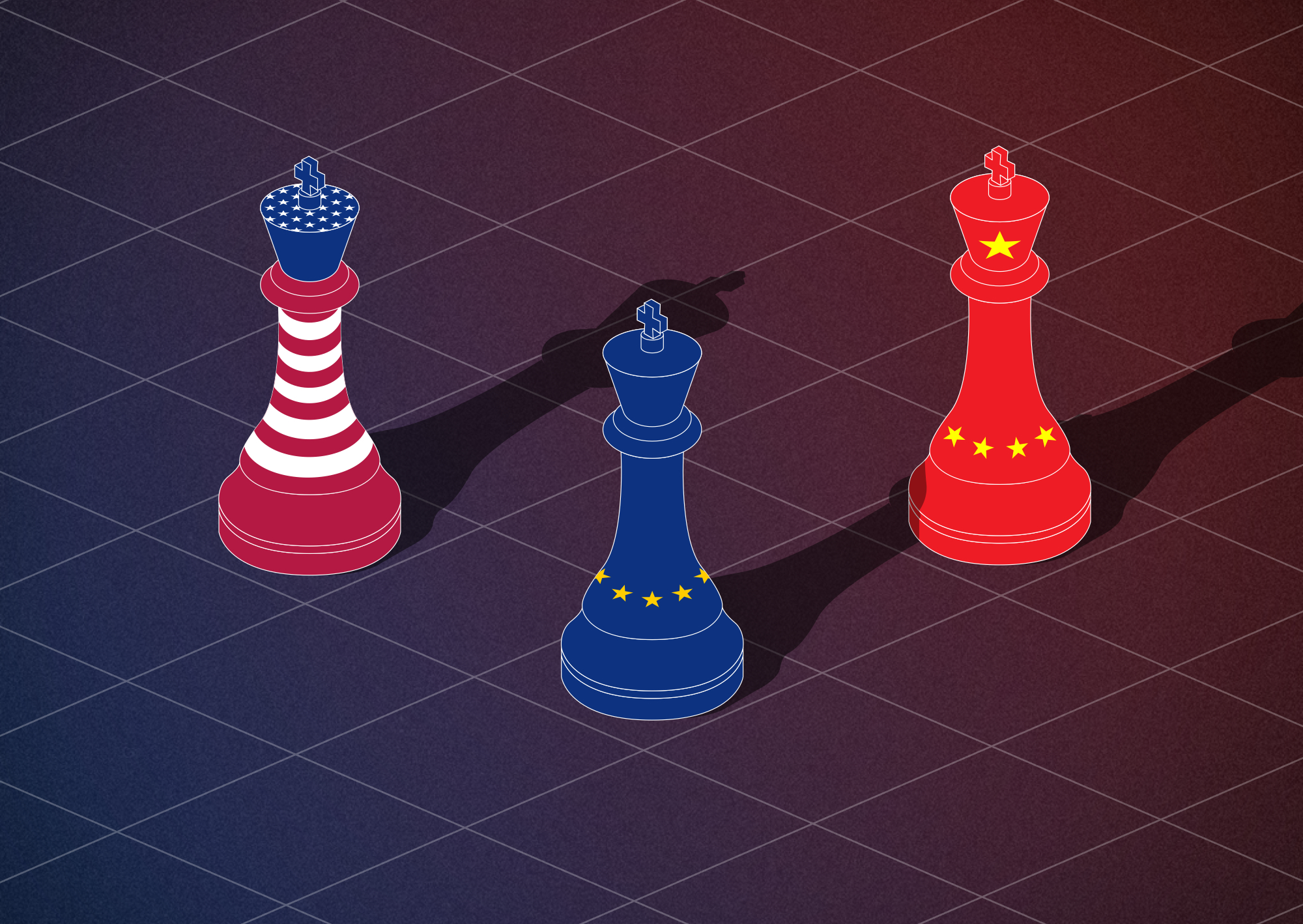
But History never takes a break. Nationalism, imperialism and prideful power politics are not just vestiges from a dark, pre-enlightened past; they are a constant and continuous reality of international affairs, and indeed of the human condition itself. Ignoring the ghosts will not make them disappear. And with an aggressive economic competitor in Beijing, an expansionist madman in Moscow, and an increasingly recalcitrant president in Washington, Europe suddenly finds itself in the middle of a perfect firestorm, for which it is very badly prepared.
Given this context, the current turn towards greater geopolitical self-reliance is a very welcome one. Europe should indeed seek to strengthen its collective security, reduce its dependency on others, and affirm its identity as a geopolitical actor on the global stage. But doing so is easier said than done. If we are being serious about achieving strategic sovereignty, we should move beyond the phase of phrases, and towards the phase of action. This requires the willingness to reflect deeply and thoroughly on the practical preconditions which would have to be met if Europe is to become a truly autonomous power, comparable to the likes of Russia, China and the US. What are the institutional, interoperational, and industrial challenges that would have to be addressed for strategic sovereignty to become more than simply a slogan?
This article is an attempt to analyse those conditions. By doing so, I hope to demonstrate that achieving actual strategic sovereignty will be far more complicated than many at present are willing to admit. In order for a more transparent and democratic debate about Europe’s security architecture to take place, it is important to acknowledge these challenges, rather than to avoid them. For as a wise man once said, “there are no solutions; there are only trade-offs.”
Institutional requirements: national, federal, or ‘flexible’ decision-making?
First of all: what exactly do we mean when we use the word ‘sovereignty’? Without going into too much detail on the philosophical origins of this oft-debated term, it may be useful to consider its etymological meaning. Being derived from the French word ‘souverain’, itself derived from the Latin noun ‘superanus’ (meaning ‘ruler’, ‘leader’, ‘superior’), the term ‘sovereignty’ denotes supreme, singular power. Being truly sovereign, in short, means being the primary centre of political control.
The question of Europe’s strategic sovereignty is therefore inextricably linked to the question of political power itself, and where it should ultimately reside. At the national level, the European level, or somewhere ‘in between’? For the moment, foreign and defence policy remain national competences. Admittedly, the EU does have its own Common Foreign and Security Policy (first introduced in the 1992 Maastricht Treaty and further developed in the 2007 Lisbon Treaty), which even encompasses a Common Security and Defence Policy, enabling the EU to deploy small-scale missions, mostly for civilian, stabilisation and peacekeeping purposes, in highly volatile places like Bosnia, Kosovo, Georgia, Armenia, Mali, Libya, Somalia, and Iraq. However, this is about as far as the EU’s hard power (if we can call it that) really goes.
Moreover, any and all decision-making on matters related to the CFSP and CSDP still requires the unanimous consent from all twenty-seven national governments in the European Council. Thus, the EU is about as powerful as its weakest link. This became painfully obvious when former prime minister Orbán continuously used his veto to obstruct, frustrate or delay common economic sanctions against Russia. It is exactly for this reason that, shortly after his electoral defeat, Commission president Von der Leyen called for the veto to be abolished altogether, in favour of qualified majority voting. This would indeed strengthen the EU’s collective strategic sovereignty, but at the considerable cost of cutting away at the ability of individual states to prevent policies from being adopted which could potentially damage their national interests. As Van Middelaar argues, “we all too easily forget what is truly at stake. […] The transition to majority decision-making is inseparable from questions about the foundation or unification of Europe.”
If ‘strategic sovereignty’ is taken to mean the ability to act independently, as a single geopolitical unit, without being sidelined by one of its constituent member states, then ‘strategic sovereignty’ necessarily implies a federalising logic. But such a “Philadelphia moment” (as Van Middelaar has called it, in reference to the American city where the 1787 Constitutional Convention was held) is still a long way off. It is perhaps the EU’s most difficult challenge today. Ditching the veto in exchange for what former ECB president Mario Draghi calls “pragmatic federalism” would certainly help to solve the EU’s current impasse, but would also come at the expense of national governments’ ability to block policies that could hurt their position.
For many, such a fundamental change to the Treaties is still a bridge too far. It is a ‘trade-off’ which very few statesmen are willing and able to make. In fact, the 1954 European Defence Community (EDC) failed for precisely this reason; France deemed it too ‘federal’ and a threat to French sovereignty, and therefore decided to veto the ratification of the founding treaty. Even with the war in Ukraine serving as a catalyst for closer European cooperation, it is anything but certain that states like Poland, Hungary, France and Germany would now be willing to accept deeper integration, if this means losing their ability to veto common decisions that might conflict with their particular national interests.
Yet, as legitimate as such objections undeniably are, we nevertheless have to ask ourselves: what exactly is the long-term alternative? Ad hoc alliances and ‘coalitions of the willing’ will likely not suffice in providing a permanent security framework for Europe as a whole. Nor will they be able to put Europe on par with other great powers like Russia, China and the US. Last but not least, they are at constant risk of being ‘divided and conquered’ by their adversaries. In other words, we are faced with a choice between two possibilities: we can either decide to preserve our individual sovereignty and diminish our collective security, or we can decide to diminish some of our individual sovereignty while strengthening our collective security. Yet one thing is certain: we cannot have both simultaneously.
Improving the interoperability of military capabilities
The second precondition for strategic sovereignty is the ability to respond collectively in case of crisis. This requires common capabilities, or, at the very least, national capabilities that can easily be used by several forces at once. Improving interoperability (the ability of multiple armed forces to operate more effectively together) is a crucial hurdle to be overcome. For the moment, Europe is still divided into different national defence forces, each with its very own national military industrial complex. As a consequence, Europe’s military landscape remains fragmented, and national defence capabilities are often completely incompatible.
Thus, the US supplies almost sixty-four percent of all military equipment imported into the EU in the period 2019–2025, according to SIPRI. Not only are American weapon manufacturers much larger than their transatlantic counterparts, they are also more advanced, thanks in no small part to the economic benefits of having a massive ‘economy of scale’ – something the fragmented European defence industry simply lacks. Thus, Europeans are not just institutionally divided, but also logistically and industrially divided as well. (And hence, hopelessly dependent on the US.) In an increasingly volatile environment, Europe can no longer afford to depend solely on foreign actors for its own security. Instead, national governments must urgently develop their capacity to act together whenever the situation requires it.
There have been positive steps in the right direction. For instance, at the level of the national governments, president Macron’s recent pledge to expand France’s nuclear deterrence to its European partners, is a major achievement for Europe’s collective security. So too are the increasingly numerous bonds between various national defence forces. (Take, for instance, the merger of the Dutch and German combat brigades.) Even though most of these ties are bilateral, rather than pan-European, this still remains an encouraging development.
At the EU level, ambitious initiatives like the European Defence Fund (EDF), Permanent Structured Cooperation (PESCO), and the Security Action For Europe instrument (SAFE) (a part of the ‘Readiness 2030’ programme) are intended to deepen defence cooperation and improve overall operational readiness. PESCO enables all participating states (including every EU member state, except for Malta) to jointly plan, develop, and engage in collaborative military operations. The SAFE instrument provides substantial loans for national governments to invest in major military procurement projects. Likewise, the EDF financially supports common defence projects encompassing multiple EU member states.
In addition, Article 42.7 TEU (often referred to as the EU’s ‘mutual defence clause’) provides a legal basis for collective assistance in the event that a member state becomes the victim of military aggression. “If a member state is the victim of armed aggression on its territory, the other member states will have towards it an obligation of aid and assistance by all the means in their power.” Although the clause has only been activated once (after the barbaric terrorist attack at the Bataclan Theatre in Paris), it nevertheless presents the EU and its members with the possibility of common action in case of an attack. At the recent European Council summit in Nicosia, European leaders agreed to let the Commission develop a detailed operational response plan, in case Article 42.7 were indeed to be triggered. None of this is intended to diminish the enduring importance of NATO, but it is intended to diminish the overreliance on NATO (or, more specifically, on the US) when it comes to Europe’s own security.
Yet, despite these positive developments, major obstacles remain. European defence cooperation continues to be hindered by diverging interests, industrial competition, and persistent disagreements over leadership and financing. The failure of the Future Combat Air System (or FCAS), a joint program of French, German and Spanish defence companies to develop a next-generation combat aircraft, highlights how difficult it is to get multi-national defence projects off the ground. Although the project was intended to become a prime example of European military cooperation, disagreements over technology sharing, industrial responsibilities, and strategic priorities have repeatedly delayed progress, and eventually led to the program’s humiliating failure. It only goes to show how difficult it is to turn multinational defence projects from a lofty idea into actual implementation.
Industrial innovation, affordable energy and essential resources
The third precondition for strategic sovereignty consists of energy security and access to critical materials. In an increasingly unstable environment, Europe’s ability to attain affordable energy and strategic resources will determine not just its competitiveness, but also its economic resilience and political independence. But how to secure such resources, without establishing new dependencies? Nuclear energy, in combination with renewables, currently seems like the most reliable long-term solution. Nuclear power provides the stable baseload capacity necessary to support sustainable industrial growth while simultaneously helping Europe to achieve its climate objectives. Taken together, nuclear and renewable energy can reduce dependencies on foreign suppliers and shield Europe’s economy from global energy shocks.
Likewise, access to critical materials is becoming a geopolitical issue. Lithium, cobalt and rare earths are essential resources that are indispensable for advanced technologies and defence industries. Europe is facing a difficult dilemma: should these metals be sourced domestically?(And, if so, where? And at what economic and ecological cost?) Or should the EU continue to rely on foreign supply chains? In the long term, building partnerships and even ‘spheres of influence’ in resource-rich regions like Iceland, Greenland and the Western Balkans will play an important role in securing Europe’s access to essential minerals. Conversely, it would be very advantageous for Europe’s neighbours as well, as they would stand to benefit from increased investments, trade, and economic growth. Thus, the EU has a direct interest in strengthening its ties to these regions; be it by negotiating new association agreements, or by incorporating them into the Union in their entirety.
In doing so, the EU could secure the material resources needed for technological innovation. Winning the tech race is key to remaining competitive. Technological leadership increasingly determines economic power, military strength, and geopolitical influence. But for businesses to flourish and innovative industries to thrive, Europe needs lower energy prices, and better access to strategic resources. European businesses still face significantly higher energy costs than most of their international competitors, undermining their ability to innovate and grow.
Moreover, the EU needs to follow through on its proposal to create a simple, single legal framework for startups and other corporations (the so-called ‘28th regime’ or ‘EU-INC’), and establish a common capital markets union, to make it easier for investors to invest across Europe’s internal borders. Thankfully, as the latest European Industry Summit in Antwerp and the informal European Council summit in Alden Biesen have demonstrated, the awareness of the problem is definitely there. But the time to talk about these reforms is over. Now is the time to act. Europe must take decisive action, if it wishes to secure its strategic sovereignty in the decades to come. One thing is certain: without access to critical materials, affordable and reliable energy supplies, and a regulatory framework that is conducive to innovation, Europe’s industrial backbone will not survive for long. And without industry, no strategic sovereignty.
In conclusion
Europe is confronted with a choice. Either it can decide to tighten the bonds that unite it and become a geopolitical actor in its own right, or it can decide to remain internally divided and, consequently, externally dependent upon others, who do not always have Europe’s best interest in mind. But ridding itself from its self-inflicted ‘Stockholm syndrome’ will not come without a cost. In order to strengthen the EU’s collective security, individual member states have to be willing to sacrifice at least some of their national sovereignty in the process. In addition, improving military capabilities will require significant investments, increasing the pressure on national budgets, many of which are already heavily burdened by debt. And last but not least, there is the issue of finding cheap and reliable sources of energy, as well as supply chains for critical materials, which are indispensable for Europe’s economic competitiveness, technological innovation and industrial independence.
In other words: there are no shortcuts. There are no simple solutions. Building a genuine geopolitical union will come at a price. Achieving strategic sovereignty requires the willingness to make sacrifices in the interest of Europe as a whole. Let us therefore try to bear in mind that we must make these sacrifices today to build a stronger, more resilient, more united Europe tomorrow. Though much is taken, much abides… And even though the challenges we are facing now are indeed formidable, and the road ahead remains long and arduous, we still have every reason “to strive, to seek, to find, and not to yield.”
Disclaimer: While Euro Prospects encourages open and free discourse, the opinions expressed in this article are those of the author(s) and do not necessarily reflect the official policy or views of Euro Prospects or its editorial board.
Write and publish your own article on Euro Prospects
Subscribe to our newsletter – stay informed when we publish articles on pressing European affairs.