6 min read — Defence Industry | Military Affairs | EU Institutions
Is HYDEF, the EU's Hypersonic Interception Programme, Still Making Progress?
Russia perpetrated yet another heavy attack targeting Kyiv on May 24th, firing some 600 drones and 90 missiles including hypersonic Kinzhal and Zircon missiles. As EU foreign policy chief Kaja Kallas has said, “Russia hit a dead end on the battlefield, so it terrorizes Ukraine with deliberate strikes on city centres.” A tactic made easier by Ukraine’s lack of air defence systems that can reliably intercept hypersonic missiles – Europe has the same problem. Could the EU’s Hypersonic Defence Interceptor Programme (HYDEF) help to solve this challenge?
Russia claims to produce 1,000 hypersonic missiles annually, and, in addition to them, Moscow also has the Avangard hypersonic glide vehicle (HGV) in its arsenal, “capable of evading modern missile defence architectures.” China has likewise fielded hypersonic missiles and HGVs; North Korea says it has tested an HGV; and Iran recently deployed its new Fattah-2 HGV. The emerging threat of hypersonic weapons that can evade current air defence systems has prompted Europe to urgently pursue interceptors and systems that are faster and more agile. Andrius Kubilius, European Defence and Space Commissioner, explained: “Europe must strengthen collaboration in defence, with the European Defence Fund acting as a key foundation for this effort. For the sixth time, we are investing significant resources to incentivize and support research and development on major defence capabilities.”
Indeed, in December 2025, the European Defence Fund (EDF) announced that out of €1 billion in funding for 2026 defence research and development, the largest portion will go towards advanced air and missile defence. Rudy Ruitenberg from DefenseNews reports that this includes “€168 million for hypersonic counters and high-end endo-atmospheric interception” and to fund ongoing work to help bring them “to technology readiness level 6 and develop demonstrators for areas including the interceptor air frame, propulsion and lethality.”
The HYDEF (HYpersonic DEFence) Interceptor Programme was initially slated to receive €100 million of that funding, but the programme seems to have stalled over the past year. In November 2025, it was announced that the Early Maturation Mid-Term Review (EM-MTR) and Fourth Progress Review Meeting had been held in October. The announcement was accessible on the website of Sistemas de Misiles de España (SMS), the project coordinator, but nowhere else.
Who’s the Leader?
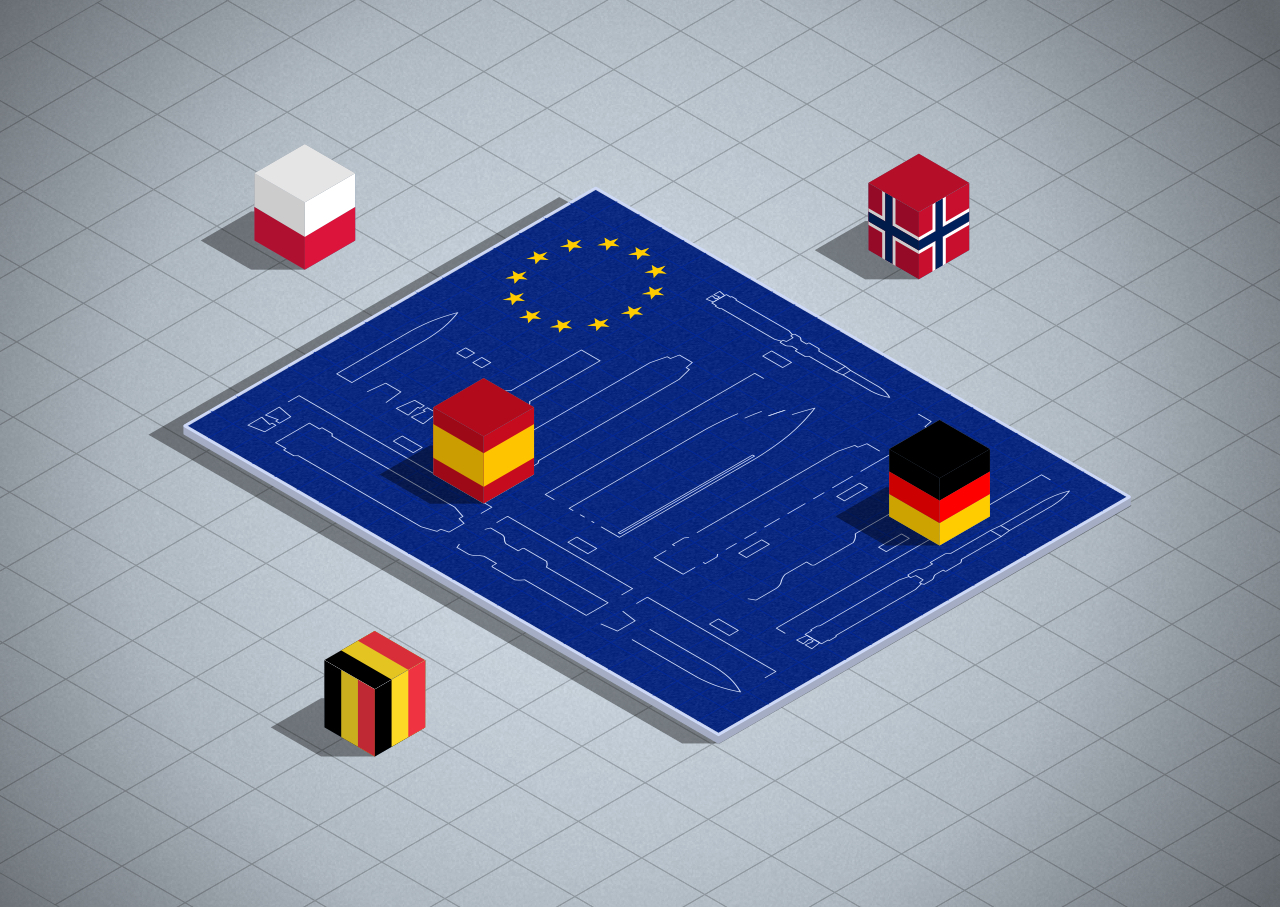
HYDEF was launched in 2021 to respond to a request from the EDF for proposals for an “endo-atmospheric interceptor” and now includes 13 companies from Spain, Germany, Belgium, Norway and Poland. Six of the companies are from Spain, with four (Escribano E&M, GMV, Sener Aerospace and Instalaza) making up SMS, the programme leader. Technical coordination is led by Germany’s Diehl Defence and the interceptor concept revealed in 2023, known as IRIS-T HYDEF, is modelled on the company’s IRIS-T family of short- to medium-range air defence systems.
This has led media to focus on Diehl’s leadership role in HYDEF, often referring to the programme as German, begging the question of who is actually in charge at HYDEF. Diehl has consistently used Spanish companies to provide elements of IRIS-T. In May 2025, it was announced that Sener would take on its “first lead-component role” by designing the control/actuation subsystem, but Diehl is in charge of all technical aspects of the system and missiles, working with other companies in supportive roles.
Indeed, IISS observes that whilst the SMS consortium has experience in guided weapons, these companies have no experience in missile defence, in developing full missile systems or in project leadership. Escribano has most recently focused on making turrets for armoured vehicles (Guardian family) and Sentinel naval remote stations; GMV produces command and control systems (TALOS, Socrates) and Intelligence systems (SAPIIEM JISR suite); Sener’s engineering and technology services are used in infrastructure projects worldwide from SpainSat NG-I for Spanish satellite communications to the Cebu-Cordova Link Expressway in the Philippines; and Instalaza is best known for producing light weaponry including grenade launchers, ammunition and sight and targeting systems. This means HYDEF’s programme coordinator is in new territory, which is why observers were surprised when EDF selected HYDEF in 2022 for the €100 million project.
Experts from IISS observed that the EDF decision was essentially intended to reward Spanish efforts to consolidate its defence industry “by reducing fragmentation” and by pursuing a previously ignored capability. Spain’s air defence currently relies on American Patriot systems, including a $1.7 billion contract signed last December with Raytheon for four new systems – a purchase that might take a while given America’s own production constraints and Washington’s current disdain for Spain’s leadership. Regardless, HYDEF signed with OCCAR in October 2023 to begin the programme, and participating states provided an additional €10 million for HYDEF, effectively bringing Spanish industry into the realm of air defence.
Final decision in 2026
HYDEF may very well sort out its leadership issues and make up for this past year’s stalled progress, but if not, Europe’s future air defence capabilities might have another option as the European Commission decided in July 2023 to fund a second hypersonic interceptor programme: Hypersonic Defence Interceptor Study 2 (HYDIS²), under France’s MBDA leadership, including 19 industrial partners from 14 European countries.
In December 2025, it was reported that the EDF would decide in 2026 which programme, HYDEF or HYDIS, would ultimately receive €100 million in funding. Thus far, the European Commission has funded both, justifying the decision as “a strategy aimed at maintaining industrial competition, reducing technological risk and avoiding dependence on a single supplier,” but moving forward, only one project will advance with EDF. Guiding its decisions, IISS observed that the European Commission-run EDF’s “goals include extending cross-border cooperation and supporting small and medium-size enterprises”, whereas PESCO projects are “meant to address the military and defence capability ‘common binding commitments’ that the relevant national partner states sign up to when they decide to join PESCO.” The EDF will have to act as arbitrator by making its selection using a “best athlete” approach.
With Russia’s recent willingness to use hypersonic weapons capable of hitting any capital in Europe, the pursuit of a sovereign European air defence system and interceptor missile has gained new urgency. It is EDF’s priority to select whichever programme demonstrates the best ability to respond effectively, swiftly, and in a coordinated manner to a threat against which Europe is currently defenceless or dependent on allies that are not entirely reliable.
Disclaimer: While Euro Prospects encourages open and free discourse, the opinions expressed in this article are those of the author(s) and do not necessarily reflect the official policy or views of Euro Prospects or its editorial board.
Write and publish your own article on Euro Prospects
Subscribe to our newsletter – stay informed when we publish articles on pressing European affairs.