Forgotten Civil War: What Are the EU’s Interests in Myanmar?
Forgotten Civil War: What Are the EU’s Interests in Myanmar?
While headlines centre around conflicts in Iran, Palestine, Ukraine and Sudan, an ongoing conflict in Southeast Asia that has claimed over 100,000 lives persists with little coverage. The civil war in Myanmar, beginning in 2021, has turned into a complex battle of interests between internal and external political actors. The fates of different ethnic groups, critical raw minerals and the geopolitical order have converged upon this war-torn country. So what exactly are the EU’s interests in Myanmar?
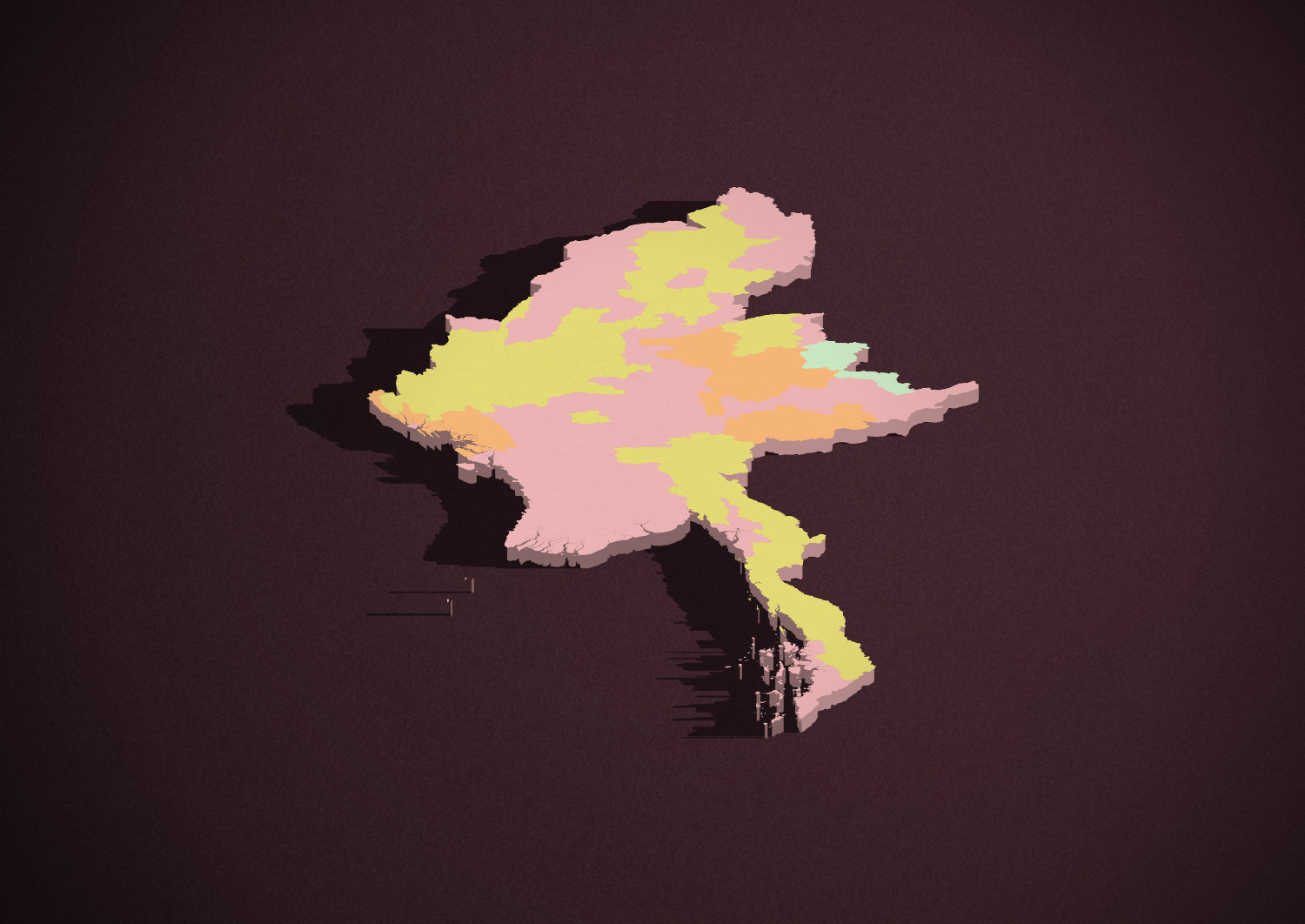
Image Credit: Euro Prospects
By Naid Makhmudov, International Affairs Correspondent
Edited by Mehak Kulaar, International Affairs Coordinator
25 August 2026

The Civil War
In 2021, Myanmar experienced its second major military coup in its history, sparking what has since become the country’s ongoing civil war. Yet the conflict didn’t start in 2021. The Southeast Asian country has, in fact, been embroiled in civil conflict since 1948, the year it gained independence from British colonial rule. The underlying reason behind what has been regarded as the longest civil war of modern times lies in Myanmar’s status as an “unfinished nation”. Myanmar encompasses more than 135 recognized (including Bamar, Shan, Karen, Rakhine, Mon, Chin, Kachin, and Karenni) and dozens of unrecognized (including Rohingya) ethnic groups. Almost 70 percent of the population in Myanmar are Bamar people. Since independence, however, leaders of Myanmar were unable to create an inclusive national identity. As such, fighting between minority ethnic armed organizations (EAOs) and the majority Bamar people has not fully ceased since 1948.
Information on the current civil war remains scarce, as Myanmar’s military (Tatmadaw) continues to detain local journalists while international reporters struggle to reach the country. Historically, however, the main opposition party to the military rule has been the National League for Democracy (NLD), winning the first elections in 1990 since the earlier coup of 1962. The NLD would go on to win in 2015 and 2020, with its leader Aung San Suu Kyi, daughter of the venerated revolutionary Aung San, becoming the clear favourite. Despite Aung San Suu Kyi’s reverence as a democratic pioneer, having won the Nobel Peace Prize in 1991 for her efforts, she did not object to the genocide against the Rohingya, an unrecognized Muslim minority in majority-Buddhist Myanmar, sparking her fall from international grace. For largely other reasons of power, however, Suu Kyi and many NLD representatives have since 2021 been imprisoned by the military junta.
Five years later, the Tatmadaw, dominated by the Bamar people, controls nearly 21% of Myanmar, while the EAOs hold around 42%. More than 100,000 lives have been claimed by the conflict and millions more have been displaced. The Tatmadaw’s violent suppression of protests and its military campaign led to the creation of the National Unity Government (NUG), an opposition unity movement encompassing many ethnic groups, including certain members of the Bamar majority. Its main objective lies in creating a “federal democratic union”, an idea supported by many EAOs. The armed wing of the NUG, the People’s Defence Force (PDF), mustered around 100,000 soldiers in 2024. Among the many ethnic armies, the most organized and numerous are the Shan State Army, the Kachin Independence Army (KIA), the Karen National Liberation Army (KNLA), and the Three Brotherhood Alliance (the Myanmar National Democratic Alliance Army (MNDAA), Ta’ang National Liberation Army (TNLA) and the Arakan Army (AA)). However, they are not the only active groups in the civil war, and are not all supporters of the National Unity Government, with nearly 2600 groups fighting against the de facto military government.
Tatmadaw, despite the war crimes it has committed, has strong military and political support from China, Russia and Thailand. India tries to keep pragmatic relations with Tatmadaw. The opposition, on the other hand, does not enjoy broad foreign support, mainly due to fragmentation of ethnic armies, their different goals (whether it is autonomy like the nationalist Wa State model or democratic union) and the NUG’s lack of power to consolidate authority. EAOs, too, have perpetrated war crimes of their own. UN Special Envoy to Myanmar, Julie Bishop, believes that Myanmar is “on a path to self-destruction” or “balkanization”. For the European Union, it is hard to support the opposition taking into consideration this situation.
The European Union’s interests in Myanmar
On a political level, the EU has less influence on the fighting parties in the civil war, unlike regional and neighbouring countries. However, it remains the only external power which is interested and committed to a democratic future of Myanmar. In 2022, the EU appointed a special envoy to Myanmar, and has worked closely with ASEAN and the UN to find a diplomatic solution to the conflict. The EU supports the Five-Point Consensus plan proposed by ASEAN and rejected by Myanmar’s military. The Bloc believes that the only solution is inclusive dialogue that must involve the NUG and the EAOs.
The representatives of the NUG and some of the EAOs visited Lithuania in 2023. The EU has acknowledged the NUG and hosted its representatives in Brussels. The NUG representatives are also located in Czechia. Historically, Vaclav Havel and Suu Kyi were friends. Although Czechia has shown support previously to the NLD and now to the NUG, some Czech officials have also met with Myanmar’s military. Such contacts occur due to the lack of common consensus between the EU member states regarding support for the EAOs. The particular worry lies in the fear of ethnic cleansing and fragmentation of the country. Many EAOs, moreover, were accused of unlawful actions, including ethnic cleansing. Meanwhile, some countries have already closed or are scheduled to close their embassies in Myanmar by the end of 2026.
On a humanitarian level, the EU has a history of providing humanitarian assistance, economic partnership and democratic support to Myanmar. The European Union is one of the biggest donors to Myanmar, especially after the Trump administration stopped USAID. Since 1994, Myanmar has received over €506.68 million in humanitarian funding from the EU. In 2026 alone, the EU allocated €38.6 million. The NUG has repeatedly urged the EU and the United States to provide military assistance, primarily through the provision of arms. Moreover, after Operation 1027 in 2023 against the military, the NUG stated that they were in touch with the EU. However, besides the US’s BURMA Act, which was supposed to provide non-lethal assistance, no other military help was provided. With the ease of pressure on Tatmadaw by the current Trump administration, the EU is the only Western power that pro-democratic opposition groups can rely on.
The civil war is also shaped by economic interests. Currently, economic relations between Myanmar and the European Union remain stalled. The EU has put economic sanctions and arms embargo on Myanmar. Prior to 2019, Myanmar exported almost half of its textiles to the EU. In 2025, the European Union was the 4th largest trading partner for Myanmar, thanks to, among others, Everything But Arms (EBA) trade scheme. However, the illicit economy has been growing during the civil war. Myanmar is the largest producer of heroin in the world, and this drug has also reached the EU. Myanmar has also become a hub for online scam centres targeting not only people from neighbouring countries but also from the European continent.
On a geopolitical level, Myanmar is considered one of the largest sources of rare earth minerals which are critical to the modern economy, especially for electric vehicles, modern weapons, renewable energy technologies and artificial intelligence. The country also has large gold, tin, aluminium and copper deposits. Kachin state and Shan states, controlled by EAOs and located near China, are the primary areas with these minerals. China, which has established strong relations with Tatmadaw, engages with these EAOs too. Unlike China, which accounts for the processing of more than half of the rare earth materials mined in Myanmar, the EU does not directly source these minerals from Myanmar. The European Union does not have economic relations with EAOs or with Tatmadaw. Mining is also environmentally dangerous. However, the EU’s Critical Raw Materials Acts, which seeks to diversify the EU’s supply chains, indicates that geopolitical competition with China is also shaping the EU’s relations with Myanmar.
With the disruption in the Strait of Hormuz and possible closure of the Bab-el-Mandeb Strait, the geopolitical significance of the Strait of Malacca is vital. Myanmar’s Tanintharyi Region, which is controlled in some areas by the Tatmadaw and in some by the EAOs, has a strategic location close to the strait of Malacca. While potential future disruptions in this strait will primarily affect China, the EU is not safe either, as it remains interdependent with China and part of the global supply chain.
In 2026, the Tatmadaw organized its first general elections since 2021. The Union Solidarity and Development Party, an ultra-nationalistic party closely aligned with the Tatmadaw, was declared the winner, and Min Aung Hlaing became president. The results were welcomed by a few countries, including China. The EU and the UN described them as unfree. Nevertheless, the elections did not stop the civil war. Today, it is at a stalemate.
Conclusion
Brussels is currently not as preoccupied with this civil war as it is with the crises in Ukraine or the Middle East that create security risks right on its borders and supply-chain routes. However, the ongoing conflict in Myanmar holds direct and indirect consequences for the Bloc.
With the closure of USAID, the EU now finds itself as arguably the last, and by far the largest, donor of humanitarian assistance to Myanmar. This assistance is vital for the population and for the support of civil society, vulnerable groups, and independent media. While the Union’s foreign policy, among others, seeks to consolidate democracy and respect for human rights, the complex civil war in Myanmar poses challenges to this policy, as the EU does not fully engage with either party, besides the occasional communication with the NUG. Beyond that, for the EU, the implications of the civil war in Myanmar reach past the humanitarian and foreign-policy framework, encompassing organized crime (scam centres), rare earth minerals, and geopolitical challenges.
Thus, member states and Brussels need to reassess their strategy in Myanmar and give this conflict more attention. Taking into consideration the limited leverage of the EU in this civil war, the Bloc will likely continue to provide humanitarian assistance and coordinate with ASEAN. However, with the growing number of ASEAN member states engaging with the Tatmadaw, the EU will have to decide whether to engage with the military regime as well, in order to avoid “balkanization,” or to start engaging with the established EAOs, provided that they are not conducting ethnic cleansing and human rights abuse. The EU needs to realize that neglecting the second-biggest country in Southeast Asia will lead to a weakening of its influence in this important region, as more countries turn to China.
Disclaimer: While Euro Prospects encourages open and free discourse, the opinions expressed in this article are those of the author(s) and do not necessarily reflect the official policy or views of Euro Prospects or its editorial board.
International Affairs Correspondent
Based in the Netherlands, Naid Makhmudov is an international relations specialist with academic credentials from Saint Petersburg State University, the University of Bologna, the University of Macedonia, and the University of Pannonia. He holds multiple master’s degrees focusing on International Relations, Political Science and European studies. Naid has conducted research and contributed to initiatives related to the EU foreign policy, Post-Soviet states, MENA region, Western Balkans, Türkiye and geopolitics. His diverse academic and professional background allows him to explore cross-regional cooperation, external relations, and the evolving role of regional and global powers in international affairs.
Edited by Mehak Kulaar, International Affairs Coordinator | Follow our European journalism