After 50 Years of Trade, Europe Has Learnt to Manage Its Expectations of China
For fifty years, Europe pursued China with the conviction that trade would beget liberalisation; the last decade has been the slow, costly process of revising that assumption.
Migration Alone Won’t Solve Europe’s Labour Problem
Migration has long been framed as the solution to Europe’s labour shortages and demographic challenge. Yet why do millions of jobs across the EU remain unfilled even as many working-age migrants remain underemployed or excluded from the labour market? Europe’s labour problem is becoming less about labour supply and more about its ability to absorb and integrate workers effectively.
After the Iran War: NATO’s Paper Power May Not Survive a Long War
The Iran war is not NATO’s war. Yet, ahead of the 2026 Ankara Summit, it has exposed a deeper anxiety: NATO’s military capabilities may be easy to visualize, but it is evident that the alliance is not ready, both in a political and industrial sense, from the rising Russian threat.
The EU Keeps Insisting It’s Not a State. It Keeps Building One Anyway
From a coal and steel pact to an €800 billion defence plan, seven decades of crisis management have quietly assembled something Europe refuses to name.
Free, Open, and Untouchable? Open-Source Enforcement Gaps Within the AI Act
The EU has rules for open-source AI, but little means to enforce them. Providers self-declare compliance, regulators cannot verify it, and offshore developers face no meaningful consequences for ignoring Brussels. The AI Act’s open-source regime risks mistaking documentation for accountability.
Musk vs. the EU: The Battle Over Free Speech Four Years Since Twitter’s Acquisition
Elon Musk and the EU have been talking past each other for four years about free speech and content moderation. Now they must make their respective cases in court.
Orbán’s Political Stranglehold on Hungary is Facing Its Toughest Test Yet
Hungary’s 2026 elections are set to be the most serious test yet of Viktor Orbán’s long-standing political dominance, with huge consequences for Europe.
Bulgaria’s Russian Web: How Moscow’s Networks Influence Politics, Media and Society
Bulgaria’s adoption of the euro on January 1, 2026, marks a major geopolitical shift. In spite of this, echoes of its historic ties to Russia continue to play a role across its political, economic and informational landscape.
The Populist Quagmire: The European Far-Right in the Age of Strategic Autonomy
Amidst the rise of the populist far-right in Europe, the EU must look beyond its differences and be unequivocal in its “strategic autonomy”.
The Fellowship of the Payments: Europe’s Journey Beyond the Two Towers
For decades, Visa and Mastercard have dominated Europe’s payment rails. Efficient — yes. Strategically neutral? Not so much.
Albania’s Justice Reform Puts the EU’s Rule-of-Law Credibility to the Test
Albania’s EU accession bid is becoming a critical test of whether Brussels will uphold its core values on human rights, due process, and accountability when they become politically inconvenient.
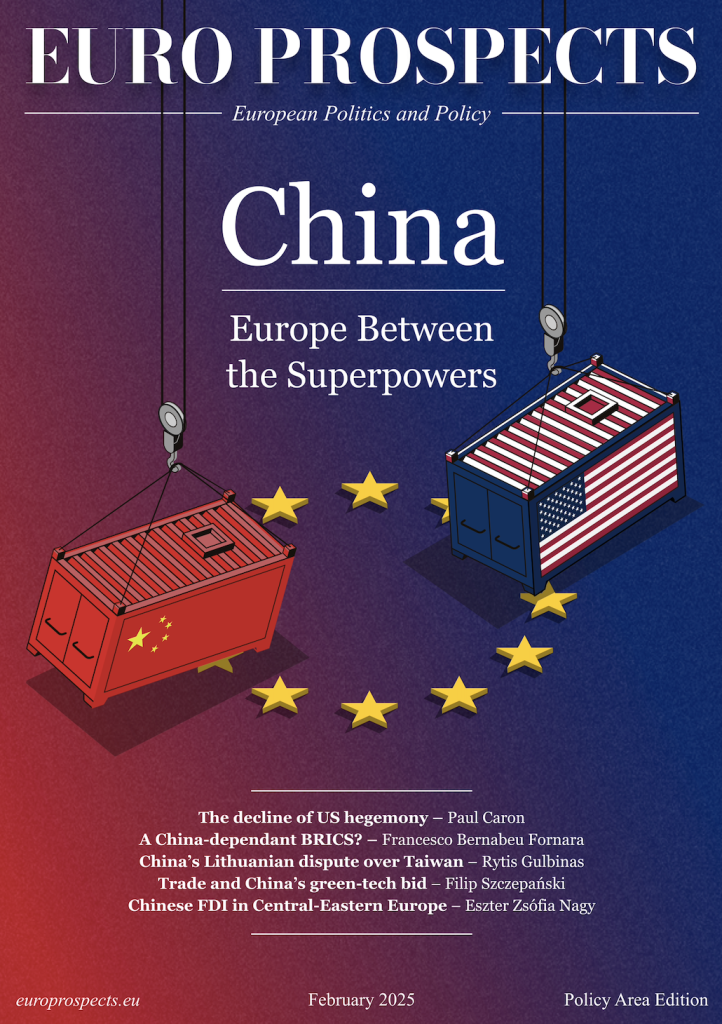
Why China Cannot be Europe’s Alternative to the US
Europe risks trading one dependency for another if it treats China as a shortcut to economic security amid U.S. trade uncertainty.