7 min read — Netherlands | Security | Defence | Military
Rearming Europe: Following the Netherlands’ Example?
Gijs Tuinman, State Secretary for Defence of the Netherlands, recently challenged Dutch industry to develop a domestically-produced equivalent of the American Tomahawk missile. In doing so, Tuinman had inadvertently challenged the rest of Europe to similarly follow Dutch ambitions of limiting its dependence on foreign technology for military procurement.
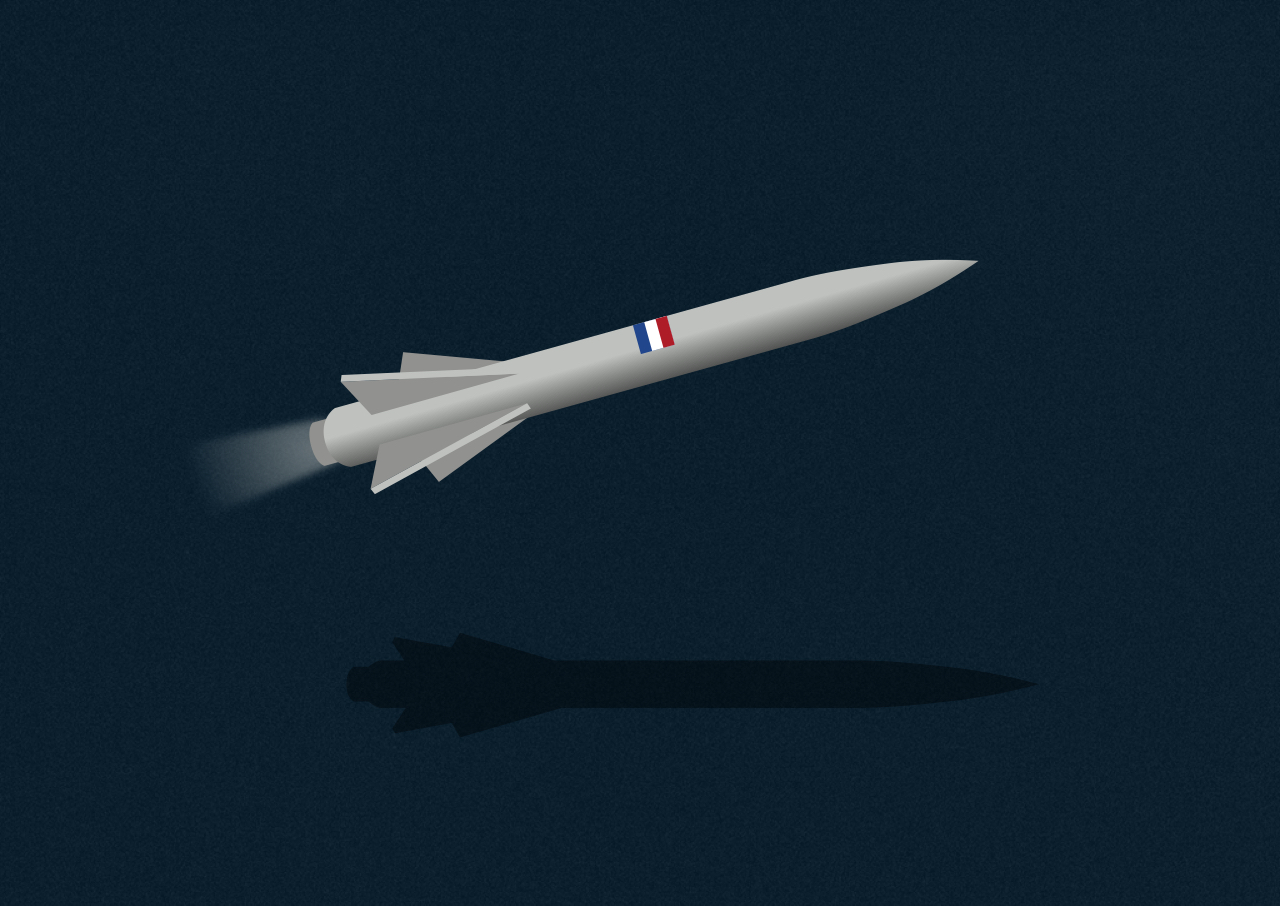
In his speech at the NEDS defence exhibition in Rotterdam, Tuinman stressed that “drones alone are insufficient” and cannot provide the same reach or deterrence effect as deep precision strike (DPS) missiles. Researcher Lotje Boswinkel came to the same conclusion about the drone versus long-range missile systems debate, arguing, “Yet, on the Ukrainian battlefield, long-range systems demonstrated their worth, disrupting logistics and command nodes or reducing Moscow’s oil refining capacity.”
The pursuit of Dutch long-range strike capabilities mirrors efforts across the continent as European countries and the EU step up initiatives to protect themselves from Russia. The Swedish Armed Forces published a report in November arguing for long-range capabilities saying, “The ability to conduct strikes at significant distances enhances deterrence and aims to degrade adversaries’ critical infrastructure and military assets.” Such developments demonstrate that European nations of all sizes recognise the need to be equipped with missiles capable of deterring future Russian aggression, with the Netherlands is leading by example that such missiles can and should be produced on European soil.
Domestic DPS Solutions over American Ones
To fill the Dutch military’s desire for a ground-launched, long-range cruise missile, Tuinman asked domestic manufacturers to design a simplified Tomahawk alternative that could be produced quickly and in mass quantities. He said a national solution was needed to ensure continuous updates and reduce reliance on foreign suppliers, especially given increased European and international demand for such munitions, preventing “smaller countries from acquiring new missiles quickly when situations evolve.”
Without explicitly saying so, Tuinman highlights problems with Europe relying on foreign long-range missiles, most notably the Tomahawk which has “long been the benchmark for long-range precision strike.” One issue is the cost. Tomahawks are expensive with an average export cost of $2.5-4 million per missile, which excludes the required, but costly maintenance and software updates, a ticket price which could create some hesitation. This restricts use to strategic targets, and given that four out of sixteen fired recently in Nigeria did not detonate, their efficacy is also questionable.
Even if cost and efficiency were not an issue, the main problem is that the U.S. needs Tomahawk missiles with Trump arguing, “We want Tomahawks, also. We don’t want to be giving away things that we need to protect our country.” Production by missile manufacturer Raytheon is limited, pushing foreign orders after American, making delivery times longer than announced with lower quantities than expected. This will be exacerbated as a recent report from The New York Times reveals that the Tomahawk’s accuracy depends on samarium, a rare-earth metal processed primarily in China and, following trade disputes with Washington, Chinese authorities put restrictions on its sale to American companies. Raytheon found an alternative supply in France, but the stock is limited.
Another concern not openly evoked is America’s new stand-off position towards Europe and what that means for weapons it controls. When Trump floated the idea of providing Ukraine with Tomahawks, he said their use would remain under US operational control, as with ATACMS supplied to Ukraine. This has kept Ukraine’s hands tied as top EU diplomat Kaja Kallas observes, “They use weapons that are not produced in Ukraine [and] sometimes there are limitations on how they can use those weapons … your military needs to really have free hands in this regard.”
These might have all factored into Tuinman’s challenge and may have also contributed to Dutch officials’ decision to cancel an order for Tomahawks to equip current Walrus-class and future Orka-class submarines manufactured by France’s Naval Group. In 2023, the Dutch government announced it intended to purchase Tomahawks for maritime DPS capabilities. Whilst the order for its frigates stands, in May 2025, Dutch officials said “prohibitive cost and time overheads” needed to restart production of the submarine-compatible Tomahawk variant meant they would seek an alternative. In June, Tuinman said its Navy would pursue the submarine-launched version of the Joint Strike Missile (JSM-SL) under development by Norway’s Kongsberg and expected to be operational by 2032.
The choice was surprising as observers agree the most logical alternative is MBDA’s Naval Cruise Missile (NCM) since they are readily available, battle-proven and already equip Suffren-class submarines from which the Netherlands’ future Orkas are derived, but with conventional propulsion. Naval Group made the same proposal to Poland as it seeks DPS capabilities for its Orka programme, but Poland has apparently selected Saab’s offer. However, when visiting Naval Group’s Toulon site, Polish delegates signed a letter of intent with French officials to work together to develop ground-launched, long-range cruise missiles.
Might Working with European Partners be Better Than Purely Domestic Efforts?
The Netherlands has shown it understands the need for European-made deep strike capabilities for reasons of availability and sovereignty and others are following. Poland, who has historically relied on American JASSM-ERs, recently started developing a 500km-range cruise missile. Defence journalist Dylan Malyasov says, “Poland’s decision to develop a homegrown system underscores its intent to strengthen national defense industry capacity and reduce reliance on foreign suppliers,” but the country might select joint production for farther-reaching solutions.
This approach has been pushed by European Commission President von der Leyen who has urged countries to identify ‘flagship capabilities at European level’ and work together on producing weapons ‘beyond the capacity of individual Member States’. For her, the priority is, “We must buy more European. Because that means strengthening the European defense technological and industrial base (EDTIB).”
Tuinman said he wants a domestically-produced solution, but Clingendael, the Netherlands Institute of International Relations, observed that, “The European defence industry is currently not operating at full capacity, primarily due to the absence of long-term contracts” and urged the Dutch government to “Contribute to European collaborative programmes and invest in key priority areas” including “deep-strike missiles.”
Given these observations, Dutch officials should consider collaborating with European allies instead of trying to ‘go it alone’ investing in a costly missile programme. In 2024, France, Germany, Italy, and Poland launched the European Long-Range Strike Approach (ELSA) to develop ground-launched cruise missile capabilities (1000km) by 2030 and “ensure better burden-sharing within the alliance.” The initiative has since been joined by Sweden and the UK, with Greece and the Netherlands expressing interest.
This could be a smart move because by joining ELSA, the Netherlands would help achieve economies of scale, interoperability and sustainably support the EDTIB by pooling orders and giving momentum to projects being developed. ELSA participants have not announced its first project, but various options are underway, including MBDA’s Land Cruise Missile (LCM), the ground-launched version of its NCM, which should be tested by 2028.
Andrius Kubilius, EU Commissioner for Defence and Space, said, “I know some of you may be thinking: Why work together in Europe? When most of the money is national? Why not just go national? I think that would be a big mistake for our defence… We need more unity now, not less.” This is increasingly vital as tensions with Washington mount over Trump’s posturing regarding Greenland. Europe, now more than ever, needs to join forces and ensure its own security.
Disclaimer: While Euro Prospects encourages open and free discourse, the opinions expressed in this article are those of the author(s) and do not necessarily reflect the official policy or views of Euro Prospects or its editorial board.
Write and publish your own article on Euro Prospects
Subscribe to our newsletter – stay informed when we publish articles on pressing European affairs.