14 min read — Iran | Israel | United States | Geopolitics
Iran War or Apocalypse? What Europe Should Know About Religious Geopolitics
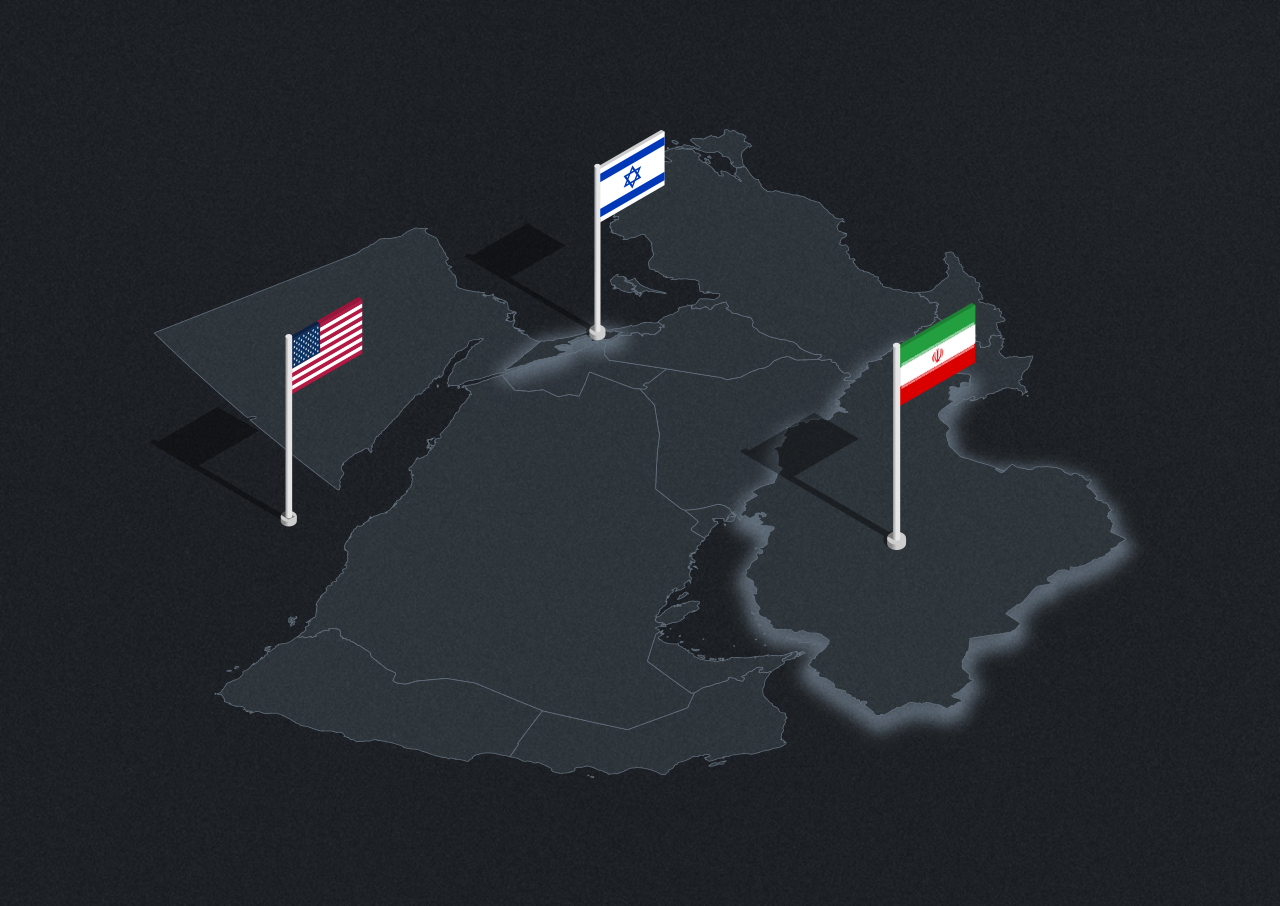
The US-Israeli war with Iran was quick to expand regionally, with its economic ramifications spanning globally. Concerns of an escalation into some form of World War III have stricken populations in the West and East, with European states increasingly exposed to both the economic and security spillovers of the conflict. But beyond expert analyses of the political, military and economic paradigm, US, Israeli and Iranian political and religious figures have spoken of Armageddon, Moshiach and Imam al-Mahdi. What lies behind such uses of religious rhetoric, and how is it used to justify war?
By Naid Makhmudov — International Affairs Correspondent
Reviewed by: Sam Volkers | Francesco Bernabeu Fornara
April 29, 2026 | 9:40
February 28’s initial American-Israeli attacks on Iran transformed within days into a full-scale war. The military theatre was quick to expand to neighbouring countries. Meanwhile, US and Israeli declared military goals differed, including preventing Iran from developing nuclear weapons, regime change or putting an end to the Iranian-led “Axis of Resistance” (including Hamas, Hezbollah, the Houthis, and various Iraqi militias).
Recurring American and Israeli rhetoric about Armageddon (battle at the end times according to Christian Bible) and Amalek (enemy of Israelites in the Hebrew Bible), however, indicate that religion too has become part of this war.
Such religious rhetoric in geopolitics is in line with the famous “Clash of Civilizations” theory by American political scientist Samual P. Huntington. According to him, the wars of the future will be fought between cultures rather than countries, where religious identities become one of the main sources of conflicts. While distinguishing between several civilizations, he highlighted the future confrontation between Western Civilization (Israel being viewed as a closely aligned with the West) and the Islamic World.
Religious rhetoric about the end times is part of so-called eschatological (or apocalyptical) politics, which uses political or military means to fulfil religious prophecies about the End of Times (such as the Second coming of Christ, Arrival of Moshiach and Reappearance of Mahdi). Historically, eschatological politics was present during wars (Crusades, Cold War) but also during internal conflicts, like during the Russian Revolution of 1917. Rhetorical segments surrounding the war in Iran give hints of such types of eschatological politics.
From a classical realist perspective, humans are driven by the desire of power, in turn transforming religion into a tool to seek that desire—especially if religion already plays a significant role in a respective society. US and Israeli populations are on average very religious compared to other Western countries. Iranian public matters, on the other hand, are controlled by the Velayat-e Faqih (Guardianship of the Islamic Jurist) system. Indeed, it is safe to say that the political systems of all three countries are susceptible to religious rhetoric, making it easier for leaders and politicians to justify their policies on faith.
And while European countries are not directly involved in the war, they bear its brunt, both in terms of reliance on energy from the Gulf region and due to their close ties with the USA and Israel. As alluring as rational analysis may be, Europe must learn to understand the religious undertones of such conflicts if its diplomatic efforts are to be meaningful. For the EU, engaging diplomatically and navigating its own economic and security interests necessitates understanding how counterparts with opposing paradigms think.
The USA
Just days after the start of US-Israeli attacks on Iran, The Guardian reported that more than 200 US troops had submitted official complaints over their American commanders believing in the blessing of President Trump by Jesus, the start of Armageddon and how this war will enable the Second Coming of Jesus.
In what became a scandal following his nomination for US Secretary of Defence, images surfaced of Pete Hegseth’s tattoo with the word disbeliever/infidel in Arabic (Kafir) and several other tattoos alluding to crusade—“Deus Vult” and Crusader Cross. A religious and messianic speech of Hegseth also appeared in 2018 in Jerusalem, where he backed the re-establishment of the Third Temple, a site to be built before the end of times, according to Christian prophecy. After the start of the war with Iran, Hegseth would call the Iranian regime “…crazy … hell-bent on prophetic Islamist delusions…”.
Segments of the current American political establishment has a track record of religion seeping into their policies, especially at the international level. While less explicit, the previous administration of then-President G. W. Bush had similar religious undertones. “Axis of evil” or “crusade” would be terms used by then President to refer to the war on terror. The Democrats and their presidents have also had a history of engaging with religion.
Moreover, prominent Evangelical and Christian Zionists are actively fuelling a messianic agenda. During the first days of the Iran war, John Hagee, one of America’s most famous pastors and televangelists, delivered a sermon where he predicted that the armies of China, Russia, Iran and Türkiye will intend to destroy Israel at the Battle of Armageddon, but that angels will protect Israel. Whether those who voice such claims believe it themselves or not, their influence should not be underestimated, with John Hagee himself leading the 10-million-member organization Christians United for Israel. For such religious or political leaders, the full support of Israel and its policies is necessary for the Second Coming of Jesus. For them, the establishment of Israel in 1948 is seen as an event which stimulates the Return of Jesus. Policies such as moving the US embassy to Jerusalem and recognising the Golan Heights as Israeli—recognised by a UN Security Council resolution as Syrian—are cheered by Evangelicals and Christian Zionists.
In this regard, war with Iran has been spun by many religious fundamentalists as part of the biblical prophecy and preparation for the Second Coming of Christ. During the G.W. Bush administration, there were already fundamentalist Christian politicians who wanted to support the expanding of Israel and the emergence of a larger war in the Middle East to bring the prophecy to life. Today, as Military Religious Freedom Foundation’s president Weinstein said: “Anytime Israel or the US is involved in the Middle East, we get this stuff about Christian nationalists who’ve taken over our government, and certainly our US military”.
Israel
The increased involvement of Israel in the Middle East has been evident under Netanyahu as Prime-Minister. Since 2022, the increased collaboration between Netanyahu and far-right religious Zionist politicians like Itamar Ben-Gvir and Bezalel Smotrich, has pushed messianic religious rhetoric into the mainstream of Israeli politics.
Prior to Netanyahu’s first term as a prime minster, Menachem Mendel Schneerson, one of Israel’s most influential rabbis, told Netanyahu in the 90s that there is an important role for him in the future and that he would be the last Prime Minister. Many far-right and religious Zionist politicians in Israel believe that the arrival of Mashiach (Jewish Messiah), descendant of David, is soon and should be hastened. However, in order for this to happen several things need to occur including the restoration of the Third Temple and the expansion of Greater Israel.
The former Rabbi of the Old City of Jerusalem, Rabbi Avigdor Nebenzahl, urged the raising of the Third Temple atop the current Al-Aqsa Mosque and the Dome of the Rock, with an international movement lobbying for its swift construction.
After last year’s Twelve Day war between the US-Israel and Iran, Netanyahu pointed out his “historic and spiritual mission”, including that of “Greater Israel” which would include Palestine, Jordan, and Lebanon, along with parts of Iraq, Syria, Türkiye, Egypt and Saudi Arabia. The idea of “Greater Israel”, which is also shared by Ben-Gvir and Smotrich, fuels anti-Arab sentiment, influences extremist settler policies and encourages annexations.
During the war in Gaza, Netanyahu frequently used references to Amalek, the biblical enemies of the Israelites. Now, Iran has become the new Amalek, according to Netanyahu. As Reuters reports, the name of the Israeli operation against Iran “Operating Rising Lion” is also from the Bible. Recently, Netanyahu promised that Israel will make it to the “Messiah’s return”.
And as Israeli CNN correspondent remarked the day of the first strikes, February 28, the timing of the attack and its symbolic meaning in Judaism connected modern Iran with the Jewish holiday Purim, which commemorates how in ancient Persia, the tyrant wanted to destroy Jewish people.
Iran
Since the Iranian revolution of 1979, both political and religious leaders of Iran have called the US and Israel “Great Satan” and “Little Satan”, respectively. While these descriptions help to garner domestic and international support against the West, they undoubtfully have a religious significance. The system of governance in Iran is defined by The Guardianship of the Islamic Jurist (Velayat-e Faqih), which states that the all spheres of society—including religious, political and social affairs—should be governed by the supreme Shia jurists (Khomeini, Khamenei) until the reappearance of the Imam al Mahdi before Judgement Day.
In Shia theology (particularly in Twelver Shia in Iran), it is believed that the Mahdi, who is the Twelfth Imam and descendant of the Prophet Muhammad, disappeared in the 9th century. He will reappear before the end of the world. Before his reappearance, there will be times of wars and chaos. For such religious and political leaders, Iran is considered a “vanguard of Mahdi” and the Revolutionary Guard Corps (IRGC) the army of Mahdi.
Past and current Iranian political leaders (including Ali Khamenei, Ali Akbar Velayati, Javad Zarif etc.) were part of The Hojjatie Society, which believed that they must hasten the coming of Mahdi. In this regard, the war with Israel is seen as a part of this mission. The former Iranian President Ahmadinejad also believed in this. This belief is also shared among Twelver Shia religious leaders from other countries.
The newly elected Supreme Leader of Iran, Mojtaba Khamenei, is believed to be driven by similarly eschatological convictions, with a special role “in hastening humanity down that path”. He has not yet appeared publicly. Previously, Mojtaba Khamenei was the part of the 27th Mohammad Rasulullah Division within IRGC, which has a mission to prepare for the arrival of Mahdi. The war in Iran is seen as a sign of his arrival.
With the nearly total closure of strait of Hormuz, worry is brewing that Iran’s ally, – the Houthis of Yemen, may more actively join the war and possibly block the Bab al-Mandab Strait, another vital corridor of global trade. With the disruption of navigation in both straits, there is a huge risk of economic, political, military, and social crises in different parts of the world. It is worth mentioning, moreover, that the Houthis follow Zaydism (a branch of Shia Islam). According to the Twelver Shia eschatology, near the end of times there will be a leader al-Yamani (from Yemen) who will support Imam al Mahdi.
Conclusion
The war in Iran, which was projected to end within several weeks, is still ongoing, despite failing attempts at a deal. Indeed, religious rhetoric is being used by all three sides of the war. While the US, Israel, and Iran share three different Abrahamic religions, their political and religious establishment, or at least influential parts of them, share a linked belief in the near apocalypse. In the US, eschatology includes the Second Coming of Christ who will come near the end of times. In Israel, the idea is centred on the coming of Moshiach with the restoration of the Third Temple. The prevailing ideology in Iran states that Mahdi will reappear after the times of turbulations.
This is a war which fundamentalist factions within the US, Israel and Iran have been waiting for more than 40 years. When religion raises the stakes of geopolitical struggles, the space for diplomacy narrows. Meanwhile, for the rest of the world, eschatological justification is a dangerous messianic infiltration, where the non-involved face the collateral damage of others’ apocalyptic projects.
European citizens are already facing the economic brunt of this war. Although mass migration is not presently an immediate concern, risks remain regarding the EU’s security, economic resilience, and deeper domestic polarization. With few understanding the true extent of religiosity to this war, Europe risks becoming vulnerable to the conflict’s consequences without having a comprehensive measure to tackle them.
Disclaimer: While Euro Prospects encourages open and free discourse, the opinions expressed in this article are those of the author(s) and do not necessarily reflect the official policy or views of Euro Prospects or its editorial board.
Write and publish your own article on Euro Prospects
Subscribe to our newsletter – stay informed when we publish articles on pressing European affairs.