12 min read — Middle East | Iran | Israel | United States | Geopolitics
With Ayatollah Khamenei’s Death, What Does the Future of Iran Behold?
On Wednesday, US President Donald J. Trump assured that the United States will stay in the fight to “finish the job”.
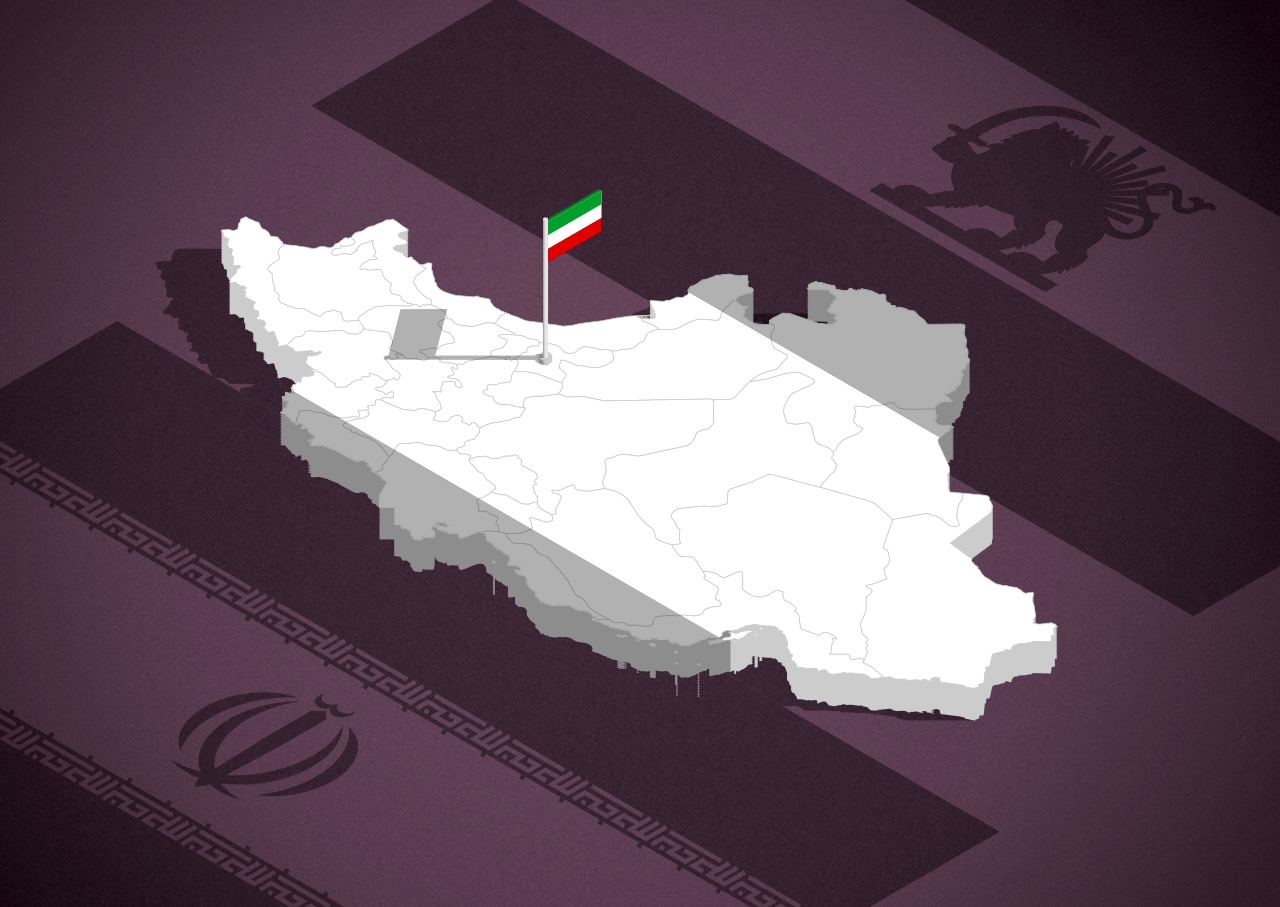
At 9:39 a.m., sunlight shines over Tehran’s skyline, with the Azadi (Shayad Tower) standing out above the city. The streets are mostly empty, showing the effects of weeks of anti-government protests and harsh crackdowns. Suddenly, a loud explosion echoes through the city. Under the premise of answering President Trump and Prime Minister Netanyahu’s promise that “help is on the way”, the Israeli Air Force conducts “Operation Roaring Lion”. Unbeknownst to most, Ayatollah Ali Khamenei, Iran’s Supreme Leader since 1989, is dead. A moment culminating in a potential turning point for Iran, bringing uncertainty for its people. Questions about Iran’s future and the stability of the Islamic Republic come up right away. However, to better understand how this pivotal event came to be, it’s important to review the history that led to this point.
Historical Context
After the 1979 Islamic Revolution removed Mohammed Reza Shah, the movement’s revolutionaries established a new government based on strict Shia interpretation of Islamic Law, led by Ayatollah Ruhollah Khomeini. At first, some Western officials, including those in the Carter Administration, saw Khomeini as a moderate figure, but this view proved mistaken. Soon after Khomeini’s return, protests featuring the chants of “Death to America” and “Death to Israel” started. These chants reflected the revolutionary movement’s deep hostility toward the United States and Israel, which many of Khomeini’s supporters viewed as key backers of the Shah’s regime and symbols of foreign influence in Iran. Once his attempt to solidify his control, Khomeini used the newly established Islamic Revolutionary Guard Corps (IRGC) and other loyal groups in an attempt to eliminate his former leftist and socialist allies, such as the Mojahedin-e-Khalq (MEK), among others—forcing survivors into exile. With his grip on power secured, nearby Gulf countries worried that Iran would try to spread its revolutionary ideas across the Middle East. This fear was one reason Iraq’s Saddam Hussein invaded Iran in 1980, starting an eight-year war that brought little benefit to either side.
During and after the Iran–Iraq War, the Islamic Republic developed a network of allied militant groups across the region, most notably Hezbollah in Lebanon and later Hamas in Gaza and the Houthis in Yemen, providing them with funding, weapons, and training even though these movements originated locally rather than being directly created by the regime. This network later played a significant role in destabilizing several nearby Arab countries, including Lebanon, Syria, Iraq, and Yemen, where Iranian-backed groups became involved in internal conflicts and regional power struggles.
In recent years, especially up until the Iran Nuclear Deal in 2015, Western policy toward Iran has often seemed like appeasement. Spotlight on the regime’s proxy-policies would once again become evident once again on October 7th, 2023. Although the regime was not directly involved, many experts have suspected that the IRGC gave material support and helped plan Hamas’ attacks that day. Under the banner of “never again,” Israel managed to destroy much of the leadership and abilities of both Hamas and Hezbollah. Just over two years later, a similar fate would befall Ayatollah Khamenei and about forty of his top military and security officials on February 28th, 2026.
For his orders that led to the deaths of thousands, in which the IRGC and Basij forces are believed to have killed anywhere from 3,000 (regime estimates) – 40,000 protesters (Opposition/International estimates) with some reports suggesting even higher numbers. In a twist of fate, Ayatollah Khamenei and his close allies were killed by the same countries they had long opposed. Thereafter, US Secretary of Defense Pete Hegseth would notably state in a press conference, “Turns out the regime that chanted “Death to America and Israel” was given death from America and Israel.”
With the regime’s upper echelon being eliminated by the minute and its military capabilities ever more degraded, the question is no longer whether the regime will change, but in what way. The future is unclear and will depend on what the US-Israeli “Operation Epic Fury” and “Operation Roaring Lion” aim to achieve.
The Stated Goals of US-Israeli Military Operations in Iran
The United States and Israel have shared several main goals for their ongoing military campaign against Iran in briefings and press releases. U.S. officials say the operation aims to destroy Iran’s missile sites and production centers. Washington also wants to weaken Iran’s navy to keep oil flowing through the Strait of Hormuz. Another important goal is to stop Tehran from developing a nuclear weapon that could threaten the region or beyond. Before the strikes, Israeli leaders warned that any attacks on their country would bring strong responses. These actions are meant to reduce the Iranian regime’s power. Recent losses among regime leadership are seen as efforts to disrupt decision-making at the highest levels of government and the military. Despite different public statements, the main goals are to limit Iran’s ability to fight, reduce its influence in the region, and lower threats to Israel, the U.S., and their allies.
President Trump, Prime Minister Netanyahu, and other top officials have not directly called for regime change. However, some statements by U.S. and Israeli officials have been interpreted as indirect calls for political change within Iran. In Washington, speculations of putting American boots on the ground have been reported on mainstream media, citing that the administration is “willing to do anything it takes” to hamper Iran. Conveying many analysts’ suspension that the administration’s viewpoint of Iran will not be “kicking the can down road.” Both Trump and Netanyahu have expressed their frustrations in dealing with the regime which has been accused by countries such as the United States, Israel, Saudi Arabia, and several other Arab governments of repressing its people and supporting global terrorism for almost 50 years.
It appears apparent that most Iranians want political change,with the diaspora overwhelmingly anti-regime. Polls conducted on people living within Iran have produced results touting support for the current regime’s downfall. One 2024 example published by Dutch non-profit GAMANN reported that among its 77,000 respondents, 26% supported a republic, 21% favored a monarchy, and about 22% did not possess enough information to make a decision. Demonstrating that no single form of governance currently holds an absolute majority. The desire of the Iranian people will only become clear following the results of a free and fair referendum in a post-Islamic regime Iran.
The Three Potential Avenues
The Continuation of a “Handicapped” Islamic Republic
Neither Trump nor Netanyahu has clearly stated that regime change is their main goal, so it is possible that the status quo could remain. It is believed the regime’s military arsenal has not been completely defanged just yet. Some experts think the IRGC, Basij militias, and local clerics might still keep some control, but the US-Israeli airstrikes have badly damaged the regime’s military, making it less likely the current government will last. President Trump has said he will only accept “unconditional surrender” from the Iranian regime, showing little interest in compromise. He has also said “he wants a role in picking the new Iranian leader” and that the people should “take over their government and institutions,” which has caused some confusion about his endgame in Iran.
Many people in the Iranian diaspora have argued, saying that “anything less than regime change is a failure for the American people and a failure to the Iranian people.” There are real concerns that parts of the IRGC could keep targeting dissidents, as they did under Khamenei’s orders a few months ago. The regime has admitted that choosing a new Supreme Leader is a security concern, signaling concern within the upper ranks of the regime. Polls conducted among the Iranian diaspora living in the West, have produced varied results. Throughout social media, there are several videos of Iranians in Tehran and other major cities having “watch parties” from their rooftops overlooking the bombings of regime facilities and IRGC bases. It is clear that Iranians want a change and their yearning for freedom will only become clear following the results of a free and fair referendum in a liberated Iran.
While support for the regime appears to be dwindling, it is still important to point out that loyalties to Islamic Republic still exist. Meaning that any signs of the regime losing its grip of power could embolden its support base in the near future. The question of who is actually leading the current regime is also on the table. While a new Supreme Leader has been named, Ali Khamanei’s son, Mojtaba, his status remains unknown. Some unconfirmed reports state that Motjaba is lying in Tehran’s Sina University in a coma with injuries consisting of either one or both legs being amputated, ruptured liver and stomach. Other conflicting reports state his injuries are only minor. Despite Iranian state media releasing his statement on March 12th, telling the world stage that “we will not refrain from avenging the blood of your martyrs.” The reasons for not video-taping or recording his statement remains unclear, meaning that no clear signs of competency exist at the moment.
“Euro-Style” Constitutional Monarchy – Restoration of the Pahlavi Throne
Another possible future for Iran is a secular constitutional monarchy similar to ones seen in Europe. In this system, the Pahlavi crown would represent the head of state, while an elected prime minister or president would be the head of government. Groups supporting this pathway have always been established. On March 5th, the Conservative Party of Iran (CPI), a new party in exile, announced its plan for a post-Islamic Regime Iran in which they advocated for the restoration of the pillars of Iran’s historical and political truth, namely its national identity, sovereignty, and monarchical legacy.
In their plan, the title of Shah would go to HRH Crown Prince Reza Pahlavi (regal name: Reza Shah Pahlavi II), with his daughter, Noor Pahlavi being designated as heir to the throne. It should be stated that in a recent interview with CBS’s 60 minutes, the Crown Prince repeatedly emphasized his aspirations to merely serve as a transitional leader, but if the Iranian people express desire for his continued service, whether as the next Shah or an elected government official, he will heed their calls.
There are signs in and outside Iran suggesting that the restoration of the monarchy could happen. Many in the Iranian diaspora have shown support for the Crown Prince, often holding up pictures of the Pahlavi family and the old Imperial Standard at rallies. Chants such as ‘Javid Shah’ (Long Live the King), “King Reza Pahlavi, and “’This is the final battle, Pahlavi will return” appear to be commonplace in Tehran, Qom, and other major cities within Iran. A phenomenon in which the CPI’s founder, Rayan Amiri, has called a ‘kind of street referendum.” Regardless, Amiri emphasizes that the final decision is up to the Iranian people at the ballot box.
An “American-Style” Republic
Lastly, a liberated Iran could also become a secular, democratic republic after the fall of the Islamic Republic. Whether led by the Crown Prince or another opposition leader, groups like the CPI could form a government with a constitution that guarantees free elections, separation of powers, and civil rights. The National Council for a Free Iran, which is separate from the Crown Prince’s group but remains part of the opposition, also has a vision for a post-Islamic Iran focused on popular rule, legal equality, and individual rights. Its leaders say it is important to include women, minorities, and independent civil society members in government, a significant change from the current clerical system. However, many people believe the National Council for a Free Iran is linked to the MEK, and critics see it as an attempt by the group to hide its cloudy past.
The MEK’s contentious reputation complicates its potential role in a post-Islamic Republic transition. The group’s decision to align with Saddam Hussein during the Iran-Iraq war significantly damaged its standing among the Iranian population. Additionally, the organization was designated as a terrorist group by most Western countries until the early 2010s. Consequently, a government involving the MEK would likely face rejection from the Iranian public, diaspora, Washington, and Tel Aviv.
This scenario could result in the continuation of sanctions and other U.S. government-sponsored measures that have severely impacted the Iranian economy in recent years. Within the diaspora, animosity persists between Pro-Pahlavi supporters and the MEK. Although the MEK has organized rallies featuring their famous yellow banners and slogans such as “No Mullahs and No Shah” in Washington and other major Western cities, there have been attacks and clashes on pro-Pahlavi rallies allegedly perpetrated by individuals affiliated with the MEK.
A notable example, a rental van displaying the sign “No mullah, no Shah” drove through a pro-Pahlavi rally in Los Angeles in January, further diminishing the group’s limited popularity. Simultaneously, chants such as “death to three corrupts – Mullahs, leftists, and the MEK” within Iran and across the diaspora underscore widespread distrust and hostility. This sentiment is partly rooted in the association of the MEK with the 1979 revolution, for which some Iranians hold the group responsible for the country’s subsequent decline.
Conclusion
Iran faces an uncertain future as leadership and military upheavals push the nation to a decisive crossroads. The country could remain a fragile Islamic Republic, shift to a constitutional monarchy under the restored Pahlavi throne, or become a secular republic without a monarchy, as promoted by the MEK. These are currently the most plausible scenarios, given opposition movements, public sentiment, and the Crown Prince’s emphasis on national unity.
However, many Iranians distrust the MEK due to its controversial history, limiting its credibility in any transition after the Islamic Republic. Civil unrest or internal conflict remains possible. Yet, widespread fragmentation appears unlikely given the Crown Prince’s calls for unity and the Iranian people’s drive to reclaim a national identity disturbed in 1979, when Iran was secular and a pro-Western promoter of regional stability. Iran’s direction now depends on the resilience of its institutions, external influence, and the leadership of credible opposition groups. Whatever the result, for the first time in decades, the balance of power is undoubtedly shifting, presenting itself as a historical turning point in Iran and the broader Middle East.
Disclaimer: While Euro Prospects encourages open and free discourse, the opinions expressed in this article are those of the author(s) and do not necessarily reflect the official policy or views of Euro Prospects or its editorial board.
Write and publish your own article on Euro Prospects
Subscribe to our newsletter – stay informed when we publish articles on pressing European affairs.