Middle East | Iran | United States | Israel | Geopolitics
Over the past weeks, the Middle East has entered one of its most volatile security crises in decades. What began as targeted US-Israeli aerial strikes on Iran has rapidly expanded into a regional conflict involving major global powers, regional actors, and growing economic repercussions.
Euro Prospects is tracking the military escalation, regional responses, and global consequences—particularly for Europe.
Jake Southerland — Senior Int’l Security Correspondent;
Francesco Bernabeu Fornara — Editor-in-Chief; and
James Murphy — Socio-Economic Dev. Correspondent
1. The Opening Strike (Day 1)
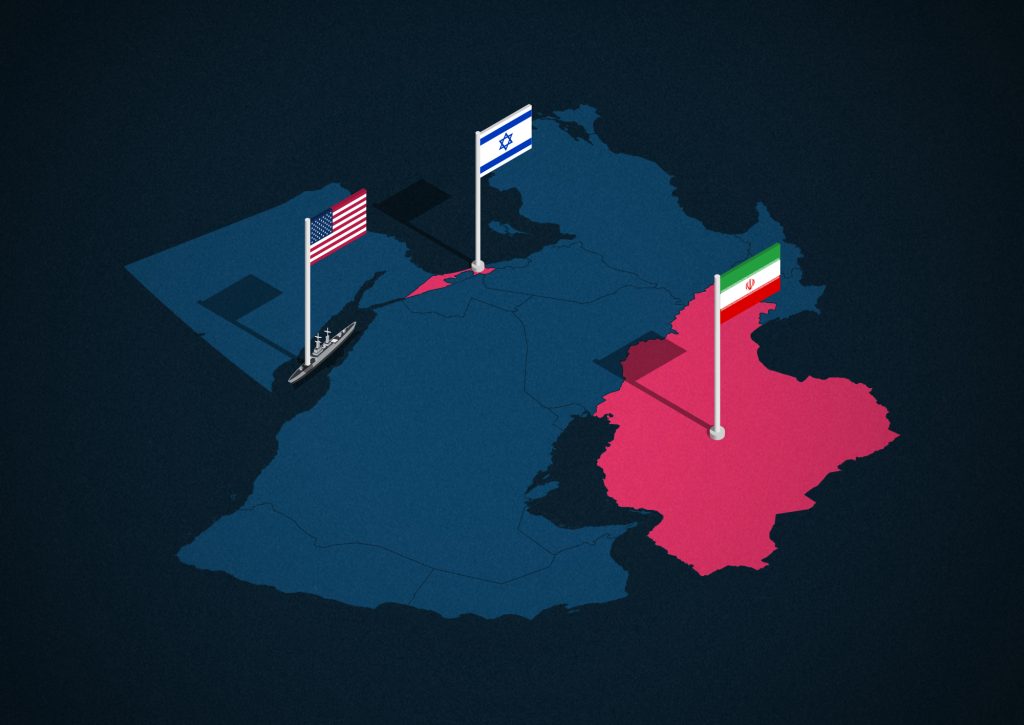
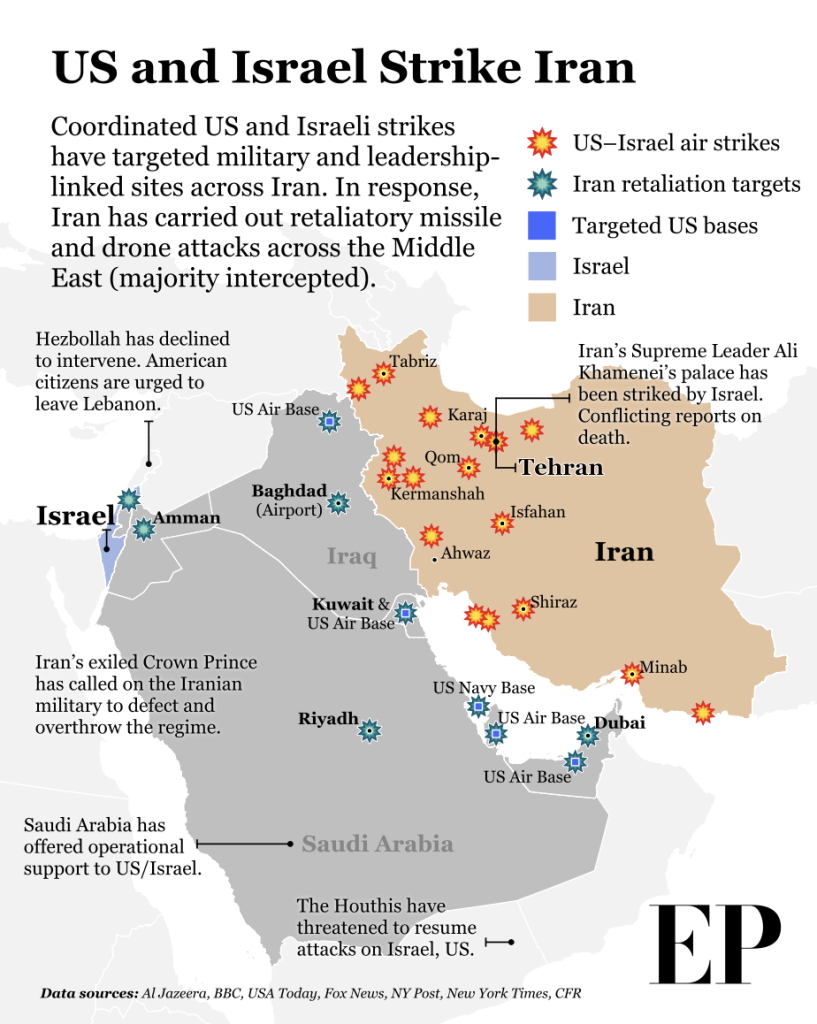
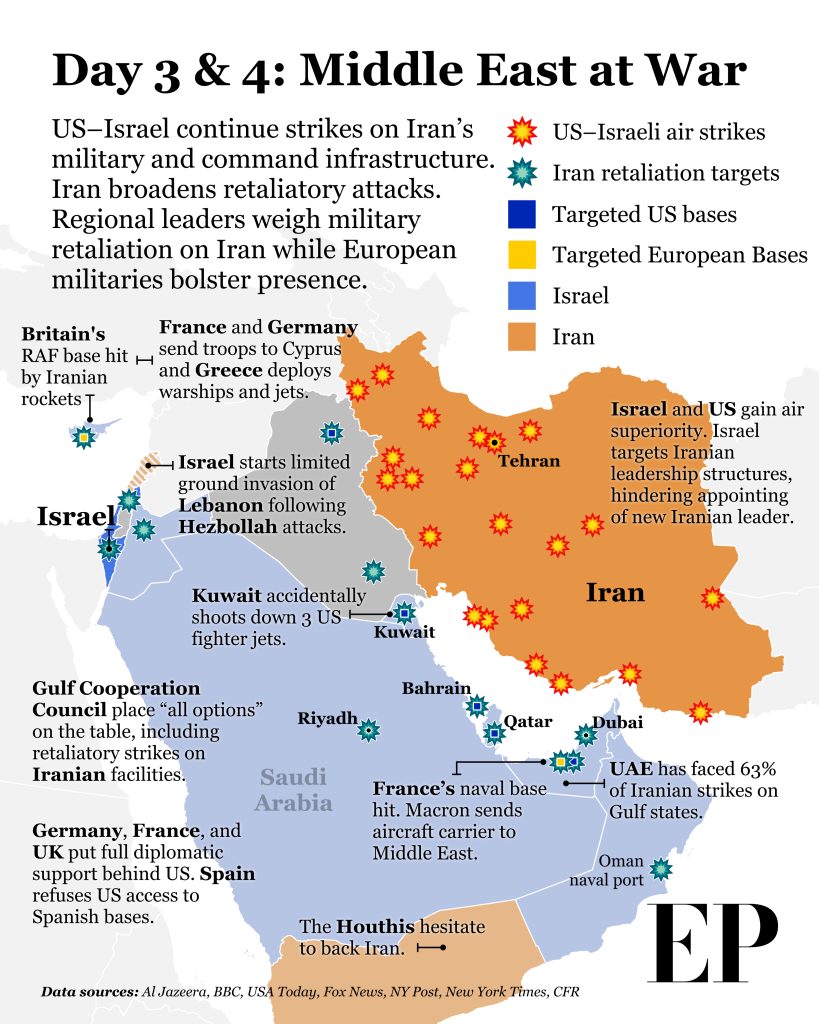
On February 28, US and Israeli forces launch coordinated strikes on Iran.
Donald Trump announces a joint military operation with Israel targeting leadership structures, IRGC facilities, and naval infrastructure in Iran.
The operation reportedly included a decapitation strike targeting Supreme Leader Ali Khamenei, who would later be confirmed dead.
Within hours, Iran retaliated with missile and drone strikes targeting Israel and U.S.-aligned states across the Gulf.
2. Regional Escalation (Days 1-6)
Iran expands its response through a combination of direct missile strikes, drones, and proxy operations.
Targets included: Israel, U.S. bases in the region, and Gulf states including Saudi Arabia, the UAE, Qatar, Bahrain, and Kuwait.
The Gulf Cooperation Council invokes Article 51 of the UN Charter, signalling a collective right to self-defense.
Iran’s regional proxies, including the Houthis in Yemen and Hezbollah in Lebanon back Iran.
3. Europe Deploys Military (Day 6)
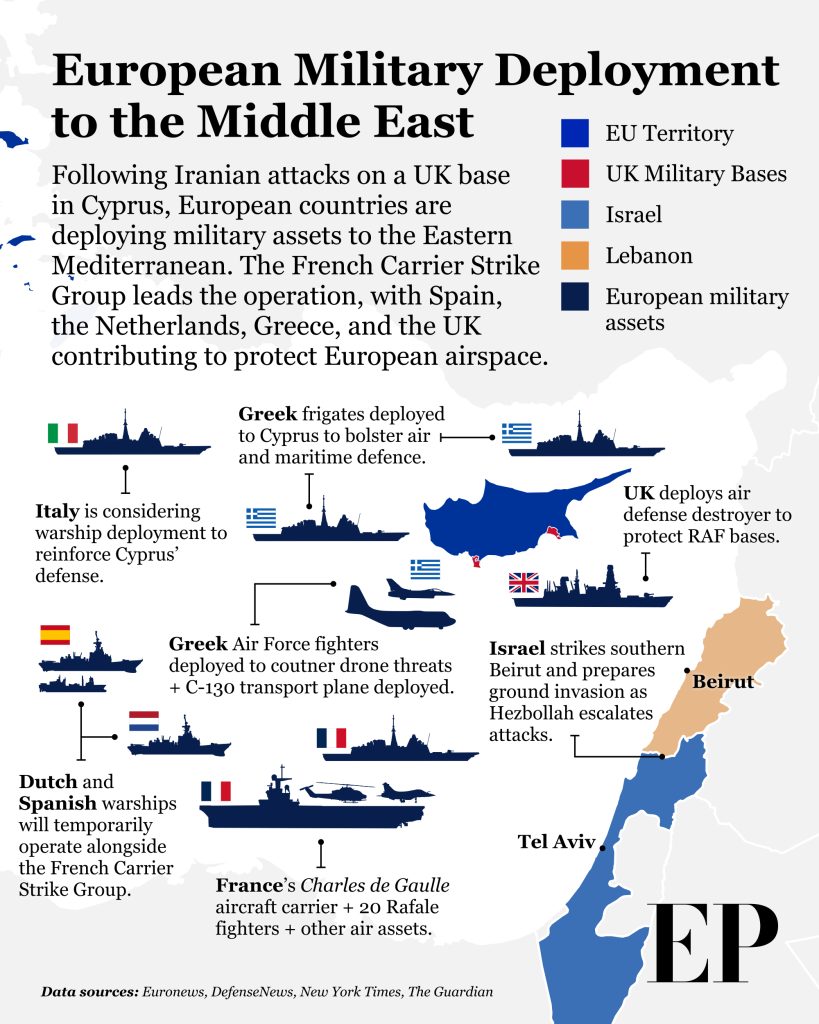
As the conflict expands, European states begin repositioning forces across the Eastern Mediterranean.
Following attacks on RAF Akrotiri, the UK’s Prime Minister Keir Starmer activates defensive air operations.
Several European countries follow suit and deploy naval forces near Cyprus, including: France, United Kingdom, Spain, Greece, Netherlands
France additionally prepares to deploy the aircraft carrier Charles de Gaulle toward the Eastern Mediterranean and the Gulf region.
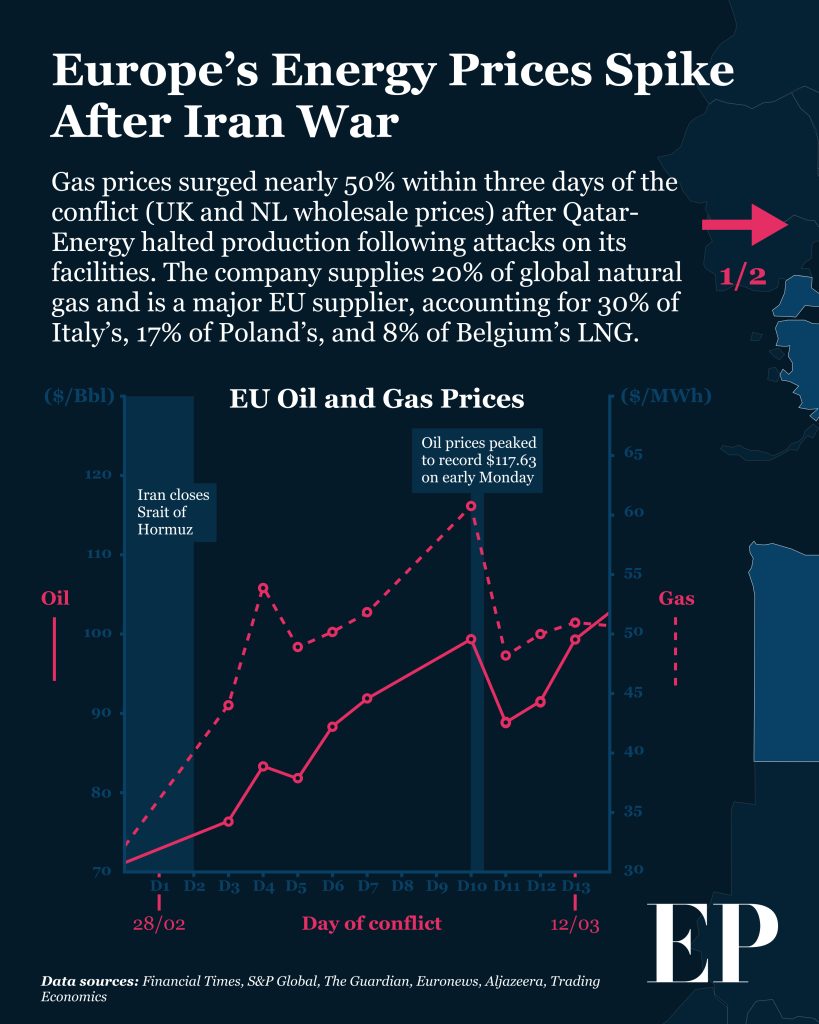
Two weeks into the conflict, energy markets destabilise.
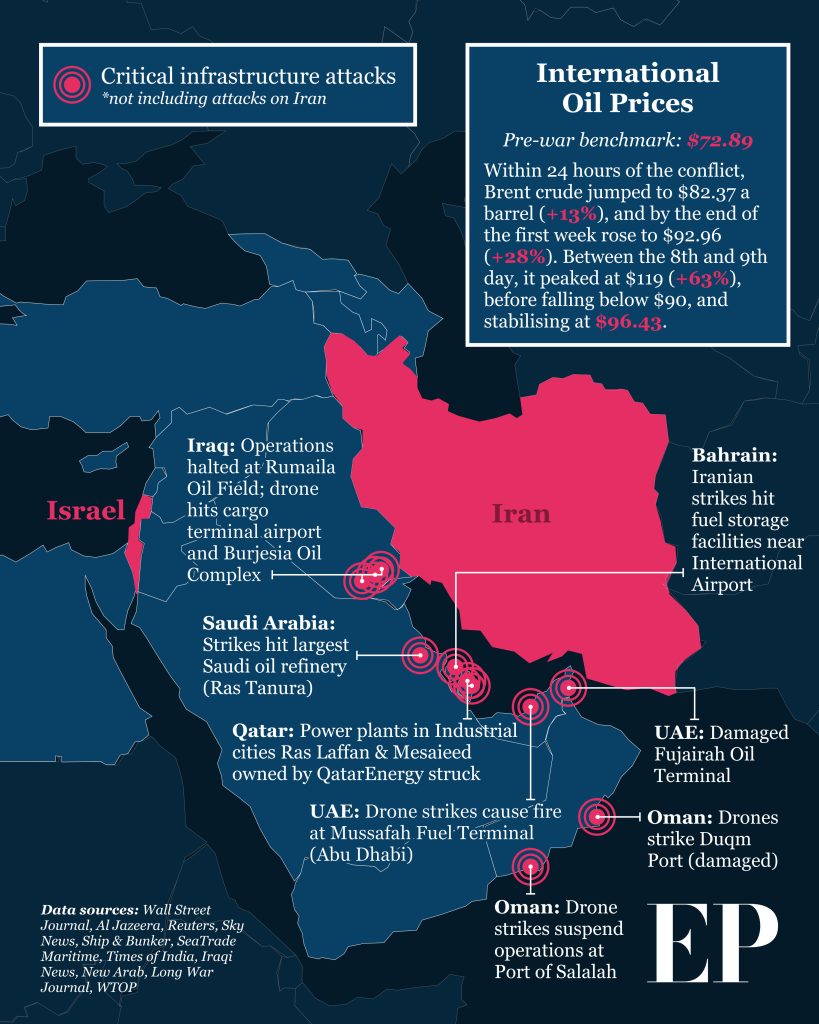
Beyond the military dimension, the conflict has begun producing serious economic repercussions. Repeated Iranian threats to close the Strait of Hormuz—through which roughly 20% of global oil and gas supply passes—have destabilised global energy markets. As a result: European gas prices have risen nearly 50%, energy markets remain volatile, concerns are growing about long-term supply disruptions. While the EU maintains emergency energy reserves, the prospect of a prolonged crisis raises difficult questions about Europe’s energy security and economic resilience.
Disclaimer: While Euro Prospects encourages open and free discourse, the opinions expressed in this article are those of the author(s) and do not necessarily reflect the official policy or views of Euro Prospects or its editorial board.
Write and publish your own article on Euro Prospects
Subscribe to our newsletter – stay informed when we publish articles on pressing European affairs.