18 min read — Africa | Economy | Trade | Corruption | Policy
Transfer Mispricing: How Multinational Enterprises Shift Profits into Losses for Africa
How do multinational enterprises use transfer mispricing to shift profits abroad, depriving African countries of vital tax revenues?
By Antonia Bauk — Int’l Law Correspondent
Reviewed by: Francesco Bernabeu Fornara
January 14, 2026 | 21:50
Multinational enterprises (MNEs) have a known tendency to seek favourable tax-systems, thereby earning more income and incurring fewer expenses. By headquartering their parent companies in a low-tax jurisdiction while their operational subsidiaries remain in the countries of main operation, MNEs sell at an inflated price while their taxes remain disproportionately low. African countries are no stranger to such corporate practices. By holding huge reserves of lucrative raw materials while suffering from weak tax-administrative capacities, Africa has become a prime target for MNEs seeking to maximise profit. It is of great significance to address these various dimensions in which transfer pricing issues manifest, as it significantly contributes to illicit financial flows that rob African countries of crucial domestic revenue. These practices also undermine transparency and accountability, eroding trust in African institutions often not at their fault. This article offers an overview of transfer mispricing and the general operation of multinational enterprises in developing countries. Is there a way to combat multinational enterprises’ transfer mispricing abuse towards developing countries? There is, but not fully and not soon enough. This article tries to explain in various examples how and why such solutions have become hardly possible.
Profit Shifting
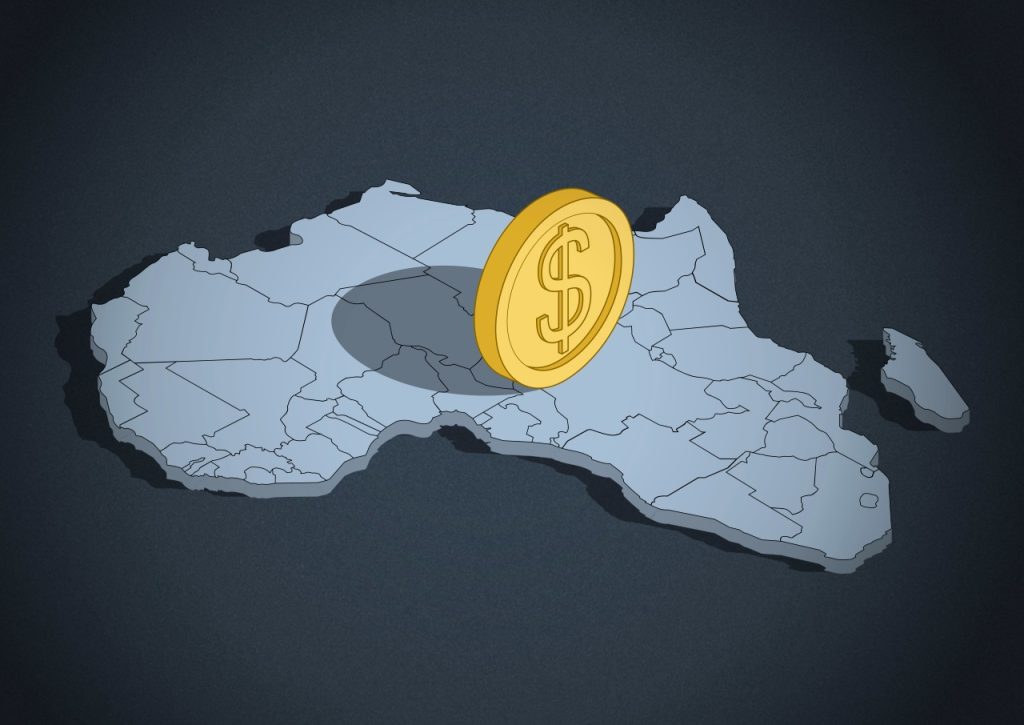
‘Transfer mispricing occurs when one company sells goods or services to another related company at an inflated or deflated price to allocate profits to a lower-tax jurisdiction. Because these transactions are internal to a multinational company, they are often not subject to market pricing.’ That is, a multinational’s subsidiary sells in one jurisdiction or country while their parent company incurs the revenue in a different, favourable jurisdiction—think the Cayman Islands, Switzerland, or Singapore. Transfer pricing is largely regarded as one of the most important profit-shifting challenges in international taxation, requiring cooperation from the very countries that benefit from it, to the particular detriment of developing countries. The 2020 United Nations Conference on Trade and Development report stated that Africa is losing circa $89 billion annually through illicit financial flows. This amount is almost the same as the continent’s total annual receipts from development aid and foreign direct investment. Illegal activities drive these losses, utilising strategies such as abusive transfer pricing, corruption, trade mispricing, and mis-invoicing, as well as tax avoidance and evasion.
Underpriced Export and Overpriced Import
Poverty is no rarity across Africa, Latin America, and Asia, despite their vast resource wealth. Indeed, extensive pools of gems, gold, oil, plant proteins, grains, and others are plentiful across those regions, attracting large multinational corporations with the capacity to extract them.
This is where trade mispricing occurs between two companies: the extractive, which is often the subsidiary, and another, often the parent company in another country. These trading corporations manipulate the sale price, quantity, or description of goods (such as copper or lithium) transferred between them. This tactic results in goods being traded at prices that deviate from their true market value, allowing companies to reduce taxes or royalties owed in the exporting country. Trade mispricing is sometimes used to facilitate money laundering, evade tariffs, smuggle goods, or hide bribes to politically exposed persons. Ultimately, it transfers economic value across borders illicitly, often at the expense of countries and communities with limited financial resilience, who bear the brunt of the revenue losses.
Trade mispricing’s other trait is illicit financial flows. It is estimated that 50% of such flows come out of developing countries—all of them African. This includes the aforementioned 40 billion dollars that were illicitly removed from Africa in the face of underpriced export and import of gemstones and gold. African countries are being swindled out of billions in tax revenues mainly by large foreign companies in the energy and resource sectors, but also increasingly by small and medium-sized enterprises, such as safari organizers in countries such as Kenya, Tanzania, South Africa, and even Egypt.
These illicit practices deprive vulnerable countries of crucial foreign exchange revenue and erode their tax bases, undermining resources needed to support their populations. For instance, the United Nations Conference on Trade and Development (UNCTAD) estimates that African nations facing high capital flight—partly due to trade mispricing—could significantly reduce the child mortality rate for those under five, from 59% to 20%, simply by redirecting these financial losses to the health sector. Additionally, addressing illicit financial flows could contribute close to half of the funding needed for Africa’s adaptation and mitigation efforts against climate change. Indeed, the opportunity cost is huge.
The Case of Zimbabwe
Most developing countries have the double challenge of working under weak administrative capacities and limited state resources, resulting in auditing transfer pricing being expensive and unable to be resolved in a needed manner. In Zimbabwe, for example, the problems are even worse: Due to financial turmoil, low wages led to massive layoffs of civil servants, leading to transfer pricing experts leaving for multinational enterprises or accounting firms with more lucrative jobs.
There is a strong link between a nation’s level of economic development and its capability to mobilize revenues to fund government expenditures. In developing countries like Zimbabwe, expanding the tax base is disrupted by limited resources, insufficient capacities for effective revenue collection, as well as the presence of a large informal sector.
Developing countries facing yet the additional challenge of addressing multinationals’ profit shifting policies leaves their ability to achieve the UN’s Sustainable Development Goals (SDGs) uncertain. As a result, the UN and OECD intervened, creating guidelines that countries could adopt—considering their specific situations—to more adequately regulate transfer pricing practices. But despite their marginal effectiveness, the elephant in the room remains: the limited administrative capacity to enforce those very guidelines.
Until structural deficits plaguing administrative capacity is addressed, Zimbabwe like other countries will keep falling behind on adequately enforcing and implementing transfer-pricing rules.
Other African Examples
That said, most African countries’ transfer pricing rules are undeveloped and sometimes nonexistent. In Botswana, transfer pricing rules are still under development based on the OECD Guidelines. Cameroon uses the 2012 Finance Law as the foundational regulation for transfer pricing transactions. Malawi uses the Income Tax Act of Malawi, specifically Section 41 thereof. Zambian Income Tax Act Section 97a is adopted as a governing measure. South Africa, largely due to their more robust administrative capacity, is one of the countries that has well-developed transfer pricing rules. Zimbabwe had enforced transfer pricing rules in the 2016 Zimbabwe Income Tax Act. Lesotho has no transfer pricing laws in place.
But just because a country has introduced legislation doesn’t per se lead to the solution. For example, in a Zimbabwean court case concerning the country’s Income Tax Act, the court considered whether the tax administration could tax a “non-existent income” through the “deeming provisions” of the 98 provisions. The Court ruled in favor of the tax administration, seeing as the fixed rentals for the defendant MNE were so low they concluded it was a situation of tax avoidance and under-invoicing. Despite the tax authority’s win, such cases remain rare due to the influence and asymmetrical power MNEs have over developing countries and their state.
Possible Solutions for Transfer Mispricing: Profit Shifting
The similarity between transfer pricing guidelines for industrialized and less developed countries indicates a broad consensus on the theoretical framework for determining appropriate transfer prices. Nearly all regulations are rooted in the “arm’s length” principle developed by the UN–OECD guidelines, which seeks to replicate the pricing that would occur between unrelated parties operating independently under comparable circumstances. In essence, the arm’s length approach aims to identify the market-based price that would prevail in an open marketplace.
The U.N. guidelines suggest three main methods to determine an arms’s length price for the sales of goods: the uncontrolled market price method, the resale price method, and the cost-plus method. The uncontrolled market price method sets the transfer price by reference to prices paid by independent third parties for comparable products. To be sure that the transfer price is considerably linked to that of the specific transfer, some changes may be needed for certain factors. Lastly, evidence of comparable prices needs to be, to a degree, simultaneous because of volatility in market values and currency rates
The Resale Price Method calculates the transfer price by ensuring a distributor earns a reasonable gross margin, consistent with arm’s length standards. This is done by reducing the resale price (to unrelated third parties) by an arm’s length gross margin, leaving enough to cover operating expenses and generate profit. Determining the appropriate markup involves assessing the reseller’s specific functions. If the reseller simply sells the goods without additional responsibilities, only a modest markup is warranted. However, if the reseller takes on significant tasks like advertising, marketing, and distribution, a higher markup is allowed. Factors such as exclusive sales rights in a specific market might also influence the markup, though the value of exclusivity may vary depending on the circumstances.
The Cost-plus method determines the transfer price by calculating the seller’s costs and adding an appropriate markup. The markup is established using the same principles as the resale price method. Calculating the seller’s costs requires a thorough review of the expenses incurred in producing and selling the goods, ensuring only costs attributable to the seller are included. Expenses like transportation, startup advertising, and overhead must be analyzed to confirm they directly benefit the seller and are appropriately factored into the cost.
Finally, the practice of using uncontrollable market prices—that is, externally-set prices based on the open market—can be seen as a way to address situations similar to those observed in Hong Kong or Japan. Countries such as Japan and Germany have engaged in transactions with lower-tax jurisdictions, including Malaysia and Hong Kong, precisely because these countries offer favorable tax rates, creating opportunities for profit shifting. Using uncontrollable market prices in these transactions ensures that the sale prices are close to true market values, which still marginally benefits the low-tax jurisdictions while reducing the risk of the transactions being classified as transfer mispricing.
Conclusion
Transfer mispricing is a pervasive, transnational dilemma, to the particular detriment of regions in Africa, Asia, and South America. It is a practice driven by multinational enterprises (MNEs) seeking to minimize their tax liabilities by shifting profits to jurisdictions with lower tax rates. By undervaluing imports and overvaluing exports, MNEs not only reduce their tax obligations but also increase their financial gains—illicit financial gains that could have otherwise gone to serve critical public services in developing countries. Specific examples include cases from Zimbabwe to numerous other African countries.
Addressing this issue has led to the identification of potential solutions, focusing on mechanisms to combat profit shifting and regulate import and export pricing practices. Effective solutions, however, lie particularly in solving collective action obstacles and addressing structural enforcement gaps due to low administrative capacity. Measures like those advanced by the OECD aim to enhance tax compliance and ensure a fair allocation of tax revenues, particularly for developing nations that are disproportionately affected to the detriment of their growth and the UN’s STGs.
Disclaimer: While Euro Prospects encourages open and free discourse, the opinions expressed in this article are those of the author(s) and do not necessarily reflect the official policy or views of Euro Prospects or its editorial board.
Write and publish your own article on Euro Prospects
Subscribe to our newsletter – stay informed when we publish articles on pressing European affairs.