10 min read — Geopolitics | Mercosur | Trade | Global Europe
The Mechanics of the EU-Mercosur Trade Deal: Europe’s Push to Shift the Global Order
“This is why I want to repeat what I said in this very spot during my State of the Union address: This is Europe’s independence moment,” – European Commission President Ursula von der Leyen during her speech at the European Parliament plenary debate on 17 December 2025.
By Lorist Bowen-Dodoo — Geoeconomics Correspondent
Edited/Reviewed by: Jake Southerland
March 1, 2026 | 15:30
A few weeks ago, there was significant news about the Mercosur bloc of South America and a trade deal with the European Union. A sign of realignment, it signalled that the economic positions of a continent locked in a metaphorical tug of war between two superpowers were changing. Yet, the trade deal has had a series of roadblocks, and even now, is still not solidified. What we seem to be seeing is an attempt by both parties to shift an economic system that has been stress tested for too long, to a position where they can garner some advantages. According to the European Council President, the deal’s development is a step in the right direction of multilateralism and global stability. But to understand this deal, we need to investigate the nature of the real cracks in geopolitical stability from Europe’s perspective.
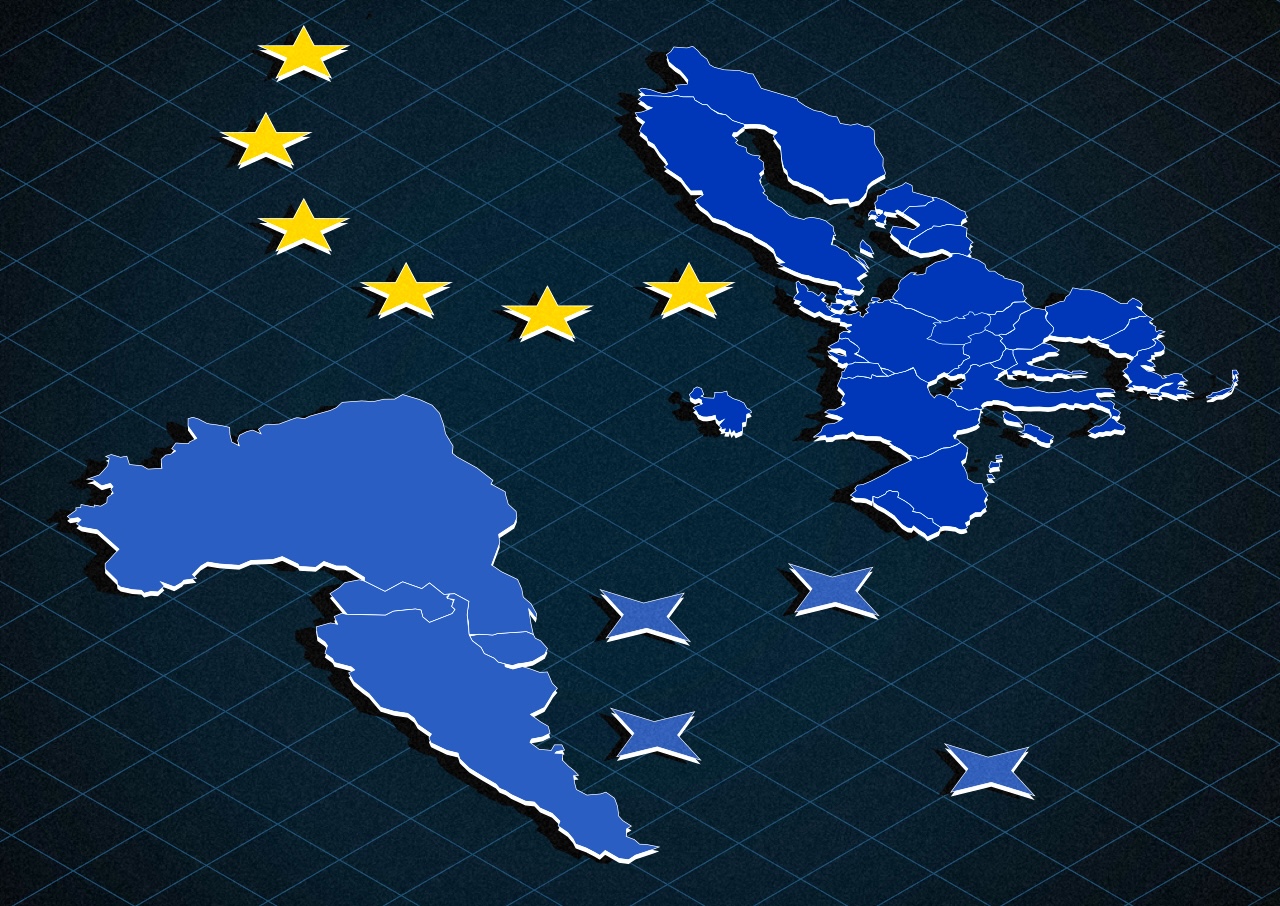
Mercosur is not like the European Union (EU) in every sense. Mercosur represents the initials of Mercado Común del Sur (Southern Common Market). Similarly to the EU, Mercosur was a product of the global economic integration of the 1990s. With the Treaty of Asuncion (1991), Mercosur was created with the goal of pushing for greater economic integration amongst its member states – Argentina, Brazil, Paraguay and Uruguay. Since their inception more than thirty years ago, this deal represents a historical peak. While the pending deal brings significant benefits for both Mercosur and the EU, some in the EU Parliament have expressed dissent, citing legal concerns. Those concerns center on whether the deal will clash with existing EU climate policy.
Free trade is one of the hallmarks of a global economy, and countries are free to enter into free trade agreements with one another if they think it is in their best interests to do so. Within the paradigm of globalization, it makes sense to enact free trade agreements: Access to cheaper goods and services, increased production and economic interaction that spurs development at arguably a faster rate than an isolationist approach. Free trade agreements facilitate trade by reducing or eliminating existing barriers to trade which include tariffs or other non-tariff barriers such as import quotas. Comparable trade blocs with often-disputed successes include NAFTA (North American Free Trade Agreement) and ASEAN (Association of Southeast Asian Nations). The European Union, a complex and highly functional free trade area, stands as one of the most successful free trade areas.
Unlike the EU which has fully integrated its member states, Mercosur is not a fully integrated economic and political union. Mercosur has had its challenges on its path to realizing the common market (an advanced stage in economic integration) due to key institutional issues centred on independence being unable to be instituted as a key principle, and the lop-sided nature when it comes to countries like Brazil seemingly having its own interests ahead of others in the bloc. Issues of uniformity, such as Brazil’s refusal to lower tariffs on fellow bloc members, have created numerous obstacles for Mercosur’s desire of a common market to come to fruition. Therefore, Mercosur is a trade bloc that is probably attempting to become a well-oiled customs union. Mercosur countries exported about $452 billion (€418.5 billion) worth of goods in 2024 and imported $366 billion (€338.9 billion). Of course, most of this was attributable to the bloc’s largest economy Brazil, which is a net exporter. A powerhouse when it comes to agriculture and petroleum, Brazil is seen as the bloc’s key driver of advantage. It certainly sees itself as that too. Lamenting on the opposition to the Mercosur-EU trade deal within Europe, Brazil’s Ambassador to the European Union Pedro Miguel da Costa e Silva highlighted its role as one of the largest agri food suppliers to the EU, while arguing that their agricultural sector is already meeting standards that the EU expects for entry to its market. But the potential benefits accrue for the EU.
Finding an alternative solution in a markedly more hostile economic environment should be imperative for the EU, according to Bruegel. Looking elsewhere for beneficial trade deals is the most practical solution. European Commission head Ursula Von der Leyen echoed this in her remarks at the World Economic Forum last month. The Commission’s head points to an issue for Europe that goes beyond trade.
The key defining terms to focus on here are confrontation and coercion. The EU is at economic risk when it comes to overreliance on imports. The policy brief published in Bruegel highlighted the European Economic Security Strategy that was published in 2023 by the European Commission. While it suggests updates to better adapt to the world in 2026, its premise was solid. Presently, the EU exports more goods and services than it imports but is a net importer when it comes to energy and raw materials. Fossil fuel dependency in the EU exposes it to shocks in the current geopolitical climate. As the Russian invasion of Ukraine further highlighted this reality, it became necessary to limit adverse effects by pushing towards renewable energy. Through REPowerEU, imports increased from other suppliers like the United States and Norway (the latter is not an EU member state). Russian imports were cut significantly. This example of diversification came due to a dilemma – reliance on a hostile state. And today, diversification in other areas is being called for. Benefits such as securing first mover advantages (advantages that come with being the first business in a market) in one of the world’s richest agricultural markets could shield the EU from significant costs due to fragmentation. The European Commission sees it that way with its online factsheet highlighting the already significant investment in the region by the EU, and the win-win scenario it says the EU market would experience, as a result.
The same can be said for its heavy industry as the agreement would cut tariffs on automobiles, for instance, leading to growth for automobile makers. According to this report by Santander, the industry that has been in decline over recent years could see growth through policies pointed to in plans such as the Green Deal Industrial Plan. As for where the EU-Mercosur trade deal is concerned, a market of 270 million people is why associations such as European Automobile Manufacturer’s Association see it as a celebratory milestone with tariffs on cars being reduced, and growth guaranteed over the next decade if the deal goes ahead. The EU-Mercosur Interim Trade agreement would expose the EU to raw materials that are essential in the value chain of machinery and automotive.
Value will be also be drawn for countries in the Southern Common Market. They would gain significant foreign investment on top of what the EU already is responsible for and expose their agricultural sector to a large market. GDP will be projected to grow and more jobs will be created in what will be seen as South America’s attempt to stamp its authority in the fragmented international order. Yet, this is still on the side of optimism because the deal has not been ratified.
The EU-Mercosur deal is not actually being implemented because it is being held up in the European Parliament. The EU’s operational structure has meant that even though the trade deal is supported by the European Commission, it still needs the European Parliament’s approval in order for it to actually be implemented. As to why it is being held up comes down to a legal issue that a couple of member states. A final vote for ratification could have come in the next couple of months, which would have formally approved it, if not for varying political groups having an issue with its legality. With a referral coming from a majority of parliament, it now goes to the Court of Justice of the European Union, which could take a while to settle. It centres on a part of the agreement (European Mercosur Partnership Agreement) which seems to give the member states of the Southern Common Market the ability to ensure that EU exports stick to the agreement in any case. If not, they could seek compensation. Members of the European Parliament who voted to send the deal to the Court of Justice see it as a challenge to the EU’s regulatory policies. With discontent also being registered in France about what it means for their local industries and markets, this roadblock is the latest in a long line of roadblocks that have defined this trade deals history.
For Europe, the geopolitical reality today is forcing it to reconsider its actual strategic positioning, albeit grappling with domestic obstacles. The EU is a complex body and it truly is in a complex situation.
Disclaimer: While Euro Prospects encourages open and free discourse, the opinions expressed in this article are those of the author(s) and do not necessarily reflect the official policy or views of Euro Prospects or its editorial board.
Write and publish your own article on Euro Prospects
Subscribe to our newsletter – stay informed when we publish articles on pressing European affairs.