6 min read — United Nations | Global Europe | Security | Defence
The Funeral No One Wants To Attend: The Collapse of the Global Nuclear Order
As the old nuclear order decays, the world clings to rituals of reassurance that can no longer hide the growing risks beneath the surface.
By Elena Murillo Barrio — Guest author
Edited/Reviewed by: Jake Southerland
February 11, 2026 | 10:00
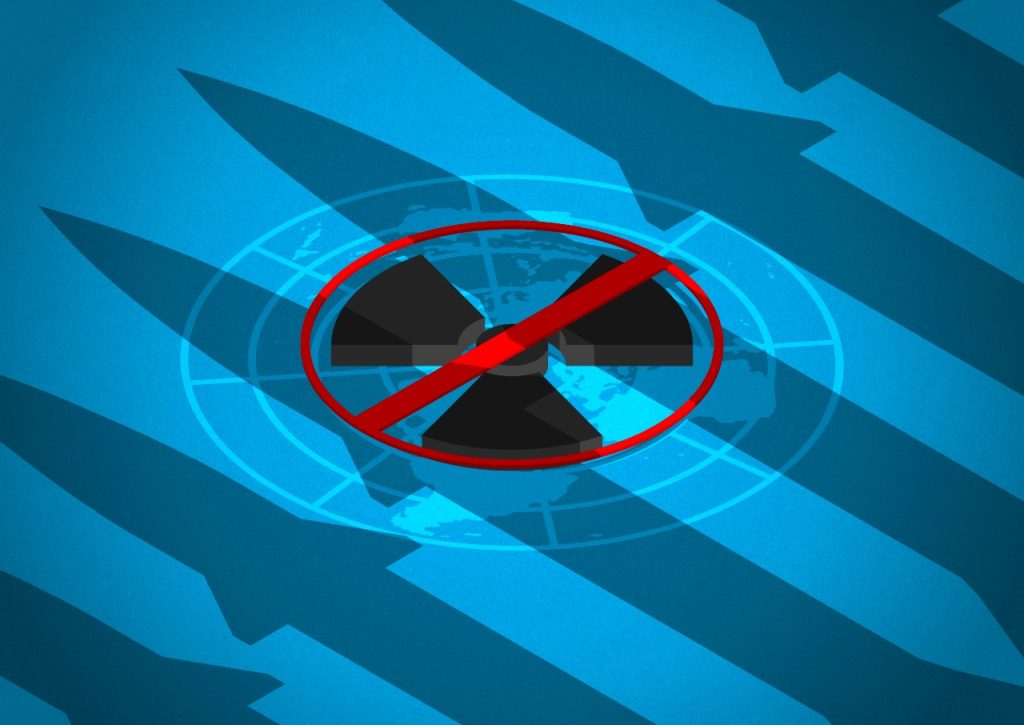
The Weapons of Mass Destruction (WMD) global architecture is crumbling, but the international community is too polite to attend the funeral. The 21st century has brought nuclear risks we could never have imagined before. Russia’s Avangard hypersonic glider, the autonomous Poseidon nuclear torpedo, or China’s dual-capable DF-17 now threaten international security. As a result, the post-Cold War arms rule is no longer fit for purpose. Yet prevailing narratives proclaim the survival of treaties and institutions such as the NPT or the IAEA, as evidence of success. They celebrate the persistence of the regulatory “corpse” of WMDs even though its “soul”, effective disarmament and security, has vanished.
It is undeniable that we lack a coherent nuclear strategy for today’s challenges. The bipolarity that characterized the Cold War period and the following decades does not exist anymore. China and North Korea continue to expand their arsenals without restraint; Russia underpins military aggression in Ukraine with nuclear threats; and the last U.S.–Russia arms control treaty will expire in February 2026. Yet the reluctance to sign the death certificate of the old order persists. This is what scholar Benoît Pelopidas has called professional “self-censorship.” Questioning the effectiveness of the WMD regime has become taboo, compelling policymakers to ignore an increasingly visible reality. It is not a matter of ignorance, but of institutional inertia. Preserving the appearance of control has become more important than confronting reality.
We are anchoring our security to treaties that even their signatories violate, and to institutions that lack credibility. Syria used chlorine and gas during its 2013 civil war despite being a BWC member; some IAEA founding members are not NPT signatories and have shown reluctance toward it. And it’s not just that; can a 1970 regulation stop a quantum cyberattack? Clearly not. The norms and treaties of the past have achieved much, but they must now evolve and adapt to confront a world of nuclear multipolarity and new threats.
Ten years ago, influential analysts like Liviu Horovitz optimistically argued that the NPT would remain resilient, reasoning that states had no real incentives to withdraw. It was assumed that U.S. primacy was sufficiently robust to deter any serious challenge, and that emerging powers like China had little impetus to challenge the nuclear status quo. Yet, this assumption has been proved to be untenable. The world is on the brink of “nuclear anarchy.” Poland and South Korea leaders have publicly considered the possibility of creating independent or joint nuclear capabilities in response to the U.S. decline. In addition, U.S. and Israeli operations targeting Iran’s nuclear facilities have heightened fear and uncertainty over the country’s nuclear future, while raising concerns over potential cascading effects in other states, such as Saudi Arabia.
The anxiety and uncertainty that prevail today have led to the emergence of a protectionist trend that has materialized in the rise of military spending, which had never been this high since 1947. Nonetheless, among the soundest solutions are the revival of the traditional nuclear treaties and institutions, and the pursuit of a pragmatic diplomacy between powers like Russia and China. An approach whose feasibility is highly questionable.
Ironically, two months ago, the UN was holding Disarmament Week under the slogan “to secure our common future”. In practice, however, most superpowers are accelerating the effective rearmament of their territories, investing in the latest technologies and in the best experts to guarantee their national security. Accepting the reality of nuclear multipolarity does not imply surrendering to chaos; it means stopping the investment of political capital in sustaining a diplomatic zombie. It means recognizing that the era of non-proliferation as a universal norm is under severe strain, and that we have entered an age of extreme risk management and multipolar deterrence.
Within this reality, it is futile to attempt to hold back a flood with rules that never foresaw the storm. The international community must wake up, abandon their constraints and assume that 21st century stability will not come from the utopian elimination of WMD but from the management of their use. Facing the realities of crisis management is more urgent than ever. This requires a new diplomatic framework, a “Westphalia for the Digital Age”, that brings together not only states, but also unregulated stakeholders and tech giants to the table to establish new “red lines”, especially regarding AI and hypersonic capabilities. If those who can truly effect change continue clinging to nostalgia, we may find that our refusal to sign the death certificate of the old order becomes the death warrant for our future.
Disclaimer: While Euro Prospects encourages open and free discourse, the opinions expressed in this article are those of the author(s) and do not necessarily reflect the official policy or views of Euro Prospects or its editorial board.
Write and publish your own article on Euro Prospects
Subscribe to our newsletter – stay informed when we publish articles on pressing European affairs.