10 min read — Geopolitics | Syria | EU | Human Rights | Global Europe
From Normative Power to Geopolitical Actor: The EU’s Strategic Shift on Syria
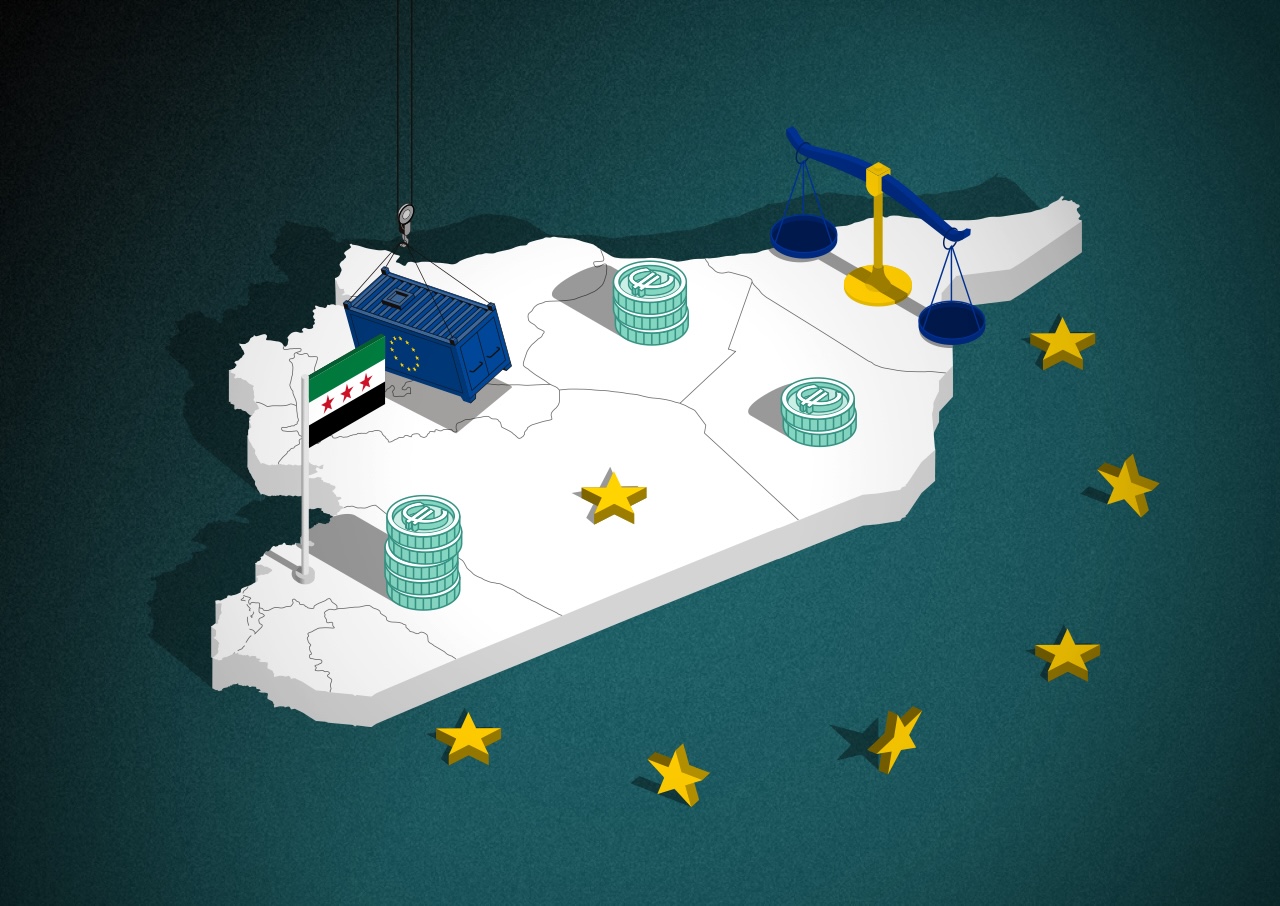
More than a decade after imposing sweeping sanctions on Syria, the European Union is recalibrating its approach. The easing of economic restrictions and the launch of reconstruction aid mark not only a policy shift, but a test of whether Brussels can evolve from a purely normative power into a strategic geopolitical actor.
By Mehak Kulaar — Int’l Affairs Correspondent
Edited/Reviewed by: Mohammad Nasser | Francesco Bernabeu Fornara
March 7, 2026 | 16:30
In early 2026, the European Union announced a €600 million package of humanitarian and reconstruction aid for Syria. European Commission President Ursula von der Leyen described the funding as a way to stabilize the country, rebuild essential infrastructure, and support economic recovery. This aid represents the clearest indication yet that Brussels is transitioning from a decade of strict economic and diplomatic isolation to a new phase in its relationship with Damascus.
The aid comes after a gradual recalibration of EU sanctions during 2025. The Council of the European Union lifted restrictions on key economic sectors like energy, transport, and banking in February 2025. The EU was able to gauge Damascus’s willingness by framing these initial measures as temporary and conditional while maintaining fundamental restrictions, like arms embargoes and targeted human rights sanctions intact.
The EU’s formal lifting of the majority of Syria’s remaining economic sanctions in May 2025 marked a major turning point. Trade and investment restrictions were removed, and key institutions including the Central Bank of Syria were allowed to reconnect with European financial systems. The EU retained export controls on sensitive technologies and targeted sanctions against individuals who violated human rights. In June 2025, Brussels added several Syrian officials to its Global Human Rights Sanctions Regime following reports of renewed violence.
These measures illustrate a deliberate strategy of conditional engagement. Rather than abandoning principles, the EU sought to retain leverage while allowing for economic reconstruction and humanitarian relief. Brussels aims to secure a role in post-war reconstruction and ensure that its assistance influences governance, compliance, and economic stability in Syria—a major departure from its traditional role of punitive isolation.
A Decade of Sanctions: Lessons from Europe’s Approach Since Assad’s Rise
The EU’s current approach is a product of more than a decade of experience with Syria. Following the outbreak of civil war in 2011, Brussels imposed some of the strictest sanctions in its history. Asset freezes, trade bans, sectoral restrictions on energy, banking, and transport were all designed to pressure the Assad regime to end violence and respect human rights.
While sanctions caused economic hardship, they failed to achieve the desired political outcomes. They disrupted formal trade and financial activity but did not prevent the government from maintaining power. Informal trade networks, regional partnerships, and alternative financing mechanisms allowed the Syrian state and its allies to bypass EU pressure. The humanitarian costs of these sanctions also became increasingly apparent, contributing to economic dislocation, unemployment, and shortages in basic goods.
Over time, international actors, particularly Gulf states, Russia and China, re-engaged with Damascus. This left the EU diplomatically marginalized as even though it was one of the largest humanitarian donors, the influence of opposing external actors presented certain limits to its influence over reconstruction and governance. Beyond immediate humanitarian relief, European powers often tagged behind US-led military operations against ISIL, for example, rather than pursuing separate strategic objectives. Eventually—and finally after Assad’s downfall—European policymakers began to realize that sanctions alone could not deliver meaningful leverage and that a more nuanced, conditional approach might be more effective in preserving European interests.
The 2025 policy shift reflects these lessons. By selectively easing economic sanctions while keeping human rights and security measures in place, the EU sought to balance moral and strategic priorities. This approach allows Brussels to regain a role in reconstruction, while maintaining legal instruments to respond if violations occur.
Legal Frameworks and Strategic Levers
The EU’s sanctions regime is designed to be both flexible and enforceable. Legal mechanisms allow the Council to quickly reinstate economic restrictions if Syria fails to comply with key conditions. With its legal basis within the EU’s Common Foreign and Security Policy (CFSP), decisions related to sanctions do not require approval from the European Parliament or Commission. This system creates a “snap-back” capability, giving Brussels leverage without the need for permanent blanket restrictions.
Targeted sanctions have become the primary instrument for upholding human rights standards. By focusing on specific individuals and entities, the EU minimizes unintended consequences for civilians while retaining moral and legal pressure. Financial compliance is closely monitored, and European banks are required to ensure that trade and investment remain within legal bounds.
This legal precision also allows the EU to align humanitarian aid with reconstruction priorities. By providing funding alongside regulatory engagement, Brussels ensures that its support reinforces compliance and transparency. This combination of conditional sanctions and aid packages represents a strategic lever that the EU can use to shape Syria’s post-war political and economic environment.
Reasserting Influence: Economic and Geopolitical Implications for Europe
The lifting of economic sanctions has significant implications for European businesses. Sectors such as construction, energy, telecommunication, and transport are now accessible to European firms. Banks can re-establish correspondent relationships and facilitate trade finance.
Yet the significance of this shift is ultimately political rather than commercial. By re-entering Syria’s economic space while maintaining arms embargoes and targeted human rights sanctions, the EU is testing a more strategic form of engagement. Gulf states, Russia and China are already invested heavily in reconstruction projects, hence Brussels understands that absence can pose doubts on its relevance. Combining aid, regulatory access and conditional legal mechanisms allows the EU not only to promote transparency and accountability, but to retain leverage in shaping governance and economic standards. In that sense, the Syria pivot reflects a broader change in European foreign policy. For years, the EU described itself primarily as a normative actor, leaning on sanctions and value-based diplomacy. The turn of events since 2025 suggests a recognition that in a more competitive geopolitical environment, norms alone are insufficient. Engagement, even when cautious and conditional, is becoming a strategic tool of influence. Syria therefore serves as an early test case of whether the EU can act not only as a guardian of standards, but as a strategic actor of balancing values with power politics.
Conclusion
The EU’s evolving approach to Syria represents a deliberate move from isolation towards conditional engagement. The lifting of most economic sanctions, along with the retention of targeted human rights and security measures, strikes a clean balancing act between principle and pragmatism. Shifting away from being a purely normative actor, European aid packages for reconstruction are now more than just humanitarian gestures—they are now strategic tools designed to shape economic and governance outcomes in an increasingly geopolitical world.
Lessons from more than a decade of sanctions has underscored this reality: the need for flexibility and legal precision. By maintaining conditionality, snap-back mechanisms, and targeted oversight, the EU can influence Syria’s post-war recovery without entirely compromising its normative standards. A separate issue will regard questions of democratic accountability—within this more flexible and fast-paced decision-making process, parliamentary involvement and oversight may wane, likely raising concerns in Brussels.
For European businesses, banks, and policymakers, the opening of Syria’s economic sectors presents opportunities and challenges, while offering Brussels a renewed role in a region where influence had waned—and where the next few years will be decisive for the region following recent events in Iran.
Ultimately, the EU’s strategy seeks to reassert its presence in Syria through a combination of engagement, legal leverage, and economic involvement. It reflects a recognition that sustainable post-war revival and political stability require cooperation rather than isolation. However, such cooperation must be carefully structured to maintain accountability and credibility.
Disclaimer: While Euro Prospects encourages open and free discourse, the opinions expressed in this article are those of the author(s) and do not necessarily reflect the official policy or views of Euro Prospects or its editorial board.
Write and publish your own article on Euro Prospects
Subscribe to our newsletter – stay informed when we publish articles on pressing European affairs.