10 min read — Enlargement | EU | Greenland | Geopolitics
Expansion Fatigue? Now Is the Moment for Enlargement — And Not Only in the East
The direct threat to Greenland might have cooled down. This is nevertheless a chance for Europe to strengthen its future.
Long gone are the delusions that a new year means a fresh start, a blank slate. There is too much to worry about in the world to think that January perhaps brings calm and reflection, taking time to think about what the new year might bring. The start of 2026 was no difference, with anxiety levels about world affairs already at a high; distressing scenes in Iran, regime “change” in Venezuela and the ever continuing winter storms that remind us the issue of climate change is still hanging in there as well.
Yet, what perhaps became most unexpected was the United States’ blatant wish to take a piece of a NATO ally’s territory. Surely, between democratic states, expansionist practices were something we left behind a while ago? Surely, a democratic and international law-abiding country such as the US would not actually go through with invading Greenland? For countries such as Russia, waging a war against Ukraine, or China, on an everlasting quest for Taiwan, an expansionist agenda is par of the course. But the US—the historical proponent of the rules-based international order—actually threatening to seize land of an ally, that was a new step altogether, showing that if you thought Trump had run out surprises, there is always more in the bag of tricks. Europe had become the immediate target.
This has resulted in the headlines having been dominated by the United States’ desire to annex Greenland for supposed security reasons. An event that has fractured the so-called ‘old alliances’ in the world, leaving especially Europe to ponder its future. And even though Trump’s autocratic pursuit for ever more power and disregard of international justice has since abated slightly—with direct military invasion of Greenland ruled out—it is a message for Europe. And it seems, after years of hanging on to the US for dear life, it has indeed finally got that message: Europe is on its own.
But Europe as it is now can, and should, make the most of the situation. The time is ripe to establish a unity that stands as one, getting a foot in among the powers that are trying to chip away at its fringes. And it is exactly at these edges of the continent where the pain-points, and the opportunities, lie. Enlargement has been a topic that keeps coming back from time to time. More often than not it barely grazes the news bulletins—and fades away just as quickly as it appeared, making enlargement an endless cycle of false promises and dashed hopes.
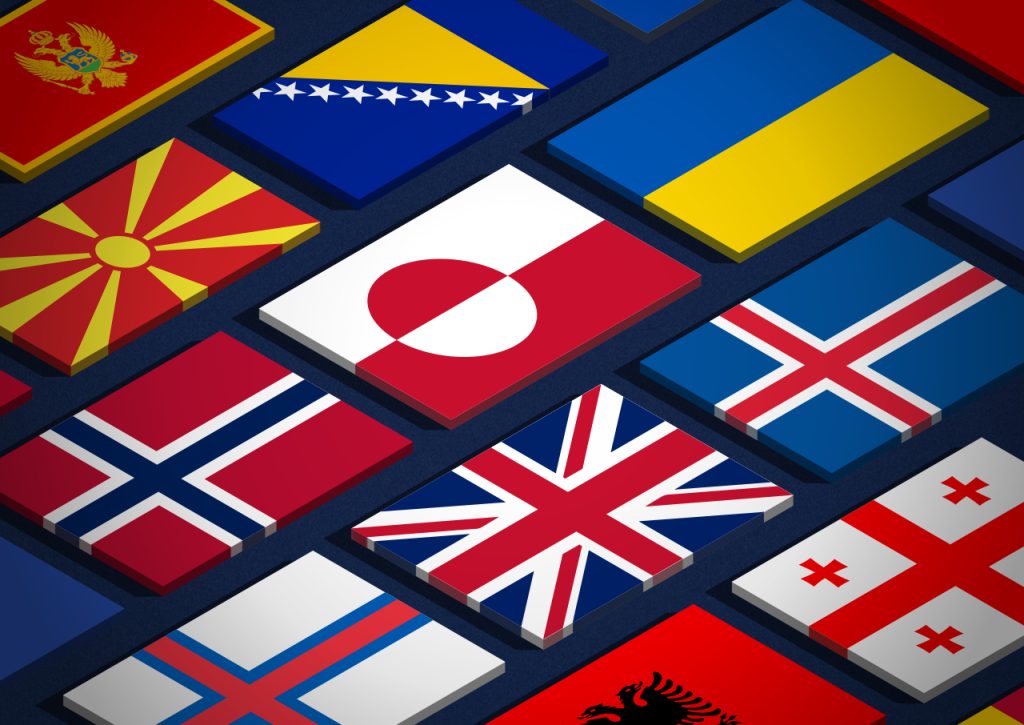
Real progress in accession has not happened for the current candidate countries, both across the Western Balkans (Albania, Bosnia and Herzegovina, Kosovo, Montenegro, North Macedonia, Serbia) and among Europe’s more distant candidates of Georgia, Moldova and Ukraine. It comes at a precarious moment in time, the pressure by Russia ever more increasing. Especially with a seemingly Russia-friendly government in Washington. Therefore, enlargement in this region is priority number one. How long does the stalling need to go on before the tide in these countries changes from pro-European to pro-Russian? Either by a change in the internal political environment itself, or by actual aggression from Russia.
No credible, tangible future for the Western Balkans and the other three nations in Eastern Europe means that they are falling into a limbo that Europe cannot afford. Needless to say, the accession process takes time and due diligence is important. Making sure the countries fit all the criteria, and all the right precautions are in place, is important—after all, accession should not be a charitable undertaking. The EU stands for democratic and judicial rights, which are almost becoming rare in the world as judged by the past months of international politics. And this should rightfully be safeguarded when inviting more countries to join. However, the more time it takes to agree on certain policy fields, the more time that the great powers of the world have to make their own rules. And subsequently step in to change the maps of the world to their liking.
While eastward enlargement is no new dilemma for the EU, what is novel in 2026 is the provocation that has now emerged from across the Atlantic. What was once an international order based on mutual respect has now turned into an intimidation campaign by the US. While one may quarrel on the validity of Trump’s threats, there is no doubt that the attention-grabbing comments made by the President in recent months have a real-world consequence. And even though invasion has perhaps been ruled out, the US is not backtracking on its isolationist stance on the world stage. This leaves Europe no other choice than to step up.
A fresh look at enlargement
Just as strengthening its position in the east, the EU needs to make the powerful decision to bring up the idea of talks with countries that have perhaps not really been part of the EU’s enlargement outlook in recent decades, the ones at the other end of the continent. These are Iceland, Greenland and Norway, where the lack of discussion on EU enlargement has mostly been of own accord. But public opinion on joining the EU—or at least a much closer relationship—is perhaps becoming more positive. Even the United Kingdom has begun heading towards EU alignment in recent weeks. If it is possible there, then countries like Iceland and Norway—which are part of the EEA and thus have closer ties with the EU already—might be willing to see what is achievable in the future. Iceland and Norway are not going to change their minds because of recent weeks alone, but it does not hurt for the EU to see where such discussions might lead. Greenland, because of its position at the centre of the row, and its relationship to Denmark, has a more acute stake in the matter.
All in all, enlargement needs to be finalised in the case of the six Western Balkan nations, as the wait has been too long and opposition too obstinate. But that is not all. Europeans must begin mainstreaming the possibilities of a Union that includes the far northwest of the continent joining the EU. Bringing up the possibilities of enlargement in public and discussing them in more depth, signals a stronger and more independent EU, capable of deciding its own future. Narratives are just as powerful as actions, and if the EU wants to come out of the Greenland row looking like it can put up a fight on the world stage, this is an opportunity to do so. It has a chance to make the EU a truly European bloc, from Iceland to Moldova.
As Canadian Prime Minister Mark Carney powerfully put it in Davos, the status-quo has been ruptured. Perhaps at a time of rupture, solutions are not small policy changes, but grand ideas that can show the way forward. Jean Monnet, one of the founders of the European project, predicted from the beginning that a united Europe was going to be forged out of crises. So why let such a good crisis go to waste?
Disclaimer: While Euro Prospects encourages open and free discourse, the opinions expressed in this article are those of the author(s) and do not necessarily reflect the official policy or views of Euro Prospects or its editorial board.
Write and publish your own article on Euro Prospects
Subscribe to our newsletter – stay informed when we publish articles on pressing European affairs.