10 min read — Netherlands | Greenland | NATO | Geopolitics
Constrained Atlanticism After Greenland: How the Netherlands Exposes Europe’s Dilemma
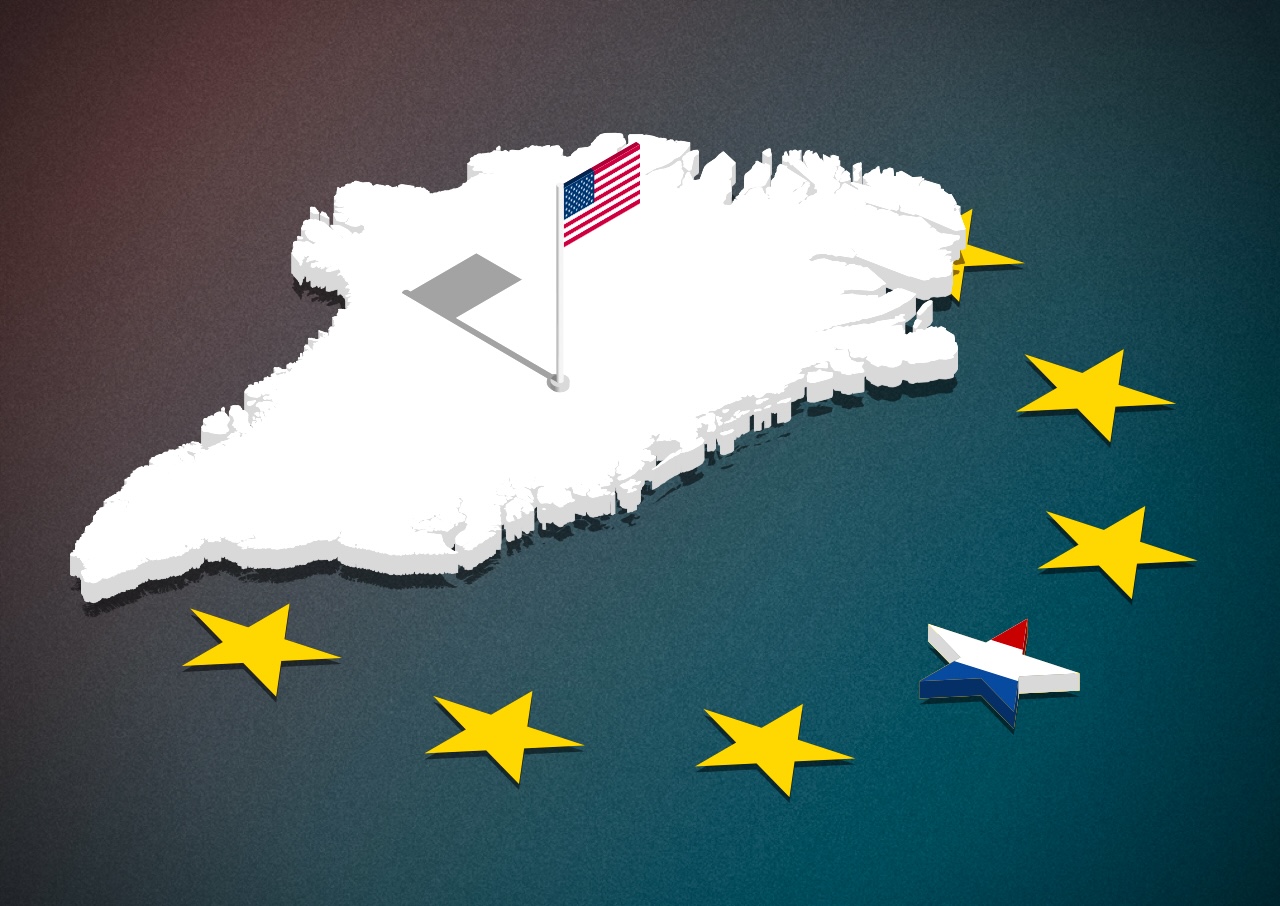
The Netherlands, an exemplifier of a US-oriented Europe, finds itself in a familiar but increasingly awkward position as Arctic geopolitics heat up and U.S. interest in Greenland resurfaces. How do Atlanticist Europeans protect European sovereignty without endangering its long-standing Atlantic orientation?
By Ximena López Pérez — Netherlands Correspondent
Edited/Reviewed by: Francesco Bernabeu Fornara
February 26, 2026 | 12:10
Diplomatic tensions heated up yet again across the transatlantic after Donald Trump’s comments about bringing Greenland under American control. But Washington’s tone has softened in the weeks since the World Economic Forum in Davos. No official proposal or policy initiative has been advanced, and direct references to a “purchase” have decreased. Although previous proposals for 10–25% tariffs on European imports were made as possible leverage in talks involving Denmark and its allies, these policies have not been implemented or formally introduced. What has become clear, however, is the US’ willingness to use punitive economic pressure as an instrument of leverage even in alliance relationships—exposing structural weaknesses in the transatlantic partnership that go beyond the current crisis.
For the Netherlands, the effects are clear. Every year, Dutch exporters send tens of billions of dollars’ worth of goods to the United States; even temporary tariffs run the risk of damaging important industries and eroding confidence in the rules-based trade order. But for devout trans-Atlanticist states like the Netherlands, the rift hits deeper than economic malaise. Indeed, a deeper tension is revealed by the crisis: how can mid-sized European states historically dependent on US backing manage security reliance on Washington while defending territorial sovereignty and collective European values. The Dutch problem exemplifies that tension.
Red Lines and Transatlantic Ties: The Netherlands’ Position
While not directly calling out the conflict, Dutch Foreign Minister David van Weel has denounced the tariffs to be “inappropriate” and “blackmail”. In line with other EU members, the Netherlands has reaffirmed its support for Denmark and Greenland’s right to self-determination in separate statements.
Rooted in a long-standing pro-Atlantic tradition, the Dutch leadership strikes a balance between strategic messaging, NATO alignment, and fiscal prudence, positioning the Netherlands as a trustworthy U.S. ally and a conduit between Washington and more independent European powers like France.
The Netherlands is structurally Atlanticist: driven by economic interests and its deep reliance on the U.S.-led NATO framework, it seeks to avoid transatlantic conflict, safeguard its reputation within the alliance, and balance EU solidarity with pragmatic ties to Washington.
This complexity is reflected in parliamentary opinion. Although Trump’s threats were criticized by members of all parties, support for robust transatlantic diplomatic and NATO engagement in the Arctic remains.
Dutch public opinion is on par. In line with most European public opinion, the majority of people reject unilateral coercion from Trump and prefering diplomatic or NATO-centered mediation to such pressure. Despite this, Dutch confidence in NATO is still higher than that of many of its EU counterparts, something consistent with the nation’s overall foreign policy strategy of striking a balance between transatlantic relations and European unity.
On the economic side, Dutch companies have voiced their own concerns, warning that a rise in tariffs may harm exporters and manufacturers who already have narrow profit margins, making it ever more difficult for the country to balance its moral obligations with its financial interests.
Greenland’s Strategic Role and EU Diplomacy
It is hard to understate Greenland’s geostrategic relevance. The region is ideally situated between North America and Europe, atop developing Arctic sea routes and abundant untapped natural resources. Because of its significance, disagreements over its governance have an impact not only on Danish sovereignty, but on EU trade and security policy.
At the EU level, the crisis has rekindled discussion about the Anti-Coercion Instrument (ACI), also known as the “trade bazooka,” a tool that enables Brussels to punish states by threatening their economies in an effort to influence their policies. The bloc needs to be prepared to react “decisively” to pressure, according to French President Emmanuel Macron, who has openly called for its use in response to U.S. tariff threats.
EU states, however, have exercised caution, with more Atlanticist members like the Netherlands pulling the brakes. To date, member governments have refrained from initiating the ACI right away, preferring to consider the wider ramifications for trade and cooperation before attempting diplomatic engagement with the United States. Fault lines are emerging between prioritising geopolitics or economics.
The European Parliament, on the other hand, has formally urged the EU to stand united against coercion and to fortify coordinated foreign and security policies.
More broadly, this push-and-pull at the EU level is highlighting the limitations of the current European tools in facing pressure from a strong ally. The bigger question at hand is whether the crisis will strengthen long-standing dependencies or hasten true strategic autonomy in EU diplomacy.
Arctic Security, NATO, and Dutch Military Involvement
Growing Arctic strategic competition has been a backdrop for the Greenland crisis. With China’s growing interest in Arctic trade routes and Russia’s assertiveness, NATO is prioritizing the Arctic. As a result, the alliance is starting to formally plan for an Arctic Sentry mission that will improve surveillance and collective defense within the Arctic Circle.
NATO commitments have a significant impact on the Netherlands’ position, but not all Arctic-related engagement comes from the same place. Following Washington’s increased rhetoric on Greenland, Dutch officials reaffirmed their support for Denmark and Greenland, and their limited military involvement was presented as a sign of alliance unity and reassurance. The timing had political significance as well—even though it was officially characterized as routine reconnaissance and preparatory exercises under Danish leadership.
This short-term signaling has to be distinguished from NATO’s overall Arctic policy. The rising interest of the alliance in the High North started before the Greenland dispute. This is primarily caused by the military expansion of Russia in the Arctic region and the rising economic interest of China in this area.
The Dutch involvement illustrates the structural constraints of the Dutch foreign policy. As NATO is a foundation of the Dutch military strategy, a constant diplomatic tension between The Hague and Washington could lead to a weakening of the alliance’s unity and efficiency. With determination to remedy the transatlantic partnership, the Hague must find a balance between demonstrating its commitment to joint EU defense and taking no steps that could widen the rift between Europe and North America—an ever harder sell for members like France ready to pave a new, autonomous European security architecture altogether.
Long-Term EU-Greenland Opportunities After the Crisis
The Greenland situation requires EU member states to evaluate their plans for extended involvement in High North operations. Greenland’s abundant fish stocks and unique mineral resources together with its potential shipping lanes create an ideal partnership for EU economic and strategic activities which can only resume once the current diplomatic crisis settles.
The European Union needs to develop an all-encompassing strategy for Greenland—one that should establish partnerships through fisheries agreements,infrastructure development, and resource extraction assistance. Security-related cooperation will surely need to increase, but whether such policies will be more under the umbrella of NATO or the EU will depend on current debates between pro-strategic autonomy and pro-Atlanticist factions within Europe.
The European Union’s strategy towards Greenland must also consider developments in Greenlandic domestic politics. Following the renewed American pressure, the Greenlandic leadership has reiterated that Greenland is not for sale and the need for self-determination. Although independence is a long-term goal for many Greenlanders, the recent tensions have strengthened the pragmatic bonds with Denmark and Europe rather than promoting separation. The public debate has been characterized by an increasing recognition of the economic and institutional stability offered by the European partnerships.
For Brussels, this is both an opportunity and a responsibility. Rather than viewing engagement solely through the lens of geopolitics, the EU might choose to enhance cooperation in fisheries, infrastructure, and resource development, in which Greenland has shown a desire to diversify beyond its current partners. Security cooperation is likely to increase as competition in the Arctic heats up, but whether this is organized through NATO or EU channels will depend on the debates between those in favor of strategic autonomy and more Atlanticist member states.
The economic ties that Greenland has maintained with the European markets, as well as its recent focus on institutional partnerships, provide the EU with leverage and legitimacy to adopt a long-term strategy towards Greenland, even though it is not a member of the Union.
Implications for Dutch Foreign Policy and European Unity
The Greenland crisis extends beyond its Arctic territorial conflict. Dutch foreign policy is being tested, one that has historically sided with the US more than many other European states. The Netherlands faces a three-way conflict which stems from three interrelated forces:
- Defending territorial sovereignty and international norms alongside EU partners.
- Preserving robust transatlantic security ties under NATO without conceding to coercive diplomacy.
- Protecting economic interests tied to global trade networks.
The upcoming events will impact everything outside of Greenland’s frozen territory. Europe must establish effective deterrence mechanisms to protect itself from coercive threats which stem from both its allies and its adversaries. The EU must establish methods to balance its economic ties with other nations against its necessary geopolitical decisions.
The Netherlands needs to find ways to fulfill its European and international obligations while protecting its essential national interests. The answers to these questions will define Dutch and European foreign policy in a more contested international order.
Disclaimer: While Euro Prospects encourages open and free discourse, the opinions expressed in this article are those of the author(s) and do not necessarily reflect the official policy or views of Euro Prospects or its editorial board.
Write and publish your own article on Euro Prospects
Subscribe to our newsletter – stay informed when we publish articles on pressing European affairs.