8 min read — Sudan | Global Europe | Africa | Human Rights
Sudan: The Make-or-Break Test for a Human Rights-Based International Order
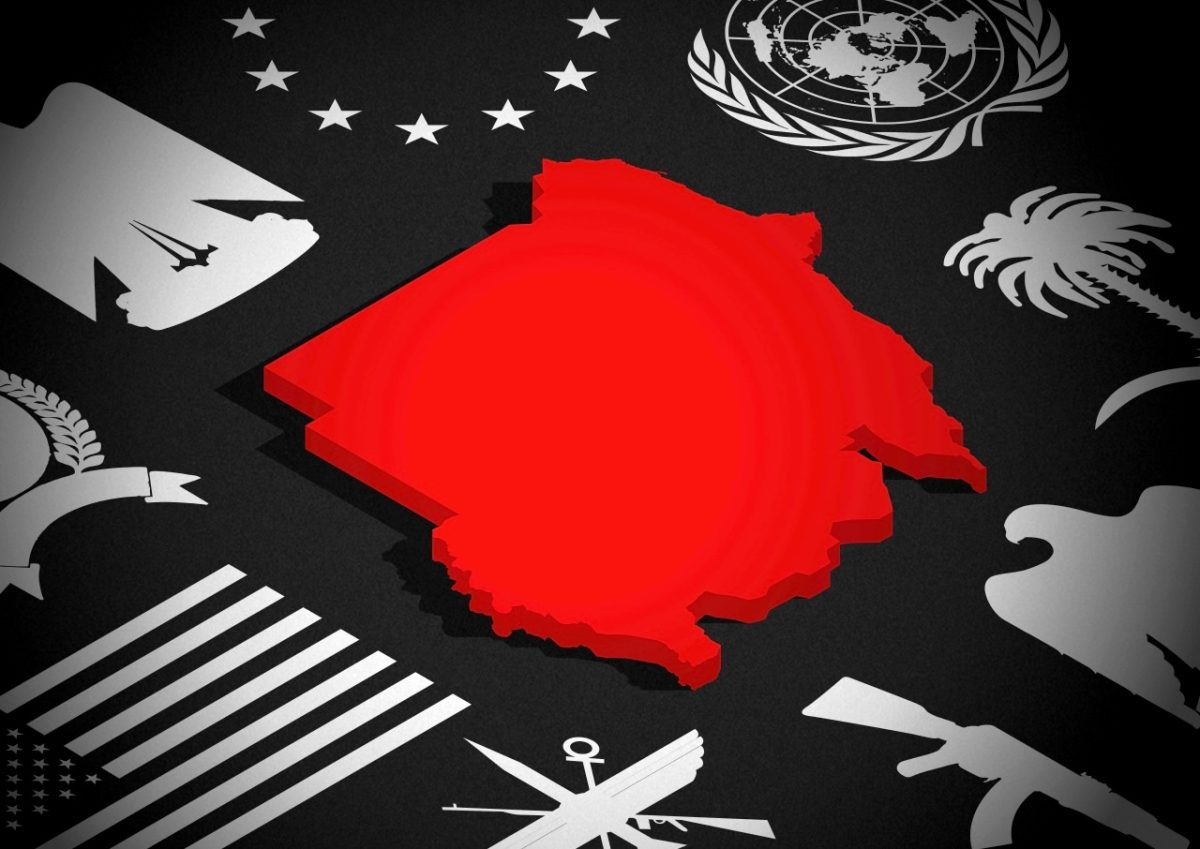
Sudan is a stress-test of whether human rights will remain a principle in the new emerging international order.
By Theodora Chatzisotiriou — Guest author
Edited/Reviewed by: Francesco Bernabeu Fornara
January 24, 2026 | 10:00
It’s become almost a meme the fact that if a crisis doesn’t trend, the world turns a blind eye—and Sudan is no exception. Sudan has been one of those “invisible emergencies”, a catastrophe so huge it should dominate headlines yet so neglected it hardly manages to get any real attention. Right now, a country of 50 million people is being grounded by a war that has displaced more civilians than any other conflict on earth. Entire cities have been emptied out. Families walk for days with no food. Cholera spreads. And still, the world’s response has been little more than mumbles. For those watching, it seems nearly impossible to observe and not doubt our humanitarian commitments.
Sudan’s crisis didn’t emerge out a void—it wasn’t a tragic accident of geography. It is the result of an international system powerless at defending human rights when it is most inconvenient. Inconvenient for whom? Powerful states—both regional and in the West—who have prolonged the war, either actively or by their overlooking. While some hesitate to intervene, weapons are being supplied, sides backed, and even blockades supported. The result is a humanitarian crisis which makes the UN’s Responsibility to Protect more rhetoric than reality. Without immediate action, global commitments are not principles. They are conditional on circumstances.
One reason Sudan challenges the international system is quite precisely because it is not a contained civil war. The crisis is deeply transnational. Regional powers, private military groups and cross-border financial networks have all played a role in sustaining the violence. Arms and funding move through international channels, while Sudan’s natural resources—particularly gold—are extracted and traded through lucrative global markets, further financing the war economy. This war is not happening on the margins of the international system. It is embedded within it. Treating Sudan as a distant internal conflict allows external actors to escape accountability while civilians bear the consequences.
Despite this reality, international responses remain narrow and fragmented. Diplomatic efforts have focused on short-term ceasefires rather than the broader political and economic structures that sustain the conflict. Multilateral institutions have raised alarms and voiced concern but have struggled to translate them into effective action. The United Nations remains constrained by political divisions and limited enforcement capacity, while regional organizations lack the influence to force real compliance from the parties involved. Ceasefires are announced, broken, and quickly abandoned, reinforcing the sense that protecting civilians is a matter of convenience rather than essential.
Sudan’s ongoing situation further reveals the uneven and selective focus of the international community. Western governments frequently speak passionately about humanitarian principles, but their response to Sudan tells a different story. While not fueling the crisis, their engagement in brokering peace has been sporadic at best with cautious sanctions, uneven diplomatic pressure and humanitarian funding that fails to match the scale of displacement and need. The media mirrors this imbalance. Conflicts directly tied to Western security or economic interests dominate headlines, while Sudan slips from view. This imbalance matters. This hierarchy of attention shapes political urgency and policy responses and determines which crises receive real action. Action in democracies can only emerge if elected governments truly feel the political and public pressure to do so.
The implications of this selectivity extend far beyond Sudan. When humanitarian norms are applied inconsistently, their legitimacy erodes and malign actors take note. The UN’s Responsibility to Protect was meant to ensure that mass atrocities could no longer be brushed aside in the name of sovereignty or alternative state interests. In practice, Sudan shows how quickly that promise unravels while civilian protection becomes politically inconvenient. Over time, this weakens trust in international institutions and deepens the sense that global rules apply only to certain conflicts or even to certain people.
Sudan is therefore not only a humanitarian tragedy. It is a stress-test for the international order itself—one that is in decadence from an increasingly power-politics world. It exposes the widening gap between the language of global responsibility and the reality of global action. When mass displacement, famine, and systematic violence fail to prompt a sustained response, the issue is not a lack of information but a lack of political will. Ignoring Sudan does not shield the international system from the fallout—it only postpones it. Prolonged humanitarian crises generate regional instability, forced migration, and long-term insecurity that eventually cross borders.
A meaningful response to Sudan cannot come from words alone. It would require sustained diplomatic pressure from the UN Security Council and major regional powers on actors fueling the conflict. It demands serious efforts to disrupt the financial and resource networks that sustain armed groups. Humanitarian funding must match the true scale of the crisis. The international system must adapt itself to a transnational dimension increasingly influenced by non-state actors. And most importantly, Sudan must be seen not as a peripheral African tragedy, but as a central challenge to global governance at a time when it is most in strain.
Sudan should not become another case study in quiet abandonment. If the international community continues to look away, it will not only fail millions of Sudanese civilians. It will further erode the norms it claims to uphold. Responsibility to Protect will be reduced to empty words in the texts of historical archives and humanitarian principles will mean little. And make no mistake: the next crisis is already waiting and if we ignore it the way we ignored Sudan, the consequences will be catastrophic. Not only for those trapped in the conflict zones, but for the credibility and stability of the entire international system itself. In Sudan, inaction is not neutrality. It is complicity.
Disclaimer: While Euro Prospects encourages open and free discourse, the opinions expressed in this article are those of the author(s) and do not necessarily reflect the official policy or views of Euro Prospects or its editorial board.
Write and publish your own article on Euro Prospects
Subscribe to our newsletter – stay informed when we publish articles on pressing European affairs.