14 min read — Iran | Global Europe | Middle East | Democracy
Why Supporting the People of Iran Is a Moral Responsibility and a Historic Opportunity
Anti-regime slogans are filling Iran’s streets: “Death to the Dictator [Khamenei]…Javid Shah…This is the final battle, Pahlavi will return.”
By Jake Southerland — Int’l Security Correspondent
Edited/Reviewed by: Mohammad Nasser and Francesco Bernabeu Fornara
January 21, 2026 | 18:30
As the halfway mark for January comes and goes, it’s safe to say that it has not been a great start to the new year for some of the world’s authoritarians. With Nicolás Maduro’s capture a few weeks ago, Venezuela appears to be the first domino to go, albeit the future of the country as a whole is far from certain. Now, it looks as if the Islamic Republic of Iran is teetering on the brink of collapse. For well over three weeks, the people of Iran have taken to the streets in an unprecedented show of resistance towards the regime, motivated by aspirations of freeing themselves from an oppressive regime with a record of atrocities dating back 47 years.
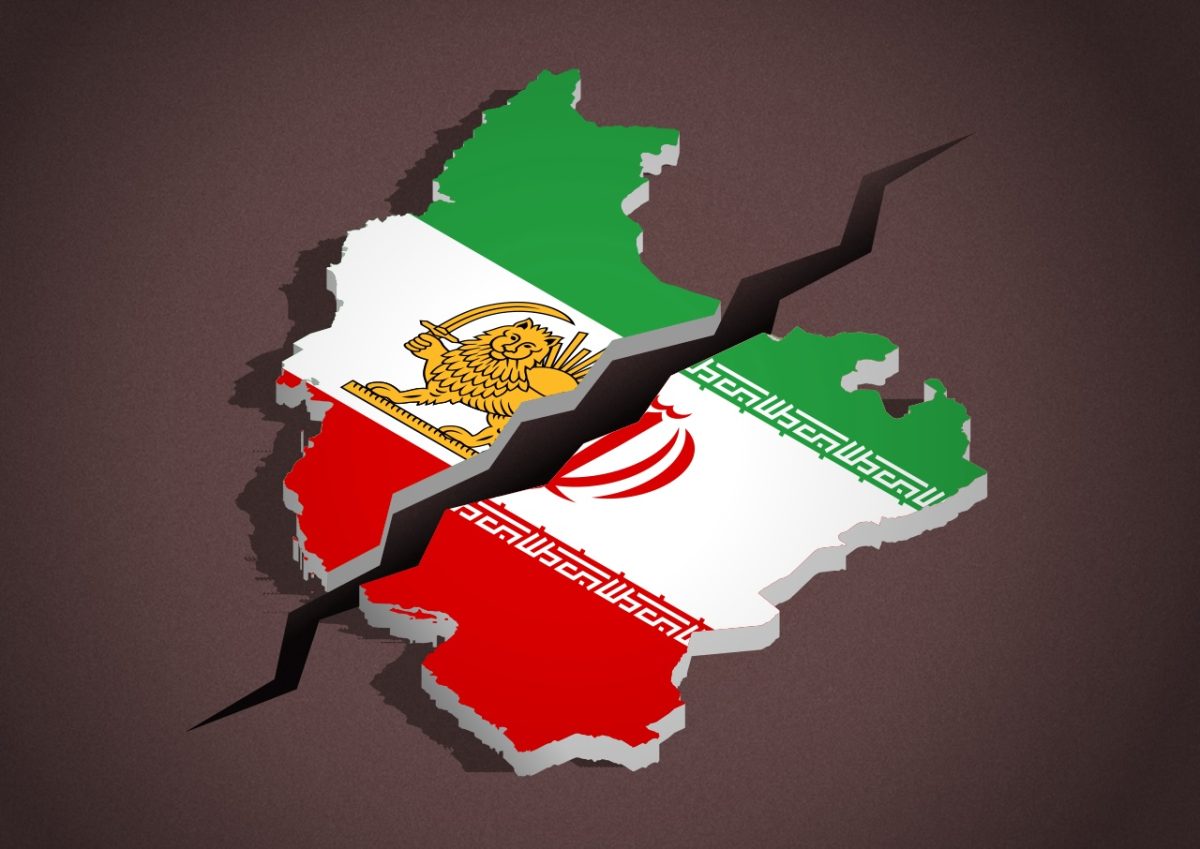
What started as protests against Iran’s rapidly devalued currency, the Rial ($1 ~ 1.036 million IRR), has evolved into a near-full-blown revolution. Within hours of people taking to the streets, chants calling for “Death to the Dictator [Khamenei]“, “Javid Shad” (Long Live the King),” and “This is the final battle, Pahlavi will return“ have echoed throughout numerous Iranian cities. The name Pahlavi symbolically refers to the exiled Crown Prince, HRH Reza Pahlavi, the son of the deposed Shah, HM Mohammed Reza, who was overthrown in the 1979 Islamic Revolution—thanks in large part to a combined socialist-Islamist front. Yet, after Ayatollah Khomeini consolidated power, he would go on to execute not only his former allies, the socialists/communists, but also anyone else who dared to oppose his newfound regime. Sound familiar?
Almost five decades later, upon the backdrop of an economy in free fall, the people of Iran have had enough. It comes as the regime faces diplomatic isolation on the world stage, suffering from constant shortages of basic living necessities for its citizens, and a ruined economy likely beyond the realms of repair in its current form. Despite this, the Islamic Regime’s funding for rebel groups, islamic terrorism, and proxy conflicts across the region seems incessant—not least in view of advancing its “fatwa” of “destroying Israel” and “destroying America.” The ongoing revolution appears to have no end in sight as the regime’s forces have become more desperate in their attempts to quell the uprisings—yet every night the Iranian people continue to fill the streets. U.S. President Donald Trump has not hesitated to intervene: clearly stating his support for the people of Iran, and even threatening Khamenei that the U.S. will be “locked and loaded“ if the Islamic Revolutionary Guard Corps (IRGC) and their terrorist proxies start killing protesters, something that they have often resorted to in the past. EU leaders, on the other hand, have made clear further repression will lead to tougher sanctions.
Despite the complete communications blackout, samples of evidence are suggesting atrocities committed by the regime—evidence that is spreading like wildfire throughout the West. Some estimates have the number of dead protestors as low as 2,000 and others as high as 20,000. Yet, verifying these numbers proves almost impossible. Nonetheless, it’s abundantly clear that the Islamic Republic is desperately clinging to power—even going as far as reportedly using some form of chemical agents or toxins in their attempts to quell public dissent. “The regime’s violence against its own people is not a sign of strength, but of weakness,” posted German Chancellor Friedrich Merz on X. The regime has even threatened to resume previously halted executions of arrested protestors. Ironically, giving the phrase, “desperate times call for desperate measures,” an Orwellian ring to it. Yet, the Western world remains on the fence; it’s time for us to support the people of Iran. Not only because it’s a moral responsibility, but also a “Berlin Wall” moment for the geopolitical landscape of the Middle East and beyond.
The Current Status Quo in the Middle East
Since overthrowing the Pahlavi monarchy in 1979, the Islamic Republic has created its fair share of adverse relationships with its neighbors. The elephant in the room—Israel. With the Islamic regime’s overt hatred of the Jewish state, it is evident why Israeli-Iranian relations have been virtually non-existent since 1979. As for Iraq, from 1980-1989, the two countries fought a brutal war, which featured WW1-style trench warfare, killings of regional minorities, and appalling war crimes; all resulting in very little gains for either side. While Iraq initiated the conflict with its ground invasion of Iran, provocative policies by the newly established Islamic Republic bears much of the responsibility.
From the outset, the regime was driven by an aggressive ambition to export its “revolutionary” ideology beyond Iran’s borders. In pursuit of this goal, the mullahs openly sought to undermine and overthrow neighboring Arab governments, including Saddam Hussein’s regime, while also attempting to revisit and resolve territorial disputes inherited from the deposed Shah. Finally, Saudi Arabia—a country locked in a “Cold War” with Iran over competing political, economic, and even religious interests, due to the Sunni/Shia divide. A byproduct of this geopolitical and religious schism is the countless proxy wars in Iraq, Yemen, Lebanon, Syria, Gaza, and so forth—wars propped up by the IRGC, from Hezbollah to Hamas and the Houthis. It begs the question: how does the Islamic Republic utilize its terrorist pawns?
Hezbollah (Lebanon)
Founded in response to the 1982 Israeli invasion of Lebanon, Hezbollah has likely been the most militarized and infamous of Iran’s proxies. Due to the militant group holding almost total control of the south of Lebanon, Hezbollah holds great sway in domestic affairs, acting as a “state-within-a-state” with immense influence over the country’s government. Its entrenched position is all becoming possible thanks to significant swaths of financial and logistical support from the IRGC—something openly praised by Hezbollah senior leadership, such as its Secretary General Hassan Nasarallah. According to him, “everything it [Hezbollah] eats and drinks, its weapons and rockets, comes from the Islamic Republic of Iran.” The U.S. State Department believes the IRGC’s financial contributions to Hezbollah could be estimated at around $700 million (€600 million) per year.
But with the group’s top brass wiped out by the Israeli Defence Forces—including Hassan Nasrallah himself and his chief of staff, Haytham Ali Tabatabai—the organisation is already on one foot. And while Hezbollah continues to hold the power to threaten the Lebanese government, the Islamic Republic’s fall would mean a cut from the group’s revenue stream. That said, whatever happens in Iran, Hezbollah’s fall will not be a swift one—a free Iran, however, may prove to be a catalyst for a “slow death within” for one of the IRGC’s most coveted proxies.
Hamas (Gaza)
Since seizing control of the Gaza Strip in 2006, some experts have argued that Hamas has governed it as “a separate state” from the Palestinian Authority in the West Bank. Just like Hezbollah to the North, Hamas has the IRGC to thank for its logistical and financial support—roughly $100 million (€86 million) annually. While officially unconfirmed, a now-famous Wall Street Journal report suggested the IRGC gave Hamas the “green light” for the heinous attacks of October 7th, citing Hamas and Hezbollah officials speaking in anonymity It’s no secret that Hamas does not single-handedly make decisions to engage in war without prior explicit agreement from Iran— a relationship that would obviously be severed when the Islamic Republic falters.
The Houthis (Yemen)
Under their now deceased leader’s direction, Hussein al-Houthi, the group adopted the goal of exporting the ideals of Ayatollah Khomeini’s Islamic Revolution to Yemen. Following al-Houthi’s death in a 2004 Yemeni airstrike, his name became synonymous with the rapidly growing non-state power. While Saudi Arabia long asserted that Iran had been providing the Houthis with logistical support since the early 2000s, documentary and intelligence evidence have confirmed Iranian backing from at least 2011 onward. Despite repeated military operations conducted by an Arab coalition since 2015, the Houthis have retained control over nearly the entirety of the former North Yemeni territory. Due to a 2022 UN-brokered ceasefire, the guns would go silent—then October 7th happens. With Iranian-supplied drones and cruise missiles, the Houthis launched attacks into southern Israel, vowing that they will not stop until the invasion of Gaza is halted. Not only that, the group turns its sights on cargo ships navigating the Gulf of Aden, which represents about a quarter of all maritime traffic, responsible for fueling the global trade apparatus. All of the chaos propped up by a regime now on the brink thanks to hundreds of thousands of Iranians on the streets in a show of defiance.
The Situation on the Ground
In recent days, former President Donald Trump has promised the Iranian people that “help is on the way.” At the same time, the symbolic leader of the opposition movement, HRH Crown Prince Reza Pahlavi, has issued numerous calls to action directed at the Iranian public. These include urging citizens to “reclaim the embassies for the people by replacing the Islamic Republic flag with the Lion and Sun banner,” as well as calling on members of the Artesh (the Iranian Army) to side with the population. Meanwhile, the only confirmed communication between Tehran and Washington has consisted of messages from Supreme Leader Ali Khamenei, rhetoric that has largely served to escalate tensions rather than reduce them. Collectively, these signals point toward the possibility of an imminent military strike by the United States and/or Israel. While the specifics of any potential military operation remain unconfirmed, anecdotal indicators have drawn attention.
Notably, the so-called “Pentagon Pizza Tracker” has registered elevated activity levels in recent days. Although this is far from a definitive indicator, the tracker has historically coincided with periods preceding major U.S. military operations. In addition to the assets already stationed in the region, the USS Abraham Lincoln, along with other vessels from its carrier strike group, are supposedly en route to the Middle East following its prior deployment in the South China Sea. Trump has also ordered the evacuation of some troops from American bases in the region – signs of potential preparations for a pending American and/or Israeli operation.
Officials within the current regime, including Foreign Minister Abbas Araghchi, have claimed that the protesters are American and Israeli assets, insisting that everything is “back to normal.” Yet videos of mass demonstrations and brutal IRGC crackdowns continue to surface, finding ways to circumvent the regime’s media blackout—partly due to Elon Musk’s donation of Starlink systems. Even more telling, Iranian state television recently aired posters alluding to Trump’s July 2024 assassination attempt, bearing the threat, “This time it [bullet] will not miss the target.” Indeed, the Islamic Republic has demonstrated time and time again that it cannot be trusted. The Iranian people have given the world a rare gift: a clear opportunity to deal a killing blow to the “Axis of Resistance.” It is now the moment the democratic world must seize this historical opportunity.
How a Free Iran will Muffle the Spread of Radical Islamic Terrorism
In his recent messages to the world and to the Iranian people, the Crown Prince has laid out a clear vision of what a free Iran would look like and how it would behave on the world stage. He has repeatedly contrasted the Iranian nation with the clerical dictatorship that currently rules it. Since 1979, Iran has been associated with terrorism, extremism, and poverty, but the Crown Prince conveys that the “real Iran” is a beautiful, peace-loving, and flourishing country that will rise again once the regime falls. The new Iranian state would normalize relations with the U.S. and Israel and financing of terrorism would finally end. The Crown Prince stated explicitly that “once the Islamic Republic is removed, support for terrorist groups will cease immediately” and Iran would prioritize confronting other IRGC initiatives such as fostering organized crime, facilitating drug trafficking, and promoting radical Shia Islam.
He also conveyed that Iran’s nuclear program would end and that the new transitional government would work with regional and global partners as a stabilizing force instead of as a source of bloodshed. The Crown Prince’s words are grounded in his broader argument that the current regime’s ideology is fundamentally expansionist, and that its security apparatus, including the IRGC, has been central in destabilizing the Middle East and beyond.
For Europe and the rest of the free world, the collapse of the Islamic Republic and the emergence of a free Iran would represent not a distant geopolitical shift but an immediate strategic benefit. For decades, European capitals have borne the consequences of Tehran’s “revolution” through global terrorism, energy insecurity, and disrupted maritime trade. IRGC-backed proxies have fueled instability that has pushed millions toward Europe’s borders, strained social systems, and forced European navies into constant deterrence operations in the Red Sea and Gulf of Aden. A free Iran ending the current regime’s foreign operations would mean fewer regional wars, reduced refugee pressure, safer trade routes, and a dramatic decline in state-sponsored terror networks operating on foreign soil. Just as the end of the Cold War removed a central source of ideological subversion from Europe’s periphery, the fall of Iran’s Islamic theocracy would mean the end of the world’s leading exporter of state-sponsored terrorism. Supporting a free Iran is therefore not merely a moral position for Europe and the West, but a pragmatic one rooted in security, economic stability, and the long term containment of radical Islamic extremism.
Conclusion
The West must do all it can to help the people of Iran. The European Parliament is debating listing the IRGC as a terrorist organization, something that should have been done ages ago. While some EU leaders, such Kaja Kallas have threatened enacting harsher economic sanctions, the regime has been functioning under a laundry list of sanctions for years now meaning that any additional ones will make very little difference. We’re beyond that point now – the West, particularly Europe needs to be more brazen in its response. Just like the U.S., Europe should follow Trump’s calls for “new leadership in Iran.” This is not Iraq, Libya, or Yemen. Why is it different? Before 1979, Iran was a functioning state with strong national institutions, a professional bureaucracy, and deep political, cultural, and economic ties to the West. The Islamic Republic did not emerge from chaos; it hijacked an already-modern and centralized nation and bent it toward ideological authoritarianism. What is unfolding today is not an attempt to build a state from nothing, but an effort to reclaim one that was taken nearly half a century ago.
Furthermore, this is a historical opportunity to take out the Islamic Republic of Iran, which has exported its rhetoric on an international scale for decades. Since 1979, they have been one of the root causes of the spread of radical Islamic terrorism. History rarely offers clean opportunities to confront the source of such a destructive ideology—this moment is different. The Iranian people themselves are doing what no foreign power has ever been able to do. They are challenging the regime from within, at enormous personal cost, with a clear vision of a different future. To stand aside now would not be a restraint. It would be a failure to recognize history as it unfolds. If the Islamic Republic falls, its proxies will weaken, its extremist ideology will fracture, and one of the most enduring sources of radical Islamist violence will be dealt a decisive blow. Moments like this do not come often and when they do, history tends to judge harshly those who choose hesitation over resolve.
Disclaimer: While Euro Prospects encourages open and free discourse, the opinions expressed in this article are those of the author(s) and do not necessarily reflect the official policy or views of Euro Prospects or its editorial board.
Write and publish your own article on Euro Prospects
Subscribe to our newsletter – stay informed when we publish articles on pressing European affairs.